
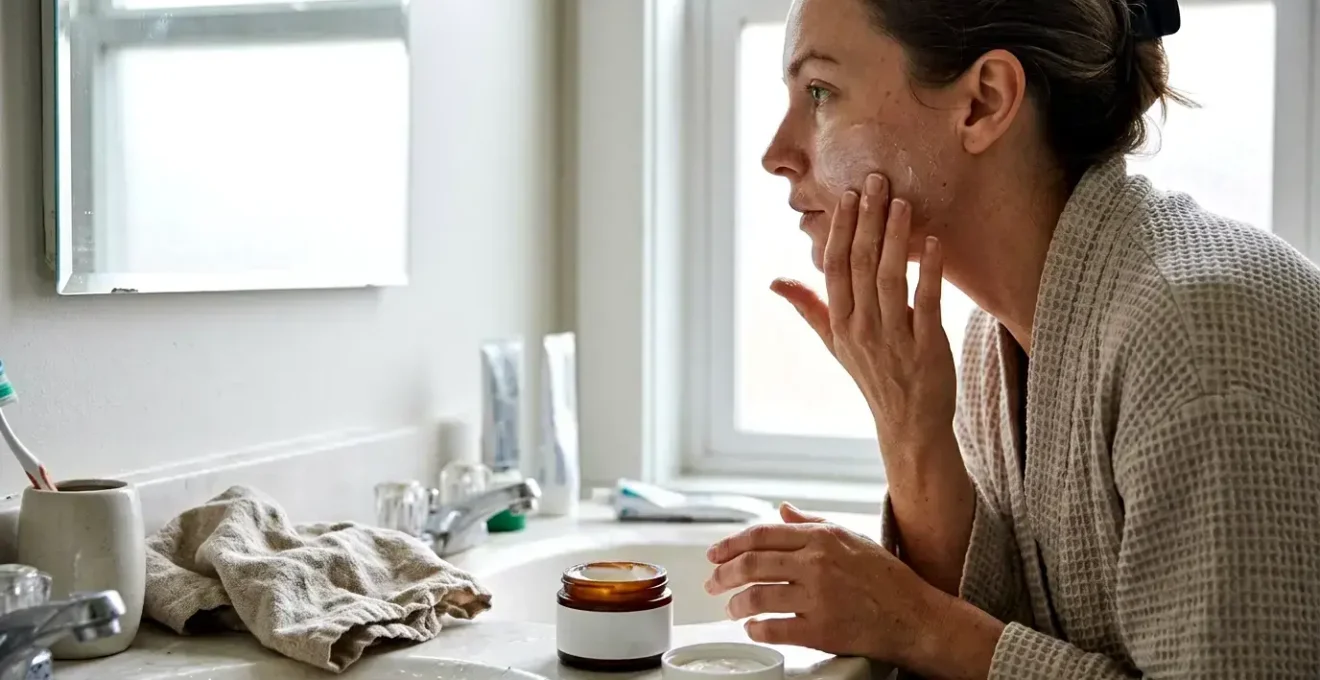
Dry, stressed skin does not always need more moisture alone. It may also need the lipids that help maintain the stratum corneum, the outermost layer responsible for limiting water loss and protecting against external irritants. This distinction matters when choosing a moisturiser: a formula that attracts water may temporarily improve hydration, while a well-designed lipid complex can help reinforce the structures that keep moisture inside the skin.
The three lipid groups that deserve particular attention are ceramides, cholesterol and free fatty acids. They work together within the skin barrier, rather than functioning as interchangeable moisturising ingredients. However, simply finding one of these names on a cosmetic label does not establish that a product contains an effective barrier-supporting combination. Ingredient selection, formulation quality, concentration and compatibility all matter.
For adults dealing with tightness, flaking or persistent dryness, the practical objective is to identify a formulation that supports both hydration and barrier function without relying exclusively on a heavy texture. Understanding how physiological lipids work, how to read an INCI list and when to combine lipid-based products with humectants makes that decision considerably easier.
Barrier Repair Complex: The Essential Ingredients
- Ceramides, cholesterol and free fatty acids form complementary components of the skin’s intercellular lipid barrier. Their balance matters more than the presence of a single headline ingredient.
- A useful barrier cream should combine appropriate lipids with a formulation capable of delivering and maintaining them within the product and on the skin.
- Glycerin supports hydration, while lipid-rich moisturisers help reduce moisture loss. Combining both approaches can be particularly useful for flaky, dehydrated skin.
- Why Do Ceramides, Cholesterol, and Fatty Acids Work Together in Skin Creams?
- How to Check Whether a Barrier Cream Contains a Meaningful Lipid Blend?
- Lipid Repair Cream or Glycerin Gel: Which Is More Suitable for Flaky Skin?
- Why a Barrier Cream May Sting When Applied to Cracked or Inflamed Skin
- When to Apply a Lipid-Rich Barrier Cream After Evening Cleansing?
- Why Are Plant-Derived Ceramides Not Always Identical to Human Skin Ceramides?
- Glycerin or Aloe Vera: Which Feels Better on Tight, Dehydrated Skin?
- Can Plant-Derived Ceramides Improve Dry Skin Without Heavy Moisturisers?
Why Do Ceramides, Cholesterol, and Fatty Acids Work Together in Skin Creams?
Ceramides, cholesterol and free fatty acids work together because they form the principal lipid groups in the stratum corneum’s intercellular barrier. Each contributes to the organisation of the lipid layers between skin cells, helping limit transepidermal water loss (TEWL) and the penetration of external substances. A cream containing all three is therefore designed around the skin’s physiological barrier structure rather than relying on a single moisturising ingredient.
The outermost skin layer is often described using a brick-and-mortar analogy. Corneocytes, the flattened cells of the stratum corneum, act as the bricks. The surrounding lipid matrix acts as the mortar that fills the spaces between them. This matrix contains ceramides, cholesterol and free fatty acids arranged in organised structures known as lipid lamellae.
These lipids have complementary structural roles:
- Ceramides contribute to the organised lipid layers and help maintain the cohesion and permeability properties of the barrier.
- Cholesterol contributes to lipid organisation and helps maintain the physical properties of the intercellular matrix.
- Free fatty acids contribute to the composition and organisation of the lipid structures that help regulate water movement through the outer skin layer.
The importance of their relationship is demonstrated by experimental research on physiological lipid mixtures. A study published in the Journal of Investigative Dermatology found that an equimolar mixture of ceramides, cholesterol and free fatty acids supported normal barrier recovery under the investigated experimental conditions. It also reported that certain incomplete mixtures containing only one or two lipid components delayed recovery compared with the tested combinations.
1:1:1
An equimolar ceramide-to-cholesterol-to-free-fatty-acid mixture supported normal barrier recovery in the reported experimental models. This is a research finding, not a universal concentration or mixing instruction for commercial skincare products.
1996 experimental research on physiological lipid mixtures and skin barrier repair.
Importantly, the findings should not be interpreted as evidence that every cosmetic moisturiser needs exactly equal quantities of these ingredients. The same research reported improved recovery with certain mixtures in which one component was present at a higher relative proportion. The appropriate balance depends on the formulation and experimental conditions.
The practical consequence is that a ceramide-only marketing claim provides incomplete information. A product may contain ceramides yet lack the complementary lipid composition needed to reproduce the physiological organisation of the barrier.
These lipids also contribute to a physical structure rather than acting as a guaranteed biological signal that instructs skin cells to manufacture new ceramides. Their topical benefits should be understood in terms of formulation, barrier support and the conditions in which they are used. Improvement in dryness may develop progressively as the skin barrier becomes better supported.
For a closer look at the experimental evidence, consult the original research on physiological lipid mixtures and skin barrier repair.
This distinction provides the foundation for evaluating cosmetic labels. The next step is to determine whether the ingredients listed on a product actually tell enough about its lipid composition to justify its barrier-repair claims.
How to Check Whether a Barrier Cream Contains a Meaningful Lipid Blend?
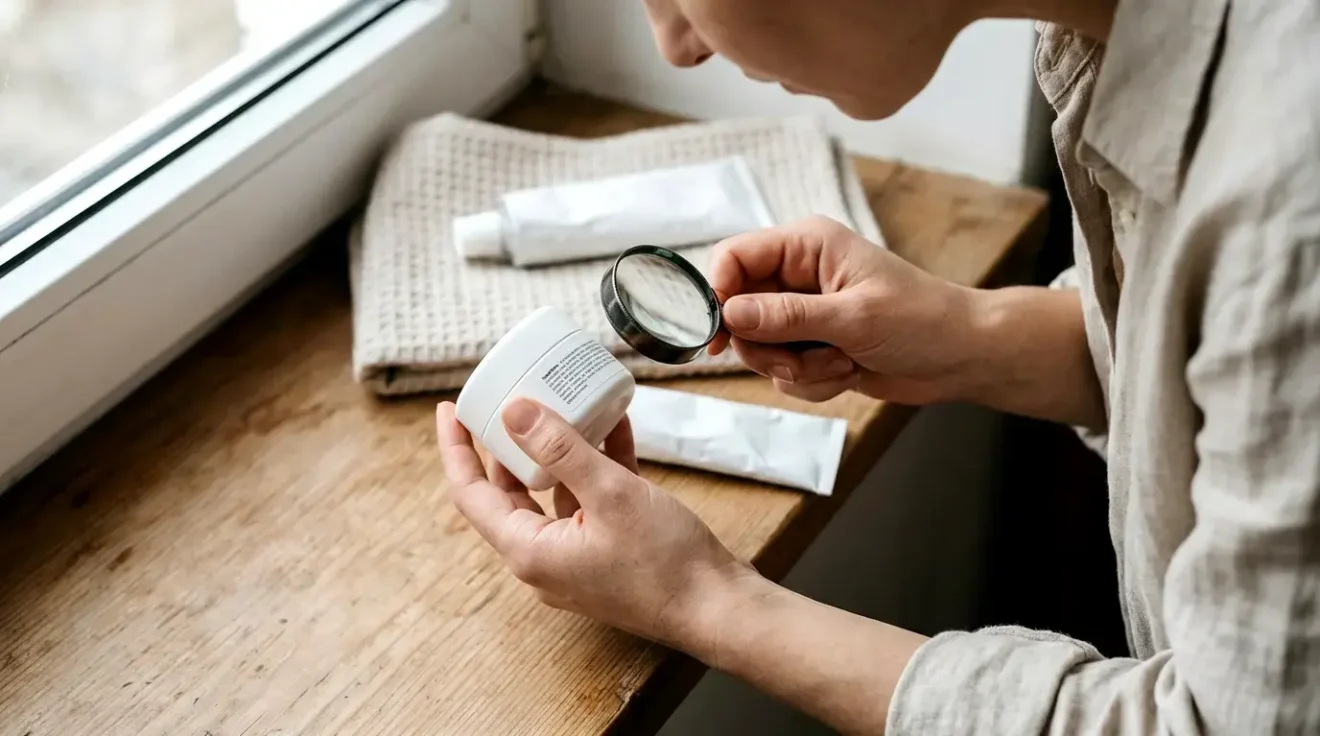
A meaningful barrier cream should be evaluated by its complete formulation, not by the presence of the word ceramide on the front of the packaging. Look for ceramides, cholesterol and free fatty acids, then assess the overall ingredient system, texture and formulation information. An INCI list can identify which ingredients are present, but it cannot independently confirm their exact concentrations, ratio or clinical effectiveness.
The first practical step is to turn the packaging around and examine the ingredient declaration. Search for the three main lipid groups using their cosmetic ingredient names.
- Ceramides: look for names such as Ceramide NP, Ceramide AP and Ceramide EOP.
- Cholesterol: the ingredient may appear under the name Cholesterol.
- Fatty acids: look for ingredients such as Linoleic Acid, Stearic Acid, Palmitic Acid or other relevant free fatty acids.
Not every fatty-acid-containing ingredient performs the same function. Fatty acids may also be present as components of triglycerides, esters or other lipid structures. Their presence alone does not prove that the formulation contains the free fatty acids required to reproduce a physiological lipid blend.
Ingredient order is another useful clue, but it is frequently misunderstood. In the United States, the FDA generally requires cosmetic ingredients to be listed in descending order of predominance. Ingredients present at concentrations of 1% or less may, however, be listed in any order after ingredients above that threshold. Consequently, a ceramide appearing near the end of the list is not necessarily present in a specific trace concentration, and its exact percentage cannot be calculated from its position.
The same caution applies to the idea that all effective barrier lipids must appear in the upper third of an INCI list. There is no universal regulatory or scientific rule establishing that position as a threshold for meaningful barrier repair. Low concentrations of certain specialised ingredients may still have a formulation purpose.
For United States products, the FDA guidance on cosmetic ingredient labeling explains the relevant ingredient-ordering requirements. Other English-speaking markets have their own regulatory frameworks, so United States labeling rules should not automatically be applied to products sold in the United Kingdom, Canada or Australia.
It is also important to distinguish the main barrier lipids from other ingredients commonly associated with barrier care:
- Squalane: an emollient that helps soften skin and reduce moisture loss through its surface-conditioning properties. It is not a substitute for the complete physiological lipid trio.
- Shea butter: a complex mixture of lipids that provides emollient and occlusive benefits, but does not automatically establish the presence of a balanced ceramide-cholesterol-fatty-acid system.
- Phospholipids: membrane-related lipids that can have useful formulation and skin-conditioning functions, but are not interchangeable with the three principal stratum corneum lipid groups.
Formulation quality matters as much as ingredient selection. Ceramides have limited solubility in many conventional cosmetic systems, and their incorporation requires appropriate processing and formulation design. A scientific review in the International Journal of Cosmetic Science discusses ceramide chemistry, barrier function and the importance of correct formulation for topical applications.
Brand transparency can provide additional confidence. Look for manufacturers that identify the ceramide types, explain the formulation approach or provide research supporting the finished product. A disclosed lipid ratio is useful context, although it does not independently prove clinical effectiveness.
Five Checks Before Choosing a Barrier Repair Cream
- Read the complete INCI list and highlight every ceramide-related ingredient. Deliverable: a written list of identified ceramides.
- Search for cholesterol and relevant fatty acids. Deliverable: a three-category ingredient checklist showing which lipid groups are present.
- Identify complementary emollients and humectants, including glycerin, squalane and shea butter. Deliverable: a separate list of hydration and conditioning ingredients.
- Check whether the manufacturer explains its ceramide formulation, lipid proportions or supporting research. Deliverable: a record of available formulation evidence.
- Compare the complete ingredient systems of shortlisted products rather than relying on front-label claims. Deliverable: a side-by-side comparison identifying the most transparent formulation.
Once the lipid composition is understood, the next decision concerns texture and hydration. A lipid-rich cream and a glycerin gel can both benefit dry-feeling skin, but they address different parts of the moisture problem.
Lipid Repair Cream or Glycerin Gel: Which Is More Suitable for Flaky Skin?
For flaky skin associated with dryness and a weakened barrier, a lipid-rich repair cream is generally the more useful primary moisturiser than a glycerin gel used alone. Glycerin attracts and retains water in the outer skin layers, whereas a lipid-focused cream helps support the barrier that limits water loss. Combining the two can address both hydration and moisture retention.
The distinction begins with the difference between dehydration and insufficient barrier lipids. Dehydrated skin lacks adequate water in its outer layers. Dry skin, in the cosmetic sense, often involves insufficient surface lipids and impaired barrier function. These conditions can overlap, which explains why skin can feel both tight and flaky.
Glycerin is a humectant. It attracts water and helps maintain hydration in the stratum corneum. It is particularly useful in lightweight lotions, gels and serums because it can improve skin softness without necessarily leaving a heavy surface film.
A lipid-rich cream takes a different approach. Ceramides, cholesterol, fatty acids and complementary emollients help support the intercellular lipid environment and reduce water loss. This is especially relevant when dryness is accompanied by rough texture, visible flakes or discomfort after cleansing.
A practical comparison helps clarify when each approach makes sense:
| Criterion | Lipid repair cream | Glycerin gel |
|---|---|---|
| Primary function | Supports the skin barrier and limits moisture loss. | Attracts and retains water in the outer skin layers. |
| Typical texture | Usually richer, depending on the formulation. | Usually lightweight and less occlusive. |
| Flaky skin | Often the more suitable primary moisturiser. | Can improve hydration but may be insufficient alone. |
| Oily but dehydrated skin | A lighter lipid lotion may still be useful. | Often a convenient hydration option. |
| Combination use | Can be applied after a humectant product. | Can be applied first, followed by a suitable moisturiser. |
One common mistake is to assume that adding water to the skin automatically resolves flaking. A humectant may increase hydration, but it does not independently replace missing barrier lipids. If moisture continues to escape rapidly, the skin may remain uncomfortable despite repeated application of a hydrating gel.
For this reason, the usual layering sequence is straightforward: apply a glycerin-based serum or gel first, then follow with a moisturiser containing suitable emollients and barrier-supporting lipids. Applying the products to slightly damp skin can also help retain surface hydration.
However, a heavy cream is not automatically better. Some formulations may feel uncomfortable on oily or combination skin, and the amount of occlusion required varies with the environment, skin condition and individual tolerance. A lighter lotion containing a well-designed lipid system may be sufficient for mild dryness.
When flaking is accompanied by redness, cracks or persistent discomfort, product selection also requires attention to tolerability. Even a well-designed moisturiser can sting when applied to an already compromised skin surface.
Why a Barrier Cream May Sting When Applied to Cracked or Inflamed Skin
A barrier cream may sting on cracked or inflamed skin because a compromised skin surface is more sensitive to ingredients that would normally be tolerated. Small fissures and increased barrier permeability can expose more sensitive tissue to contact with the formulation. The sensation does not necessarily mean that ceramides or other barrier lipids are damaging the skin; the cause may be another ingredient or the existing inflammation.
When the stratum corneum is intact, it helps limit the penetration of substances from the environment and cosmetic products. Cracking, irritation and inflammation can weaken this protective function. Ingredients that are usually comfortable may then produce burning, tingling or discomfort.
Potential contributors include:
- Fragrance: fragrance mixtures can irritate sensitive skin or trigger contact reactions in susceptible individuals.
- Essential oils: naturally derived aromatic ingredients may still cause irritation or sensitisation.
- Alcohols: some simple alcohols, particularly in high concentrations, may contribute to irritation or dryness. Fatty alcohols such as cetyl alcohol and cetearyl alcohol have different properties and should not automatically be treated as equivalent.
- Acidic active ingredients: exfoliating acids and other low-pH actives may be uncomfortable when applied to a damaged barrier.
- Preservatives: certain preservative systems may cause irritation or contact allergy in sensitive individuals, although preservatives are important for product safety.
Natural or plant-based formulations are not automatically gentler. Botanical extracts, essential oils and fragrance compounds can still cause reactions. Equally, a synthetic ingredient is not inherently irritating simply because it is produced synthetically.
The duration and intensity of the sensation matter. A brief, mild tingling sensation that quickly disappears is different from persistent burning, increasing redness or swelling. These symptoms should not be interpreted as proof that a product is repairing the barrier.
If burning persists or becomes more intense, discontinue the product and avoid adding further potentially irritating actives. A simple, fragrance-free moisturiser with a short, well-tolerated ingredient list may be a more appropriate temporary option. Avoid rubbing, exfoliating or repeatedly testing the product on inflamed areas.
For skin with deep cracks, bleeding, significant inflammation or signs of infection, cosmetic barrier care may not be sufficient. Medical assessment is appropriate when symptoms are severe, persistent or worsening.
Another important distinction is between irritation and allergic contact dermatitis. Irritation may occur through direct effects on a compromised skin surface, while allergic contact dermatitis involves an immune response to a particular substance. Recurrent reactions to different products can justify professional assessment and, where appropriate, patch testing.
Once a well-tolerated product has been identified, consistency becomes more important than repeatedly changing formulas. Application technique and cleansing habits can also influence how much support the skin needs throughout the day.
When to Apply a Lipid-Rich Barrier Cream After Evening Cleansing?
The most practical time to apply a lipid-rich barrier cream after evening cleansing is while the skin is still slightly damp, once excess water has been gently removed. Applying moisturiser before the surface becomes completely dry helps retain hydration. There is no scientifically established universal minute-by-minute application window, and the suitability of evening use depends more on the routine and product than on a guaranteed nighttime repair advantage.
After cleansing, the outer skin layer may temporarily contain additional water. If the skin is left exposed for too long, evaporation can contribute to a feeling of tightness. Applying a suitable moisturiser while the surface is still slightly damp helps reduce this problem.
The application process can remain simple:
- Cleanse with lukewarm rather than hot water.
- Use a gentle cleanser that does not leave the skin feeling stripped.
- Pat the face with a clean towel without rubbing aggressively.
- Apply any compatible water-based serums or treatments that are part of the routine.
- Finish with a lipid-rich moisturiser, adjusting the amount to the skin’s needs.
Evening application can be convenient because it allows a richer product to remain on the skin without interfering with daytime makeup or sunscreen. However, the idea that barrier recovery universally peaks during sleep needs qualification.
A human-skin study published in 2000 found that barrier recovery varied according to the time of day. In the investigated conditions, recovery was significantly slower between 20:00 and 23:00 than during other measured periods. This finding challenges the simplistic claim that skin repair automatically reaches its highest rate throughout the night.
The research examined endogenous skin-barrier recovery rather than comparing the effectiveness of morning and evening application of commercial lipid creams. It therefore cannot establish that nighttime moisturising is inherently superior. The practical benefit of evening application is primarily the opportunity for consistent, comfortable product use.
For readers interested in the physiological evidence, the human study on time-dependent skin barrier recovery provides useful context.

The cleanser itself deserves attention. Harsh surfactants, frequent washing and hot water can increase dryness and leave the skin feeling uncomfortable. A lipid-rich cream cannot fully compensate for a routine that repeatedly irritates the barrier. A gentle cleansing approach reduces the need for intensive moisturising afterwards.
Product compatibility also matters when layering. Water-based serums and suitable active treatments are generally applied before the moisturiser. The lipid-rich cream then provides the final moisturising layer. If a prescribed topical treatment has specific application instructions, those instructions should take priority over a generic cosmetic layering sequence.
There is no need to apply an excessively thick layer. A comfortable, even application is generally preferable to creating an unnecessarily heavy coating, particularly when the skin is prone to congestion or does not tolerate rich textures.
For people who prefer lighter formulations, the next consideration is the origin and structure of the ceramides themselves. Plant-derived ceramides offer an interesting alternative, but their names and molecular characteristics require careful interpretation.
Key Takeaways Before Choosing Plant-Derived Ceramides
- Plant-derived ceramide ingredients can support barrier-focused formulations, but their molecular composition should not be assumed to reproduce every ceramide found in human skin.
- The ingredient source is only one consideration; molecular structure, formulation quality and complementary lipids also influence the product’s potential usefulness.
- A lighter ceramide formulation may be appropriate for everyday dryness, while more severe dryness may require additional emollient or occlusive support.
Why Are Plant-Derived Ceramides Not Always Identical to Human Skin Ceramides?
Plant-derived ceramides are not necessarily identical to human skin ceramides because ceramides are a diverse family of molecules with different sphingoid bases, fatty acid chains and structural characteristics. Plant ingredients may provide ceramide-related compounds or precursors that resemble some components of human skin lipids, but their molecular structures and behaviour are not automatically interchangeable.
Human skin contains numerous ceramide subclasses. These molecules share a general structure consisting of a sphingoid base linked to a fatty acid, but variations in chain length, saturation and chemical structure create different ceramide types. These differences contribute to the organisation and properties of the stratum corneum lipid matrix.
In cosmetic formulations, ceramides can be produced through different routes, including synthetic processes and the use of plant-derived raw materials. The term phytoceramide is commonly associated with plant-origin ceramide-related ingredients, including materials obtained from sources such as rice and wheat.
However, the terminology on cosmetic packaging can be confusing. Several ingredient names may appear in this category:
- Ceramide NP: a defined ceramide ingredient identified by its INCI name.
- Ceramide AP: another specific ceramide type with a different molecular structure.
- Ceramide EOP: a ceramide subclass associated with specialised structural features in the skin barrier.
- Plant-derived ceramide complexes: ingredients obtained from botanical sources that may contain ceramide-related compounds or associated lipid components.
These names should not be treated as interchangeable. A generic claim such as plant ceramides does not reveal the exact molecular composition of an ingredient or establish whether it corresponds to a particular human skin ceramide subclass.
The distinction also matters when interpreting product claims. A plant-derived ingredient may offer useful skin-conditioning or barrier-supporting properties without being an exact molecular replacement for the full range of endogenous human ceramides.
A formulation containing plant-derived ceramide ingredients alongside cholesterol and fatty acids may have a more comprehensive barrier-supporting rationale than one relying on a botanical ingredient alone. Nevertheless, the final effect depends on the ingredient composition, concentrations, formulation stability and performance of the finished product.
Research reviews on ceramide structure and topical formulation emphasise that ceramides are a family of molecules rather than a single uniform ingredient. The scientific discussion also highlights the importance of appropriate formulation processes for incorporating them into cosmetic products.
For that reason, buyers should favour ingredient declarations that identify specific ceramide types rather than relying exclusively on broad claims such as ceramide complex or plant-powered barrier repair.
This molecular distinction does not mean plant-derived ingredients are ineffective. It means their suitability should be judged through the complete formulation and the skin concern being addressed, including whether a lightweight product can provide sufficient moisturising support.
Glycerin or Aloe Vera: Which Feels Better on Tight, Dehydrated Skin?
Aloe vera often feels more immediately cooling and lightweight on tight or overheated skin, while glycerin is a more established humectant for improving water content in the outer skin layers. The better choice depends on whether the priority is sensory comfort or sustained hydration. For dehydrated skin, glycerin generally offers the more predictable moisturising function, while aloe can provide a pleasant complementary sensation.
Although both ingredients are commonly used in hydrating products, their functions are not identical.
Glycerin is a well-characterised humectant. It attracts water and helps maintain hydration in the stratum corneum. It is colourless, generally odourless and compatible with a wide range of cosmetic formulations. Depending on its concentration and the rest of the formula, it can leave a slightly tacky sensation.
Aloe vera is a botanical ingredient commonly incorporated into gels and lightweight moisturisers. Its high water content and gel-like texture can create a cooling, refreshing sensation. Aloe preparations also contain various plant-derived compounds, although their composition and effects depend on extraction and formulation.
The distinction between immediate feel and longer-term hydration is important. A product that feels refreshing is not necessarily the most effective at maintaining skin hydration. Conversely, a product with a strong humectant function may not offer the most pleasant texture for every user.
Several factors influence the choice:
- For lightweight hydration: a glycerin gel can provide water-binding support without the feel of a rich cream.
- For a cooling sensation: an aloe-based gel may be more pleasant when the skin feels warm or temporarily uncomfortable.
- For persistent tightness: glycerin combined with a moisturising cream offers a more comprehensive approach than either ingredient alone.
- For reactive skin: check the complete formulation, because fragrance, preservatives and botanical additives may influence tolerability.
Another common misconception concerns glycerin in dry climates. It is sometimes suggested that glycerin will necessarily draw water out of deeper skin layers when the surrounding air is dry. This oversimplifies how humectants behave in a formulated moisturiser. Their performance depends on concentration, the surrounding formulation, skin conditions and the availability of water.
A sensible approach is to combine humectant hydration with an appropriate moisturising layer. Applying a glycerin serum to slightly damp skin and following it with a lipid-containing lotion or cream helps support hydration and reduce subsequent moisture loss.
Aloe and glycerin can also be used together when the finished products are compatible and well tolerated. Aloe can provide the preferred sensory experience, while glycerin supplies a more established humectant function. A suitable moisturiser can then complete the routine.
For people who dislike rich moisturisers, this raises an important final question: can a lighter ceramide-based product provide enough support without a heavy cream?
Can Plant-Derived Ceramides Improve Dry Skin Without Heavy Moisturisers?
Yes, plant-derived ceramide ingredients can be incorporated into lightweight formulations that support dry skin without requiring a heavy cream. Their potential usefulness depends on the complete lipid composition, formulation quality and the condition of the skin barrier. A lightweight ceramide lotion may be sufficient for mild dryness, but severely flaky or cracked skin may need additional emollient and occlusive support.
The key distinction is between the texture of a cosmetic product and its functional composition. A thick cream often provides a more substantial surface film, helping reduce water loss through occlusion. However, a rich texture does not automatically mean that a product contains a well-designed ceramide-cholesterol-fatty-acid blend.
Likewise, a lightweight serum or lotion is not automatically ineffective. A properly formulated product may incorporate ceramide ingredients into a lighter emulsion or other delivery system. The formulation can support the barrier while offering a less greasy finish that is more comfortable for daytime use or combination skin.
There are, however, differences in what these products can reasonably achieve.
- Lightweight ceramide serums: can provide targeted barrier-supporting ingredients with minimal heaviness, but may not offer sufficient occlusion when used alone on very dry skin.
- Ceramide lotions: offer a middle ground between a lightweight serum and a rich cream, often combining humectants, emollients and barrier-supporting lipids.
- Rich barrier creams: provide a more substantial moisturising and occlusive layer, which may be helpful when dryness is pronounced or the environment is particularly challenging.
The most appropriate choice also depends on how compromised the skin barrier is. Mild tightness after cleansing may respond well to a lightweight lotion containing ceramides and complementary moisturising ingredients. Persistent scaling, cracking or roughness may require a richer formulation to provide additional surface protection.
Environmental conditions can change the decision. Cold weather, indoor heating and low-humidity conditions may increase the practical need for an occlusive moisturiser. In contrast, warm and humid conditions may make a lightweight lotion more comfortable for everyday use.
Skin maturity can also influence product preference. Changes in skin lipids and moisture retention may make richer formulations more comfortable for some mature adults. However, age alone does not determine which texture is necessary; individual skin condition and tolerance remain more useful selection criteria.
Expectations should remain realistic. A barrier-focused moisturiser may improve the appearance of dryness and reduce tightness with consistent use, but the speed and extent of improvement vary according to the underlying cause, formulation and application routine. A single application cannot establish whether a product has meaningfully supported barrier function.
A practical assessment is to observe changes in visible flaking, post-cleansing tightness, skin comfort and product tolerance over a consistent period of use. If symptoms persist or worsen despite appropriate moisturising, an underlying skin condition such as eczema or contact dermatitis may need professional assessment rather than a stronger cosmetic product.
The most flexible approach is not necessarily to choose between a light ceramide serum and a rich cream. A lightweight ceramide lotion can be used during the day, with a richer moisturiser added at night or on particularly dry areas when needed. This allows the texture to change according to the skin’s condition without abandoning the barrier-supporting ingredients.
When selecting a barrier repair complex, prioritise the complete lipid system, appropriate hydration and tolerability. A well-formulated lightweight product can be sufficient for everyday dryness, while more compromised skin may benefit from an additional occlusive layer. Comparing ingredient lists and adjusting texture to the skin’s actual needs is a more reliable strategy than assuming that heavier always means better.
If dryness, flaking or tightness remains persistent, the next useful step is to review the entire skincare routine and identify whether cleansing, active ingredients or an underlying skin condition is contributing to the problem.