
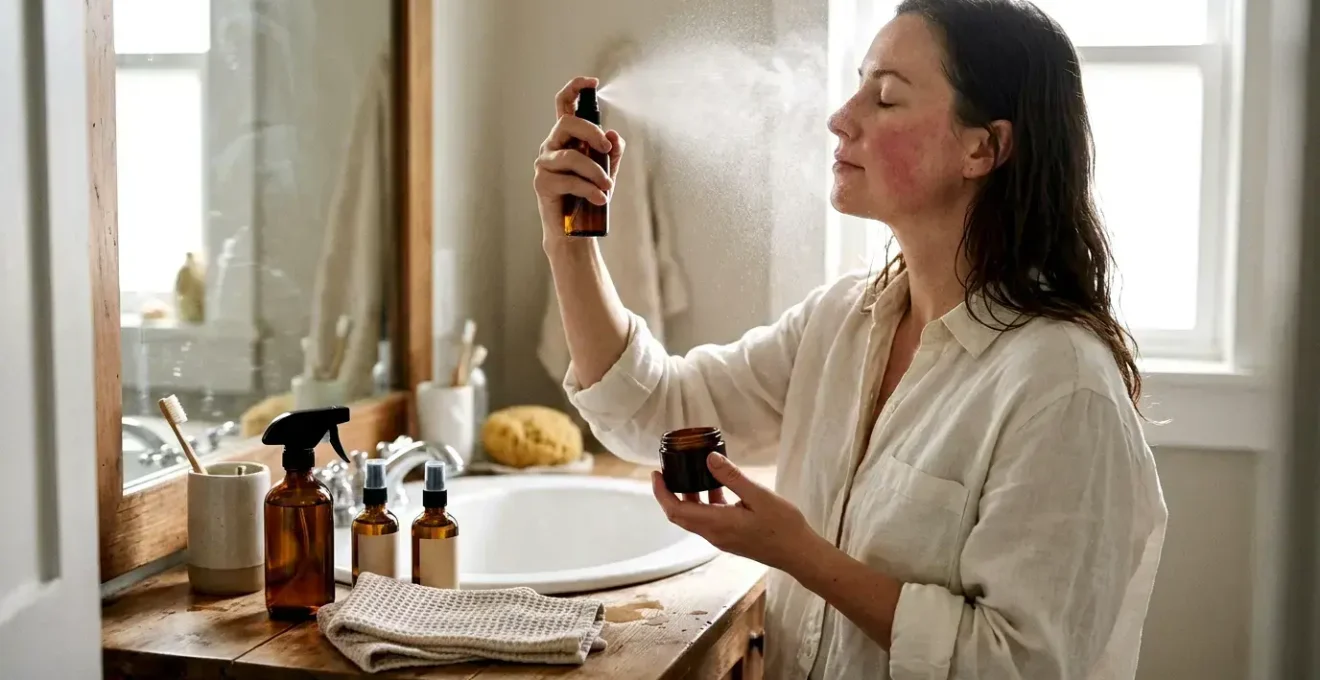
Rose, chamomile and other floral waters can be useful additions to a sensitive-skin routine, but their value depends on their formulation, preservation and compatibility with the individual skin barrier. A genuine hydrosol is an aqueous botanical distillate containing water-soluble and dispersed volatile constituents. It is not automatically equivalent to a moisturiser, a clinically tested soothing treatment or a completely irritation-free product.
The distinction matters because sensitive skin can react to botanical ingredients, fragrance components and even seemingly simple water-based products. A floral water may provide a pleasant application experience and serve as an additional step before moisturiser, but its presence does not guarantee improved hydration or reduced redness.
The most useful approach is to assess three things before introducing one: what the bottle actually contains, whether its preservation system is appropriate, and how it behaves when applied underneath a moisturiser. Understanding these factors makes it easier to decide whether a hydrosol deserves a place in a routine or whether a simpler fragrance-free moisturiser is the better option.
Floral Waters and Sensitive Skin: The Essentials
- Authentic rose hydrosols can have different aromatic profiles because botanical varieties and distillation conditions influence their chemical composition.
- Floral waters provide an aqueous application step, not lasting hydration on their own. Follow them with a suitable moisturiser.
- Preservation, packaging and hygienic handling matter. Discard products showing changes in smell, colour or clarity, and do not rely on appearance alone to establish microbiological safety.
- Why Can Two Rose Hydrosols Have Different Scents and Skin Feel?
- How to Layer Chamomile Floral Water Under Cream Without Leaving Skin Tight?
- Real Rose Hydrosol or Rose-Scented Water: Which Are You Buying?
- Why Unpreserved Floral Waters Can Become Unsafe After Opening
- When Should You Discard an Opened Floral Water After Changes in Smell or Clarity?
- Why a Water-Based Hydrating Mist May Leave Your Face Feeling Drier
- Why Fresh Plant Extracts Can Create Microbial Risks in Homemade Cosmetics
- How to Care for Sensitive Skin Without Mistaking a Medical Condition for Irritation?
Why Can Two Rose Hydrosols Have Different Scents and Skin Feel?
Two authentic rose hydrosols can smell noticeably different and produce slightly different application experiences without either product necessarily being defective. The botanical variety, growing conditions, plant material and distillation process influence which volatile compounds enter the aqueous distillate. Consequently, a delicate floral scent in one bottle and a stronger, more distinctive aroma in another are not automatically signs of different quality.
Botanical identity is an important starting point. Rosa damascena and Rosa centifolia are two different rose species used in aromatic and cosmetic ingredient production. Their chemical profiles are not identical. A comparative investigation of seven rose oils and hydrosols produced in Bulgaria identified differences in the volatile composition of the resulting products, including their aromatic constituents.
For example, the study reported phenylethanol representing 65.52 ± 2.50 % of the relative volatile composition of the investigated Rosa damascena hydrosol, compared with 36.61 ± 0.92% for the Rosa centifolia hydrosol. These percentages describe the relative composition of the measured volatile fraction, not the proportion of phenylethanol in the entire bottled product.
The findings illustrate why two genuine rose waters do not necessarily smell alike. However, chemical differences alone cannot establish which hydrosol feels gentler or performs better on sensitive skin.
Growing conditions and processing can also influence the finished profile. Terroir, seasonal variations, the condition of harvested flowers and distillation parameters may contribute to differences between batches. The precise influence of each factor depends on the production process and cannot be inferred from fragrance alone.
Another distinction concerns how the water is obtained. A hydrosol is associated with the aqueous distillate collected during steam or water distillation of botanical material. It contains water-soluble constituents and small amounts of volatile aromatic compounds. Other products sold as rose water may instead be prepared by adding fragrance or botanical extracts to water. These formulations should not be treated as interchangeable.
When comparing bottles, examine the following information:
- Botanical name: Look for Rosa damascena or Rosa centifolia rather than an unspecified reference to roses.
- Ingredient identity: Check whether the product is identified as a flower water or contains added fragrance.
- Production information: Look for an explanation of steam distillation or another clearly described preparation method.
- Batch transparency: Check whether the manufacturer explains natural variations in scent and colour.
A consistent fragrance between production batches may reflect controlled sourcing, processing or formulation. It does not independently prove synthetic additions, just as a variable scent does not prove authenticity. Product documentation is more informative than attempting to judge the manufacturing process by smell.
For a closer understanding of these botanical differences, consult the comparative study of rose oils and hydrosols published in Resources. Its findings concern chemical composition rather than clinical performance on sensitive skin.
Ultimately, a different scent is not sufficient reason to reject a rose hydrosol. The more relevant question is whether the manufacturer provides reliable ingredient information and whether the finished formulation agrees with the skin.
How to Layer Chamomile Floral Water Under Cream Without Leaving Skin Tight?
Chamomile floral water is best used as a preliminary aqueous step rather than as a standalone moisturiser. Apply a light amount to clean, slightly damp skin and follow it promptly with a compatible cream. This helps reduce the feeling of dryness that can occur when water evaporates without an appropriate moisturising layer to support the skin barrier.
The underlying mechanism is straightforward. Water applied to the skin does not remain there indefinitely. As it evaporates, the temporary cooling and refreshing sensation disappears. In some circumstances, particularly in dry or air-conditioned environments, the skin can subsequently feel tighter.
A floral water does not necessarily supply the ingredients needed to maintain hydration. Unlike a properly formulated moisturiser, a simple hydrosol may contain little or no meaningful concentration of humectants, emollients or occlusive components.
The moisturiser is therefore the essential second step. A suitable cream combines ingredients that help attract water, soften the skin and reduce moisture loss. Its formulation matters more than whether the first layer contains rose, chamomile or another botanical distillate.
A practical layering method looks like this:
- Cleanse with a gentle product that does not leave the skin feeling stripped.
- Leave the face slightly damp rather than allowing it to become completely dry.
- Apply a small amount of chamomile floral water using clean hands or a hygienic spray.
- Follow with a fragrance-free moisturising cream while the skin is still slightly damp.
- Observe how the skin feels after application and adjust the amount or frequency if necessary.
People with very dry skin may find that a simple hydrosol adds little noticeable benefit. In that situation, a moisturiser containing glycerin or other appropriate humectants, alongside barrier-supporting emollients, may be more useful than repeatedly applying floral water.
Climate also influences the experience. In an air-conditioned office or a low-humidity environment, repeated water-only applications may leave the face feeling uncomfortable. In more humid conditions, the same product may feel refreshing without producing the same degree of perceived tightness.
There is also a difference between temporary tightness and irritation. Tightness that disappears after applying cream may simply reflect insufficient moisturisation. By contrast, persistent stinging, itching, redness or a burning sensation suggests that the product may not be suitable.
The American Academy of Dermatology recommends moisturising skin while it is still damp after bathing to help retain moisture. Its guidance for atopic dermatitis also favours fragrance-free creams or ointments over lotions and recommends careful testing of newly introduced skincare products. These principles support a cautious approach to layering, although they do not establish chamomile hydrosol as a treatment for eczema.
For people prone to reactions, introducing the floral water separately from other new products makes it easier to identify a possible trigger. Avoid introducing several botanical ingredients at once, particularly when the skin is already irritated.
A hydrosol is optional, not a prerequisite for healthy skin. If the face feels more comfortable with a simple fragrance-free moisturiser alone, there is no need to add another step.
Real Rose Hydrosol or Rose-Scented Water: Which Are You Buying?
A genuine rose hydrosol and a rose-scented water may look similar in a bottle, but they are not necessarily the same type of cosmetic ingredient. A true rose hydrosol is obtained through botanical distillation, whereas a scented water may simply combine ordinary water with fragrance. Reading the INCI ingredient list and checking the manufacturer’s production information are the most practical ways to understand the difference.
The ingredient declaration provides an initial clue. A product containing Rosa Damascena Flower Water identifies Damask rose flower water as an ingredient. COSMILE Europe describes this ingredient as a plant-derived steam distillate, with cosmetic functions including fragrance, skin conditioning and skin protection.
By comparison, an ingredient list containing Aqua and Parfum may indicate a water-based fragrance formulation rather than a genuine rose hydrosol. However, the interpretation must remain precise: Parfum identifies a fragrance composition, not necessarily an exclusively synthetic substance.
A product can also contain both a genuine floral water and added fragrance. Therefore, finding Rosa Damascena Flower Water on the label does not automatically establish that the formulation is fragrance-free.
Consider these common ingredient-list patterns:
| Ingredient declaration | What it indicates | What remains to verify |
|---|---|---|
| Rosa Damascena Flower Water | Damask rose flower water as a declared cosmetic ingredient. | Purity, additional ingredients, preservation and production documentation. |
| Aqua, Parfum | Water and a fragrance composition. | Whether botanical ingredients are present elsewhere in the formulation. |
| Aqua, Rosa Damascena Flower Water, Parfum | A formulation combining water, rose flower water and added fragrance. | The purpose and concentration of the additional fragrance. |
The economic difference can also be relevant. Producing rose essential oil and aromatic distillates requires substantial quantities of botanical material, and the essential oil yield can be low. However, essential oil yield must not be confused with hydrosol yield, and it cannot be used alone to calculate the commercial price of a finished floral water.
A surprisingly inexpensive product is not automatically counterfeit or diluted, but a very low price combined with vague ingredient information and no production transparency deserves closer examination.
Visual inspection is less reliable than many consumers assume. Authentic hydrosols are not universally distinguished by a particular colour or level of clarity. A transparent liquid is not proof of authenticity, and a slight natural variation is not proof of contamination or adulteration.
For a more precise understanding of the ingredient name and its cosmetic identity, consult the COSMILE Europe ingredient entry for Rosa Damascena Flower Water. The database explains the ingredient’s botanical origin and preparation, while distinguishing flower water from fragrance declarations.
For sensitive skin, the most important consideration is not whether a product is marketed as natural or luxurious. It is whether the complete formulation is compatible with the skin’s tolerance. A fragrance-free moisturising product may be a better choice than an aromatic rose water for someone who reacts to fragrance.
A rose-scented water can still be enjoyable as a sensory product. The problem arises when its fragrance-based formulation is mistaken for a functional botanical distillate or assumed to offer specific benefits for reactive skin.
Why Unpreserved Floral Waters Can Become Unsafe After Opening
Unpreserved floral waters can become microbiologically contaminated after opening because they contain a substantial amount of water and may offer few natural barriers against bacterial or fungal growth. Repeated handling, contact with fingers, unsuitable packaging and poor storage conditions can introduce microorganisms. However, not every preservative-free hydrosol will necessarily become contaminated, and the actual risk depends on its formulation and handling.
Water availability is the central concern. Unlike many oil-based cosmetics, floral waters are aqueous preparations. Their botanical origin does not make them sterile or naturally protected against all microorganisms.
Contamination can occur at several stages. It may originate from raw materials or manufacturing conditions, or enter after opening through the environment and repeated consumer contact.
The way a bottle is designed can influence exposure. A wide-mouth container requires repeated opening and may encourage direct contact with the liquid. A pump or spray mechanism can reduce the need to touch the product, although it does not guarantee microbiological safety.
Other factors also deserve attention:
- Repeated finger contact: Handling the opening or dipping fingers into the product may introduce microorganisms.
- Warm storage: Excessive heat can compromise product stability and may encourage microbial growth.
- Humidity and moisture: Poor storage conditions can contribute to contamination risks, particularly when packaging is not adequately protected.
- Inadequate preservation: A formulation without an effective preservation system may be more vulnerable to contamination.
- Packaging defects: Damaged closures or unsuitable dispensing systems can compromise product protection.
Refrigeration may be recommended for certain products, but it is not a substitute for a validated preservation system. Cooling alone cannot establish that a contaminated product has become safe again.
For commercial cosmetics, preservation must be considered as part of the complete formulation and packaging system. A suitable preservative is selected according to the product’s composition, intended use and compatibility requirements. Its presence should not automatically be considered a disadvantage simply because a consumer prefers natural skincare.
Likewise, a preservative-free claim is not proof of superior quality. Some formulations may use alternative protective approaches or specific packaging systems, but their effectiveness needs to be established rather than assumed.
The U.S. Food and Drug Administration identifies contaminated water, raw materials, inadequate preservation, unsuitable packaging, poor storage and consumer handling as potential causes of cosmetic contamination. Its guidance also explains that contaminated cosmetics can contain harmful bacteria or fungi.
This is especially relevant when the skin barrier is compromised. A product applied to inflamed, cracked or irritated skin should be selected particularly carefully because the skin may be less tolerant of additional exposure.
There are several practical ways to reduce unnecessary exposure:
- Choose a product with clearly explained preservation and storage instructions.
- Prefer hygienic dispensing systems that reduce direct contact with the contents.
- Avoid touching the bottle opening or spray nozzle with fingers.
- Follow the manufacturer’s storage and use recommendations.
- Choose smaller formats if a large bottle is unlikely to be used within its recommended period.
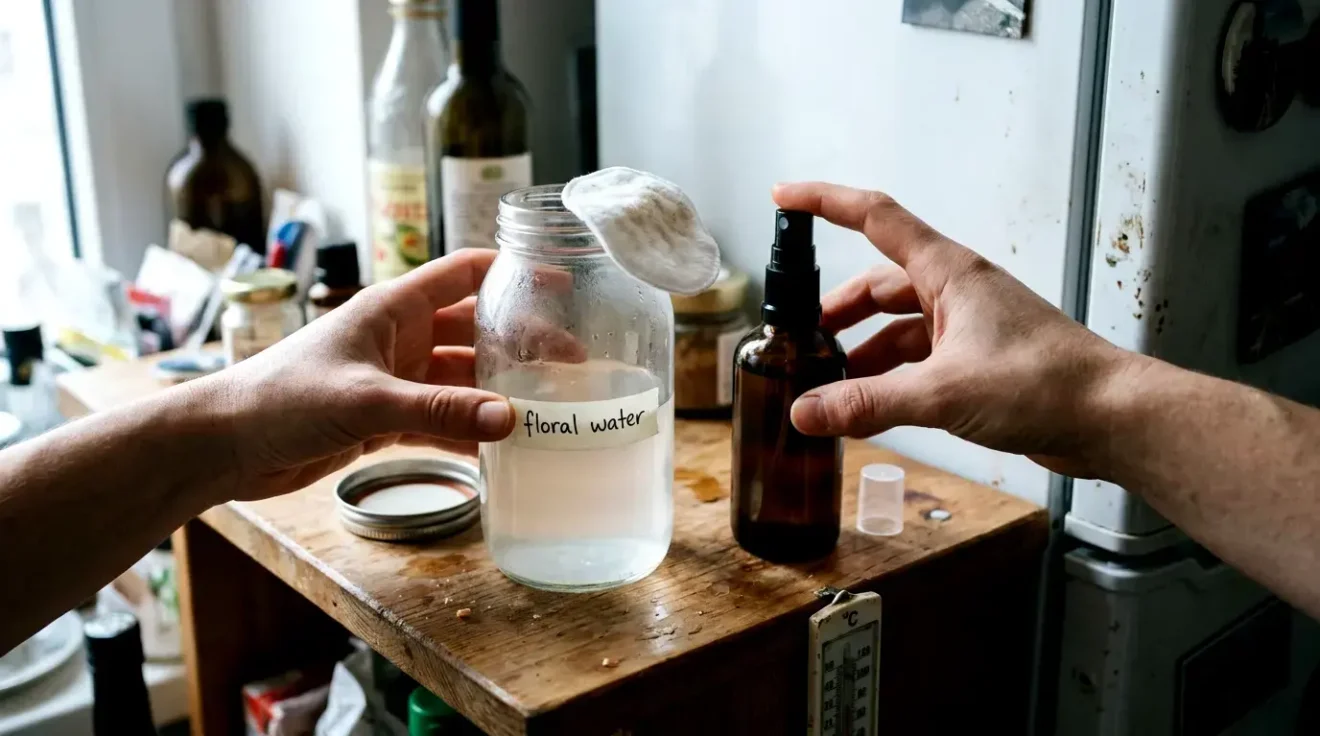
Packaging can therefore make a practical difference, but the most important reassurance comes from the manufacturer’s safety and preservation information. If the product has no clear instructions or its storage requirements are uncertain, it is better to avoid assuming that it remains safe indefinitely.
Ultimately, a well-preserved and appropriately packaged hydrosol is a more sensible choice than an attractive botanical product with unclear storage conditions. The next step is recognising when an opened bottle should no longer be used.
When Should You Discard an Opened Floral Water After Changes in Smell or Clarity?
Discard an opened floral water if it develops an unusual sour, fermented or musty smell, becomes unexpectedly cloudy, changes colour, develops suspended particles or shows a visible film. These changes may indicate deterioration or contamination. Do not attempt to restore the product by refrigerating it, filtering it or transferring it into another container.
Some natural variation is possible between botanical batches, so the initial appearance and scent of the product provide useful reference points. What matters most is a noticeable change during storage or use.
Pay attention to the following warning signs:
- Unusual odour: A smell that becomes sour, fermented, rancid or musty compared with the product’s original aroma.
- Unexpected turbidity: A liquid that becomes noticeably cloudy when it was previously clear.
- Suspended particles: New particles or deposits that were not present when the bottle was opened.
- Colour changes: An unexplained shift in colour during storage.
- Surface changes: A film, unusual residue or visible layer forming inside the container.
However, an important limitation must be understood: microbial contamination is not always visible or detectable by smell. A bottle that looks clear and smells normal cannot automatically be considered microbiologically safe.
This is why the product’s stated shelf life and storage instructions remain important. The period after opening, often represented by a PAO symbol, provides guidance for the intended use of a cosmetic product after opening. It should be respected rather than treated as an optional suggestion.
The appropriate period depends on the specific formulation, preservation system, packaging and conditions of use. There is no universal number of weeks or months that can safely be applied to every rose or chamomile hydrosol.
A useful inspection routine is simple:
- Check the bottle’s appearance and packaging before the first use.
- Record the opening date if the manufacturer recommends tracking it.
- Observe changes in smell, clarity and colour during regular use.
- Check whether the dispensing system or closure has become damaged or contaminated.
- Discard the product if there is a concerning change or if its recommended use period has expired.
There is little value in trying to finish a nearly empty bottle if its condition has become questionable. The remaining quantity does not justify applying a potentially contaminated cosmetic to the face.
It is also important not to use sensory inspection as the only safety test. An apparently unchanged product can still contain microorganisms. Follow the manufacturer’s instructions even when the liquid looks perfectly normal.
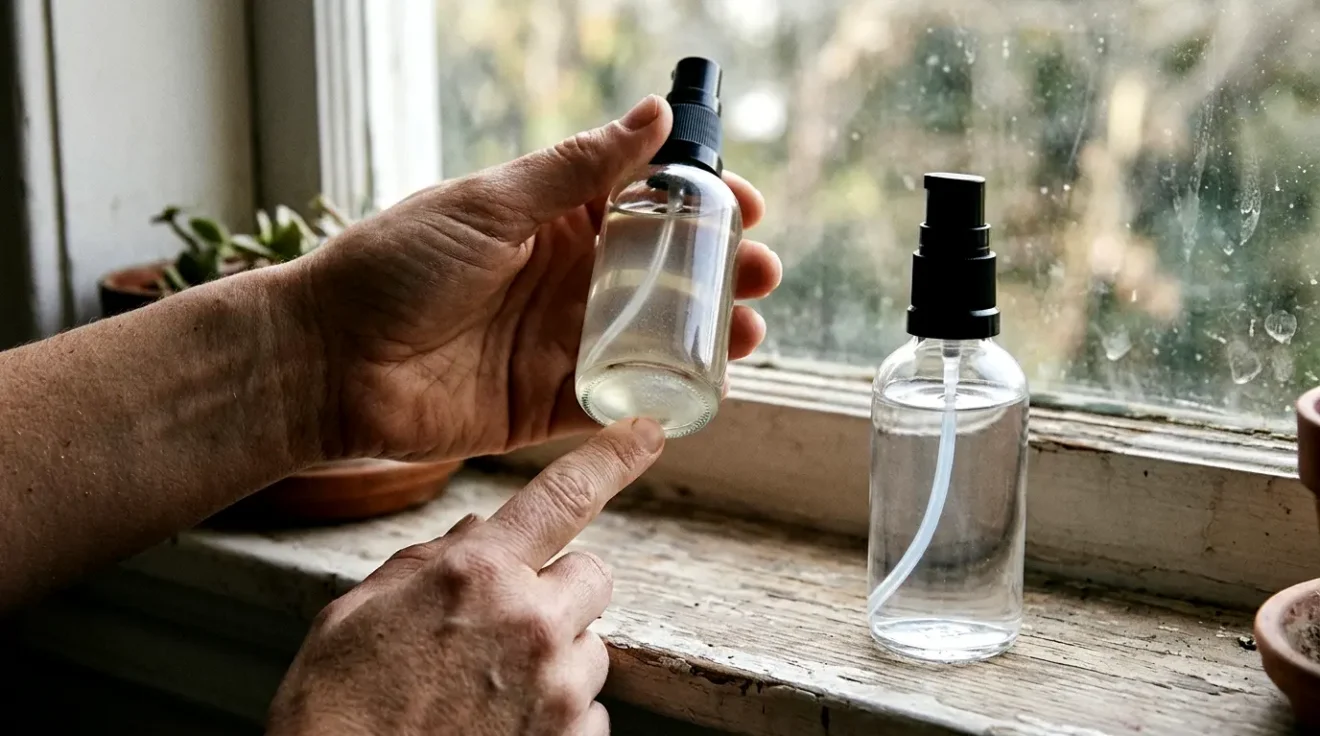
For someone with reactive skin, this precaution is particularly important. A product that has changed during storage should not be tested on the face to determine whether it still feels acceptable. Discarding it is the more sensible decision.
Good cosmetic hygiene is not about making a routine complicated. It is about avoiding unnecessary risks and replacing a questionable product rather than attempting to use every last drop.
Key Takeaways Before Using a Floral Water Mist
- A botanical distillate and a simple scented water are different formulations, so check the ingredient declaration before purchasing.
- Water-based mists can leave skin feeling tight when they evaporate without a suitable moisturising layer.
- Microbial safety depends on formulation, preservation, packaging and handling, not simply whether a product looks natural.
Why a Water-Based Hydrating Mist May Leave Your Face Feeling Drier
A water-based hydrating mist can leave the face feeling drier when the applied water evaporates without an effective moisturising layer to reduce moisture loss. This is particularly noticeable in dry indoor environments, heated rooms and air-conditioned spaces. The refreshing sensation immediately after spraying should not be confused with lasting hydration.
Water on the skin creates a temporary feeling of freshness, but this does not mean the skin barrier has received everything it needs to maintain comfort.
When a mist contains primarily water or hydrosol, its ability to support lasting hydration may be limited. Once the liquid evaporates, the skin can return to its previous condition or feel tighter, especially when the surrounding air is dry.
The formulation makes a significant difference. Not all facial mists behave in the same way.
| Mist type | Main characteristics | Practical consideration |
|---|---|---|
| Water-only mist | Primarily provides temporary surface wetting. | Follow with moisturiser if the skin feels dry. |
| Floral water or hydrosol | Provides an aqueous botanical application with aromatic constituents. | Check fragrance tolerance and preservation. |
| Humectant-enriched mist | May contain glycerin or other water-binding ingredients. | Its performance depends on the complete formulation and environmental conditions. |
| Moisturising mist | May combine humectants, emollients and other conditioning ingredients. | Check whether it provides enough moisturising support for the individual’s skin needs. |
Humectants such as glycerin help attract and retain water within the skin’s superficial layers. However, their effectiveness depends on the concentration, formulation and surrounding conditions. A mist containing glycerin is not automatically equivalent to a complete moisturiser.
Repeatedly spraying water over makeup during the day can also create a frustrating cycle. The face feels refreshed immediately after application, but the effect disappears as the water evaporates. Without an appropriate moisturising layer, frequent applications may not improve the underlying dryness.
A more useful approach is to treat a facial mist as an optional preparation step rather than a replacement for skincare essentials.
For a simple routine:
- Apply the mist sparingly to clean skin if it is comfortable.
- Follow with a suitable moisturiser before the water evaporates completely.
- Avoid repeatedly spraying the face simply because it feels temporarily dry.
- Choose a more substantial moisturising formulation when tightness persists.
Some people prefer a cream containing humectants and emollients, while others benefit from a richer formulation with additional barrier-supporting ingredients. The right choice depends on the individual’s skin condition and tolerance.
Oils may help reduce moisture loss by providing an emollient or occlusive effect, but they do not supply water in the same way as aqueous moisturising ingredients. They should not automatically replace a well-formulated cream, especially when the skin is very dry.
For people who experience burning or stinging after applying a mist, the issue may not be evaporation alone. The product could contain an ingredient that the skin does not tolerate. In that case, stop using it rather than increasing application frequency.
A mist should make skincare more comfortable, not create an obligation to reapply it throughout the day. When lasting hydration is the priority, the moisturiser deserves more attention than the spray.
Why Fresh Plant Extracts Can Create Microbial Risks in Homemade Cosmetics
Fresh plant extracts can introduce microbial risks into homemade cosmetics because freshly harvested flowers, leaves and other botanical materials are not sterile. When combined with water, they can create preparations that support microbial growth, particularly when there is no validated preservation system. A natural origin does not guarantee microbiological safety.
Homemade infusions, fresh botanical juices and water-based macerations may appear harmless because their ingredients come directly from plants. However, they can contain microorganisms from the raw materials, water, utensils, work surfaces and hands involved in preparation.
There are two distinct stages of concern.
First, contamination can occur during preparation. Fresh plant material may carry environmental microorganisms. Unclean containers, utensils and water can introduce additional contamination. Even when preparation takes place in a clean domestic kitchen, the conditions are not equivalent to a controlled cosmetic manufacturing environment.
Second, microorganisms can multiply during storage. A preparation containing water and organic plant material may offer suitable conditions for microbial growth. This process can occur without obvious changes in smell, appearance or consistency, particularly during the early stages of deterioration.
This is why visual inspection alone is insufficient to establish the safety of homemade botanical cosmetics.
Professional cosmetic production involves a more controlled approach. Manufacturers are responsible for the safety of their finished products and must consider raw material quality, manufacturing hygiene, formulation stability, preservation and packaging.
Preservation systems are selected according to the formulation and require appropriate validation. The mere presence of a preservative does not establish that a finished cosmetic is adequately protected.
Similarly, a homemade preparation should not be considered safe simply because it contains ingredients traditionally associated with skincare, such as chamomile, rose petals or aloe vera.
For readers interested in botanical DIY skincare, several precautions can reduce unnecessary risks:
- Prefer preparations intended for immediate use rather than storing fresh plant mixtures for extended periods.
- Use appropriately sourced cosmetic ingredients instead of assuming that fresh plant material is suitable for direct facial application.
- Consider commercially prepared hydrosols or dry botanical extracts when a water-based homemade preparation would otherwise be necessary.
- Prepare small quantities rather than maintaining large batches for repeated use.
- Avoid adding water or fresh plant material to an existing cosmetic product.
A commercially prepared hydrosol is not automatically sterile or safe indefinitely, but its manufacturing and preservation information can provide a more reliable basis for evaluating the product than an improvised household preparation.
The FDA identifies contaminated water and raw materials, poor manufacturing conditions, ineffective preservation, inadequate packaging and consumer handling as possible sources of cosmetic contamination. Its guidance on microbiological safety and cosmetics explains why these factors deserve attention even when a product is intended for ordinary personal care.
The distinction is not between natural ingredients and synthetic ingredients. It is between a preparation whose microbiological risks have been appropriately managed and one whose safety has not been established.
Botanical skincare can remain part of a thoughtful routine without requiring fresh ingredients to be mixed and stored at home. Simpler preparation methods and properly documented cosmetic ingredients are often the more practical choices.
How to Care for Sensitive Skin Without Mistaking a Medical Condition for Irritation?
Sensitive skin does not always indicate a medical condition, but persistent redness, itching, burning or recurrent inflammation should not automatically be attributed to a cosmetic product. Conditions such as atopic dermatitis, rosacea, seborrhoeic dermatitis and allergic contact dermatitis can produce overlapping symptoms and may require professional assessment. Floral waters can be optional cosmetic additions, but they cannot diagnose or treat these conditions.
Ordinary skin sensitivity may appear after exposure to a new product, environmental changes, excessive cleansing or a routine that contains too many potentially irritating ingredients. The reaction may improve when the suspected trigger is removed and the routine is simplified.
However, certain dermatological conditions can produce similar symptoms even when a person has not recently changed their skincare products.
For example, atopic dermatitis can involve dryness, itching, inflammation and a compromised skin barrier. Rosacea may involve persistent facial redness and episodes of flushing. Allergic contact dermatitis can produce an inflammatory response following exposure to a substance that triggers an allergic reaction.
Seborrhoeic dermatitis may also cause recurring redness and scaling, often in areas where sebaceous glands are more active.
These conditions cannot reliably be distinguished from ordinary sensitivity through a cosmetic routine alone.
Several signs suggest that professional advice is more appropriate than simply changing floral waters or moisturisers:
- Redness that persists or repeatedly returns.
- Inflamed patches, scaling or visible lesions.
- Intense itching, burning or discomfort.
- Symptoms that worsen despite stopping suspected cosmetic triggers.
- Sudden, widespread or unexplained skin reactions.
- Cracking, oozing or signs that the skin barrier is significantly compromised.
Swelling around the eyes or lips, blistering, significant pain or rapidly spreading inflammation also warrants prompt medical assessment. Severe swelling involving the tongue or throat or difficulty breathing requires emergency medical attention.
For mild reactions without warning signs, a cautious routine reset can help reduce unnecessary exposure.
Start by stopping recently introduced products that could be contributing to discomfort. Keep cleansing gentle and use a moisturiser that has previously been tolerated. Avoid introducing additional exfoliants, fragrances or botanical treatments while the skin settles.
Once the skin is comfortable again, new products can be introduced individually. This makes it easier to identify a possible trigger than introducing several formulations simultaneously.
The American Academy of Dermatology recommends fragrance-free creams or ointments for people with atopic dermatitis and explains that fragrance can trigger flare-ups. It also provides guidance on testing new skincare products through repeated application to a small area of the skin for 7–10 days. Such home testing is a precaution, not a guarantee that an allergic or irritant reaction cannot occur.
Floral waters deserve particular caution in this context. A rose or chamomile hydrosol may be well tolerated by one person but cause discomfort in another. Botanical origin does not eliminate the possibility of irritation or allergy.
For someone with diagnosed eczema, rosacea or another inflammatory skin condition, treatment recommendations should come from an appropriately qualified healthcare professional. A hydrosol should never replace prescribed treatment or delay a medical consultation.
There is also no requirement to use a floral water to achieve a good skincare routine. A gentle cleanser, a suitable fragrance-free moisturiser and appropriate sun protection may be sufficient for many people with reactive skin.
Adding a floral water makes sense only when it is compatible with the skin’s needs, its formulation is sufficiently transparent and its preservation is appropriate. If the skin remains irritated, the most useful next step is a professional assessment rather than another cosmetic experiment.
Can rose hydrosol be used every day on sensitive skin?
Rose hydrosol may be used regularly if its complete formulation is compatible with the individual’s skin and its preservation system supports the intended use. However, daily application is not essential. Start cautiously, avoid products containing unnecessary added fragrance and discontinue use if redness, itching or stinging develops.
Is chamomile floral water better than rose water for irritated skin?
Neither can be considered universally better. Both have different botanical compositions, and neither is established as a treatment for sensitive-skin conditions simply because it is a floral distillate. The most suitable choice depends on the formulation, ingredient tolerance and individual skin condition. A fragrance-free moisturiser may be preferable when the skin is actively irritated.
Should floral water be applied before or after moisturiser?
If a floral water is included in the routine, apply it before moisturiser. Use it on clean, slightly damp skin and follow with a suitable cream to help maintain skin comfort. Applying a simple aqueous mist after moisturiser is unlikely to provide the same layering approach and may leave the surface feeling wet without improving lasting hydration.
Does a preservative-free hydrosol last longer in the refrigerator?
Refrigeration may be recommended by certain manufacturers, but it does not guarantee microbiological safety or replace an appropriate preservation system. Follow the product’s specific storage instructions and recommended period after opening. Discard the hydrosol if its smell, appearance or packaging changes unexpectedly, even when some product remains.
Can floral waters replace moisturiser or dermatological treatment?
No. A simple floral water is primarily an aqueous cosmetic preparation and does not necessarily provide the humectants, emollients and occlusive ingredients needed for lasting moisturisation. It also cannot replace treatment for eczema, rosacea, allergic contact dermatitis or other skin conditions. Its role, when tolerated, is limited to an optional complementary step in an appropriate routine.