
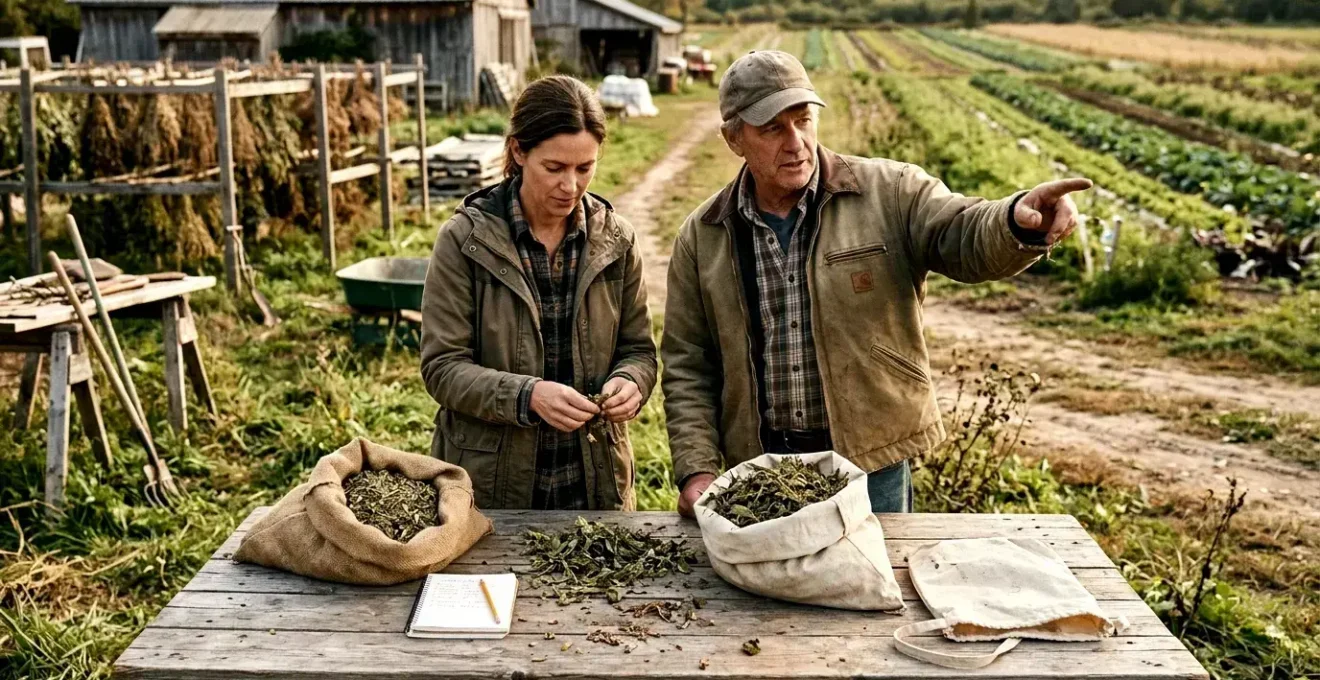
Botanical ingredients can give skincare and beauty products distinctive properties, but their natural origin does not automatically make their production environmentally responsible. High-value species, intensive cultivation, poorly managed wild harvesting and opaque intermediary networks can all place pressure on ecosystems. For independent beauty brands, the challenge is to establish whether a botanical ingredient comes from a supply chain that protects biodiversity while delivering consistent quality.
Responsible procurement requires more than a supplier’s sustainability statement or a certificate attached to an invoice. Buyers need to identify the actual growing or harvesting location, understand how the plant is collected, verify batch-level documentation and assess the social and ecological conditions behind production. They must also distinguish between genuinely traceable ingredients and materials that have passed through several intermediaries before reaching a distributor.
The most reliable approach combines species-specific sourcing decisions, documentary verification, independent evidence and regular supplier assessments. Wild harvesting can be appropriate under effective ecological and community governance, while cultivation can reduce pressure on natural populations when agricultural practices protect soil, water and habitats. The right choice depends on the botanical species, its origin and the way it enters the supply chain.
Responsible Botanical Sourcing: Key Principles
- Verify the botanical species, plant part, actual farm or harvest location and batch history before approving a supplier.
- Assess conservation risks according to species, harvesting maturity, regeneration capacity and local ecological conditions rather than assuming cultivated ingredients are always sustainable.
- Require traceable analytical documentation, harvest records and proportionate supplier audits to detect adulteration, mislabelling and unsustainable procurement.
- Why Can Wild-Harvested Sandalwood Create Serious Conservation Concerns?
- How to Verify the Farm Origin of Botanical Ingredients From a New Supplier?
- Wild Harvesting or Regenerative Farming: Which Better Supports Botanical Supply?
- The Traceability Red Flags to Check Before Buying Bulk Essential Oils
- When Should Cosmetic Brands Audit Seasonal Botanical Suppliers?
- Why Doesn’t a Plant-Based Skincare Label Guarantee a Low Environmental Footprint?
- Why Does Harvest Season Change the Composition of Cosmetic Plant Extracts?
- Which Sustainable Beauty Practices Actually Reduce Waste at Home?
Why Can Wild-Harvested Sandalwood Create Serious Conservation Concerns?
Wild-harvested sandalwood can create serious conservation concerns because its most valuable material, the heartwood, develops as trees mature. Strong commercial demand therefore encourages the removal of older specimens, potentially before natural regeneration can replace them. When harvesting exceeds the population’s capacity to recover, repeated extraction progressively depletes wild resources. The risk becomes particularly difficult to control when illegally harvested wood enters legitimate commercial channels through intermediaries.
Sandalwood illustrates why the conservation assessment must start with the botanical species rather than the generic ingredient name. Santalum album, commonly known as Indian sandalwood, and Santalum spicatum, Australian sandalwood, have different geographical distributions, production systems and sourcing contexts. A certificate stating that sandalwood was purchased legally does not necessarily establish where the tree originally grew or whether its removal complied with conservation requirements.
This distinction creates a traceability paradox. Illegally harvested material can be mixed, repackaged or transferred through successive transactions until the final commercial documentation identifies only the last legitimate seller. Consequently, an invoice or certificate of origin may establish a transaction without independently proving the original harvest location. Buyers should request evidence connecting the product to its actual source, including species identification, harvest authorisation and batch records.
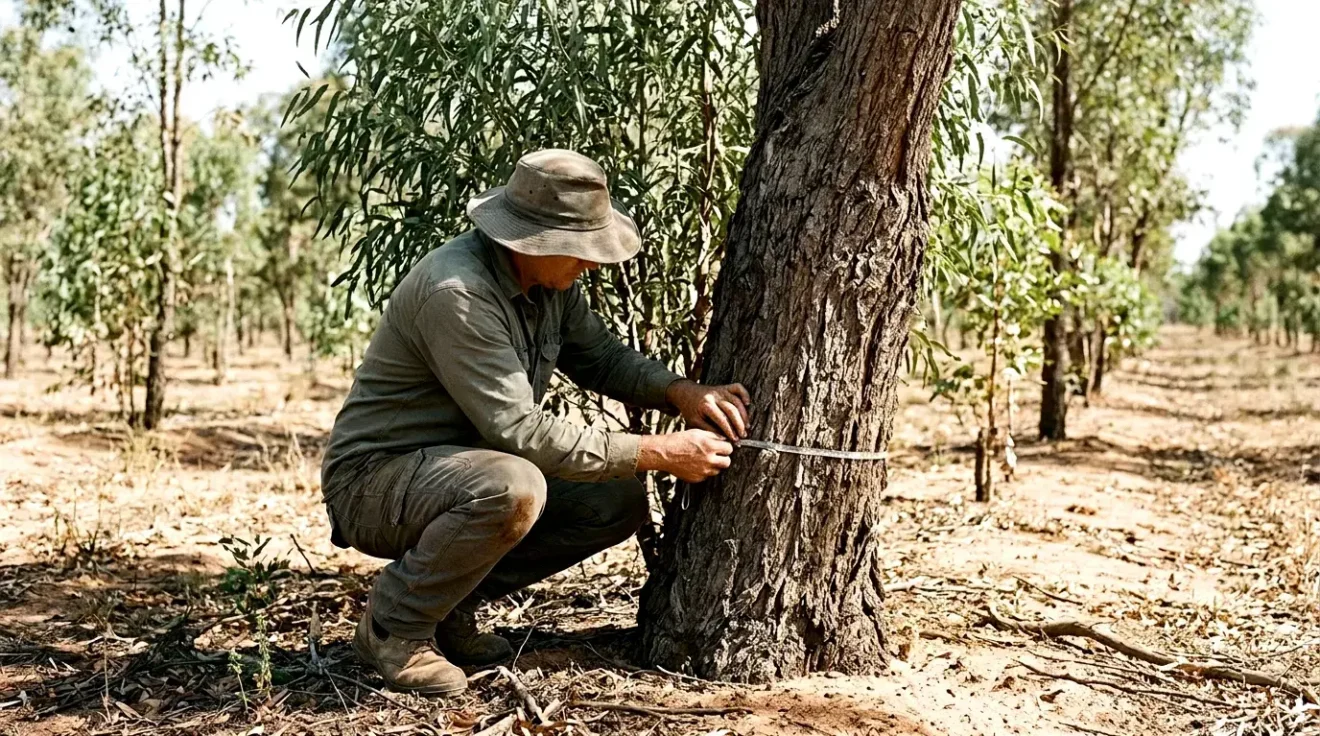
Australian forestry reporting provides a useful example of how production systems can be distinguished. According to the Australian Bureau of Agricultural and Resource Economics and Sciences (ABARES), Western Australian Santalum spicatum plantations are typically harvested when trees reach approximately 25 to 30 years of age, allowing sufficient heartwood and oil development. The same reporting identifies approximately 5,600 to 6,000 hectares of these plantations as of 2020–21. These figures describe a specific Australian production context, not a universal maturity threshold for every sandalwood species.
25–30 years
Typical harvesting maturity reported for Western Australian Santalum spicatum plantations. This is species- and production-system-specific information, not a general rule for all sandalwood.
Australian government data on non-wood forest products, ABARES, State of the Forests Report.
Plantation production can provide an alternative to pressure on wild populations, but cultivation alone does not prove ecological sustainability. Buyers must still investigate land-use history, biodiversity impacts, water management and the legitimacy of the plantation’s production records. The cheapest available sandalwood oil may also carry an elevated risk of substitution or undocumented sourcing, making unusually low prices a reason for additional investigation rather than an automatic purchasing advantage.
Ultimately, a responsible purchasing decision must consider the tree’s species, maturity, geographical origin and legal harvesting conditions together. This approach also provides a useful foundation for checking whether other botanical suppliers can substantiate their claimed farm or collection locations.
How to Verify the Farm Origin of Botanical Ingredients From a New Supplier?
Verifying the farm origin of a botanical ingredient requires evidence that connects the purchased batch to an identifiable cultivation or harvesting site. A supplier’s commercial address is not necessarily the ingredient’s place of production. Buyers should request a certificate of analysis, batch-level traceability records and the name of the actual farm or collection area, then compare the botanical identity, plant part and harvest year across the documentation.
The first distinction to establish is the difference between a supplier and an actual producer. A distributor, exporter or broker may have extensive product knowledge without owning or managing the farm. Some intermediaries describe themselves as producers because they coordinate cultivation or work closely with local growers. That relationship can be legitimate, but it should be documented rather than assumed.
Request the following information before accepting a new supplier:
- Botanical identity: the complete Latin name, including the species, and the plant part used.
- Production location: the farm name, geographical area or documented wild-collection zone.
- Harvest information: the harvest year, collection period and relevant production records.
- Batch documentation: a certificate of analysis and records linking the material to its production lot.
- Supply-chain participants: the grower, processor, exporter and any intermediaries involved.
These documents should be cross-checked rather than reviewed independently. For example, a certificate identifying a dried leaf extract from one botanical species should not be paired with a batch record describing another species or a different plant part. Differences in harvest years may also indicate that the supplier has combined materials from multiple production periods.
Next, establish whether the supplier can demonstrate a genuine relationship with the farm. Useful evidence includes farm visit arrangements, cultivation records, harvest calendars, cooperative agreements and photographs tied to a specific production period. Where appropriate, geolocated harvest information can strengthen verification, particularly when the sourcing region has conservation or land-use risks.
Third-party mapping resources and responsible-sourcing platforms may help buyers identify production areas and investigate geographical claims. However, a mapped location is not automatically proof that a specific shipment originated there. Independent verification should connect the location to the relevant supplier, production period and purchased batch.
Blended ingredients require additional scrutiny. An essential oil or botanical extract may combine materials from several farms or harvests. This does not necessarily make the ingredient unsuitable, but the supplier should explain how individual lots are recorded, segregated and combined. A traceability claim becomes unreliable if the producer cannot reconstruct which source batches contributed to the final product.
For small beauty businesses, an initial verification process can be practical without requiring an extensive external audit. The objective is to build a consistent documentary record that can be updated with each order and escalated when discrepancies appear.
A five-step supplier-origin verification checklist
- Request the supplier’s certificate of analysis and record the exact botanical Latin name, plant part and batch number in a procurement file.
- Obtain the actual farm or collection-site name and retain supporting geographical documentation identifying the production location.
- Request the harvest year and relevant cultivation or collection records, then compare these details against the certificate of analysis.
- Identify every intermediary and processing facility between the producer and the purchasing business, recording the responsible entity at each stage.
- Ask for an explanation of lot segregation and blending practices, then document any unresolved inconsistencies before approving the supplier.
Once the production origin is established, the next decision concerns the harvesting model itself. A documented farm does not automatically represent a better ecological outcome than a responsibly managed wild-collection area.
Wild Harvesting or Regenerative Farming: Which Better Supports Botanical Supply?
Neither wild harvesting nor regenerative farming is universally better for botanical supply. The more responsible option depends on the species’ regeneration capacity, its dependence on natural habitats, the ecological impact of cultivation and the governance of local production. Wild collection can support conservation when harvesting is controlled and communities benefit from protecting natural resources, while farming can reduce pressure on wild populations when it avoids habitat conversion and protects soil and water.
The first consideration is biological. Some botanical species regenerate relatively quickly after appropriate collection, whereas slow-growing trees and plants that depend on mature ecosystems may be more vulnerable to repeated extraction. Harvesting bark, roots, seeds or heartwood can also have very different effects on plant survival. Buyers therefore need species-specific information rather than a general sustainability claim.
A useful purchasing assessment compares four factors:
| Assessment criterion | Wild harvesting | Regenerative farming |
|---|---|---|
| Species regeneration | Depends on natural population recovery and harvesting limits. | Can support planned production and controlled plant replacement. |
| Habitat dependence | Can preserve natural habitats when collection remains within ecological limits. | Can protect biodiversity through diverse cultivation, but may damage ecosystems if land conversion occurs. |
| Community governance | Requires clear access rights, harvesting rules and fair benefit-sharing. | Requires responsible land management and fair relationships with agricultural workers and growers. |
| Production control | Depends on collection monitoring, species assessments and harvest records. | Can provide greater control over cultivation practices, harvest timing and production volumes. |
Well-managed wild harvesting can create an economic incentive to protect forests and other natural habitats. When local communities receive legitimate income from botanical resources, maintaining the ecosystem can become economically valuable. However, this potential benefit depends on secure resource rights, transparent trading arrangements and effective collection limits. It should not be assumed that all wild-harvesting operations deliver equitable community benefits.
The FairWild Standard 3.0 provides a structured framework for evaluating these conditions. Its assessment system contains seven principles and 24 criteria addressing ecological, socio-cultural and business requirements. These include species conservation, habitat protection, workers’ rights, community interests, legal compliance and responsible trading practices. It is a useful reference for buyers assessing wild-collected ingredients, although the actual certification scope and audit status must still be checked for the supplier concerned.
Regenerative farming requires equally specific scrutiny. The term is not, by itself, proof of a verified environmental outcome or a universally standardised cosmetic sourcing certification. Suppliers should explain the practices they actually implement, such as:
- Soil rebuilding and reduced soil disturbance.
- Polyculture or crop diversification instead of extensive monoculture.
- Water conservation and responsible irrigation management.
- Habitat protection and the preservation of ecological corridors.
- Responsible use of agricultural inputs and nutrient management.
For some fast-growing herbs, cultivated production may provide predictable supply while reducing pressure on natural populations. For slow-growing or habitat-dependent species, the ecological consequences of cultivation may be more complex. Replacing a diverse natural ecosystem with a plantation should not be considered sustainable simply because the crop is grown rather than collected.
For procurement teams, the practical objective is to select the production system that maintains ecological resilience while supporting reliable, transparent supply. That assessment must then extend to the finished ingredient, particularly when purchasing concentrated essential oils in bulk.
The Traceability Red Flags to Check Before Buying Bulk Essential Oils
Before buying bulk essential oils, beauty brands should verify that the oil’s botanical identity, analytical profile, batch number and production origin are consistent. A refusal to provide batch-specific GC/MS documentation, an unusually low price for a claimed high-value origin or vague descriptions of the oil’s composition should trigger additional checks. These warning signs do not independently prove fraud, but they indicate that the ingredient needs stronger verification before purchase.
Gas chromatography–mass spectrometry (GC/MS) is commonly used to examine the chemical composition of essential oils. The resulting analytical profile can help identify unexpected constituents, unusual proportions and potential inconsistencies with the declared botanical material. For example, an oil marketed as a particular species should have a chemical profile consistent with the expected composition of that species and its production conditions.
However, a GC/MS certificate should not be treated as conclusive proof of authenticity. Interpretation requires suitable reference information, knowledge of the botanical species and consideration of natural chemical variability. A document may also be outdated, generic or associated with a different production batch. Buyers should therefore check the sample identification, laboratory information, analysis date and batch reference.
Several warning signs deserve particular attention:
- No batch-specific analysis: the supplier provides only a generic specification sheet or refuses to identify the analysed sample.
- Unusually low pricing: the quotation is difficult to reconcile with the claimed species, origin and production method.
- Unclear product description: the supplier does not distinguish a genuinely plant-distilled oil from a synthetic fragrance or a natural-identical composition.
- Unexpected chemical constituents: the GC/MS profile contains unexplained compounds or proportions inconsistent with the declared material.
- Discontinuous batch identification: the batch number changes without supporting documentation when the product passes between processors or distributors.
High-value oils, including rose and sandalwood, warrant particular care because their commercial value can create incentives for dilution, substitution or adulteration. Cheaper essential oils, isolated fractions or synthetic compounds may be introduced into a product marketed under a more valuable botanical name. Chemical analysis can reveal inconsistencies, but additional testing may be needed to investigate specific adulteration mechanisms.
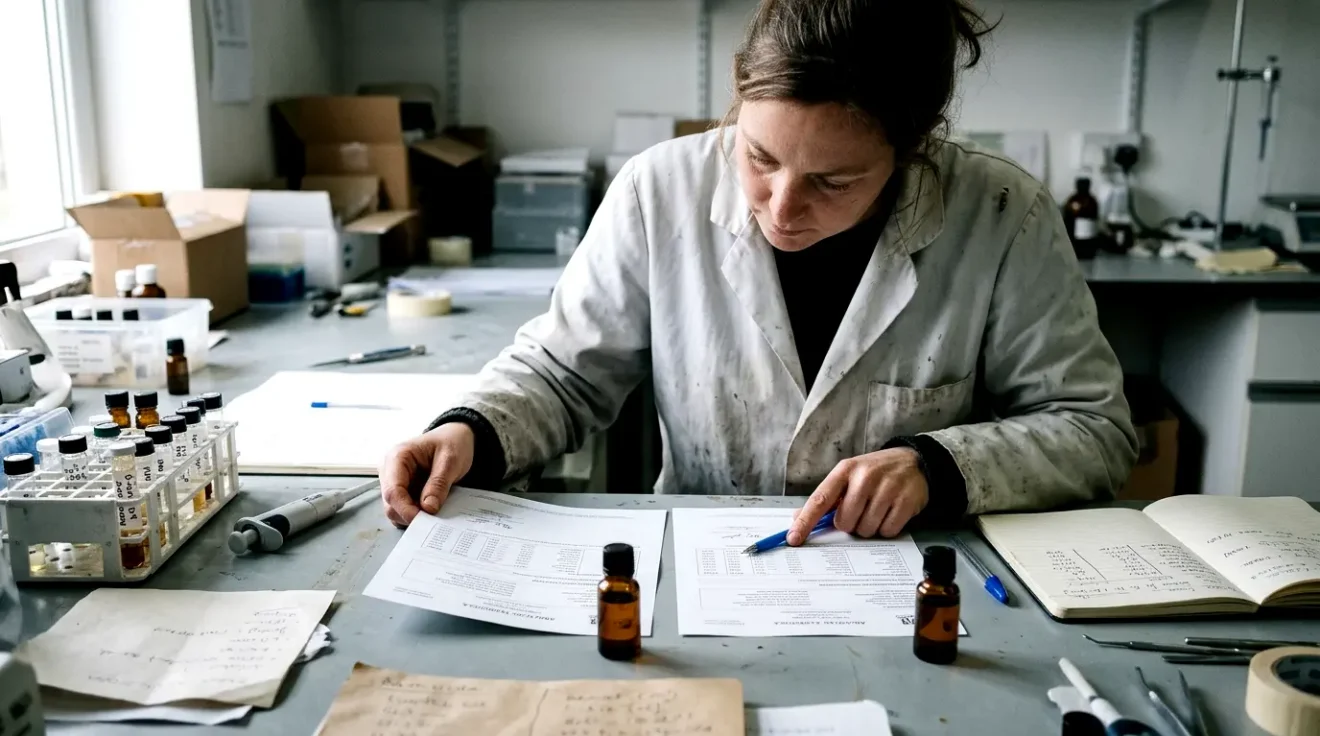
Traceability also needs to extend beyond the distillation facility. An oil may be distilled in one country, transported to another, blended with other batches and bottled by a third company. Each transfer creates an opportunity for information to become disconnected from the physical material. Brands should identify the distillation entity, the blending facility and the bottling operator, while checking that batch references remain traceable throughout these stages.
Smaller brands can strengthen their checks without immediately commissioning a full supplier audit. They can request documentation for the same batch at different purchasing stages, compare the certificates supplied with separate deliveries and retain sealed reference samples. Where inconsistencies remain, an independent laboratory can analyse a retained sample and compare the results with the supplier’s documentation.
These checks should be proportionate to ingredient value, sourcing risk and purchase volume. A high-risk botanical with a history of substitution deserves stronger verification than a readily available, low-risk ingredient with an established production history.
Even when an oil passes its initial quality checks, its production conditions can change between harvests. Regular supplier assessments are therefore necessary to ensure that traceability and quality remain reliable throughout the purchasing relationship.
When Should Cosmetic Brands Audit Seasonal Botanical Suppliers?
Cosmetic brands should schedule botanical supplier audits around the actual harvest calendar, not only their own purchasing or financial calendar. An assessment before harvesting can establish whether labour, collection permissions and infrastructure are ready, while an audit during or immediately after harvest can reveal how materials are collected, handled and stored. The appropriate timing depends on the botanical species, the production region and the risks associated with each processing stage.
A first-time supplier qualification should ideally take place before the initial commercial order. Where practical, visiting during the harvest period provides an opportunity to observe real production conditions rather than relying exclusively on documents prepared during quieter months. The assessment can examine harvesting methods, workforce conditions, collection volumes and the separation of different botanical materials.
Ongoing monitoring serves a different purpose. Once a supplier has been approved, periodic assessments should verify whether the production practices remain consistent and whether changes in the supply chain have been properly documented. Post-harvest inspections are particularly relevant for botanical materials requiring drying, sorting and storage before processing.
Seasonal production introduces several specific risks:
- Premature or delayed harvesting: financial pressure or unexpected demand may encourage producers to harvest outside the appropriate collection window.
- Moisture and mould: humid conditions can increase the risk of deterioration when drying and storage facilities are inadequate.
- Unrecorded additional sourcing: suppliers facing high demand may introduce material from third-party producers without adequately updating batch documentation.
- Inconsistent harvest volumes: weather and environmental conditions can affect the quantity of available botanical material.
- Weak segregation: different harvest periods or production locations may be mixed without sufficient records.
For small independent brands, conducting an on-site audit in every sourcing region may be financially or operationally unrealistic. A tiered verification approach can provide a more proportionate alternative. Local third-party inspectors may examine facilities and collection conditions, while cooperative certification and season-specific photographic evidence can help establish whether declared practices are being followed.
Documentary evidence should be tied to the relevant production period. A photograph of a drying facility taken several years earlier does not establish its condition during the latest harvest. Similarly, a general supplier declaration does not prove that a specific batch was handled under the stated conditions.
Audit frequency should reflect the supplier’s risk profile. A newly approved supplier, a high-value wild-collected species or a production region experiencing significant seasonal variability may require closer monitoring than an established low-risk agricultural source. Material changes to the farm, harvesting method, processing facility or intermediary network should also trigger a review.
For practical planning, buyers can build a seasonal audit calendar that records the expected harvest window, evidence collection period, inspection responsibilities and batch approval requirements. This turns supplier monitoring into a recurring procurement control rather than an occasional compliance exercise.
Monitoring seasonal suppliers protects both ingredient quality and ecological integrity. Nevertheless, even a well-managed supply chain cannot be evaluated through cultivation and harvesting practices alone: the wider environmental footprint also depends on how botanical ingredients are processed and marketed.
Why Doesn’t a Plant-Based Skincare Label Guarantee a Low Environmental Footprint?
A plant-based skincare label does not guarantee a low environmental footprint because it describes the origin or composition of an ingredient, not necessarily the conditions under which it was produced. Environmental performance depends on the source of the plant material, the intensity of cultivation or harvesting and the processing required to turn the raw material into a cosmetic ingredient. A botanical ingredient can therefore be plant-derived while still contributing to deforestation, resource depletion or energy-intensive manufacturing.
The first variable is geographical and ecological origin. An ingredient obtained from a crop associated with habitat conversion may carry substantial environmental risks even when the finished cosmetic is marketed as natural or plant-based. Palm oil derivatives illustrate this distinction: their botanical origin does not remove the deforestation concerns associated with certain production systems.
The second variable is cultivation intensity. Agricultural inputs, irrigation, land requirements, transport and harvest practices all influence the environmental profile of a botanical raw material. A crop grown through intensive monoculture may create different ecological pressures from the same species cultivated through diversified agricultural practices.
The third variable is processing chemistry. Extracting useful compounds from plants can require solvents, energy, water and additional purification stages. A heavily processed plant-derived surfactant or extract may consequently have a substantial manufacturing footprint. A carefully sourced alternative from another material category may sometimes perform better under a particular environmental assessment, although a reliable comparison requires equivalent product functions and appropriate life-cycle boundaries.
In the United States, the Food and Drug Administration has not established a regulatory definition of the term natural for cosmetic labelling. Cosmetic claims must nevertheless remain truthful and not misleading. This distinction matters because a natural or plant-based description does not independently demonstrate sustainable cultivation, responsible harvesting or ethical labour conditions.
Beauty brands should therefore replace broad marketing language with verifiable supplier questions:
- Where was the botanical material cultivated or collected?
- Does production involve habitat conversion or pressure on vulnerable wild populations?
- Which agricultural or harvesting practices are used?
- What processing methods and resources are required?
- Can the supplier provide evidence supporting environmental and social claims?
For buyers, the most important implication is that the environmental profile of a cosmetic ingredient is largely influenced before formulation begins. Once a raw material has entered the manufacturing process, many of its upstream sourcing impacts have already occurred. Ingredient selection should therefore include farm-level and harvest-level evidence rather than relying on the language used on a finished product label.
This also explains why traceability is more than an administrative requirement. It allows brands to investigate the actual production system, identify environmental risks and distinguish a substantiated sourcing claim from an attractive but unsupported description.
Responsible botanical procurement therefore begins with evidence about the ingredient itself. The next consideration is how harvest timing influences both the quality of the material and the ecological capacity of the plant to regenerate.
Key Takeaways Before Evaluating Seasonal Supply
- Botanical species, plant part and growth stage determine which harvesting conditions are appropriate.
- Seasonal chemical variation should be anticipated through harvest records and analytical comparisons rather than treated automatically as a quality failure.
- Climate variability makes supplier flexibility and plant-readiness monitoring increasingly important for long-term procurement planning.
Why Does Harvest Season Change the Composition of Cosmetic Plant Extracts?
Harvest season changes the composition of cosmetic plant extracts because plants produce and accumulate secondary metabolites according to their development stage and environmental conditions. Essential oil content, aromatic compounds and other phytochemicals can vary between vegetative growth, flowering and fruiting. Consequently, the same botanical species harvested at different moments may produce extracts with different chemical profiles, yields and formulation characteristics.
Secondary metabolites are compounds involved in plant defence, communication and adaptation to environmental conditions. Their production can respond to plant age, sunlight, temperature, water availability and other seasonal influences. The concentration of a particular compound may therefore increase or decrease as the plant develops.
For aromatic plants, the flowering stage can be particularly relevant because essential oil yield and composition may change during the transition between vegetative growth and flowering. However, there is no universal optimal harvest stage. The appropriate collection period depends on the species, the plant organ used and the chemical constituents the producer aims to obtain.
A 2024 scientific review indexed in PubMed, Harvest time optimization for medicinal and aromatic plant secondary metabolites, examines the influence of harvesting time, plant age and environmental conditions on secondary metabolite production. Its findings support a species-specific approach to harvest planning rather than a single calendar applicable to all botanical ingredients.
For cosmetic manufacturers, seasonal variability has direct quality-control implications. Two batches from the same species may differ chemically without either being defective. Brands should therefore request harvest-date documentation and compare analytical certificates across production periods to identify expected variations and determine whether formulation adjustments are necessary.
Seasonality also has a conservation dimension. Harvesting outside the appropriate period can interfere with reproduction or recovery, depending on the plant species and the part collected. Removing flowers before seed production, extracting roots from vulnerable populations or collecting material during a critical regeneration period may create ecological pressure even when the harvesting volume appears modest.
The quality and sustainability arguments consequently converge on the same principle: harvest timing should follow the biological requirements of the species. Suppliers should be able to explain how they determine plant readiness and how collection schedules respond to local growing conditions.
Climate variability introduces another challenge. Traditional harvesting windows may become less predictable when rainfall patterns, temperature and growing conditions change. Long-term contracts based exclusively on fixed calendar dates may therefore become less reliable than arrangements that allow harvest periods to adapt to observed plant development.
Brands can reduce this risk by recording the actual collection date, production location, relevant environmental observations and analytical results for each incoming batch. Comparing these records over successive harvests helps distinguish natural seasonal variation from changes in supplier practices or raw-material quality.
Seasonal sourcing decisions therefore influence more than the chemical composition of an ingredient. They also shape the long-term availability of botanical resources and the ability of brands to maintain reliable production without exceeding ecological limits.
Which Sustainable Beauty Practices Actually Reduce Waste at Home?
The most effective sustainable beauty practices reduce unnecessary product consumption, prevent premature disposal and extend the useful life of packaging. Choosing recyclable or refillable containers can help, but these measures deliver meaningful benefits only when products are used efficiently and packaging is actually reused or processed through an available waste-management system. Consumers can support responsible botanical sourcing while reducing the environmental impact of their everyday beauty routines.
Packaging often receives the greatest attention because it is immediately visible. However, buying products that are never fully used, applying excessive quantities or replacing items before they are finished can also create avoidable waste. Preventing unnecessary purchases and using appropriate quantities are therefore practical starting points.
Consumers can make a difference by adopting several straightforward habits:
- Use products efficiently: follow the recommended application amount rather than assuming that more product produces better results.
- Finish existing products: avoid opening several similar products simultaneously when doing so increases the likelihood of expiry or disposal.
- Choose suitable packaging: consider durability, material composition and whether the container can be reused or recycled locally.
- Use refill systems repeatedly: retain and reuse the primary container rather than purchasing a refill once and discarding the original packaging.
- Check local recycling rules: identify which materials are actually accepted by the local waste-management system.
Refill systems deserve particular scrutiny. A refill model does not automatically reduce waste simply because the product is sold in a smaller or lighter package. Its environmental benefit depends on the durability of the original container, the number of times it is reused and the materials required to manufacture and transport replacement packaging.
For example, a refill pouch purchased once and then discarded may provide limited benefits if the original container is not reused. By contrast, a durable container used repeatedly can reduce the need for new primary packaging, provided that the refill system itself does not introduce disproportionate material or transport impacts.
End-of-life labels also require careful interpretation. Terms such as biodegradable and recyclable do not guarantee that packaging will be processed successfully after disposal. Mixed materials, residual cosmetic products, adhesives and local infrastructure limitations can all affect whether a package can enter an appropriate recovery system.
Consumers should therefore check local collection guidance instead of assuming that every container carrying a recycling symbol belongs in household recycling. Packaging made from multiple inseparable materials may require different treatment from a single-material container.
These everyday choices connect directly to the broader question of ethical botanical sourcing. A brand that invests in traceable agricultural production, responsible harvesting and transparent ingredient documentation is also better positioned to examine the environmental impact of its packaging and manufacturing decisions.
Purchasing decisions can reinforce these practices. Consumers can look beyond plant-based or natural claims and examine whether a company identifies botanical species, explains sourcing origins and provides credible information about its suppliers. A transparent brand makes it easier to distinguish substantive environmental commitments from unsupported marketing statements.
For consumers and independent beauty brands alike, the most credible progress comes from combining efficient product use, durable packaging, transparent ingredient sourcing and evidence-based environmental claims. Responsible purchasing becomes more meaningful when it rewards businesses that can demonstrate how their botanical materials are produced and how their products are designed to minimise avoidable waste.
What documents should a beauty brand request before purchasing botanical ingredients?
Beauty brands should request a batch-specific certificate of analysis, the complete botanical Latin name, the plant part used, the harvest year and documentation identifying the actual farm or wild-collection area. Additional records should identify intermediaries, processing facilities and any blending operations. The documents should be cross-checked to ensure that the botanical identity, production origin and batch references remain consistent.
Is wild-harvested botanical material always less sustainable than farm-grown ingredients?
No. Responsible wild harvesting can support biodiversity and local livelihoods when collection volumes, species regeneration and community rights are properly managed. Cultivation can reduce pressure on wild populations but may also cause habitat conversion, monoculture-related impacts and excessive resource use. The appropriate choice depends on the species, its ecological requirements and the production system. The FairWild Standard 3.0 provides a useful framework for assessing sustainable wild collection.
How can small beauty brands verify botanical suppliers without conducting expensive on-site audits?
Smaller brands can combine batch-specific documentation, farm identification, harvest records, supplier declarations, photographs linked to the production period and independent laboratory testing. Third-party local inspectors and cooperative certification can provide additional assurance when direct visits are impractical. Verification should be proportional to the botanical ingredient’s conservation, adulteration and traceability risks.
Does a natural or plant-based cosmetic ingredient automatically have a lower environmental impact?
No. Plant-derived ingredients can involve deforestation, intensive agriculture, high water consumption, resource-intensive extraction and long supply chains. Environmental performance depends on the ingredient’s origin, cultivation or harvesting practices, processing requirements and transport. In the United States, the FDA has not established a regulatory definition of natural for cosmetic labelling, so the term should not be treated as evidence of environmental sustainability.
Why should cosmetic brands request harvest dates for botanical extracts?
Harvest dates help brands interpret natural variations in botanical composition and verify whether collection occurred during an appropriate developmental stage. Seasonal conditions can influence secondary metabolite concentrations, essential oil profiles and extraction yields. Recording harvest dates alongside batch-specific analytical results helps manufacturers manage formulation consistency while assessing whether harvesting practices respect the regeneration requirements of the species.