

A holistic wellness routine does not need to involve an elaborate skincare collection, a rigid morning schedule or an hour of evening rituals. For busy adults, the most useful approach is to connect a few manageable habits: gentle skincare, sufficient rest, regular movement, hydration and simple ways to unwind. These habits support everyday wellbeing while helping natural beauty care become part of ordinary life rather than another demanding responsibility.
The key is to work with the week as it actually happens. A short evening routine after a late meeting, a walk during a lunch break or a consistent wind-down cue before sleep can be more sustainable than an ambitious programme that disappears whenever work becomes demanding. Natural products can play a role, but using more products does not automatically produce better results. A small, appropriate selection combined with realistic lifestyle habits is a more practical foundation.
Building this routine means understanding what affects the skin, choosing habits that fit available time and adapting them when circumstances change. It also means recognising that consistency is not perfection: a shortened routine on a difficult day still counts as self-care.
A Practical Approach to Everyday Holistic Wellness
- Prioritise sleep, hydration, movement and stress management alongside a simple skincare routine.
- Use existing products and attach short self-care habits to activities already present in the working day.
- Adapt the routine to energy levels, shift patterns and budget instead of following rigid daily rules.
- Why Does Poor Sleep Make Your Complexion Look Duller the Next Morning?
- How to Create a 10-Minute Evening Self-Care Ritual Without Buying More Products?
- A Warm Bath or a Short Walk: Which Better Fits Your Evening Wind-Down?
- Why Overly Strict Self-Care Routines Can Increase Everyday Stress
- When to Fit Self-Care Into a Rotating Shift Work Schedule?
- How to Build a Personal Wellness Routine on a Limited Monthly Budget?
- Why Can a Familiar Bedtime Scent Become Associated With Feeling Sleepy?
- How to Make Natural Beauty Habits Part of a Healthier Personal Wellness Lifestyle?
Why Does Poor Sleep Make Your Complexion Look Duller the Next Morning?
Poor sleep can make the complexion look duller because sleep restriction is associated with measurable changes in skin hydration, water loss and facial appearance. During normal sleep, the body maintains processes involved in tissue maintenance and fluid regulation. When sleep is shortened or fragmented, the skin may look less bright and feel less comfortable the following morning. These changes do not mean that a single difficult night has permanently damaged the skin.
One experimental study published in Sleep Medicine examined 24 healthy women aged 30–55 who normally slept well. Participants experienced two consecutive nights with only three hours of sleep per night. Researchers recorded a significant decrease in skin hydration and an increase in transepidermal water loss. Facial brightness and saturation also decreased. These findings provide a measurable indication that substantial short-term sleep restriction can affect both skin characteristics and visible appearance.
24 participants
The study involved 24 healthy women aged 30–55 and investigated two consecutive nights of restricted sleep. Its small, female-only sample limits generalisation to other populations and ordinary variations in sleep.
Experimental research published in Sleep Medicine, 2022.
It is useful to distinguish temporary changes in appearance from longer-term skin concerns. Dehydration, disrupted sleep and ordinary morning fluid distribution can contribute to a tired-looking face. Darker under-eyes or reduced brightness may also be influenced by genetics, allergies, lighting and individual skin characteristics. A dull complexion is therefore not proof of one specific problem.
Before reaching for additional cosmetics, consider three practical questions:
- Was sleep insufficient? Look at the previous night’s duration and whether interruptions affected rest.
- Was hydration adequate? Consider whether normal fluid intake was maintained during the day.
- Was the evening unusually demanding? Late meals, alcohol, screen exposure and stress may have disrupted the usual wind-down routine.
A sensible morning response is to drink water if thirsty, cleanse gently when needed, apply an appropriate moisturiser and use broad-spectrum sunscreen during daytime exposure. Avoid trying several new products at once to correct a temporary appearance change.
The broader lesson is that skin appearance reflects more than topical care. Prioritising rest provides a more sustainable foundation for natural beauty habits than repeatedly purchasing products to compensate for an exhausting week.
When sleep is consistently disrupted or fatigue persists, addressing the underlying sleep difficulty is more useful than simply changing skincare products. This foundation also makes a short evening ritual easier to establish.
How to Create a 10-Minute Evening Self-Care Ritual Without Buying More Products?
A useful 10-minute evening self-care ritual can combine the skincare products already in the bathroom with one calming activity. The aim is not to complete a complicated beauty routine but to create a predictable transition between work and rest. A few minutes of gentle cleansing, a simple moisturising step and a short period of stretching or breathing can provide structure without increasing spending or adding unnecessary products.
Start by dividing the available time into manageable steps. The following structure is an example rather than a medically prescribed schedule:
- Minutes 1–3: Gentle cleansing. Remove everyday dirt, sweat and sunscreen with a cleanser already suited to the skin. Avoid aggressive scrubbing or unnecessary repeated washing.
- Minutes 4–5: Basic hydration. Apply an existing moisturiser appropriate for the skin’s needs. There is no requirement to introduce a serum, mask or additional treatment.
- Minutes 6–8: Release physical tension. Try gentle shoulder rolls, comfortable stretching or slow breathing while avoiding forceful movements.
- Minutes 9–10: Prepare for rest. Lower the lighting, put the phone aside and make the sleeping environment comfortable.
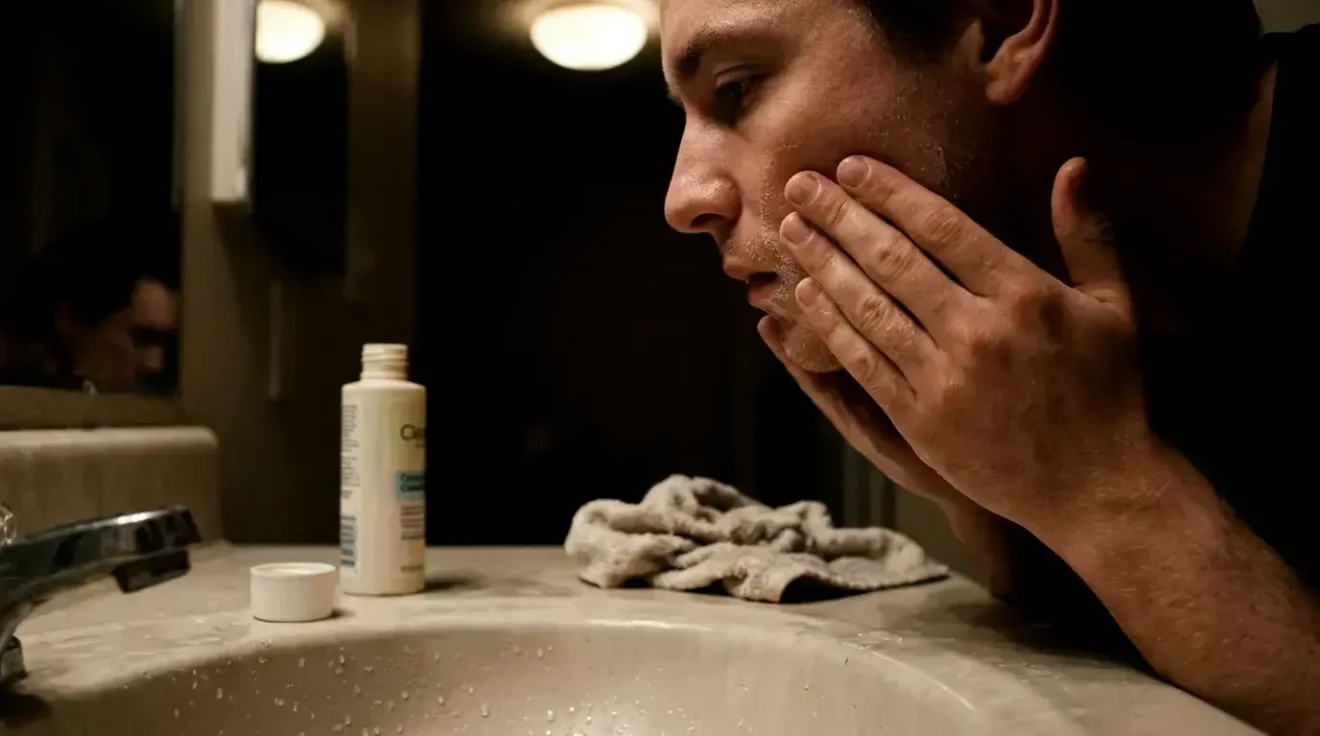
The most important principle is substitution rather than accumulation. When a new product seems appealing, ask which existing step it would replace and whether that step is genuinely missing. If the current cleanser and moisturiser meet everyday needs, another product may add expense and complexity without a meaningful benefit.
Dermatological guidance supports keeping basic skincare manageable. The American Academy of Dermatology recommends a straightforward approach built around cleansing, moisturising and sun protection. Its consumer advice also explains that limiting the number of products can help reduce costs and the possibility of irritation. A simple routine is not necessarily an incomplete routine.
A short ritual can also work as a behavioural cue. Repeating the same sequence after closing a laptop or brushing teeth gradually makes the transition more familiar. The benefit is not that a particular sequence guarantees sleep, but that a predictable activity can make it easier to stop working and begin winding down.
For sensitive skin, introduce no unnecessary changes and discontinue products that cause irritation. If a prescribed treatment is part of the routine, do not remove it simply to make the ritual shorter.
Once the cosmetic steps are simplified, the remaining minutes can be adapted to the kind of day that has just ended. For some evenings, a warm bath is appropriate; for others, a short walk may be more useful.
A Warm Bath or a Short Walk: Which Better Fits Your Evening Wind-Down?
A warm bath and a short evening walk can both support a transition away from work, but they serve different needs. A warm bath provides passive relaxation and may support sleep when taken at an appropriate time before bedtime. A walk adds gentle movement, changes the environment and can help interrupt a stressful or sedentary day. The better option depends on physical energy, mental tension, available time and proximity to sleep.
A warm bath works partly through thermoregulation. After exposure to warm water, the body gradually loses heat, and this subsequent temperature change is associated with conditions that can support sleep onset. A systematic review and meta-analysis published in Sleep Medicine Reviews examined 17 studies, with 13 contributing quantitative data. It found that passive body heating through a warm shower or bath could improve certain sleep outcomes.
The review identified water temperatures of approximately 40–42.5°C and bathing one to two hours before bedtime as conditions associated with improvements in sleep onset latency and other sleep measures. However, these findings should not be treated as universal requirements. Individual comfort, health considerations and personal schedules matter, and the research does not establish that bathing directly improves skin appearance.
For a more sedentary day, a short walk may be the more practical choice. Gentle outdoor movement can provide a break from screens, introduce a change of scenery and help create psychological distance from unfinished work. It does not need to become a demanding workout: a comfortable pace and a manageable route are sufficient for a simple evening transition.
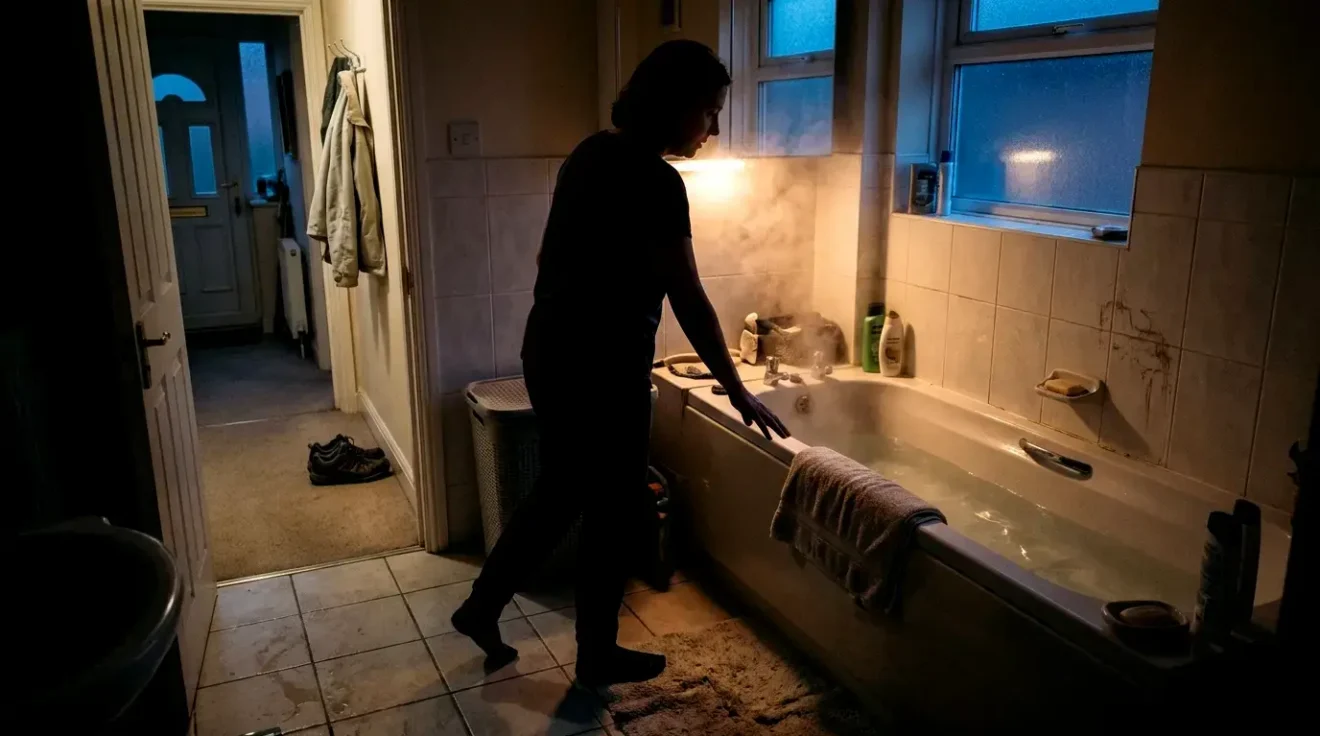
The following comparison can help match the activity to the day’s demands:
| Consideration | Warm bath | Short walk |
|---|---|---|
| Best suited to | Physically tiring days when relaxation is the priority | Sedentary or mentally demanding days when movement is welcome |
| Main contribution | Passive relaxation and possible support for sleep | Gentle movement and a break from screens |
| Practical requirements | Bathroom access, preparation and time for bathing | Comfortable footwear and a suitable route |
| Schedule flexibility | More suitable when the evening allows preparation and recovery time | Can be shortened or fitted into a fragmented evening |
Neither activity is compulsory. On an exhausting evening, resting without adding another task may be the most appropriate decision. Likewise, people who find warm baths uncomfortable or unsuitable can choose another relaxing activity. Safety and personal comfort should always take priority over following a suggested temperature or schedule.
Alternating between walking, bathing and quiet rest is a realistic approach. The objective is to create a transition that supports recovery without turning the evening into another performance target.
Why Overly Strict Self-Care Routines Can Increase Everyday Stress
Overly strict self-care routines can increase everyday stress because they transform supportive habits into obligations that must be completed perfectly. When every skincare step, workout, breathing exercise and bedtime activity becomes compulsory, missing one item can trigger guilt instead of relief. This pressure can make an otherwise useful routine harder to maintain, particularly during demanding working weeks.
The problem often begins with unrealistic expectations. A person may establish an ambitious morning routine, a multi-step skincare programme and a fixed evening schedule without considering commuting, family responsibilities, deadlines or changing energy levels. The plan may look attractive on paper but fail under ordinary working conditions.
When a day becomes busy, the entire routine can feel impossible. Someone who misses a morning skincare step may decide that the day is already off track. A missed evening ritual may then become a reason to abandon the following day as well. This all-or-nothing response creates an unnecessary cycle of starting, stopping and self-criticism.
A more sustainable alternative is the flexible-minimum method. Each habit has a standard version and a smaller version that remains achievable on difficult days.
- Standard skincare: gentle cleansing, moisturising and daytime sun protection where appropriate. Minimum skincare: complete the essential cleansing and moisturising steps relevant to the situation.
- Standard movement: a planned walk or exercise session. Minimum movement: a short, comfortable period of walking or gentle mobility.
- Standard wind-down: a longer period away from work and screens. Minimum wind-down: a few minutes of quiet breathing and preparing the bedroom.
- Standard bedtime preparation: the usual evening sequence. Minimum bedtime preparation: reduce distractions and make the sleeping environment comfortable.
The minimum version is not a failed version of the standard routine. It is a deliberate way of preserving continuity without requiring ideal conditions. Some days genuinely call for recovery rather than additional activity, and flexibility makes room for that.
A useful self-check is to examine the emotional response to missing a step. If skipping one product creates anxiety, if a shortened routine feels like failure, or if an unexpected work commitment causes significant self-criticism, the routine may be too demanding.
It is also important to distinguish healthy consistency from compulsive behaviour. Self-care should support everyday functioning, not interfere with work, relationships, rest or financial priorities. A routine that requires constant monitoring or creates distress deserves simplification.
Five Practical Steps to Simplify Your Wellness Routine
- Write down the skincare products used during a typical week and identify the genuinely necessary daily steps. Deliverable: a short list of essential products.
- Choose one existing daily anchor, such as brushing your teeth or closing your laptop. Deliverable: one clearly defined habit cue.
- Set a realistic standard duration for the evening ritual. Deliverable: a routine that fits within ten minutes.
- Define a minimum version for particularly demanding days. Deliverable: a shorter alternative with no unnecessary steps.
- Review the routine after one working week and remove any activity that consistently creates pressure. Deliverable: a revised, manageable weekly routine.
Once flexibility becomes part of the routine, it is easier to accommodate another common challenge: working hours that change from one week to the next.
When to Fit Self-Care Into a Rotating Shift Work Schedule?
People working rotating shifts should generally organise self-care around their actual waking and sleeping periods rather than conventional morning and evening clock times. A wind-down routine at 8 a.m. can be just as relevant before daytime sleep as one at 10 p.m. is before overnight sleep. The important consideration is a consistent transition into the person’s intended rest period.
Rotating schedules can make fixed wellness routines impractical. A worker may finish an overnight shift, sleep during the day, wake in the afternoon and return to work that evening. Following a conventional evening skincare and bedtime schedule would ignore the actual structure of that day.
Instead, divide the routine into three adaptable versions:
- Before a night shift: use a brief skincare routine and prepare essential items for work. Avoid adding lengthy activities that reduce available rest.
- On a more predictable working day: follow the standard short routine, linking it to waking or the end of the working period.
- On a day off: allow additional time for a relaxing bath, gentle movement or another restorative activity if it feels helpful.
These versions are organisational options, not scientifically required routines. Their purpose is to reduce the effort involved in adapting to different working hours.
Sleep environment and light exposure deserve particular attention. The National Institute for Occupational Safety and Health (NIOSH), part of the US Centers for Disease Control and Prevention, provides occupational guidance for night and evening shift workers. Its recommendations include going to bed after arriving home from a night shift, keeping the sleep environment very dark and reducing disturbances that interfere with rest.
These practical measures can be more relevant to recovery than the exact order of cosmetic products. Daytime sleep may be interrupted by daylight, household activity or environmental noise. Preparing a dark, quiet sleeping space helps protect the available sleep opportunity.
For additional detail, NIOSH guidance on sleep after night shifts explains practical ways of managing sleep following evening and overnight work. The resource was last reviewed in March 2020, so it should be understood as occupational educational guidance rather than a newly issued 2026 recommendation.
Another common mistake is treating the end of a shift as the equivalent of a conventional evening. Someone finishing work at 7 a.m. may need to prioritise sleep rather than a long walk, a bath or additional household tasks. A short cleansing and preparation sequence may be enough before going to bed.
With the timing adapted to real working conditions, the remaining challenge is making the routine financially sustainable. A manageable selection of products can help achieve that without sacrificing essential care.
Key Takeaways Before Choosing Your Everyday Wellness Budget
- Prioritise essential skincare and lifestyle habits instead of purchasing products for every possible concern.
- Keep the routine adaptable to available time, working patterns and personal energy levels.
- Evaluate the usefulness of each product before replacing it or adding another item to the bathroom shelf.
How to Build a Personal Wellness Routine on a Limited Monthly Budget?
A personal wellness routine can remain effective on a limited monthly budget when spending is organised around essential needs rather than the number of products purchased. A small selection of suitable skincare products, combined with free or inexpensive habits such as walking, stretching and maintaining a regular sleep environment, can provide a practical foundation. The goal is to use resources deliberately, not to buy the cheapest possible version of everything.
Natural beauty products can be appealing, but natural ingredients are not automatically safer, more effective or more economical. Formulation, skin compatibility, storage requirements and individual needs matter more than marketing descriptions. A versatile moisturiser that suits the skin and is used consistently may be more useful than several specialised products that remain unopened.
Start by prioritising what is used regularly:
- Gentle cleansing: choose a cleanser appropriate for the skin and avoid unnecessary repeated washing.
- Moisturising: select one suitable product that supports the skin’s hydration needs.
- Sun protection: make broad-spectrum sunscreen an essential daytime consideration. The American Academy of Dermatology recommends SPF 30 or higher.
- Optional treatments: consider additional products only when they address a specific need and fit the available budget.
Tools, devices, single-purpose masks and elaborate accessories can usually be postponed when money is limited. Pantry ingredients such as plain oils should not automatically replace formulated products either. Their suitability depends on the ingredient, formulation, skin type and intended use. Food-grade does not necessarily mean appropriate for every topical application.
A particularly useful budgeting habit is the finish-before-replacing rule. Do not open another product simply because a new option looks attractive. Finish the current item when appropriate, or replace it when it expires or becomes unsuitable. This reduces unnecessary purchases and helps prevent natural formulations with limited shelf lives from being forgotten.
The American Academy of Dermatology’s recommendations on affordable skincare explain how a straightforward routine can help control costs. The guidance also covers product expiration, storage and the potential irritation associated with using too many products. Expiration and storage requirements should always be checked on individual product labels rather than assumed to be identical across formulations.
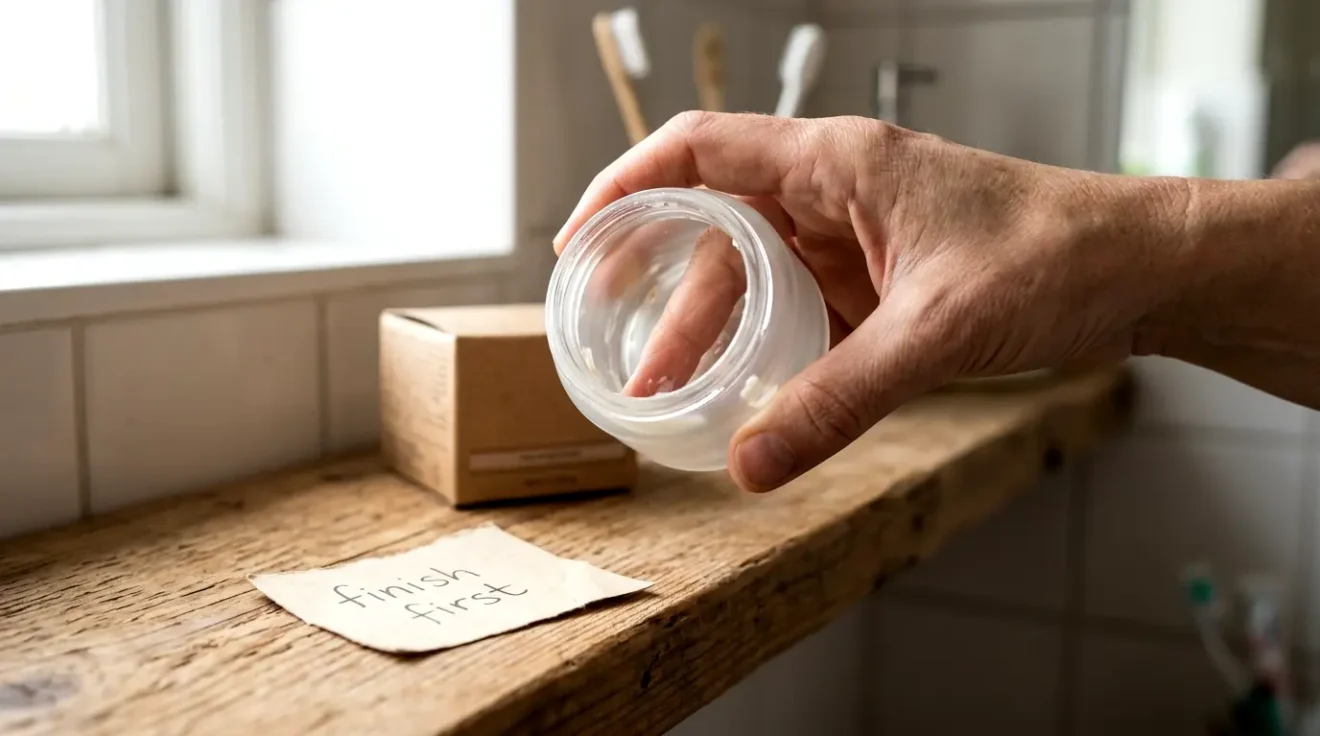
Budgeting also means avoiding repeated bargain purchases that do not meet actual needs. Buying several inexpensive products that cause irritation or remain unused can become more expensive over time than selecting one suitable item carefully.
Before committing to a new formulation, check the ingredients, suitability for the intended use and storage instructions. When possible, start with a smaller size. A patch test, performed according to the product’s instructions, can help identify possible irritation before broader use, although it cannot guarantee that an adverse reaction will never occur.
For a realistic monthly budget, separate essential skincare from optional wellness spending. Walking, comfortable home stretching, a regular bedtime cue and time away from screens do not require a new beauty purchase. These habits can provide meaningful structure without creating another recurring expense.
Once the product selection is under control, attention can shift towards another inexpensive habit: creating a familiar sensory cue that helps distinguish the end of the working day from the beginning of rest.
Why Can a Familiar Bedtime Scent Become Associated With Feeling Sleepy?
A familiar bedtime scent can become associated with feeling sleepy through repeated learning. When the same smell is consistently present during a relaxing pre-sleep routine, the brain may gradually connect that sensory experience with the transition towards sleep. Over time, encountering the scent can become a familiar reminder that the working day is over and rest is approaching. However, this association is individual and does not mean that a fragrance directly causes sleep.
The principle is similar to other learned environmental cues. A particular sound, lighting arrangement or familiar activity may become associated with a predictable daily event through repetition. In the same way, a gentle scent can become part of a person’s established bedtime environment.
For a practical approach, choose one scent that is already familiar and comfortable. It could be a subtle fragrance from an existing personal-care product, a familiar herbal note or another suitable sensory element. Reserve it for the pre-sleep period and combine it with a consistent sequence, such as washing the face, changing into comfortable clothes and lowering the lights.
Repetition matters more than novelty. Frequently changing fragrances or introducing several competing sensory cues can make the routine less predictable. Using the chosen scent throughout the day may also make it less distinctive as an evening signal. The objective is to create a familiar association, not to find an increasingly powerful fragrance.
There are also important limitations. Research on learned associations does not establish that one particular natural fragrance reliably improves sleep for everyone. Individual preferences, environmental conditions and sensitivity to fragrances can influence the experience. Strong fragrances may be unpleasant or trigger headaches, respiratory symptoms or irritation in some people.
Essential oils deserve particular care. Natural origin does not guarantee safety, and concentrated oils should not automatically be applied directly to the skin or used around pets and other household members without considering relevant precautions. A fragrance-free routine is equally valid when scents are uncomfortable or unsuitable.
A simple way to experiment is to:
- Choose one familiar, mild scent that is already comfortable.
- Associate it with the same short wind-down activities.
- Use it consistently before the intended sleep period.
- Observe whether the cue feels relaxing without expecting an immediate physiological effect.
- Stop using it if it causes discomfort or irritation.
The same approach can be applied to lighting, background noise and the order of evening activities. Combining familiar cues may make the transition more predictable, although none should be treated as a guaranteed sleep intervention.
This sensory habit also illustrates a broader principle: natural beauty and wellbeing practices are easier to sustain when they connect with ordinary activities rather than becoming separate projects.
How to Make Natural Beauty Habits Part of a Healthier Personal Wellness Lifestyle?
Natural beauty habits become part of a healthier personal wellness lifestyle when they are connected to everyday behaviours that support overall wellbeing. Skincare is one component of this approach, alongside sleep, hydration, movement and stress management. A suitable topical routine can help maintain skin comfort, but it cannot replace the wider conditions that influence how a person feels and looks. The most sustainable approach combines appropriate products with small, repeatable lifestyle habits.
Think of natural beauty as an integrated practice rather than a separate programme. A gentle cleanser and moisturiser may form the basic skincare foundation, while adequate rest and regular physical activity support general health. Daytime sun protection remains important even when the rest of the routine focuses on natural ingredients. These elements have different purposes and should not be treated as interchangeable.
The next step is to attach each habit to an existing daily anchor. This reduces the need to remember a new task and makes the routine easier to adapt when working hours change.
- After brushing your teeth: complete the relevant morning or evening skincare steps.
- Before making coffee or breakfast: drink water if thirsty and prepare for the day.
- After closing your laptop: take a short walk, stretch or begin the evening wind-down.
- Before going to sleep: reduce distractions and prepare a comfortable sleeping environment.
- On a day off: allow additional time for an activity that feels restorative without making it compulsory.
These anchors are particularly useful during busy periods because they connect self-care to events that already happen. They also accommodate people who work irregular hours: brushing teeth and preparing for sleep remain meaningful anchors whether bedtime occurs in the evening or during daylight hours.
Consistency should not be confused with immediate results. Natural skincare products do not automatically produce faster or better outcomes than conventional formulations, and lifestyle changes rarely transform skin overnight. A routine should be evaluated over a reasonable period, taking account of the product’s intended purpose, individual skin characteristics and the consistency of use.
It is equally important to recognise when a concern requires more than a lifestyle adjustment. Persistent irritation, unexplained changes in the skin, worsening acne or other ongoing symptoms may require advice from a qualified healthcare professional. Replacing products repeatedly or experimenting with household ingredients is not always an appropriate response.
A seasonal review can keep the routine relevant without making it complicated. Every few months, examine which products are still being used, which have expired, which habits are genuinely helpful and which steps create unnecessary work. Check product labels and storage instructions before deciding whether an item should remain in use.
This review can also identify whether the working week has changed. A new commute, different responsibilities or a shift rotation may require moving a walk, shortening the evening ritual or changing the sleep environment. The routine should respond to life rather than demand that life reorganise itself around the routine.
Long-term progress is therefore measured by usefulness and consistency, not by the number of products or activities completed. A small routine that remains comfortable and practical over several months is often a more realistic achievement than a complex programme followed for a few days.
Start with one or two manageable changes this week, use the products already available and review what genuinely helps. A holistic wellness routine should make everyday life feel more balanced, not more complicated.
How long does it take to establish a consistent self-care routine?
There is no universal timeframe for establishing a self-care habit. It depends on the complexity of the activity, existing routines, working hours and individual circumstances. Start with one short activity linked to an established daily anchor, then adjust it according to how manageable it feels. Consistency over time matters more than following an arbitrary deadline.
Can a minimalist skincare routine be enough for healthy-looking skin?
Yes. A suitable basic routine can provide the essential elements of everyday skincare: gentle cleansing, moisturising and appropriate sun protection. Additional products may be useful for specific concerns, but more steps do not automatically mean better results. Skin type, individual needs and product suitability should guide the selection.
Are natural skincare ingredients always better for sensitive skin?
No. Natural ingredients can still cause irritation or allergic reactions, just as synthetic ingredients can. Essential oils and botanical extracts may be particularly unsuitable for some sensitive skin types. Check ingredient information, follow product instructions and discontinue use if irritation develops. Natural origin alone is not a reliable measure of safety or effectiveness.
What is the easiest wellness habit to maintain during a very busy week?
A short habit attached to something already present in the day is often easiest to maintain. For example, cleansing after brushing your teeth, stretching after closing your laptop or preparing a comfortable sleep environment before resting requires little additional planning. Choose an activity that addresses a genuine need and has a realistic minimum version for demanding days.
Should skincare products be changed with the seasons?
Not necessarily. Seasonal changes in temperature, humidity and sun exposure may affect how the skin feels, so some people benefit from adjusting moisturising or sun-protection habits. However, changing products simply because a new season begins is unnecessary. Keep suitable products, observe how the skin responds and make adjustments only when there is a practical reason.