
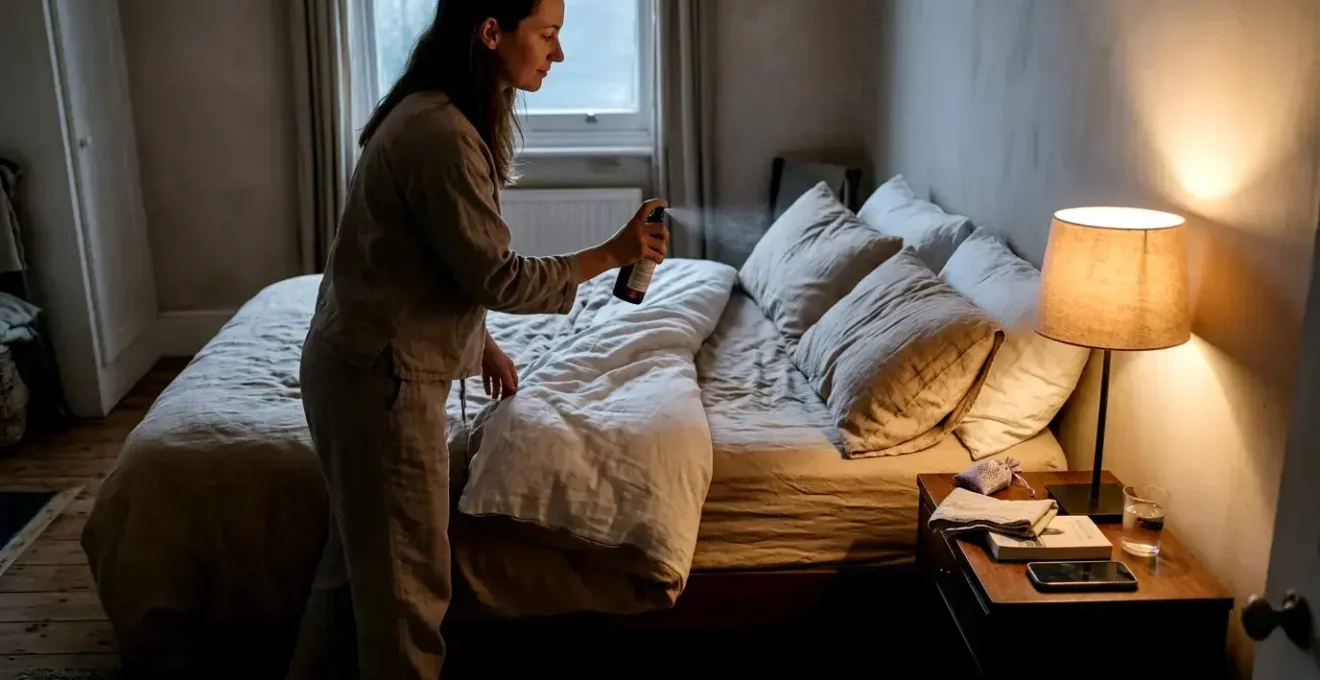
A lavender-based bedtime ritual may help some adults transition from evening activity to rest, but it should be understood as a relaxation cue rather than a proven sleep treatment. A familiar scent can become associated with bedtime through repetition, while the act of slowing down, reducing stimulation and preparing the bedroom may contribute to the overall experience. Research on lavender aromatherapy suggests potential sleep-related benefits, although the evidence remains limited and individual responses vary.
The practical question is not simply whether lavender smells relaxing. It is whether introducing a consistent, gentle scent makes the evening routine easier to maintain without creating respiratory discomfort, disturbing a sleeping partner or exposing household pets to unnecessary risks. The safest approach prioritises low exposure, no direct skin application and no continuous overnight diffusion.
For light sleepers, people with asthma, allergy-prone individuals and households with animals, an unscented bedroom may be preferable. A useful bedtime routine should support sleep hygiene first, with fragrance remaining an optional addition rather than a requirement.
What to Know About Lavender Bedtime Rituals
- A familiar bedtime scent may become a learned relaxation cue through repetition, although lavender is not a guaranteed sedative.
- Choose gentle, non-skin-contact options such as a sachet or an appropriately formulated pillow mist, and avoid excessive fragrance exposure.
- Use scent briefly before bed rather than leaving a diffuser running overnight, particularly around people with respiratory sensitivities or household pets.
- Why Can a Familiar Bedtime Scent Become Associated With Feeling Sleepy?
- How to Create a Gentle Bedtime Aroma Ritual Without Applying Essential Oils to Skin?
- Lavender Pillow Mist or an Unscented Bedroom: Which Is Better for Light Sleepers?
- Why Strong Bedroom Fragrances Can Make Night-Time Congestion Worse
- When to Use a Calming Room Scent Before Bed Without Leaving a Diffuser Running Overnight?
- Why Essential Oil Diffusion Needs Extra Caution Around Pets and Asthma?
- How to Create a 10-Minute Evening Self-Care Ritual Without Buying More Products?
- How to Build a Holistic Wellness Routine That Fits a Busy Working Week?
Why Can a Familiar Bedtime Scent Become Associated With Feeling Sleepy?
A familiar bedtime scent can become associated with feeling sleepy because the brain learns to connect repeated sensory experiences with particular situations. If the same gentle fragrance is present during a consistent wind-down routine, it may eventually act as a reminder that the day is ending. This is a form of learned association, not proof that the fragrance itself directly induces sleep.
The process resembles classical conditioning. Initially, the smell of lavender may have no particular relationship with bedtime. However, when it repeatedly accompanies familiar activities such as dimming the lights, putting away a phone, reading or preparing for bed, the scent can acquire contextual meaning. Over time, encountering that smell may help signal the transition towards rest.
Consistency matters more than intensity. Using a fragrance occasionally, particularly only after a difficult night, is less likely to establish a reliable association than incorporating the same gentle cue into an ordinary evening routine. The objective is to create a predictable sequence rather than to increase exposure whenever sleep feels difficult.
Personal memory also influences the experience. Lavender may remind one person of a peaceful garden, clean bedding or a relaxing holiday, while another person may associate it with an unpleasant product or an overpowering fragrance. A scent that already feels comforting may therefore be a more suitable choice than one selected simply because it is popular.
It is also important to distinguish the effect of fragrance from the effect of the complete ritual. Slower breathing, reduced screen exposure, quieter surroundings and a consistent bedtime can all contribute to relaxation. Any perceived improvement cannot automatically be attributed to lavender alone.
Scientific evidence provides some encouragement but requires careful interpretation. A 2025 systematic review and meta-analysis included 11 randomised controlled trials involving 628 adults. The pooled results suggested improved sleep outcomes following lavender essential oil interventions. However, differences in protocols and study quality limit the strength of the conclusions. These findings do not establish that a familiar scent independently creates a conditioned sleep response or that every commercial pillow mist will produce the same results. The systematic review of lavender essential oil and sleep in adults provides further context.
11 trials · 628 adults
The 2025 systematic review included 11 randomised controlled trials with 628 adult participants. Its findings suggest potential sleep-related benefits, but differences in study methods and quality prevent a universal recommendation.
Evidence: The systematic review and meta-analysis published in 2025.
A practical starting point is to choose a scent that feels pleasant, use it consistently at the same point in the evening and avoid changing several aspects of the routine simultaneously. This makes it easier to notice whether the ritual genuinely helps.
The most useful result is not necessarily feeling sleepy immediately after smelling lavender. It is developing a familiar transition that makes putting aside the day’s activities feel more natural.
How to Create a Gentle Bedtime Aroma Ritual Without Applying Essential Oils to Skin?
A gentle bedtime aroma ritual can be created without applying essential oils to the skin by using a passive scented object, a suitable pillow mist or a brief fragrance experience before getting into bed. The simplest approach is to select one method, keep the exposure modest and repeat it at a consistent point in the evening.
Direct skin application is unnecessary for this purpose. Essential oils are concentrated aromatic substances, and applying them without appropriate formulation and dilution can cause irritation or allergic contact reactions. Some citrus essential oils also contain phototoxic constituents, depending on their composition and processing. These concerns relate to skin exposure and should not be confused with the separate question of inhaling fragrance.
For a no-skin-contact routine, consider the following options:
- A dried lavender sachet: Place a small fabric sachet near the bedside rather than directly beneath the face. Its passive fragrance avoids the need for spraying or electrical equipment.
- A scented paper card: A lightly scented card can provide a subtle background aroma when positioned away from direct contact with bedding.
- A formulated pillow mist: Choose a product specifically intended for textiles or pillow use, following its label instructions. Apply it sparingly and allow the fabric to dry before lying down.
- Brief personal inhalation: If a product is specifically suitable for this purpose, a short exposure before bedtime may be preferable to maintaining a continuous fragrance in the bedroom.
The distinction between pure essential oil and a finished fragrance product is important. A commercially formulated pillow mist may contain ingredients and concentrations designed for its intended use, whereas pure essential oils should not be assumed suitable for direct spraying onto bedding or inhalation without appropriate guidance.
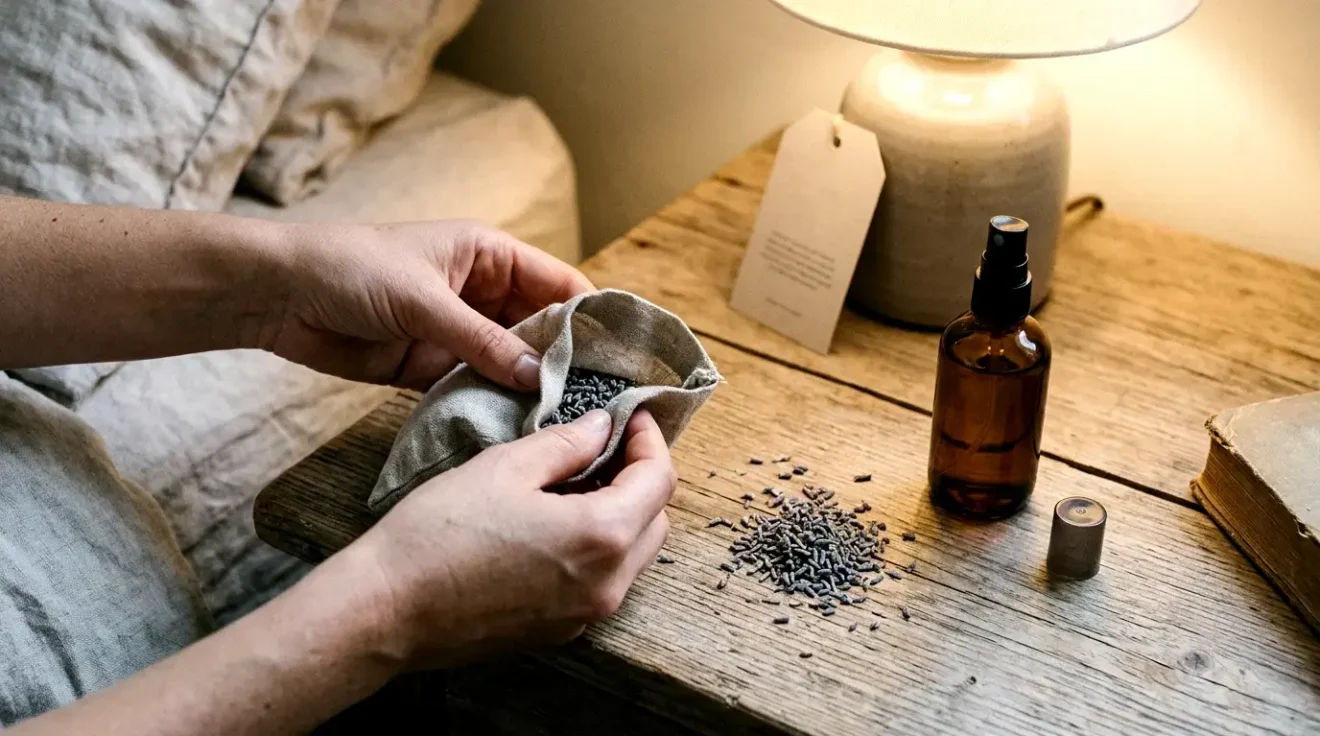
Several common mistakes can undermine an otherwise comfortable routine:
- Using more fragrance in the belief that a stronger smell will produce a stronger relaxation response.
- Spraying bedding immediately before lying down, leaving little time for the fragrance to disperse or the fabric to dry.
- Combining several scented products, making the bedroom smell busy rather than calm.
- Using an air fragrance on textiles when the manufacturer’s instructions do not specify that application.
The National Center for Complementary and Integrative Health (NCCIH) distinguishes aromatherapy from topical use and notes that the sleep-related benefits of lavender aromatherapy remain uncertain. It also identifies headache and coughing among possible adverse effects. Its institutional overview of lavender evidence and safety is useful when assessing claims made about essential oils.
Before introducing a product, check its intended use, ingredient information and safety instructions. A fragrance that is marketed as natural is not automatically suitable for every person or every surface.
Five Steps for a Skin-Free Bedtime Aroma Ritual
- Choose one scent that you genuinely enjoy and record your selection in a simple bedtime routine note.
- Select a suitable delivery method, such as a dried lavender sachet or a textile-specific pillow mist, and record its intended use.
- Position the scented object away from direct contact with your face and sleeping area, and note its location.
- Introduce the scent at the same point in your evening routine, recording the approximate time.
- Check for irritation, coughing, headaches or discomfort and record whether the method should be reduced or discontinued.
A successful aroma ritual should feel almost effortless. If the preparation becomes complicated, the fragrance becomes intrusive or discomfort appears, simplifying or removing the scented element is the more sensible choice.
Lavender Pillow Mist or an Unscented Bedroom: Which Is Better for Light Sleepers?
An unscented bedroom is generally the more cautious starting point for light sleepers, particularly those who experience headaches, nasal irritation, allergies or asthma symptoms around fragrances. A lavender pillow mist may suit someone who enjoys gentle scents and tolerates them comfortably, but it is not essential for good sleep hygiene. The better option is the one that leaves the sleeping environment comfortable throughout the night.
Light sleepers can be particularly aware of environmental changes. A fragrance that seems pleasant during the evening may become distracting after several hours, especially when the bedroom is small or poorly ventilated. Even a subtle scent can be unwelcome when someone is trying to settle into sleep or becomes more sensitive to smells at night.
Several practical factors can guide the decision:
| Decision factor | Lavender pillow mist | Unscented bedroom |
|---|---|---|
| Personal enjoyment of fragrance | Suitable when the smell feels pleasant and unobtrusive. | Suitable when fragrance is unnecessary or unwelcome. |
| Light sleeping | May provide a familiar bedtime cue if tolerated. | Avoids introducing another potential environmental distraction. |
| Asthma or fragrance sensitivity | Requires particular caution and may be unsuitable. | Often the more conservative option. |
| Allergy concerns | Product ingredients may introduce additional sensitivities. | Reduces unnecessary fragrance exposure. |
| Shared bedroom | Requires agreement between both sleepers. | A neutral option when preferences differ. |
| Outdoor or household odours | May add another smell without resolving the source. | Allows attention to ventilation and environmental cleanliness. |
The scientific evidence should also influence expectations. The systematic review of lavender essential oil interventions suggests a possible improvement in sleep outcomes, but the available studies do not establish that a commercial pillow mist works equally well for everyone. The NCCIH also considers the overall evidence for lavender aromatherapy and sleep quality uncertain. A positive finding in a research setting is not a guarantee of an individual benefit.
A simple personal comparison can provide useful information. If fragrance is already well tolerated, alternate between several nights using the same modest pillow-mist routine and several nights without it. Keep bedtime, room temperature and other evening habits as consistent as reasonably possible. Record the approximate time needed to fall asleep, perceived sleep quality and the number of remembered awakenings.
This is a personal observation exercise, not a clinical sleep assessment. It cannot establish that fragrance caused a change, especially when stress, workload, caffeine intake or other environmental factors vary. However, it may help identify whether the scented routine feels helpful or distracting.
Couples should also consider differences in scent preference. One partner may find lavender comforting while the other experiences it as overpowering. In a shared bedroom, the preferences and comfort of both sleepers matter more than maintaining a fragrance routine.
If an unscented environment consistently feels more comfortable, there is no reason to introduce fragrance simply because it is associated with wellness or relaxation.
Why Strong Bedroom Fragrances Can Make Night-Time Congestion Worse
Strong bedroom fragrances can make night-time congestion worse because some volatile fragrance compounds may irritate sensitive airways and contribute to respiratory discomfort. People with existing allergies, asthma or fragrance sensitivity may be particularly affected. A room that smells strongly of lavender or another botanical product is therefore not necessarily a healthier environment for sleeping.
Fragrance exposure can involve several different reactions. Some people experience irritation, such as a burning sensation in the nose, throat discomfort or coughing. Others may have an allergic response or symptoms associated with an existing respiratory condition. These experiences should not automatically be treated as the same medical process.
Allergic rhinitis involves an immune response to particular allergens and can produce symptoms such as sneezing, itching and nasal congestion. Fragrance-related irritation, by contrast, does not necessarily involve an allergy. A person can experience discomfort from an indoor fragrance without having a diagnosed fragrance allergy.
The distinction matters because the appropriate response depends on the underlying sensitivity. Someone experiencing recurring congestion should not automatically assume that lavender is the cause or that an alternative essential oil will solve the problem.
Strong fragrance exposure can also contradict the intended purpose of a bedtime ritual. A concentrated smell may become distracting, trigger coughing or make breathing feel uncomfortable. Increasing the amount of lavender in the room does not necessarily improve relaxation and may instead create an unpleasant sleeping environment.
The U.S. Environmental Protection Agency acknowledges that indoor fragrances can trigger asthma episodes and other adverse health effects in some sensitive individuals. It also recognises that the mechanisms behind these responses are not fully established. Its guidance on indoor fragrance exposure and potential health impacts supports a cautious approach without suggesting that every fragrance affects every person in the same way.
One practical observation is whether symptoms repeatedly appear in a particular environment. For example, if nasal discomfort, throat irritation or coughing occurs after using a bedroom fragrance and improves when that fragrance is removed, the product may be contributing to the problem. This observation does not establish a medical diagnosis, but it is a sensible reason to stop exposure.
Useful adjustments include:
- Stop using the scented product rather than trying to mask the smell with another fragrance.
- Ventilate the room appropriately when outdoor conditions allow.
- Wash bedding according to its care instructions if fragrance residue is suspected.
- Keep the bedroom free from unnecessary sprays, scented candles and concentrated aromatic products.
- Seek medical advice when congestion or breathing symptoms persist, recur or interfere with sleep.
Breathing difficulty, wheezing or significant asthma symptoms should not be treated as a normal adjustment to a new fragrance. Follow the person’s established asthma management plan and seek appropriate medical assistance when symptoms are severe or worsening.
A bedroom should make comfortable breathing easier, not introduce another possible source of irritation. For anyone who regularly wakes with congestion, removing fragrance is a more reasonable first step than experimenting with stronger aromatic products.
When to Use a Calming Room Scent Before Bed Without Leaving a Diffuser Running Overnight?
A calming room scent is best treated as a short pre-bedtime cue rather than an all-night exposure. Using a suitable fragrance during the wind-down period, then switching it off before sleeping, can help establish a predictable routine without continuously saturating the bedroom with scent. A short period before bedtime is a practical approach, not a scientifically established optimum duration.
For someone who enjoys lavender, a brief exposure during the final evening activities may be sufficient. For example, the scent can accompany reading, putting away electronic devices or preparing the bedroom. The important element is the repeated association between the fragrance and the transition towards rest, rather than the length of time a diffuser remains active.
Continuous overnight diffusion introduces several avoidable considerations. The smell may become overwhelming, sensitive individuals may develop respiratory discomfort, and a fragrance that initially feels pleasant may become distracting during the night. Prolonged exposure is not necessary to demonstrate commitment to a bedtime routine.
Different delivery methods offer different levels of control:
| Method | Exposure control | Practical consideration |
|---|---|---|
| Electric diffuser with a timer | Can provide a defined operating period when the timer and automatic shut-off function work correctly. | Check the manufacturer’s instructions and actual shut-off behaviour. |
| Hand-operated pillow mist | Allows the user to control when and how much product is applied. | Only use on textiles when the formulation and label permit it. |
| Passive lavender sachet | Provides a less active and more gradual fragrance experience. | It does not offer the same precise control over fragrance release. |
A timer can be convenient, but it should not be assumed that every diffuser has a reliable automatic shut-off. Some inexpensive devices may have limited timer settings or require manual operation. Checking the product instructions and confirming its actual behaviour is more useful than relying on a feature that may not be present.
The timing can remain flexible. Introducing the scent during the final part of the evening, perhaps while reading or preparing for bed, creates a clear transition. Once that activity finishes, the diffuser can be switched off and the room ventilated when appropriate. There is no need to establish an exact exposure period as a universal sleep prescription.
For example, a person who usually goes to bed at 10:30 p.m. might incorporate a short fragrance cue into the activities preceding bedtime. This is an illustrative routine, not evidence that a particular number of minutes produces a measurable improvement in sleep.

For people who prefer to avoid electrical equipment, a passive sachet or a single suitable textile mist may provide a simpler alternative. The choice should reflect personal tolerance, household circumstances and the practical instructions associated with the product.
The objective is to make the bedroom feel ready for sleep, not to maintain a constant fragrance. If the scent becomes noticeable or uncomfortable after lights out, removing it altogether is a reasonable adjustment.
Key Takeaways Before Adding Essential Oils to a Bedroom
- People with asthma or fragrance sensitivity may experience respiratory symptoms even when a scent is marketed as natural or relaxing.
- Household pets, especially cats, require separate consideration because essential oil exposure can present veterinary risks.
- A simple unscented routine can preserve the benefits of predictable bedtime habits without introducing concentrated aromatic substances.
Why Essential Oil Diffusion Needs Extra Caution Around Pets and Asthma?
Essential oil diffusion requires extra caution around pets and people with asthma because inhaled aromatic compounds can affect respiratory comfort, while some essential oil constituents can be toxic to animals. These are separate safety concerns and should not be reduced to a single general warning. A household containing either group should assess exposure carefully before introducing a diffuser.
For people with asthma, fragrances may act as triggers for respiratory symptoms. Sensitivity varies considerably, and not everyone with asthma responds to the same products. The fact that a fragrance is derived from a plant does not guarantee that it is suitable for inhalation. Anyone whose asthma symptoms are associated with fragrances should avoid introducing an essential oil diffuser into the sleeping environment.
Pets present a different concern. Animals can be exposed through inhalation, skin contact or accidental ingestion. Their ability to process certain aromatic compounds differs from that of humans, and the potential effects depend on the species, substance, concentration and exposure route.
Cats deserve particular attention. They have limited activity of certain liver metabolic pathways, including glucuronidation, which contributes to their vulnerability to some essential oil constituents. This does not mean that every essential oil has an identical toxic effect, but it does mean that casual household diffusion should not be assumed harmless.
Dogs, birds and other household animals also require species-specific consideration. Birds, in particular, have sensitive respiratory systems, making airborne substances an important environmental concern. An animal that appears comfortable initially may still be exposed to an unsuitable product.
The Merck Veterinary Manual discusses essential oil toxicoses in animals, including inhalation and other exposure routes. Its veterinary guidance also addresses the particular vulnerability of cats and the importance of preventing exposure. The Merck Veterinary Manual’s review of essential oil toxicity in animals is a useful reference for understanding why human aromatherapy advice should not automatically be applied to pets.
When animals are present, a conservative approach is preferable:
- Do not assume that a diffuser is safe simply because it uses a small quantity of oil.
- Do not place essential oil products where animals can lick, knock over or accidentally ingest them.
- Ask a veterinarian before introducing essential oil diffusion into a household with pets.
- Pay attention to coughing, unusual breathing, drooling, vomiting, lethargy or changes in behaviour after suspected exposure.
- Seek veterinary advice promptly if an animal may have been exposed to a potentially toxic essential oil.
Passive scent products are not automatically risk-free either. A sachet may be accessible to a curious pet, while a scented textile can create exposure through direct contact. An unscented bedroom, clean bedding and appropriate ventilation provide a simpler alternative when the household includes sensitive animals.
Before adopting a scented bedtime ritual, consider the needs of everyone sharing the home:
- Is anyone diagnosed with asthma or experiencing fragrance-related respiratory symptoms?
- Does anyone have a known allergy or sensitivity to fragrance ingredients?
- Are cats, dogs, birds or other animals regularly present in the bedroom?
- Are young children likely to access scented products or diffuser contents?
When the safety of a person or animal is uncertain, the simplest option is to avoid concentrated essential oil diffusion and preserve the bedtime routine through non-fragrance activities instead.
How to Create a 10-Minute Evening Self-Care Ritual Without Buying More Products?
A 10-minute evening self-care ritual can be created using ordinary activities and products already available at home. The objective is to establish a short, repeatable transition between daytime responsibilities and bedtime, not to build an elaborate collection of wellness products. A consistent sequence can include preparing the room, completing a familiar care activity, putting screens away and allowing a few quiet minutes before sleep.
The easiest way to maintain this habit is to give each activity a clear place in the sequence. A simple example might look like this:
- Minutes 1–2: Prepare the bedroom. Tidy the immediate sleeping area, adjust the lighting and ventilate the room when appropriate.
- Minutes 3–4: Complete a familiar care activity. Wash your face, brush your teeth or use a skincare product already part of your routine.
- Minutes 5–6: Introduce a calming cue. Read a few pages, stretch gently or use a familiar, tolerated scent if appropriate.
- Minutes 7–8: Put away digital distractions. Place the phone out of immediate reach and avoid checking work messages.
- Minutes 9–10: Slow down. Sit quietly, breathe comfortably and prepare to turn off the light.
The timing is a practical framework rather than a medical prescription. Some evenings may require less time, while others may naturally take longer. The most important feature is the sequence of familiar actions.
If lavender is included, it can occupy a single place in the routine. There is no need to buy a pillow mist, essential oil, scented candle, room spray and matching body lotion. Using multiple fragrance products may make the bedroom unnecessarily strong-smelling and complicate the process of identifying a product that causes discomfort.
Before purchasing anything, take an inventory of existing household items. A clean piece of fabric, a book, an existing skincare product or an unscented bedside routine may be sufficient. If no fragrance product is currently available, there is no requirement to buy one.
The financial advantage is straightforward: a routine built around existing habits avoids turning sleep hygiene into another shopping project. More products do not automatically mean better relaxation, and additional purchases can create unnecessary waste when a simpler approach works.
A useful measure of success is whether the routine remains manageable on ordinary working days. A complicated sequence may feel appealing initially but become difficult to maintain when work runs late or other responsibilities intervene. A short ritual is easier to repeat because it requires less preparation and fewer decisions.
Keep a brief note of what the routine contains, how long it takes and whether it feels comfortable. If the scent causes irritation or does not improve the experience, remove it without abandoning the rest of the routine.
A successful 10-minute ritual does not need to look sophisticated. Its value comes from making the transition towards rest predictable, manageable and easy to repeat.
How to Build a Holistic Wellness Routine That Fits a Busy Working Week?
A holistic wellness routine fits a busy working week when it is built around realistic daily constraints rather than an idealised schedule. A short evening wind-down routine can provide consistency on working days, while longer relaxation activities remain optional for weekends. Lavender or another pleasant scent may form part of this routine, but regular sleep habits, reduced evening stimulation and a comfortable bedroom remain more fundamental.
The first step is to distinguish essential habits from optional additions. For many adults, a workable foundation includes reasonably consistent sleep and wake times, a quieter evening environment and a bedroom that supports comfortable rest. These habits do not require specialised products and can remain in place regardless of whether fragrance is used.
Lighting is another practical consideration. Reducing bright lighting in the evening can help create a calmer atmosphere, while limiting stimulating screen activities may make it easier to disengage from work and social notifications. A bedroom that is appropriately cool, quiet and comfortable can also support better sleep conditions.
The routine should reflect the actual shape of the working week. Someone who finishes work late may need a shorter transition than someone who has a predictable evening schedule. Parents, shift workers, commuters and people with changing responsibilities may all require different versions of the same basic habit.
A useful structure is to establish two versions:
- Working-day routine: A brief, repeatable sequence involving preparation for bed, reduced screen exposure and a quiet activity.
- Weekend routine: A more flexible version that may include additional reading, a relaxing bath or another enjoyable activity, provided it does not create an unnecessarily disruptive sleep schedule.
The aim is not to create two entirely different systems. Both should share familiar cues so that the transition towards sleep remains recognisable.
For particularly demanding evenings, a minimum routine can protect continuity. Preparing the bedroom, completing essential personal care, putting the phone away and allowing a few quiet minutes may be enough. If the fragrance component cannot be used because of a busy schedule, respiratory discomfort or the presence of pets, the rest of the routine can continue unchanged.
Tracking outcomes over several weeks may help identify whether the overall approach is useful. Rather than focusing exclusively on whether lavender makes someone feel sleepy, observe:
- How easily sleep begins on ordinary working nights.
- Whether remembered night-time awakenings become more or less frequent.
- How rested the person feels after waking.
- Whether the routine remains manageable during demanding weeks.
- Whether any fragrance-related discomfort appears.
These observations are personal indicators, not diagnostic measurements. Persistent difficulty falling asleep, frequent awakenings or significant daytime tiredness may require professional assessment, especially when symptoms continue despite reasonable changes to sleep habits.
It is also important to recognise when a routine is no longer suitable. A fragrance that initially feels pleasant may become irritating, or changing household circumstances may make diffusion inappropriate. Adjusting or removing the scent does not mean the overall wellness routine has failed.
For a working adult, the most sustainable approach is one that remains possible after a demanding day. A calm bedroom, predictable bedtime habits and reduced evening stimulation provide a useful foundation without depending on a particular essential oil or commercial product.
Ultimately, a lavender-based bedtime ritual is an optional tool for creating a calmer transition into the night. Its value depends on personal comfort, consistent use and appropriate safety precautions. If fragrance helps without causing discomfort, it can remain a small part of a broader sleep hygiene routine; if it does not, an unscented environment and simple evening habits are equally valid alternatives.
Does lavender smell actually make you sleepy?
Lavender fragrance may help some people feel more relaxed, and research has reported potential improvements in sleep outcomes following lavender essential oil interventions. However, the evidence remains limited, and a pleasant smell does not guarantee a direct sedative effect. Repeatedly associating a familiar scent with a quiet bedtime routine may also contribute to its perceived calming effect.
Is it safe to spray lavender essential oil directly onto a pillow?
Pure lavender essential oil should not automatically be considered suitable for direct application to pillows or bedding. It is a concentrated substance and may irritate skin or respiratory passages. Choose a product specifically formulated for textile use and follow its instructions. A dried lavender sachet is another option for people who prefer to avoid sprays.
Can lavender aromatherapy help with insomnia?
Some clinical studies suggest that lavender essential oil may improve certain sleep outcomes, but the available evidence does not establish it as a treatment for insomnia. The NCCIH considers the benefits of lavender aromatherapy for sleep quality and insomnia uncertain. Persistent insomnia deserves appropriate assessment rather than relying exclusively on fragrance.
Should a lavender diffuser be left on throughout the night?
Continuous overnight diffusion is unnecessary for establishing a bedtime scent cue and may create excessive fragrance exposure. A brief, controlled use before bed is a more cautious approach for people who tolerate the product. Follow the manufacturer’s instructions and consider respiratory sensitivities and household pets before using any diffuser.
Can lavender essential oil be diffused in a bedroom with cats?
Extra caution is necessary because cats are particularly vulnerable to certain essential oil constituents. Exposure can occur through inhalation, skin contact or ingestion. Do not assume that a short diffusion period is automatically safe. Consult a veterinarian before using essential oil products in a household with cats, and choose an unscented bedtime routine when safety is uncertain.