
Recurring facial discomfort does not always mean that the skin is simply sensitive. Stinging after applying moisturiser, persistent redness, itching and unexpected reactions to familiar products can result from a weakened skin barrier, irritant contact dermatitis, allergic contact dermatitis or an underlying condition such as rosacea. These problems can look similar, but they do not necessarily require the same approach.
The first step is to examine the pattern rather than immediately replacing every product. How quickly does the reaction appear? Does it remain where the product was applied? Is there itching, swelling, scaling or a persistent change in facial colour? Does the discomfort continue even when skincare products are removed?
For adults experiencing recurring facial reactions, a minimal skincare routine can help reduce unnecessary exposure and make triggers easier to identify. However, cosmetic self-management has limits. Reactions that persist, spread or develop recognisable inflammatory features deserve medical assessment rather than another round of product experimentation.
Understanding Sensitive Skin and Facial Reactions
- Fragrance-free and botanical skincare products can still contain ingredients that irritate skin or trigger allergic contact dermatitis.
- Transient stinging, persistent itching, spreading rashes and recurring flushing provide different clues, but symptoms alone cannot establish a diagnosis.
- Repeated facial redness, papules, unexplained reactions or symptoms that persist despite a simplified routine warrant consideration of dermatological assessment.
- Why Can Sensitive Skin Still Sting When You Use Fragrance-Free Products?
- How to Patch-Test a New Moisturiser When Your Skin Reacts Easily?
- Irritant Contact Dermatitis or Allergic Contact Dermatitis: What Signs Differ?
- Why Repeatedly Applying Botanical Oils Can Worsen Some Facial Rashes
- When Does Recurring Facial Redness Need a Dermatology Appointment?
- Why Can a Botanical Dermocosmetic Formula Still Irritate Reactive Skin?
- Why Botanical Perfumes Can Still Cause Allergic Skin Reactions
- How to Evaluate Advanced Dermocosmetic Products for Reactive or Problem-Prone Skin?
Why Can Sensitive Skin Still Sting When You Use Fragrance-Free Products?
Fragrance-free skincare can still sting because removing fragrance does not eliminate every potential irritant or allergen. Preservatives, botanical extracts, cleansing agents and other formulation components can trigger discomfort, particularly when the skin barrier is compromised. In some cases, the sensation reflects temporary sensory sensitivity rather than an allergic reaction, making the timing and accompanying skin changes important clues.
The expression fragrance-free is not a guarantee of zero irritation. In the United States, the FDA does not establish a federal definition for fragrance-free or hypoallergenic cosmetic claims. Ingredient declarations can also group fragrance mixtures under collective terms rather than identifying every constituent individually. The FDA’s guidance on allergens in cosmetics helps explain why marketing language should not replace ingredient evaluation.
Several mechanisms can explain discomfort after applying a product:
- Barrier impairment: A disrupted stratum corneum offers less effective protection against environmental exposure and cosmetic ingredients. Products that were previously comfortable may suddenly produce burning or stinging.
- Sensory hyper-reactivity: Exposed or inflamed skin can respond more strongly to temperature changes, water, sweat and otherwise well-tolerated skincare ingredients.
- Direct irritation: Some ingredients can produce an inflammatory response through direct contact, particularly when exposure is frequent or the skin is already damaged.
- Contact allergy: An ingredient may trigger a delayed immune response in someone who has become sensitised to it.
The distinction matters. A brief sting without a visible rash may be associated with barrier disruption or sensory sensitivity. Persistent itching, swelling, scaling or an expanding rash raises different concerns and should not automatically be attributed to ordinary sensitivity.
Repeatedly replacing moisturisers can also make the situation harder to understand. Each new formula introduces additional ingredients and another potential source of exposure. A temporary return to a simple, previously tolerated routine can make it easier to observe whether symptoms settle, although it cannot exclude an underlying skin condition.
A practical approach is to reduce unnecessary products, avoid introducing several new actives simultaneously and observe whether discomfort occurs independently of skincare application. A reaction that continues despite product simplification deserves further investigation.
The important distinction is that product tolerance and skin health are connected but not interchangeable. A fragrance-free moisturiser may be a reasonable choice, yet persistent reactions still require an explanation beyond the absence of perfume.
How to Patch-Test a New Moisturiser When Your Skin Reacts Easily?
Testing a new moisturiser gradually can help identify immediate discomfort or an emerging visible reaction before applying it across the entire face. Start with a small area of intact skin, observe it over several days, and only then consider testing a limited facial area. This is a practical tolerance-screening approach, not a substitute for professional allergy patch testing or a guarantee that delayed reactions will not develop.
For reactive skin, introducing a new product directly into an established facial routine makes it difficult to identify the cause of a reaction. A staged approach reduces the area initially exposed and makes observations more manageable.
A cautious home-testing approach can follow these steps:
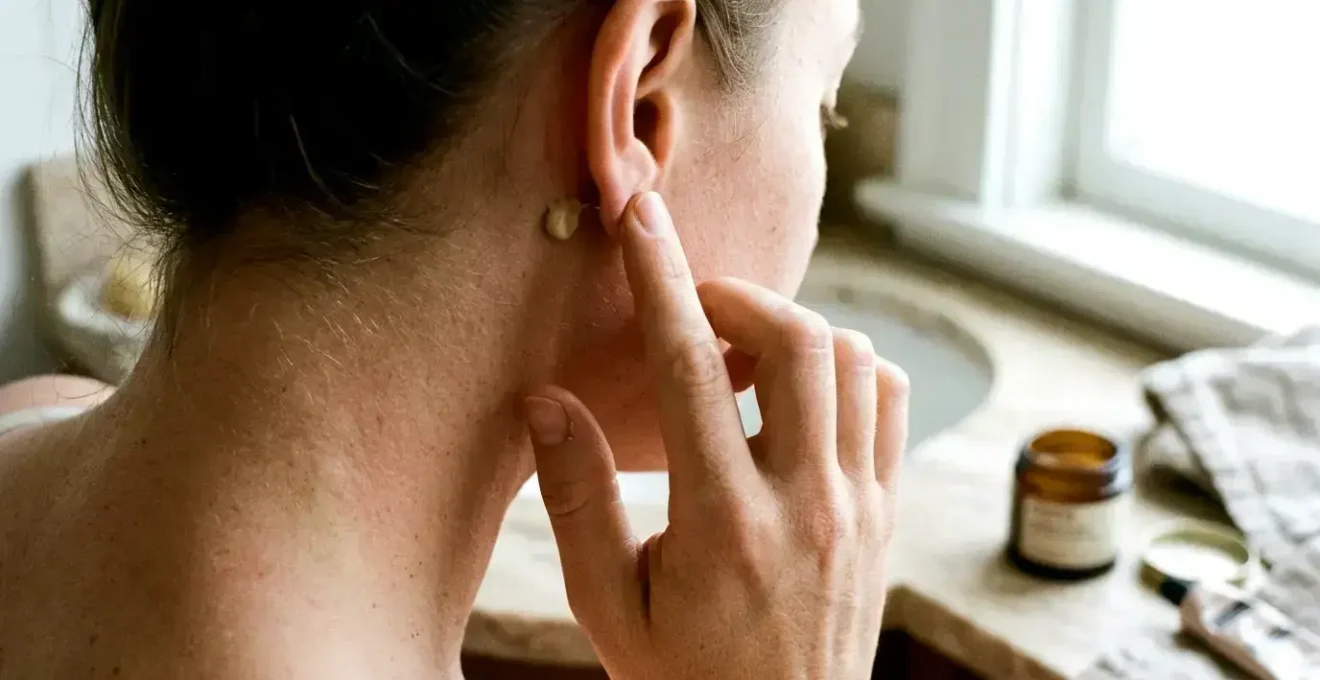
- Select a small test area. Choose intact skin behind the ear or on the inner forearm. Avoid areas that are already inflamed, scratched or broken.
- Apply a small amount. Use the moisturiser according to its instructions without mixing it with other products or deliberately increasing the exposure.
- Observe over several days. Look for burning, itching, redness, swelling, scaling or small blisters. Delayed allergic contact reactions may take time to become apparent.
- Consider a limited facial test. If the initial area remains comfortable, test a small, discreet facial zone rather than immediately applying the product everywhere.
- Record the outcome. Note the product, application area, timing and any visible reaction. Stop using it if a concerning reaction develops.
A negative result on the arm or behind the ear does not establish that a moisturiser will be tolerated across the face. Facial skin can be more reactive, and its condition may differ from that of the test area. Existing inflammation, barrier damage and the presence of other skincare products can all influence the response.
There is also an important distinction between home tolerance screening and clinical patch testing. The latter is designed to investigate allergic contact dermatitis using selected allergens applied under controlled conditions and assessed by a healthcare professional. The NHS guidance on contact dermatitis diagnosis describes professional testing, including an assessment after two days and a further examination usually performed two days later.
A home test cannot identify every relevant allergen, reproduce all real-life exposure conditions or exclude cumulative sensitisation. A product that initially appears comfortable may still become problematic with repeated use.
Keeping a reaction record is particularly useful when several products have caused similar symptoms. It can reveal whether the same ingredient family, application area or type of exposure repeatedly precedes discomfort. That information can also help a dermatologist select appropriate allergens for investigation.
Create a Practical Skincare Reaction Record
- Write down the exact product name and its complete ingredient list.
- Record the first application date and the area where it was applied.
- Describe the reaction, including whether it involved stinging, itching, redness or swelling.
- Record when symptoms appeared, how long they lasted and whether they spread.
- Maintain a chronological list of suspected products and reactions to share with a dermatologist if needed.
When reactions are severe, recurrent or suggest an allergic response, avoid further deliberate exposure to the suspected product and seek professional advice rather than repeatedly testing it at home.
Irritant Contact Dermatitis or Allergic Contact Dermatitis: What Signs Differ?
Irritant contact dermatitis and allergic contact dermatitis are different inflammatory reactions, even though both can cause redness, discomfort and scaling. Irritant dermatitis results from direct damage to the skin, whereas allergic contact dermatitis involves an immune response to an ingredient after sensitisation. The speed of onset, dominant sensation and distribution of the rash can provide clues, but clinical assessment may be needed to distinguish them reliably.
The most useful starting point is to examine how the reaction develops rather than relying on the appearance of redness alone.
| Criterion | Irritant contact dermatitis | Allergic contact dermatitis |
|---|---|---|
| Underlying mechanism | Direct irritation or damage to the skin barrier. | Delayed immune response following sensitisation. |
| Typical sensation | Burning, stinging, soreness or tightness. | Itching is often prominent, although burning can also occur. |
| Onset | Can occur soon after exposure or develop cumulatively. | Often develops after a delay, commonly 24–72 hours. |
| Distribution | Often concentrated around the exposed area. | Can extend beyond the precise application area. |
| Visible signs | Redness, dryness, scaling and, in more severe cases, fissures. | Redness, itching, swelling, scaling and sometimes blisters. |
| Response to stopping exposure | May improve when the irritant is removed, although established inflammation can persist. | May persist after exposure stops and recur following re-exposure. |
These are typical patterns rather than absolute diagnostic rules. Irritant reactions can be delayed or cumulative, and allergic reactions do not always spread visibly beyond the original contact area.
The biological difference explains why someone can develop irritant dermatitis without having a specific allergy. Repeated exposure to detergents, acids, solvents or unsuitable skincare can progressively overwhelm the skin barrier. Allergic contact dermatitis, by contrast, involves immune recognition of a substance after sensitisation. A product tolerated for months can therefore become a source of allergy later.
Essential oils and botanical ingredients deserve particular attention. Natural origin does not exclude allergenic potential. DermNet‘s specialist reference on essential-oil contact dermatitis describes delayed hypersensitivity reactions, which commonly develop 24–72 hours after exposure.
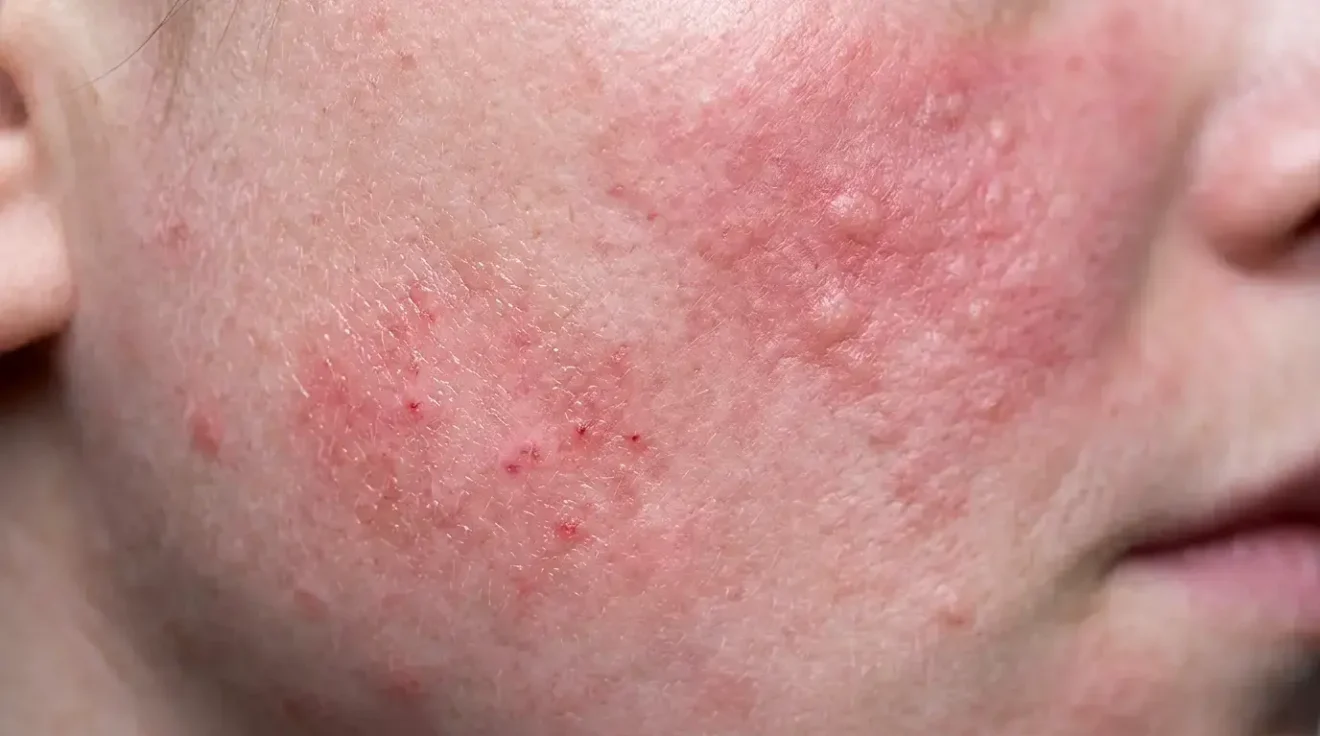
There are several reasons to seek medical assessment rather than simply changing the routine:
- A rash develops delayed itching after exposure and repeatedly returns with the same ingredient.
- Inflammation spreads beyond the original contact area.
- Blisters, pronounced swelling or persistent scaling develop.
- Several unrelated products appear to trigger similar reactions.
- Symptoms remain despite avoiding the suspected product.
Professional patch testing can help identify relevant contact allergens. It is particularly useful when the suspected trigger is unclear, several ingredients are involved or symptoms do not respond to initial management.
Neither burning nor itching alone confirms a diagnosis. When the pattern is persistent, recurrent or increasingly inflammatory, a dermatologist can investigate the cause instead of relying on cosmetic trial and error.
Why Repeatedly Applying Botanical Oils Can Worsen Some Facial Rashes
Botanical oils can be useful in some skincare routines, but they are not universally soothing. Their emollient and occlusive properties may feel beneficial on dry, intact skin while being less suitable for certain inflamed, acne-prone or follicle-related conditions. Some also contain compounds capable of triggering contact reactions. Repeated application should therefore depend on the skin’s condition and response, not simply on the ingredient’s natural origin.
One reason oils can become problematic is the difference between supporting a dry skin barrier and treating an inflammatory rash. A richer product can reduce water loss and improve comfort in some circumstances. However, a heavy formulation may feel uncomfortable on skin already affected by excess sebum, follicular congestion or active inflammation.
This is particularly relevant when facial redness is accompanied by papules or pustules. Such features should not automatically be interpreted as dryness requiring additional oil. They may indicate acne, folliculitis or rosacea, which need different management strategies.
Another consideration is the composition of botanical oils. Natural oils can contain multiple fatty acids, fragrance compounds and other minor constituents. Their composition varies according to the plant source, processing and formulation. Certain essential-oil constituents are recognised contact allergens, although this does not mean that every carrier oil or botanical oil causes allergy.
Repeated exposure also deserves attention. Frequent application increases contact with the same formulation and can aggravate an existing irritation. In someone already sensitised to a particular constituent, further exposure may provoke another allergic reaction.
Before continuing an oil-based routine, consider the following distinctions:
- Dry, intact skin: A suitable, previously tolerated emollient oil may help reduce dryness and improve comfort.
- Active facial inflammation: Adding more products can make it harder to identify the cause of the reaction.
- Redness with papules or pustules: Consider whether an inflammatory or follicular condition needs assessment rather than assuming the skin needs more nourishment.
- Itching or spreading redness: A possible contact reaction should be considered, particularly when symptoms follow repeated exposure.
The emotional response to facial discomfort can complicate matters. When skin feels tight or looks red, applying another layer of soothing oil may seem like the quickest solution. Yet more product does not necessarily mean more barrier support. If an ingredient is unsuitable, additional applications increase exposure rather than resolve the underlying problem.
A simpler approach is to pause non-essential oils when a new or worsening rash appears, avoid introducing additional botanical products and observe whether the reaction improves. Persistent inflammation or recurring lesions should be assessed medically.
Botanical oils are formulation ingredients, not treatments for every form of facial redness. Their suitability depends on the complete formula, the individual’s tolerance and, importantly, the condition affecting the skin.
When Does Recurring Facial Redness Need a Dermatology Appointment?
Recurring facial redness deserves dermatological assessment when it persists without a clear product trigger, repeatedly returns despite a simplified routine, spreads beyond exposed areas or appears alongside papules, pustules, visible blood vessels or prolonged burning. These features can indicate a condition such as rosacea or dermatitis rather than ordinary cosmetic sensitivity. A dermatologist can examine the pattern, establish a diagnosis and recommend appropriate investigations.
Redness alone is not enough to identify a specific condition. Its distribution, duration, associated sensations and accompanying visible changes are more informative.
For example, rosacea can involve recurring flushing, persistent facial discolouration, visible blood vessels and acne-like inflammatory lesions. It can also produce burning or stinging when skincare products are applied. This overlap explains why someone may interpret an underlying inflammatory condition as a simple reaction to moisturiser.
The American Academy of Dermatology‘s information on rosacea signs and symptoms describes these different manifestations and explains why rosacea cannot be reduced to ordinary skin sensitivity.
Other conditions can create similar confusion:
- Allergic contact dermatitis: A delayed inflammatory response to a specific allergen, potentially involving persistent itching and swelling.
- Irritant contact dermatitis: Inflammation associated with direct or cumulative exposure to irritating substances.
- Seborrhoeic dermatitis: An inflammatory condition that can produce redness and scaling in characteristic facial areas.
- Rosacea: A chronic inflammatory facial condition that may involve flushing, persistent redness, visible vessels and papules or pustules.
Several practical warning signs justify arranging an appointment:
- Redness repeatedly appears without an identifiable cosmetic exposure.
- Facial flushing occurs in recurring episodes or becomes persistent.
- Visible blood vessels or acne-like papules develop alongside redness.
- Burning continues well after a product has been removed.
- Symptoms persist or worsen despite simplifying skincare and avoiding suspected triggers.
- Different products produce similar reactions over several weeks.
There is no universal number of days or weeks that diagnoses a medical condition. The decision to seek assessment should reflect symptom severity, recurrence and associated features rather than an arbitrary waiting period.

A dermatologist can investigate what home observations cannot establish. This may involve examining the distribution and appearance of the rash, reviewing product ingredients, considering alternative diagnoses and arranging professional patch testing when allergic contact dermatitis is suspected.
It is important not to wait for a routine appointment if symptoms are severe. Rapidly developing facial swelling, difficulty breathing or swelling involving the lips or tongue requires emergency medical attention. Significant eye pain, visual changes or severe eye inflammation also warrant prompt medical assessment.
Early assessment can make subsequent skincare decisions more focused. Instead of treating every episode as an isolated product reaction, a diagnosis provides a clearer basis for choosing appropriate products and avoiding unnecessary exposure.
Key Points Before Evaluating Another Skincare Product
- Persistent reactions across unrelated products may indicate a skin condition or a shared allergen rather than several independent product failures.
- Botanical and dermatologist-associated formulations are not automatically suitable for inflamed or allergy-prone skin.
- Ingredient evaluation should consider the complete formulation, exposure pattern and clinical features of the skin reaction.
Why Can a Botanical Dermocosmetic Formula Still Irritate Reactive Skin?
A botanical dermocosmetic formula can irritate reactive skin because natural ingredients are not inherently non-irritating or non-allergenic. Plant extracts, essential oils, fragrance constituents and preservatives can all contribute to unwanted reactions. The term dermocosmetic describes a product’s positioning, not a guarantee of clinical suitability for every skin condition. The complete formulation and the individual’s tolerance matter more than its botanical marketing claims.
Natural formulations can contain several ingredient categories that deserve attention:
- Essential oils: These may contain fragrance molecules such as linalool and limonene, which are recognised contact allergens in certain circumstances.
- Botanical extracts: Plant-derived ingredients can have variable compositions and may contain multiple constituents with different tolerability profiles.
- Preservatives: Water-based cosmetic products require appropriate preservation to help prevent microbial contamination. Some preservative systems can cause irritation or allergic reactions in susceptible individuals.
- Fragrance components: A product marketed as botanical or naturally scented can still expose the skin to fragrance allergens.
The interaction between ingredients also matters. An ingredient tolerated in one moisturiser may not produce the same response in another formula. Concentration, pH, the surrounding ingredients and the overall formulation can influence how a product behaves on the skin.
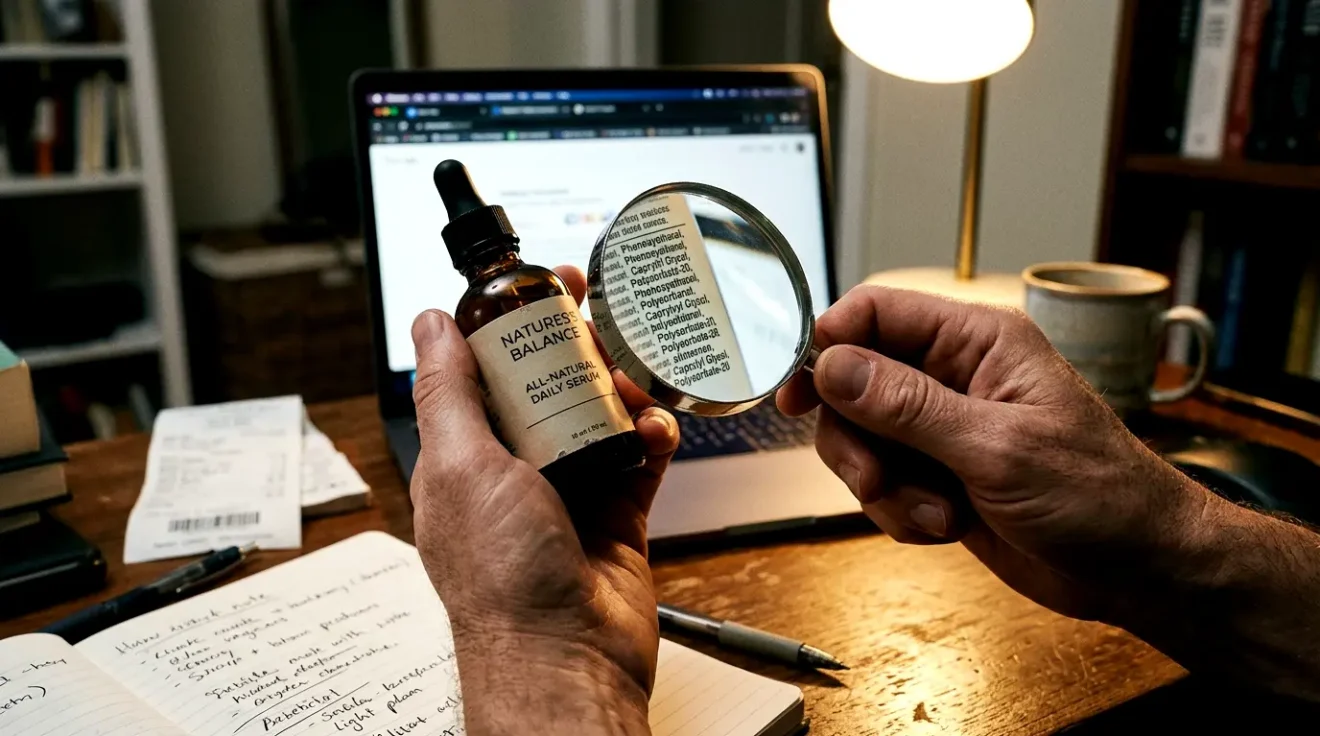
This is why evaluating a dermocosmetic product requires more than checking whether it contains a familiar soothing extract. The complete ingredient list needs to be considered alongside the skin’s current condition and any known reaction history.
Another important distinction concerns the difference between product claims and clinical evidence. Terms such as sensitive-skin tested, dermatologically tested or hypoallergenic do not establish universal tolerance. A product may have been assessed under particular testing conditions without being suitable for every person with rosacea, eczema or contact allergy.
For someone who experiences reactions to several botanical dermocosmetic products, the common factor may not be the product category itself. The skin may already be affected by a condition that makes multiple formulations uncomfortable.
This distinction is particularly relevant when redness and stinging persist even after switching to products marketed for sensitive skin. Continuing to search for increasingly specialised cosmetics may delay the investigation of rosacea, contact dermatitis or another inflammatory condition.
When considering a new formula, examine its ingredient declaration, identify known personal triggers and assess whether its active ingredients are appropriate for the current condition. Avoid introducing several new products at once.
Ultimately, the most suitable product is not necessarily the one with the longest list of plant extracts or the strongest scientific-sounding positioning. It is the one that fits the skin’s actual needs without adding unnecessary exposure or delaying appropriate medical care.
Why Botanical Perfumes Can Still Cause Allergic Skin Reactions
Botanical perfumes can cause allergic skin reactions because naturally derived fragrance molecules can trigger the same immune mechanisms as synthetic fragrance ingredients. Essential oils and plant-derived aromatic substances may contain recognised contact allergens. A natural fragrance is therefore not automatically safer for allergy-prone skin, particularly when used in leave-on facial products that remain in contact with the skin for extended periods.
The central issue is the chemical identity of the fragrance constituents rather than whether they originated from a plant or were produced synthetically.
Essential oils can contain several aromatic compounds. Depending on their composition, these may include recognised fragrance allergens such as linalool and limonene. Exposure can lead to allergic contact dermatitis in people who have become sensitised to particular substances.
Unlike many immediate irritation responses, allergic contact dermatitis is typically delayed. A reaction may develop 24–72 hours after exposure, sometimes making it difficult to connect the rash with the product responsible. The inflammation may also extend beyond the precise area where the fragrance was applied.
This delayed pattern is one reason a reaction log can be useful. Someone who applies a scented face cream on Monday and develops itching or a rash later may initially suspect another product used on the day symptoms appeared. Recording application dates and symptom onset makes the relationship easier to investigate.
Ingredient declarations also require careful reading. The term parfum or fragrance can represent a mixture rather than a single substance. Labelling requirements and the disclosure of individual fragrance constituents differ between jurisdictions. In the United States, the FDA explains that fragrance mixtures may be identified collectively in cosmetic ingredient declarations.
For people with recurring facial reactions, practical precautions include:
- Check whether the ingredient list includes parfum, fragrance or essential oils.
- Look for recognised fragrance-related ingredients that have previously caused a reaction.
- Do not assume that natural, botanical or organic fragrance claims establish allergy safety.
- Prefer products without added fragrance when fragrance exposure is a suspected trigger.
- Seek professional investigation when delayed itching or recurrent dermatitis suggests a contact allergy.
Leave-on facial products deserve particular consideration because they remain on the skin rather than being rinsed away immediately. However, contact time alone does not determine whether someone will become allergic; individual sensitisation and the specific formulation also matter.
It is also possible to tolerate a particular fragrance in one product while reacting to another. Differences in composition, concentration and exposure conditions can influence the response. This does not mean that a natural perfume is necessarily responsible for every unexplained facial rash.
Removing suspected fragrance exposure can be a useful precaution, but persistent or recurrent dermatitis requires a more precise investigation. Professional patch testing may help identify the allergen and guide future product selection.
How to Evaluate Advanced Dermocosmetic Products for Reactive or Problem-Prone Skin?
Advanced dermocosmetic products should be evaluated according to their complete formulations, active ingredients, fragrance status and suitability for the skin’s current condition. Marketing claims, botanical content and technical positioning cannot establish individual tolerance. For reactive or problem-prone skin, the priority is to introduce appropriate products gradually, recognise warning signs and distinguish manageable cosmetic discomfort from symptoms that require medical assessment.
A structured evaluation makes it easier to compare products without relying exclusively on advertising or average customer reviews.
Start with the complete ingredient list. Identify fragrance, essential oils, preservatives and other ingredients that have previously been associated with personal reactions. Ingredient lists provide useful information, but their order and presence alone cannot predict an individual’s response with certainty.
Examine the active-ingredient load. Products containing exfoliating acids, retinoids or several active ingredients may be unsuitable during an episode of significant irritation. Even ingredients that are useful in appropriate skincare routines can be poorly tolerated when the barrier is already compromised.
Consider the product’s overall formulation. A moisturiser with several soothing ingredients is not automatically better tolerated than a simpler alternative. The surrounding ingredients, concentrations, formulation characteristics and application conditions all matter.
Assess the evidence behind tolerance claims. Distinguish between a product that has undergone testing on sensitive-skin panels and one that simply uses terms such as gentle, natural or dermatologist-approved. Testing conditions, participant characteristics and the actual claims made should be considered rather than assuming universal suitability.
The following comparison framework helps identify the most relevant questions before introducing an advanced product.
| Evaluation criterion | What to examine | Decision consideration |
|---|---|---|
| Ingredient transparency | Complete ingredient declaration and known personal triggers. | Prefer formulas whose composition can be assessed clearly. |
| Fragrance status | Parfum, fragrance components and essential oils. | Consider fragrance-free alternatives when fragrance is a suspected trigger. |
| Active ingredients | Type and combination of exfoliating or treatment ingredients. | Avoid unnecessary complexity during active irritation. |
| Barrier compatibility | Moisturising and emollient ingredients and the overall formulation. | Prioritise comfort and tolerance over the number of active ingredients. |
| Testing information | Specific sensitive-skin testing claims and their limitations. | Do not interpret testing claims as guarantees of individual tolerance. |
| Personal response | Reaction log, application area and timing of symptoms. | Use actual observations rather than average product ratings. |
Product reviews can provide useful context, but contradictory experiences are not necessarily evidence that one reviewer is wrong. A product may suit someone with dry, intact skin while causing discomfort in someone with rosacea, eczema or an existing contact allergy. Different underlying conditions can produce different outcomes from the same formulation.
The most useful decision process combines the observations developed throughout this article:
- First, assess whether the reaction appears linked to a particular product or occurs independently of cosmetic exposure.
- Second, examine whether symptoms suggest direct irritation, delayed allergy or a persistent inflammatory condition.
- Third, simplify the routine and avoid introducing multiple new products simultaneously.
- Fourth, use cautious product testing only when the skin is stable and the reaction history does not suggest a need for medical investigation.
- Finally, seek dermatological assessment when symptoms persist, recur across different formulations or include signs suggestive of a medical condition.
The distinction between cosmetic sensitivity and a medical skin condition is ultimately more important than finding the most sophisticated moisturiser. Advanced products can support an appropriate skincare routine, but they cannot replace diagnosis or treatment when an inflammatory condition is present.
If facial discomfort continues despite a simplified routine, or if redness is accompanied by itching, papules, swelling or persistent burning, documenting the symptoms and arranging a dermatology appointment is a more useful next step than testing another advanced formula.
Can sensitive skin develop an allergy to a moisturiser used for months?
Yes. Allergic contact dermatitis can develop after a period of previous exposure because the immune system may first become sensitised to an ingredient. A product that was previously tolerated can subsequently trigger a delayed reaction. New itching, redness or swelling after repeated use should therefore not automatically be attributed to ordinary skin sensitivity.
Is fragrance-free skincare always suitable for rosacea-prone skin?
No. Fragrance-free products can still contain preservatives, active ingredients or other components that cause discomfort. People with rosacea may also experience burning or stinging when applying otherwise suitable skincare. Product selection should account for the complete formulation and the individual’s symptoms, rather than fragrance status alone.
Can a home patch test rule out allergic contact dermatitis?
No. A home tolerance test can help identify some immediate or visible reactions, but it cannot identify every allergen or exclude delayed and cumulative reactions. Professional patch testing is a clinical investigation performed using selected allergens and scheduled assessments. Persistent or suspected allergic reactions should be discussed with a healthcare professional.
How can someone tell whether facial redness is rosacea or contact dermatitis?
The pattern can provide clues, but it cannot establish a diagnosis on its own. Rosacea may involve recurrent flushing, persistent facial redness, visible blood vessels and papules or pustules. Contact dermatitis is more closely associated with exposure-related inflammation, which may involve itching, burning, scaling or swelling. A dermatologist can examine the distribution, history and associated symptoms to distinguish these conditions.
Should skincare products be stopped whenever the face starts stinging?
A newly introduced product that causes persistent or worsening discomfort should generally be discontinued while the reaction is assessed. However, stopping every familiar product indiscriminately can make it difficult to maintain a consistent routine. Simplifying skincare, avoiding suspected triggers and retaining previously tolerated essentials may help. Persistent, severe or unexplained symptoms warrant professional assessment rather than repeated product elimination.