
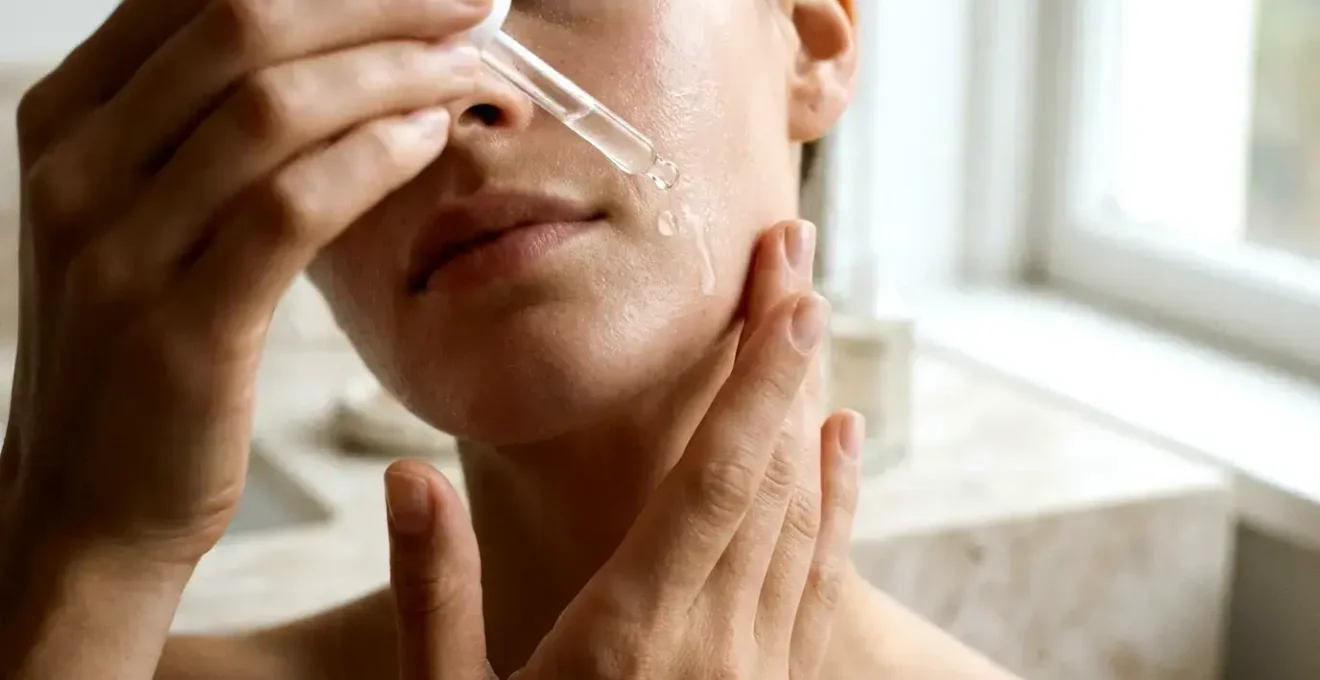
Dehydrated skin does not necessarily need a thick moisturiser to feel comfortable. It needs an effective combination of water-binding ingredients and a protective layer that reduces moisture loss. This distinction is particularly important for people whose skin feels tight after cleansing but becomes shiny during the day, or for those who dislike the greasy finish of conventional moisturisers.
A lightweight hydration routine can work by combining a humectant-rich serum with a suitable cream, adjusting the formulation to the skin’s condition and the surrounding environment. Ingredients such as glycerin, aloe vera and hyaluronic acid contribute to hydration in different ways, but their effectiveness depends on the complete formulation rather than their presence alone.
The key is to understand how skin retains water, how environmental conditions affect moisture loss and why a protective finishing layer matters. With the right combination, it is possible to improve surface comfort, reduce the appearance of dehydration-related flaking and maintain a comfortable finish without unnecessarily heavy textures.
Deep Hydration Without Heavy Skincare
- Combine humectants such as glycerin with an appropriate moisturising layer to support water retention in the stratum corneum.
- Choose lightweight serums and creams according to skin condition, ingredient formulation and environmental humidity rather than relying on marketing claims.
- Adjust your routine when heating, air conditioning or seasonal changes increase moisture loss, without automatically adding more products.
- Why Does a Hydrating Serum Mainly Improve the Skin’s Outer Layers?
- How to Layer a Hydrating Serum and Light Cream Without Sticky Residue?
- Glycerin or Aloe Vera: Which Feels Better on Tight, Dehydrated Skin?
- Why a Water-Based Hydrating Mist May Leave Your Face Feeling Drier
- When Should You Adjust Your Hydrating Routine During Winter Heating?
- Lipid Repair Cream or Glycerin Gel: Which Is More Suitable for Flaky Skin?
- Why Does Acne-Prone Skin Feel Tight Even When It Produces Excess Oil?
- Is Bio-Fermented Hyaluronic Acid Different From Conventional Hydrating Serums?
Why Does a Hydrating Serum Mainly Improve the Skin’s Outer Layers?
A hydrating serum primarily improves the water content and comfort of the stratum corneum, the outermost layer of the epidermis. Its humectant ingredients help attract and retain water within this surface layer, reducing the sensation of tightness and improving skin flexibility. However, this does not mean that a topical serum directly replenishes the deeper structural water reserves of the skin.
The stratum corneum plays a central role in maintaining skin hydration. It contains corneocytes surrounded by a lipid matrix that helps limit transepidermal water loss. When this structure functions properly, the skin retains moisture more effectively and feels smoother.
Humectants such as glycerin, urea and hyaluronic acid support water retention by attracting or binding water. Their action is different from that of occlusive ingredients, which form a protective film that slows evaporation.
This distinction explains why a serum can initially feel effective but provide only temporary comfort. In environments with low relative humidity, the surrounding air offers less available moisture. Depending on the formulation and skin condition, humectants used without an appropriate protective layer may not provide sufficient lasting comfort.
A practical way to assess your routine is to observe how your skin feels several hours after application. If tightness returns around midday despite an initially comfortable sensation, the routine may provide surface hydration without adequately limiting subsequent moisture loss.
By contrast, more sustained comfort suggests that the combination of humectants, emollients and protective ingredients is better suited to your skin’s needs.
A scientific review of skin hydration and emollient mechanisms explains the complementary functions of humectants and occlusive ingredients. The evidence supports their combined use as a strategy for maintaining the hydration of the stratum corneum, although it does not establish that every serum produces long-lasting results.
The practical consequence is straightforward: a lightweight serum can be an effective first step, but its performance often depends on what follows it. This is why layering technique matters as much as ingredient selection.
How to Layer a Hydrating Serum and Light Cream Without Sticky Residue?
Layering a hydrating serum beneath a lightweight moisturising cream allows you to combine water-binding ingredients with a protective finishing layer. Apply the serum to clean, slightly damp skin, allow it to settle, then spread a thin layer of cream over the face. The objective is to retain moisture without leaving an excessive product film.
A serum and a cream perform different functions. The serum generally contains humectants that help maintain water in the stratum corneum, while the cream contributes emollient and potentially occlusive ingredients that soften the skin and reduce moisture loss.
Applying the serum first allows its lighter formulation to contact the skin before the more substantial cream. Reversing this order may interfere with the intended layering experience, particularly when the cream leaves a substantial surface film.
**A practical layering method:**
- Cleanse gently and leave the skin slightly damp rather than completely dry.
- Apply a small amount of hydrating serum, distributing it evenly across the face.
- Allow the initial layer to settle until the surface no longer feels excessively wet or slippery.
- Apply a thin layer of lightweight moisturising cream, concentrating on areas that feel tight.
- During the daytime, finish with an appropriate broad-spectrum sunscreen.
Stickiness does not necessarily indicate that a serum contains too much glycerin or that your skin cannot tolerate humectants. It can result from the concentration of film-forming ingredients, the amount applied, the combination of formulations or insufficient time between layers.
One practical observation is the palm test: gently press your palm against the skin. If it grips noticeably and feels tacky, allow the product more time to settle before applying the next layer. This is a sensory guide, not a validated clinical absorption test.
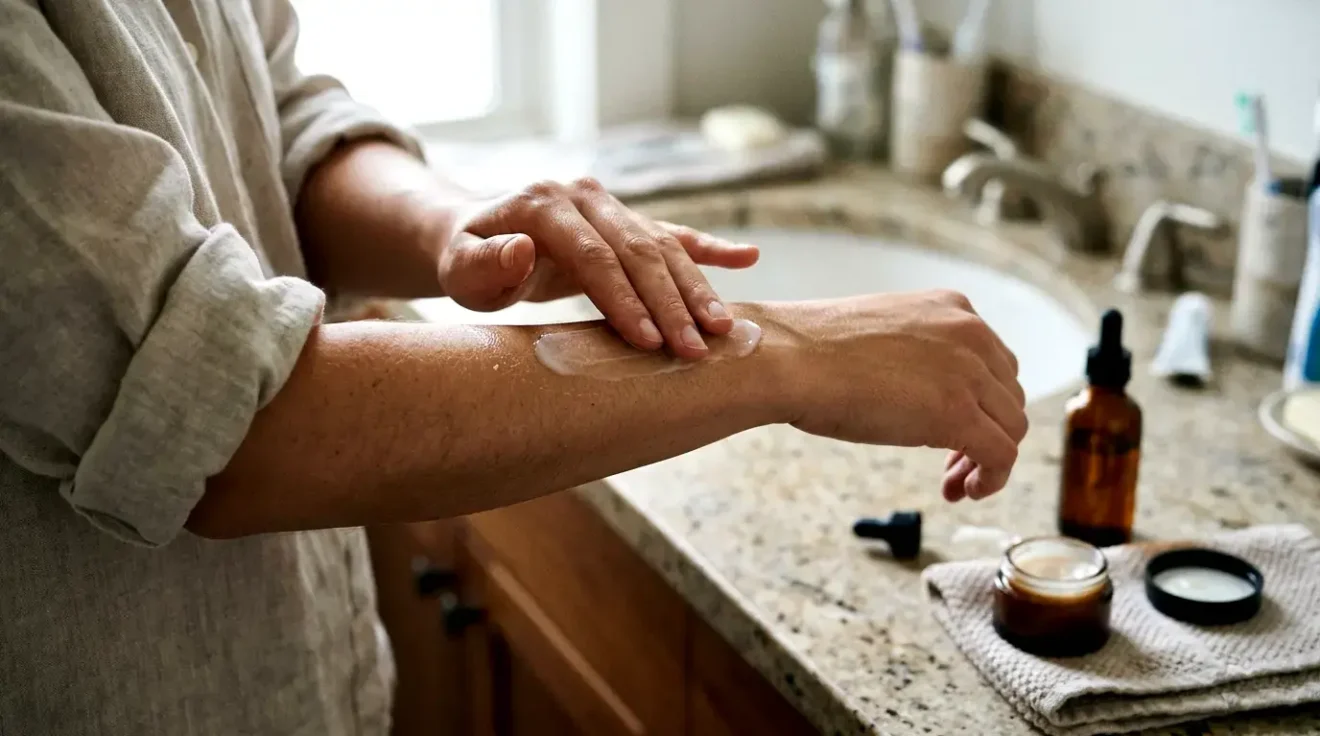
The amount of cream should also reflect the time of day. In the morning, a light lotion or gel-cream may be sufficient, particularly when followed by sunscreen. At night, a slightly richer emollient formulation can be useful if the skin feels uncomfortable or if indoor heating increases moisture loss.
If products pill, roll or form visible residue, consider whether the formulations are compatible. Silicone-rich products, film-forming polymers and excessive application can contribute to this problem. More layers do not automatically produce better hydration.
This approach also makes ingredient selection more straightforward. Rather than searching for a single miracle ingredient, compare the functions of humectants and soothing components to identify which combination addresses your particular discomfort.
Glycerin or Aloe Vera: Which Feels Better on Tight, Dehydrated Skin?
Glycerin is generally the more established choice when the main objective is to bind water and support sustained surface hydration. Aloe vera can be useful in formulations designed to provide a light, soothing feel, particularly when skin feels uncomfortable after cleansing or exposure to heat. Neither ingredient is universally better: the overall formulation and the skin’s condition determine the most suitable choice.
Glycerin is a humectant that attracts and retains water in the stratum corneum. It is widely used in moisturising products because it contributes to skin hydration and can support the skin’s natural moisturising functions.
Aloe vera, usually incorporated as an extract or gel ingredient, has a different formulation profile. Its water-rich character and additional constituents make it common in products marketed for soothing and refreshing skin. However, an aloe-based formulation is not automatically more hydrating or more suitable for sensitive skin.
A clinical study involving 20 healthy women evaluated cosmetic formulations containing 0.10%, 0.25% and 0.50% freeze-dried Aloe vera extract. Following two weeks of daily application, all three tested concentrations increased stratum corneum hydration compared with the vehicle.
Importantly, transepidermal water loss did not change compared with the vehicle. This distinction matters because increased surface hydration does not necessarily demonstrate improved barrier function.
The study also did not compare aloe vera directly with glycerin. Consequently, it cannot establish that either ingredient is superior.
The following comparison provides a practical way to approach ingredient selection.
| Selection criterion | Glycerin | Aloe vera |
|---|---|---|
| Primary formulation role | Humectant that binds water | Water-rich botanical ingredient used in hydrating and soothing formulations |
| Typical product formats | Serums, lotions, gels and creams | Gels, lightweight lotions and soothing serums |
| Potentially useful situation | Persistent tightness and dehydration | Preference for refreshing, lightweight formulations |
| Important limitation | Can feel tacky depending on concentration and formulation | Does not automatically provide lasting moisture retention or barrier repair |
For persistent tightness and dehydration-related flaking, a glycerin-containing serum or gel-cream is a reasonable starting point. For temporary discomfort associated with heat or cleansing, an aloe-containing formulation may offer a pleasant alternative, provided the complete product is tolerated.
Combination and oily skin can also benefit from both ingredients, but there is no need to layer separate products simply because they contain different humectants.
**Pay attention to formulation context.** The ingredient list alone cannot predict whether a product will feel lightweight. Its concentration, accompanying emollients, film-forming ingredients and overall vehicle all influence the finish.
A further consideration is that concentrated humectant formulations may feel uncomfortable on very dry skin when used without sufficient moisturising support. This does not mean that glycerin inherently dries the skin; it means that the complete formulation and environmental conditions matter.
Once the preferred humectant has been identified, the next challenge is maintaining its benefits throughout the day. This is particularly relevant when a refreshing mist seems to provide temporary relief but leaves the skin uncomfortable shortly afterwards.
Why a Water-Based Hydrating Mist May Leave Your Face Feeling Drier
A water-based facial mist can provide temporary surface moisture, but it does not necessarily prevent subsequent evaporation. When the water evaporates without an appropriate moisturising layer, the initial refreshing sensation may disappear quickly and leave the skin feeling tight again. The solution is to treat mist as a supporting hydration step rather than a complete moisturiser.
A facial mist mainly deposits water and other water-soluble ingredients onto the skin. Once applied, the water begins to evaporate. In an environment with low humidity, this process can happen relatively quickly.
The important distinction is between adding water temporarily and supporting the skin’s ability to retain it. A mist without sufficient humectants, emollients or protective ingredients may provide little lasting comfort, especially when used repeatedly in heated or air-conditioned spaces.
However, it would be inaccurate to claim that every water-based mist actively dehydrates the skin. The sensation depends on the product formulation, environmental conditions and the condition of the skin barrier.
**How to use a mist more effectively:**
- Apply a light mist to clean skin or to refresh the skin before moisturising.
- Allow the surface to remain slightly damp rather than waiting until all the water evaporates.
- Follow with a suitable hydrating serum or lightweight moisturiser.
- Use an emollient-rich product on areas that remain persistently dry.
This approach is particularly useful after cleansing or when refreshing the skin at home. It is less practical to spray repeatedly over makeup without considering how to restore the protective moisturising layer.
In offices, aircraft cabins and other dry indoor environments, frequent misting may provide short-lived relief without addressing the underlying moisture loss. A lightweight cream or targeted hydrating balm can be a more useful midday option.
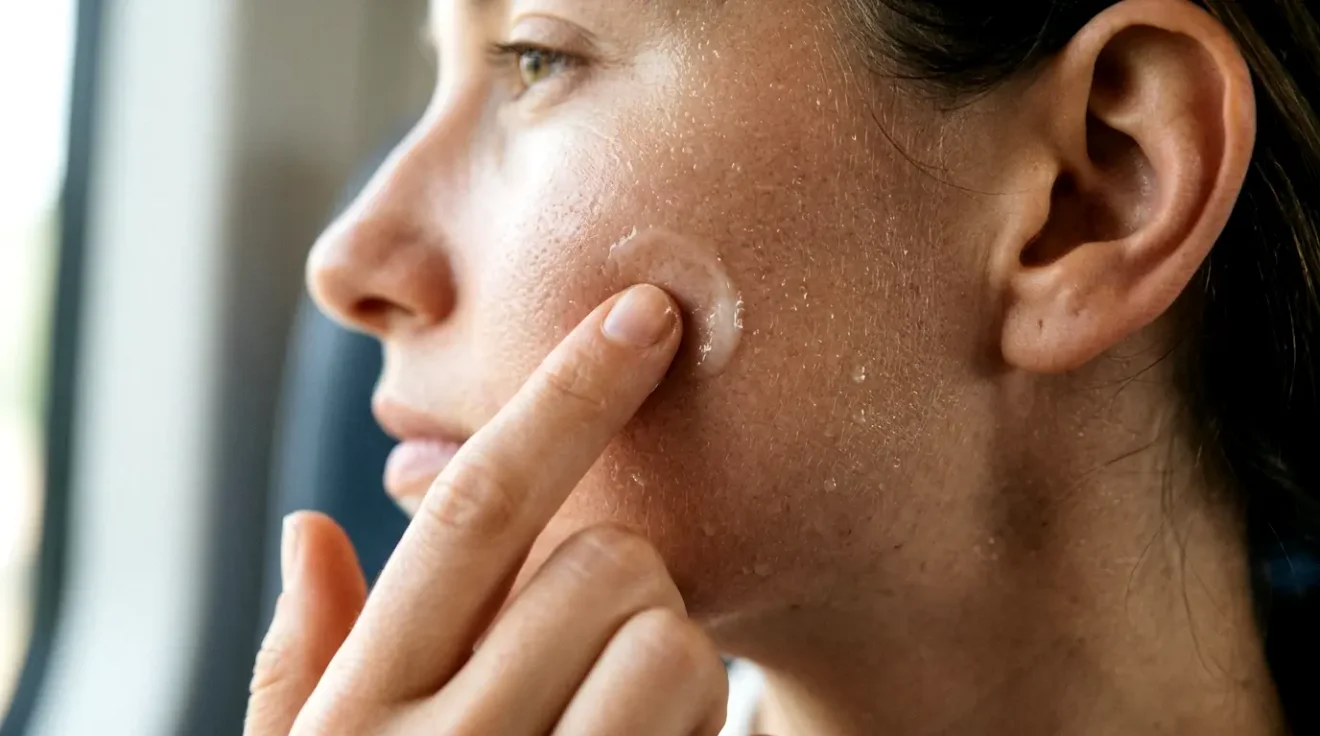
For people who wear makeup, a simple alternative is to avoid repeatedly saturating the face with mist. Instead, use a compatible moisturising product on dry areas when necessary, taking care not to disturb the makeup or compromise sunscreen coverage.
A useful distinction is that a mist can complement a moisturising routine, but it cannot reliably replace the combined functions of humectants and emollients.
The same principle becomes even more important during colder months. Indoor heating can alter the environment enough to make a previously comfortable routine feel insufficient, even when the products themselves have not changed.
When Should You Adjust Your Hydrating Routine During Winter Heating?
Adjust your hydrating routine when your skin begins feeling tight after cleansing, develops recurring flakes or becomes uncomfortable in heated indoor spaces. Winter heating often reduces indoor relative humidity, increasing the challenge of maintaining skin moisture. Rather than replacing every product, start by strengthening the final moisturising layer and reviewing cleansing habits.
The American Academy of Dermatology identifies low humidity and indoor heating as factors that can contribute to dry skin. This explains why a routine that worked comfortably during autumn may no longer provide the same results in winter.
A change in environmental conditions does not necessarily mean that your skin has become incompatible with its usual products. The balance between water retention and moisture loss may simply have shifted.
Look for observable signs that suggest an adjustment is needed:
- Post-cleansing tightness: Your skin feels uncomfortable shortly after washing, even when you use a familiar cleanser.
- Morning flaking: Dry patches return despite applying your usual moisturiser the previous evening.
- Indoor discomfort: Your face feels drier in heated rooms than when spending time outdoors.
- Reduced lasting comfort: Your skin feels hydrated immediately after application but becomes tight again within a few hours.
A graduated adjustment is usually more practical than introducing several new products simultaneously.
First, increase the protective quality of your final moisturising layer. A lightweight cream containing suitable emollients may be enough for mild seasonal discomfort. For more persistent dryness, a richer cream can provide additional support.
Second, review cleansing intensity. Avoid unnecessarily hot water, prolonged cleansing and harsh products that leave the skin feeling stripped.
Third, consider adding another humectant layer only if your skin still feels uncomfortable. More serum is not automatically the answer when the main issue is inadequate moisture retention.
The American Academy of Dermatology’s dry skin recommendations also note that creams and ointments generally provide greater moisturising effectiveness than lotions for more significant dryness.
A two-week observation period can help assess whether the adjustment is useful. This is a practical monitoring approach rather than a guaranteed recovery timeline. Observe whether your skin remains comfortable after application and whether recurring flaking becomes less noticeable.
**A simple winter hydration checklist:**
Five Actions to Optimise Your Winter Hydration Routine
- Record when tightness appears during the day. Deliverable: a short morning, afternoon and evening symptom log.
- Review your cleanser and identify any products that leave your skin feeling stripped. Deliverable: a list of products to retain or reconsider.
- Choose a lightweight humectant serum suited to your skin. Deliverable: an ingredient list highlighting glycerin or another appropriate humectant.
- Evaluate the protective properties of your moisturiser and increase its richness only where needed. Deliverable: a revised moisturising step.
- Reassess your skin after two weeks of consistent use. Deliverable: a comparison of comfort, tightness and visible flaking before and after the adjustment.
These changes are especially relevant at the beginning and end of the heating season, when indoor humidity and outdoor temperatures may fluctuate. If dryness becomes persistent, painful, inflamed or associated with cracking, professional dermatological advice is appropriate.
Seasonal dehydration and persistent flaking can also indicate different underlying needs. In particular, a lack of water and a deficiency in the skin’s protective lipids should not be treated as interchangeable problems.
Key Hydration Decisions Before Choosing a Repair Cream
- Distinguish temporary surface dehydration from a weakened lipid barrier before selecting a heavier moisturiser.
- Use humectants to support water retention and lipid-containing formulations to complement the skin’s protective surface structure.
- Avoid removing visible flakes through aggressive exfoliation when the underlying problem may be barrier-related dryness.
Lipid Repair Cream or Glycerin Gel: Which Is More Suitable for Flaky Skin?
A glycerin gel is more appropriate when flaking is associated mainly with insufficient surface hydration and the skin otherwise feels comfortable. A lipid repair cream is often more suitable when dryness is accompanied by persistent roughness, tightness and a compromised-feeling skin barrier. For visible recurring flakes, combining a humectant layer with a suitable lipid-containing cream can address both needs.
Flaky skin is not a single condition. The visible flakes may reflect inadequate water content in the stratum corneum, insufficient barrier lipids or a combination of both.
Glycerin-based gels primarily support hydration by attracting and retaining water. Their lightweight textures can suit people who dislike heavy creams, particularly when the skin is mildly dehydrated rather than significantly dry.
Lipid-containing creams have a different purpose. Ingredients such as ceramides, fatty acids and cholesterol can help complement the lipid organisation of the skin barrier. Depending on the formulation, these products can also provide emollient and occlusive effects.
A useful way to distinguish the two situations is to examine the overall skin condition rather than relying exclusively on the appearance of flakes.
| Skin observation | Possible formulation priority |
|—|—|
| Mild tightness with limited visible dryness | Humectant gel |
| Roughness and recurring dry patches | Lipid-containing moisturiser |
| Flaking with persistent discomfort | Humectant followed by lipid-rich cream |
| Oily appearance with localised dry areas | Lightweight hydration with targeted moisturising support |
A gel alone may not provide sufficient comfort when the skin’s protective lipid layer is compromised. Even if it temporarily increases surface hydration, the skin may continue to lose water without adequate moisturising support.
For this reason, a combined protocol is often more useful when visible flaking is present:
- Cleanse gently without scrubbing the affected areas.
- Apply a hydrating layer containing glycerin or another suitable humectant.
- Follow with a moisturiser containing appropriate barrier-supporting lipids.
- Concentrate the richer formulation on areas showing recurring dryness.
- Reduce the richness of the routine gradually when the skin becomes consistently comfortable.
Avoid the reflex of physically exfoliating every visible flake. Scrubs, abrasive tools and excessive exfoliating acids can aggravate an already uncomfortable skin barrier. Removing the visible flakes does not necessarily resolve the process responsible for their appearance.
A cream containing ceramides is not automatically suitable for every person or every type of flaking. Persistent scaling may also have causes unrelated to simple dehydration, including inflammatory skin conditions. If the problem continues despite gentle care, a dermatologist can help identify the cause.
This distinction is equally useful for people with oily or acne-prone skin. Excess sebum does not guarantee adequate hydration, and using stronger cleansing products to remove oil can make the sensation of tightness worse.
Why Does Acne-Prone Skin Feel Tight Even When It Produces Excess Oil?
Acne-prone skin can feel tight because sebum production and skin hydration are two different physiological processes. Sebum is an oily substance produced by sebaceous glands, whereas hydration concerns the water content of the stratum corneum. Consequently, skin can look shiny while simultaneously experiencing dehydration-related discomfort.
This distinction is important because oily skin is often treated as though it does not need moisturiser. In practice, excessive cleansing, harsh acne treatments and unsuitable products can contribute to dryness and discomfort even when sebum production remains elevated.
The result can be a frustrating combination: visible shine, enlarged-looking pores, occasional breakouts and tightness after cleansing.
Aggressive cleansing may remove surface oils and disturb the skin’s protective barrier. The resulting discomfort can encourage people to cleanse more frequently or avoid moisturisers altogether.
However, it is important not to assume that the skin automatically increases sebum production as a direct compensation for every episode of dehydration. Sebum production is influenced by several factors, including hormones, genetics and other biological processes. The relationship between cleansing, oiliness and breakouts is more complex than a simple compensatory cycle.
A more balanced hydration strategy can help avoid unnecessary irritation without introducing excessively rich textures.
**An acne-compatible hydration routine should prioritise:**
- Lightweight, water-based humectant formulations.
- Non-comedogenic moisturisers when that designation is appropriate to the formulation.
- Emollients that provide comfort without an unnecessarily heavy finish.
- Gentle cleansing rather than repeated attempts to eliminate all surface oil.
- Compatible sunscreen and acne treatments selected according to skin tolerance.
The best texture is not necessarily a completely oil-free product. Some oily and acne-prone skin types tolerate lightweight creams containing emollients better than highly concentrated gels that leave an uncomfortable film.
It is also useful to identify when tightness appears. If discomfort is most noticeable immediately after cleansing or during prolonged exposure to air conditioning, environmental dryness or cleansing intensity may be contributing factors.
If tightness occurs alongside persistent acne, irritation or peeling from active ingredients, review the frequency and combination of treatments. Retinoids, exfoliating acids and benzoyl peroxide can contribute to dryness or irritation, especially when introduced too aggressively.
A moisturiser should complement acne treatment rather than automatically replace it. Persistent or inflammatory acne may require professional assessment and an appropriate treatment plan.
Once the routine is adapted to the skin’s actual condition, ingredient selection becomes more precise. Hyaluronic acid is a common example: its production method attracts marketing attention, but its formulation characteristics provide more useful information about performance.
Is Bio-Fermented Hyaluronic Acid Different From Conventional Hydrating Serums?
Bio-fermented hyaluronic acid is produced through a fermentation process, commonly involving bacterial production, rather than being obtained through other sourcing routes. This describes its origin, not a fundamentally different hydration mechanism. For skincare performance, molecular weight, concentration and the complete formulation are generally more informative selection criteria than the fermentation label alone.
Hyaluronic acid is a naturally occurring molecule involved in water retention within human tissues. In topical skincare, it is used primarily as a humectant and film-forming ingredient that supports surface hydration and improves the feel of the skin.
Commercial hyaluronic acid can be obtained from animal sources or produced through bacterial fermentation. Fermentation-derived ingredients are widely used in modern cosmetic formulations.
However, the term bio-fermented should not be interpreted as evidence of superior moisturising performance. It indicates a production approach, not a guarantee of greater hydration, improved tolerance or deeper penetration.
One of the more important formulation considerations is **molecular weight**.
Hyaluronic acid molecules of different sizes can behave differently when applied topically. Higher-molecular-weight forms generally have limited skin permeability and primarily contribute to surface hydration and film formation.
Some lower-molecular-weight forms can penetrate further into the stratum corneum. Their behaviour depends on molecular characteristics, concentration, formulation and the experimental conditions used to assess penetration.
A scientific review of topical hyaluronic acid examines these differences and reports observations involving molecular fractions ranging from 20 to 300 kDa in studies using Raman spectroscopy. These findings should not be interpreted as proof that every low-molecular-weight product reaches the dermis or produces deeper, lasting structural hydration.
**How to assess a hyaluronic acid serum:**
- Check whether the manufacturer identifies the molecular weight or provides a clear explanation of the hyaluronic acid fractions used.
- Look for complementary humectants such as glycerin, which can support water retention.
- Consider whether the formulation includes emollients or film-forming ingredients that contribute to surface comfort.
- Evaluate the product’s texture and how it behaves when layered with your moisturiser.
- Look for evidence supporting specific performance claims rather than relying exclusively on terms such as natural, bio-fermented or advanced.
A formulation that combines different molecular weights may offer complementary surface and superficial hydration characteristics. However, the presence of multiple molecular weights does not automatically establish superior clinical performance.
There is also a distinction between ingredient sourcing and cosmetic effectiveness. Fermentation may be relevant to consumers who prefer particular manufacturing approaches, but claims about purity, environmental sustainability or reduced ecological impact require separate supporting evidence.
Likewise, the available scientific review does not establish that fermentation-derived hyaluronic acid has a distinct sensory advantage over conventionally sourced alternatives.
For someone seeking a lightweight hydrating serum, the practical priority should therefore be the complete ingredient system, product tolerance and compatibility with the rest of the routine.
Ultimately, deep hydration skincare is not about applying the thickest possible moisturiser or collecting multiple products with similar claims. It is about matching humectants, emollients and protective ingredients to the skin’s actual needs, then adjusting the routine when environmental conditions or skin tolerance change. A simple, consistent combination of a well-formulated serum, an appropriate moisturiser and daytime sun protection provides a practical starting point. If tightness, flaking or irritation persists despite these adjustments, a dermatological assessment can help distinguish ordinary dehydration from an underlying skin condition.
Can dehydrated skin become oily at the same time?
Yes. Dehydration concerns the water content of the skin’s outer layers, while oiliness relates to sebum production. These processes are separate, so skin can appear shiny while still feeling tight or uncomfortable. A lightweight humectant serum followed by a suitable moisturiser can help address this combination without relying on heavy textures.
How long does it take for a hydrating skincare routine to improve skin comfort?
Some humectant formulations can improve the immediate feel of the skin after application. More persistent dryness may require consistent moisturising and changes to cleansing habits. The American Academy of Dermatology notes that improvement in dry skin may be observed within two weeks when self-care measures are effective. This is an indicative timeframe, not a guarantee for every individual.
Should a hydrating serum be applied before or after sunscreen?
Apply your hydrating serum before moisturiser and sunscreen. Allow the preceding layers to settle, then apply a broad-spectrum sunscreen as the final step of your morning skincare routine. Follow the sunscreen manufacturer’s application instructions to maintain appropriate protection.
Can you use glycerin and hyaluronic acid together?
Yes. Glycerin and hyaluronic acid are compatible humectants commonly used together in moisturising formulations. They contribute to water retention through related but distinct formulation characteristics. Their combination does not automatically make a product more effective, so the overall formulation, skin tolerance and moisturising support remain important.
Is a lightweight gel moisturiser enough for very dry skin?
Not always. A gel moisturiser may provide sufficient comfort for mild dehydration or oily skin, but persistent dryness and flaking can require a cream containing more emollient and occlusive ingredients. The American Academy of Dermatology generally recommends creams and ointments over lotions for more significant dryness. Choose according to the severity of dryness and your skin’s tolerance rather than texture preference alone.