

Uneven skin tone does not always require stronger exfoliants, multiple brightening serums or intensive treatments. When skin is prone to irritation, these approaches can sometimes make discoloration more noticeable by triggering additional inflammation. A more sustainable strategy starts with understanding why the marks appeared, protecting the skin barrier and choosing ingredients that can address pigmentation without creating unnecessary stress.
Post-inflammatory hyperpigmentation, sun-related discoloration and persistent redness can look similar, but they do not necessarily respond to the same skincare approaches. Identifying the likely cause helps determine whether an ingredient such as azelaic acid is appropriate, how frequently to use it and when to reconsider the routine.
For adults with sensitive skin, the priority is gradual cosmetic improvement rather than rapid transformation. Consistent broad-spectrum sun protection, a simple moisturising routine and carefully introduced active ingredients can support a more even-looking complexion over time. Equally important is recognising when a persistent or changing spot needs professional assessment rather than another cosmetic product.
What Matters Most for a More Even-Looking Complexion
- Identify whether discoloration comes from previous inflammation, sun exposure or another skin concern before choosing treatment.
- Prioritise barrier-friendly skincare and introduce azelaic acid gradually if appropriate for your skin.
- Use consistent broad-spectrum sun protection to help prevent existing pigmentation from becoming darker.
- Why Do Dark Marks Remain After a Spot Has Completely Healed?
- How to Introduce Azelaic Acid for Uneven Tone Without Overloading Your Routine?
- Post-Acne Marks or Sun Spots: Which Type of Discoloration Are You Seeing?
- Why Skipping Sunscreen Can Undermine Your Efforts to Fade Dark Spots
- When Should You Reassess a Routine for Post-Blemish Discoloration?
- Why Does Daily UV Exposure Matter Even When Your Skin Never Burns?
- Why Fruit Enzyme Exfoliants Can Still Trigger Skin Reactions
- How to Care for Sensitive Skin Without Mistaking a Medical Condition for Irritation?
Why Do Dark Marks Remain After a Spot Has Completely Healed?
Dark marks can remain after a blemish has disappeared because inflammation may stimulate excess melanin production, leaving discoloration even after the original spot has healed. This is called post-inflammatory hyperpigmentation (PIH). The pigment can sit relatively close to the skin surface or deeper within the skin, affecting how long the mark remains visible and how much topical skincare can realistically achieve.
During an inflammatory episode, such as an acne breakout, the skin’s pigment-producing cells can become more active. Even after swelling and visible blemishes disappear, the additional melanin may remain. This explains why a flat brown or grey mark can persist for months without indicating that acne is still active.
The location of the pigment matters. **Epidermal pigmentation** is closer to the surface and may gradually become less visible as the skin renews itself. The American Academy of Dermatology indicates that superficial dark spots can take approximately 6 to 12 months to fade after their underlying cause has been controlled. Deeper pigmentation, involving the dermis, can persist for several years. Grey or blue-grey discoloration can sometimes suggest deeper pigment, although colour alone cannot establish its location.
There is also an important distinction between pigmentation and scarring. A flat mark that changes the colour of the skin is not the same as a depressed or raised acne scar. Topical brightening products may help improve the appearance of flat discoloration, but they do not reliably correct changes in skin texture.
Skin tone and individual reactivity also influence the likelihood of persistent marks. More deeply pigmented skin can develop noticeable PIH following relatively minor inflammation. Sensitive skin faces an additional challenge: irritation from skincare products can itself trigger discoloration.
Consequently, picking blemishes, scrubbing marks or repeatedly applying strong exfoliants can be counterproductive. **Additional inflammation can create additional pigmentation**, prolonging the original concern.
The practical response is to control the original trigger, avoid unnecessary irritation and allow sufficient time for gradual improvement. The American Academy of Dermatology guidance on fading dark spots provides further information about pigmentation, gentle skincare and realistic fading times.
A gentle approach does not mean ignoring pigmentation. It means avoiding interventions that repeatedly restart the inflammatory process while giving the skin an opportunity to recover.
How to Introduce Azelaic Acid for Uneven Tone Without Overloading Your Routine?
Azelaic acid can be a useful option for improving the appearance of post-acne discoloration, particularly when a routine needs to remain relatively simple. It has properties relevant to pigmentation and inflammatory skin concerns, but it can still cause discomfort in some people. The most sensible approach for irritation-prone skin is to introduce it gradually, monitor the response and avoid combining it immediately with several other active ingredients.
Azelaic acid is used in skincare because it can influence processes involved in excess pigmentation and may help improve the appearance of post-inflammatory marks. It is also used in dermatological care for certain inflammatory skin conditions. This makes it an ingredient worth considering when discoloration and redness coexist, although the cause of persistent redness should be assessed separately.
Clinical evidence provides a useful indication of its potential. A randomized, double-blind, placebo-controlled study published in 2024 examined a 15% azelaic acid gel in people with mild-to-moderate acne. The treatment group showed a significant reduction in melanin content in post-inflammatory hyperpigmentation lesions after 12 weeks. The authors also described adverse reactions as minimal.
However, the study involved a specific formulation and a relatively limited participant group. Its findings do not establish that every cosmetic azelaic acid product will produce the same results or that everyone with sensitive skin will tolerate the ingredient.
The difference between prescription formulations and over-the-counter cosmetics also matters. Prescription products may contain higher concentrations or use different formulation systems, depending on the country. Cosmetic products are available in different formats and concentrations, including creams, gels and serums.
**The percentage alone does not determine tolerability.** The vehicle, supporting ingredients, application frequency and condition of the skin barrier can all influence the experience.
A cautious introduction can follow these stages:
1. Begin with a low frequency, such as two evenings per week, rather than applying the ingredient every day immediately.
2. Apply the product to clean, completely dry skin, following its instructions.
3. Use a straightforward moisturiser to support skin comfort.
4. Observe the skin over several weeks before increasing application frequency.
5. Increase gradually only if there is no persistent redness, burning, tightness or worsening irritation.
Mild temporary sensations can occur with some formulations, but persistent burning or worsening discomfort should not be treated as evidence that the product is working.
The evidence from the clinical trial of 15% azelaic acid for post-acne pigmentation supports its potential in a particular treatment context, not an unrestricted recommendation for every sensitive-skin routine.
A simple schedule can reduce unnecessary overlap:
| Routine step | Morning | Evening |
|---|---|---|
| Cleanse | Gentle cleanser or water, depending on tolerance | Gentle cleanser |
| Targeted treatment | None initially | Azelaic acid on selected evenings |
| Moisturise | Simple moisturiser | Barrier-supporting moisturiser |
| Sun protection | Broad-spectrum SPF 30 or higher | Not routinely required indoors at night |
Avoid introducing several exfoliating acids, retinoids or potentially irritating treatments at the same time. If another active ingredient is already part of the routine, keeping it on separate evenings can make it easier to identify the cause of a reaction.
Progress should be judged over weeks and months rather than individual applications. If discomfort develops, reducing frequency or pausing the product is more sensible than adding further ingredients to compensate.
Post-Acne Marks or Sun Spots: Which Type of Discoloration Are You Seeing?
Post-acne marks and sun spots can both appear as brown areas on the skin, but they have different underlying causes. Post-acne discoloration usually follows an inflammatory blemish, whereas sun-related spots develop in areas with accumulated ultraviolet exposure. Their appearance and location can provide useful clues, although visual inspection alone cannot confirm a diagnosis.
Post-inflammatory hyperpigmentation often appears where acne, irritation or another inflammatory episode previously occurred. The colour can range from light brown to dark brown, depending on skin tone and the individual response to inflammation. Some post-acne marks can also appear pink or red, particularly when residual redness rather than excess melanin is the main concern.
Sun-related pigmentation, sometimes called solar lentigines, tends to occur in areas exposed to sunlight over time. Common locations include:
– The cheeks and forehead.
– The backs of the hands.
– The shoulders.
– The upper chest and décolletage.
These spots can remain visible for extended periods and may become more noticeable with continued UV exposure.
A comparison can help organise the initial assessment:
| Feature | Post-acne marks | Sun-related spots |
|---|---|---|
| Likely trigger | Previous inflammation or acne | Cumulative sun exposure |
| Typical location | Areas where blemishes previously appeared | Frequently exposed areas |
| Appearance | Brown, red or sometimes greyish discoloration | Often flat brown patches or spots |
| Evolution | May gradually fade after inflammation resolves | Can persist and become more noticeable with continued exposure |
| Skincare priority | Prevent new inflammation and support gradual fading | Consistent UV protection and appropriate assessment |
These characteristics are indicative, not diagnostic. The colour of a spot cannot reliably reveal its origin or the depth of its pigment.
When post-acne pigmentation is the main concern, a gentle routine containing a suitable ingredient such as azelaic acid may be worth considering. For sun-related discoloration, consistent sun protection is particularly important because further exposure can maintain or intensify pigmentation.
It is also entirely possible to have both concerns simultaneously. An adult may have residual marks from previous acne alongside sun-related spots on the cheeks or hands. Trying to treat every area with multiple brightening products at once can overload sensitive skin.
A better strategy is to identify the most likely source of each concern and prioritise the simplest effective measures. Avoid treating a new or unusual pigmented lesion as an ordinary cosmetic spot.
**Changes in size, shape or colour, irregular borders, itching or bleeding warrant professional assessment.** A new lesion that looks different from other spots should also be checked. The ABCDE approach used in melanoma awareness highlights asymmetry, border irregularity, colour variation, diameter and evolution. These are warning signs rather than a self-diagnostic test.
When the origin remains uncertain, a dermatologist can assess the lesion before any cosmetic treatment is attempted. A cautious diagnosis-first approach is especially important for spots that are new or changing.
Why Skipping Sunscreen Can Undermine Your Efforts to Fade Dark Spots
Skipping sunscreen can undermine efforts to improve uneven skin tone because ultraviolet radiation stimulates pigmentation and can make existing dark marks more noticeable. Even when a person does not experience sunburn, repeated exposure can contribute to ongoing skin damage. Consistent broad-spectrum sun protection therefore supports the results of a gentle pigmentation routine rather than functioning as an optional extra.
Ultraviolet radiation includes UVA and UVB rays, which affect the skin differently. UVB is strongly associated with sunburn, while UVA penetrates more deeply and contributes to pigmentation and photoaging. This distinction explains why a person can experience cumulative UV exposure without obvious redness or pain.
For someone trying to fade post-inflammatory hyperpigmentation, continued exposure can stimulate pigment production in already discoloured areas. A brightening ingredient may help address existing pigmentation, but it cannot fully compensate for repeatedly exposing the skin to the original aggravating factor.
The American Academy of Dermatology recommends choosing a sunscreen with **broad-spectrum protection, SPF 30 or higher and water resistance**. For people concerned about visible pigmentation, a tinted sunscreen containing iron oxides may also provide protection against visible light, which can contribute to pigmentation, particularly in more deeply pigmented skin.
Sensitive skin requires a little more consideration when choosing a formula. Mineral sunscreens containing zinc oxide or titanium dioxide may be suitable options for some people, especially when fragrance-free. However, mineral filters are not automatically irritation-free, and formulation differences can matter as much as the filter itself.
A practical selection process includes checking:
– Whether the sunscreen provides broad-spectrum protection.
– Whether the formula is fragrance-free.
– Whether the texture feels comfortable and does not create persistent stinging.
– Whether the product is appropriate for the intended activity and skin type.
– Whether a small-area tolerance test is possible before regular facial use.
The amount applied is another important factor. A very thin layer may provide substantially less protection than the SPF value indicated on the packaging. Applying a generous, even layer and following the product’s instructions is therefore important.
For many sunscreen products, reapplication is recommended approximately every two hours when outdoors, and after swimming or heavy sweating. Rubbing the face, wiping perspiration and prolonged exposure can also reduce the practical protection provided by an application.
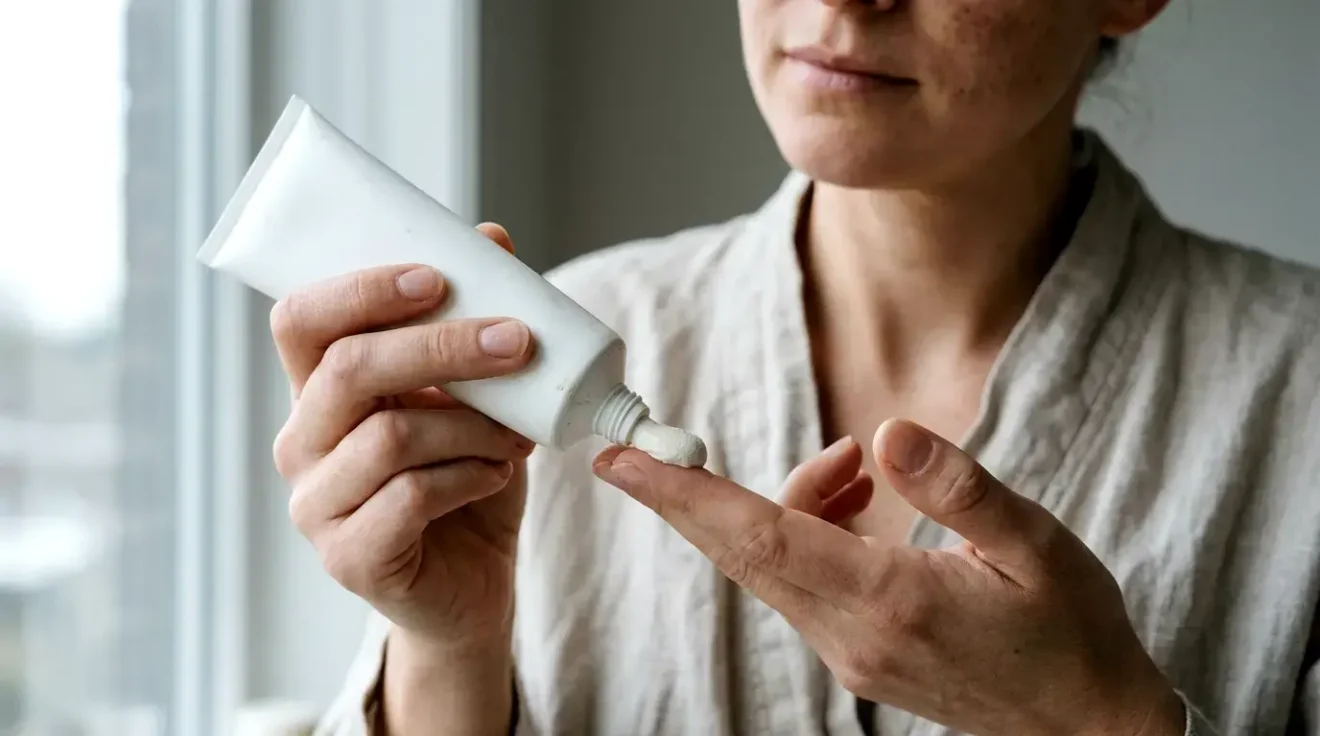
Sun protection should not be restricted to holidays or hot summer days. UVA exposure can occur during ordinary outdoor activities, including on cloudy days. Glass also blocks UVB more effectively than UVA, so some UVA exposure can occur near windows.
Shade, protective clothing, wide-brimmed hats and sunglasses provide additional ways to reduce exposure. These measures can be particularly useful when sunscreen application is uncomfortable or when spending extended periods outdoors.
The FDA guidance on sunscreen use and UV protection explains broad-spectrum protection, application and reapplication. Its regulatory recommendations are specific to the United States, so product labelling and sunscreen requirements should be checked in the country where the product is purchased.
When a sunscreen causes persistent irritation, the answer is not necessarily to abandon UV protection. Finding a better-tolerated formulation and combining it with physical protection can make daily prevention more manageable.
When Should You Reassess a Routine for Post-Blemish Discoloration?
A routine for post-blemish discoloration should be reassessed when irritation develops, new marks appear or there is no meaningful improvement despite consistent use over a reasonable period. However, slow progress does not automatically mean that a product has failed. Pigmentation can take months to fade, so tracking changes objectively is more useful than making decisions based on daily mirror checks.
Post-inflammatory hyperpigmentation is often slow to resolve. Superficial marks may take 6 to 12 months to fade after the original cause has been controlled, while deeper pigmentation can persist for years. These are general indications, not individual treatment deadlines.
One of the simplest ways to evaluate progress is to photograph the affected area regularly. Lighting, camera distance, facial position and exposure settings can make skin appear lighter or darker from one photograph to another. Without consistent conditions, apparent changes may reflect photography rather than actual pigmentation.
A useful monitoring approach involves:
– Photographing the same area in the same natural lighting.
– Maintaining approximately the same camera distance and angle.
– Avoiding beauty filters and image adjustments.
– Comparing photographs at regular intervals rather than every day.
– Recording any changes in redness, sensitivity or new breakouts.
A routine should also be assessed according to tolerance. A product that gradually improves discoloration but repeatedly causes burning or persistent redness may not be appropriate for that particular skin.
Conversely, a product that causes no discomfort but has produced little visible change after several weeks may simply need more time. The distinction depends on the ingredient, formulation, frequency and original cause of pigmentation.
Changing several products at once makes this assessment difficult. If an exfoliant, brightening serum and retinoid are introduced together, it becomes harder to determine which ingredient caused a reaction or contributed to improvement.
**Changing one variable at a time** creates a clearer picture of what the skin tolerates. It also reduces the temptation to respond to slow progress by adding more active ingredients.

A practical review should distinguish three possible situations:
– **Gradual improvement:** The marks appear lighter or less noticeable, and the skin remains comfortable. Continuing the routine may be reasonable.
– **Persistent irritation:** Redness, burning, tightness or new sensitivity suggests that the routine may need simplifying or that an ingredient should be paused.
– **No meaningful progress:** If consistent use has not produced a noticeable change over an appropriate period, the original diagnosis, product choice or treatment strategy may need professional review.
The skin barrier deserves particular attention during reassessment. If it feels persistently tight, reacts to ordinary moisturisers or becomes uncomfortable after cleansing, temporarily reducing active ingredients may be more useful than introducing another brightening product.
A dermatologist can also assess long-standing or deep discoloration and determine whether cosmetic skincare is sufficient. Professional evaluation becomes particularly important when a mark changes appearance or is accompanied by symptoms.
The goal is not to keep adding products until a mark disappears. It is to maintain a routine that the skin can tolerate while recognising when professional guidance could offer a more appropriate solution.
Key Takeaways Before Considering Additional Treatments
- Uneven skin tone can reflect both previous inflammation and accumulated UV exposure, so identifying the likely cause matters.
- Sun protection is a foundational measure for preventing further darkening, even when the skin does not burn.
- A gentle routine should be evaluated through consistent photographs, skin comfort and gradual changes rather than daily visual comparisons.
Why Does Daily UV Exposure Matter Even When Your Skin Never Burns?
Daily UV exposure matters even when the skin never burns because the absence of visible sunburn does not mean that the skin has avoided ultraviolet damage. UVA radiation can penetrate more deeply than UVB and contribute to pigmentation and photoaging without producing the obvious redness associated with sunburn. For anyone trying to improve uneven skin tone, this makes everyday protection particularly relevant.
UVB radiation is strongly associated with sunburn and plays an important role in the development of skin cancer. UVA radiation is present throughout the year and contributes to deeper skin changes, including pigmentation and premature skin ageing.
This distinction is important because sunburn is an unreliable indicator of total UV exposure. A person who rarely burns may still experience repeated exposure during commuting, walking, outdoor work or other ordinary activities.
The effects are cumulative. Pigmentation visible today may reflect previous exposure rather than something that happened the previous afternoon. Repeated UV exposure can also make existing areas of discoloration more noticeable, particularly when the skin already has a tendency towards post-inflammatory hyperpigmentation.
For sensitive skin, reducing exposure has an additional advantage: it does not require introducing another exfoliating or brightening active ingredient. **Prevention can support a more even-looking complexion without adding another potential source of irritation.**
A practical approach involves several complementary measures:
- Choose shade: Reduce direct exposure when the sun is strong, especially during extended outdoor activities.
- Wear protective clothing: Cover exposed areas with comfortable clothing designed to limit UV exposure.
- Use a wide-brimmed hat: Help protect the face, ears and neck.
- Wear sunglasses: Protect the delicate eye area from excessive UV exposure.
- Maintain sunscreen use: Apply a suitable broad-spectrum formula to exposed skin and follow its reapplication instructions.
These strategies are useful in temperate climates as well as warmer regions. Cloud cover does not eliminate UV exposure, and a routine based exclusively on the weather forecast can leave the skin insufficiently protected.
There is no need to treat every day as a high-exposure event, but regular protection should reflect the local UV conditions, the amount of time spent outdoors and the product’s instructions.
For people with sensitive skin, a combination of clothing, shade and a comfortable sunscreen can be easier to maintain than relying entirely on a single product.
When a complexion is prone to uneven pigmentation, sun protection is not simply an anti-ageing measure. It is part of maintaining a stable environment in which existing marks can gradually become less noticeable.
Why Fruit Enzyme Exfoliants Can Still Trigger Skin Reactions
Fruit enzyme exfoliants can trigger skin reactions because natural enzymes still perform a biological exfoliating action. Ingredients derived from papaya or pineapple can help break down proteins in the outermost layer of the skin, but this process can become uncomfortable when the formulation is too strong, used too frequently or applied to an already compromised skin barrier.
The word natural is not a guarantee of gentleness. Papain, derived from papaya, and bromelain, derived from pineapple, are examples of proteolytic enzymes used in cosmetic exfoliating formulations.
These ingredients act differently from traditional alpha-hydroxy acids, but they still influence the surface layer of the skin. Their exfoliating activity can help remove accumulated dead skin cells, potentially improving the appearance of dullness and uneven texture.
However, the skin’s condition at the time of application matters considerably.
A barrier that is already irritated may react more strongly to an exfoliating treatment. This can happen after excessive cleansing, frequent use of acids, recent retinoid application or repeated exposure to other potentially irritating ingredients.
Several factors can increase the likelihood of discomfort:
– A concentrated enzyme formulation.
– Leaving the product on longer than instructed.
– Using it more frequently than recommended.
– Applying it immediately after another exfoliating treatment.
– Using it on skin affected by active irritation or dryness.
– Combining several potentially irritating ingredients in the same routine.
The result can include stinging, redness, dryness and increased sensitivity. For someone already experiencing post-inflammatory pigmentation, this creates an additional concern: renewed inflammation may contribute to further discoloration.
Patch testing can help identify some reactions before applying a new product more widely. Follow the manufacturer’s directions for testing on a small, discreet area and observe the skin for delayed discomfort or visible changes. A short observation period of 24 to 48 hours can provide useful information, but it cannot guarantee that the product will never cause a reaction during repeated use.
If the skin remains comfortable, introduction should still be gradual. Avoid using the enzyme treatment on the same evening as other exfoliating acids or newly introduced active ingredients.
Fruit enzymes also have a limited role in a pigmentation-focused routine. They may help improve surface texture, but they do not replace ingredients specifically selected for post-inflammatory discoloration. Nor can they substitute for daily sun protection.
Overusing them in pursuit of faster results can create the opposite outcome by irritating the skin and potentially maintaining the cycle of inflammation and pigmentation.
For irritation-prone skin, exfoliation is optional rather than essential. A routine built around gentle cleansing, moisturising and sun protection can be a more appropriate starting point when the barrier is easily disrupted.
How to Care for Sensitive Skin Without Mistaking a Medical Condition for Irritation?
Sensitive skin does not always react to products alone. Persistent redness, burning, dryness or recurrent inflammation can also indicate an underlying condition such as eczema, rosacea or contact dermatitis. When symptoms continue despite simplifying a routine, or appear independently of product use, professional assessment is more appropriate than repeatedly experimenting with cosmetic treatments.
Product-related irritation often follows a recognisable pattern. Symptoms may appear shortly after introducing a new ingredient, become more noticeable after repeated applications and improve when the suspected product is discontinued.
However, this pattern is not universal. Allergic contact dermatitis, for example, can develop after previous exposure and may appear with a delay. The timing of a reaction alone cannot reliably distinguish irritation from an allergic response.
Underlying skin conditions can behave differently. Rosacea may involve persistent facial redness, flushing and increased sensitivity. Eczema can produce recurring dryness, inflammation and itching. Contact dermatitis may continue when exposure to the triggering substance is repeated, including exposure to ingredients found in everyday products.
These conditions can coexist with pigmentation concerns. Repeated inflammation may contribute to post-inflammatory discoloration, making the complexion appear uneven even when the original problem is not acne.
The risk of treating everything as cosmetic irritation is that an underlying condition may remain unrecognised. Continuing to try new serums or exfoliants can delay appropriate assessment and potentially aggravate symptoms.
A simplified routine can help reduce unnecessary exposure while the skin recovers.
A useful temporary foundation includes:
– A gentle cleanser that does not leave the skin feeling tight.
– A straightforward moisturiser with barrier-supporting ingredients.
– A suitable broad-spectrum sunscreen during daytime exposure.
– A temporary pause on non-essential exfoliants and strong active treatments.
Ingredients such as ceramides can support the skin barrier by helping maintain its protective structure. Other moisturising and soothing ingredients may also be useful, depending on the formulation and individual tolerance.
Once the skin is more comfortable, products can be reintroduced individually, leaving enough time between additions to identify possible reactions. If a product repeatedly triggers discomfort, there is no need to persist with it simply because it contains an ingredient associated with pigmentation improvement.
Persistent symptoms, spreading inflammation, recurrent flushing or discomfort that does not improve after simplifying skincare should prompt a medical assessment. Severe swelling, blistering, significant pain or signs of infection also require appropriate medical attention.
Changes in pigmentation need separate consideration. A spot that becomes asymmetrical, develops irregular borders, changes colour, grows or bleeds should not be assumed to be post-acne discoloration.
The American Academy of Dermatology’s ABCDE guide to melanoma explains the warning signs that warrant professional examination. The ABCDE criteria are a screening aid, not a way to rule out every suspicious lesion at home.
A Five-Step Plan for a More Manageable Sensitive-Skin Routine
- Identify the main concern: Record whether the visible change is a flat dark mark, persistent redness, an active blemish or a change in skin texture. Deliverable: a short written description of the concern and its location.
- Review current products: List cleansers, moisturisers, exfoliants, serums and sunscreens, noting when each was introduced. Deliverable: a complete skincare inventory with introduction dates.
- Establish a minimal routine: Retain a gentle cleanser, a suitable moisturiser and tolerated sun protection while pausing unnecessary active treatments. Deliverable: a simplified morning and evening routine.
- Monitor skin tolerance: Take consistent photographs and record redness, stinging, dryness and new breakouts. Deliverable: a dated skin-progress log.
- Reassess before adding treatments: Introduce one appropriate product at a time only when the skin is comfortable, and seek professional advice if symptoms persist or lesions change. Deliverable: a documented decision to continue, pause or request an assessment.
The most important principle is to repair and maintain the skin barrier before pursuing more intensive pigmentation treatments. When the barrier is compromised, even products generally considered gentle can become uncomfortable.
A gradual routine is not necessarily an incomplete routine. It can be the most practical way to improve the appearance of uneven skin tone while reducing the risk of further inflammation.
For adults with irritation-prone skin, the next step is to build a routine around tolerated essentials, introduce targeted ingredients only when appropriate and seek dermatological guidance when symptoms or pigmentation do not follow an expected course. Consistency and a healthy skin barrier matter more than the number of products used.
How long does it take for post-acne dark marks to fade?
Post-acne dark marks can take several months to fade. According to the American Academy of Dermatology, superficial hyperpigmentation may take approximately 6 to 12 months after the underlying cause has been controlled. Deeper pigmentation can persist for several years. Individual results depend on pigment depth, skin characteristics, continued inflammation and sun exposure.
Can sensitive skin use azelaic acid every day?
Some people with sensitive skin can eventually tolerate daily azelaic acid, but starting with daily application is not necessary. Beginning with two or three applications per week and increasing gradually if the skin remains comfortable can be a more cautious approach. Persistent burning, redness or irritation indicates that the frequency or formulation should be reconsidered.
Is vitamin C or azelaic acid better for uneven skin tone?
Neither ingredient is universally better. Azelaic acid has clinical evidence supporting its use for post-inflammatory hyperpigmentation and certain inflammatory skin concerns. Vitamin C is used in cosmetic formulations to address uneven tone and oxidative stress. For irritation-prone skin, the best choice depends on the formulation, individual tolerance and the underlying cause of discoloration. Introducing one active ingredient at a time makes reactions easier to identify.
Can moisturiser alone improve an uneven complexion?
A moisturiser does not directly remove established pigmentation, but it can support the skin barrier and reduce dryness that makes uneven texture more noticeable. Maintaining a comfortable barrier also helps reduce the likelihood of irritation from other skincare products. For pigmentation concerns, moisturising works best as part of a broader routine that includes appropriate sun protection and, when suitable, a targeted active ingredient.
Should exfoliation be avoided completely when the skin is sensitive?
Not necessarily, but exfoliation is not essential for improving every type of uneven skin tone. If the skin is currently irritated, dry or compromised, exfoliating products should generally be paused until comfort is restored. Once the skin is stable, a carefully selected exfoliant may be introduced gradually if appropriate. Persistent irritation is a reason to stop rather than increase exfoliation.