

Hair can feel freshly washed yet look flat, rough or strangely lifeless. The immediate temptation is to add a nourishing mask, a botanical oil or another shine-enhancing treatment. Unfortunately, more conditioning does not automatically mean healthier-looking hair. Sometimes the extra products create precisely the coated, heavy finish you are trying to eliminate.
Revitalising dull hair starts with identifying what prevents it from reflecting light or holding its shape. Surface roughness, mineral deposits, accumulated styling products and naturally fine strands can produce similar-looking results, but they require different approaches.
A practical botanical haircare routine therefore focuses on gentle cleansing, appropriate conditioning, minimal product deposition and low-friction handling. Aloe vera, oat-based formulations and lightweight plant-derived ingredients can play useful roles, provided their formulations suit the hair.
The objective is not to make every strand perfectly glossy. It is to improve softness, movement and natural-looking shine while keeping the routine simple enough to maintain.
Reviving dull hair: the essentials
- Identify whether dullness comes primarily from surface roughness, accumulated residue or lack of volume before adding products.
- Choose lightweight botanical treatments according to tangling, porosity and hair thickness rather than ingredient popularity.
- Apply less product, concentrate conditioning on the lengths and assess results across an entire wash cycle.
- Why Does Hair Look Dull Even When It Feels Clean?
- How to Refresh Tired Hair Between Wash Days Without Heavy Styling Products?
- Aloe Vera Gel or Oat-Based Conditioner: Which Suits Flat, Fine Hair?
- Why Applying Too Much Leave-In Conditioner Can Make Fine Hair Look Limp
- When Should You Change Your Haircare Routine After a Beach Holiday?
- Why Does Rough Hair Reflect Less Light Than Smooth Hair?
- Why Several Light Hair Products Can Still Create Heavy Buildup
- How to Make Dull Hair Look Naturally Shiny Without a Greasy Finish?
Why Does Hair Look Dull Even When It Feels Clean?
Clean hair can still look dull because removing dirt and excess sebum does not necessarily create a smooth, reflective hair surface. Raised cuticle scales, residual conditioning films, mineral deposits and the natural arrangement of hair fibres all influence shine. Washing more frequently may remove some residue, but it cannot automatically correct surface damage or restore volume.
Hair looks shiny when reflected light travels in relatively consistent directions. When its outer surface is irregular, light scatters and the result appears less glossy. Conditioning ingredients may temporarily improve surface smoothness, while stubborn deposits can interfere with the desired finish.
Hard water is another possible contributor. An electron microscopy study of hard-water effects on hair examined samples from 20 volunteers over three weeks. It found significantly greater magnesium deposition in the hard-water group, but no statistically significant difference in the structural surface changes assessed. Mineral accumulation is therefore plausible without proving that hard water causes every case of dullness.
To investigate your own hair, try two informal observations in consistent lighting:
- Strand light test: hold a clean, dry strand near a window or lamp and observe whether the reflection appears continuous or interrupted.
- Two-finger slide: gently move your fingers down a strand and notice whether it feels slippery, rough or coated.
These are practical comparison techniques, not validated diagnostic tests. A rough sensation may indicate friction or damage, while a coated sensation may suggest residue. Neither observation identifies the exact cause on its own.
Also distinguish surface dullness from lack of body. Hair may have a reasonably smooth surface but appear flat because the fibres lie close together, particularly near the roots. Adding a richer conditioner can worsen that visual effect.
Heat styling introduces another complication. A brushing technique or heated tool may temporarily make strands look more aligned, giving the impression that a particular serum restored their shine. This appearance change does not establish that the hair fibre has been repaired, and repeated heat or tension can contribute to wear.
Once the likely cause is clearer, refreshing the hair between washes becomes a matter of restoring its shape or managing the scalp without automatically adding another coating.
How to Refresh Tired Hair Between Wash Days Without Heavy Styling Products?
Refreshing tired hair between washes often requires little more than water, gentle handling and targeted attention to the lengths or roots. Dampening the strands can help reset their temporary shape by altering hydrogen bonds within the hair fibre. A lightweight botanical mist may assist with manageability, but applying several styling products is rarely necessary for a simple mid-week refresh.
Hair loses its initial shape through sleeping, humidity, movement and contact with clothing. Some apparent dullness is therefore a styling problem rather than a cleanliness problem.
Instead of misting the entire head indiscriminately, identify the area that needs attention.
| Hair condition | Suggested refresh | What to avoid |
|---|---|---|
| Oily roots, comfortable lengths | Concentrate on scalp cleanliness and root styling; wash the scalp when needed. | Adding oils or leave-in conditioner near the roots. |
| Dry-looking mid-lengths | Lightly dampen the affected strands with water or a suitable botanical mist. | Saturating the scalp unnecessarily. |
| Flattened shape without obvious oiliness | Re-dampen the relevant sections and reshape gently while drying. | Automatically applying more hold products. |
| Coated or uncomfortable roots | Use a proper gentle cleanse when necessary. | Repeatedly covering the problem with dry shampoo or powders. |
A hydrosol can provide a pleasant application format, but its fragrance or botanical origin does not make it inherently more effective than water. Choose well-preserved cosmetic products and stop using any mist that irritates the scalp.
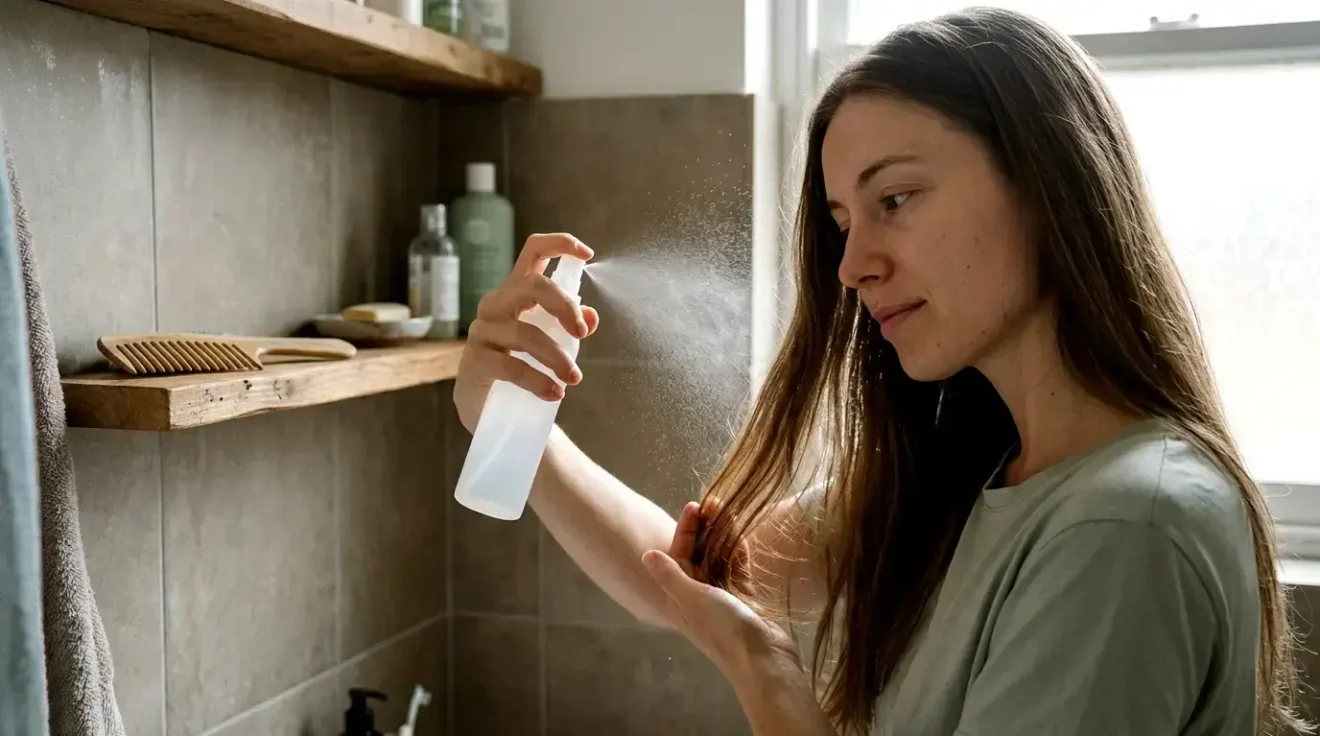
When re-wetting the hair, minimise unnecessary friction. Gently reshape with your hands, use a wide-tooth comb if appropriate for your hair texture and blot excess moisture rather than rubbing. Very wet or damaged strands may be particularly vulnerable to forceful detangling.
Repeated wetting also produces cycles of swelling and drying, so more refreshing is not necessarily better. Pay attention to how the hair responds instead of following a rigid weekly schedule.
Dry shampoo can temporarily absorb visible oil, but it does not replace cleansing. If your roots feel increasingly coated or uncomfortable by the end of the day, another powder application may simply postpone a necessary wash.
When water alone leaves the hair difficult to manage, the next decision is whether it needs light surface smoothing or more substantial detangling support.
Aloe Vera Gel or Oat-Based Conditioner: Which Suits Flat, Fine Hair?
A lightweight aloe vera gel may suit fine hair that detangles easily but becomes flat after conditioning, while an oat-based conditioner may be more useful when tangling and friction are the main problems. Neither ingredient automatically guarantees better results: the complete formulation, concentration, application quantity and rinsing method determine whether a product feels light or leaves hair coated.
Aloe-containing styling gels can form a light surface film and improve manageability. However, commercially available aloe gels may also contain thickeners and other film-forming ingredients that affect stiffness or residue.
Oat-based conditioners may contain oat extracts alongside cationic conditioning agents, fatty alcohols or emollients. Those supporting ingredients often contribute more to detangling performance than the oat extract itself.
| Selection criterion | Aloe vera gel | Oat-based conditioner |
|---|---|---|
| Primary purpose | Light styling support and surface smoothing, depending on formulation. | Detangling, softness and friction reduction. |
| Best starting situation | Hair detangles easily but loses movement under richer products. | Wet hair tangles, catches or feels rough. |
| Application | Small quantity on damp lengths, avoiding excessive layering. | Mainly mid-lengths and ends, followed by thorough rinsing. |
| Potential drawback | Stiffness, flaking or tackiness with unsuitable formulations or overdosing. | Reduced volume if the formula or quantity is too rich. |
For fine hair that tangles significantly after washing, detangling support comes before maximum volume. Repeated pulling and breakage can be more damaging than a temporary reduction in fullness.
If the hair is naturally easy to comb but loses its shape within hours, test a lighter aloe-containing formula rather than increasing conditioner richness.
Very fine hair can also be porous after colouring, heat styling or prolonged weathering. In that situation, a light rinse-out conditioner followed by a minimal amount of aloe gel may provide both slip and surface control. Apply them sequentially only if the first step is insufficient.
The important distinction is functional: conditioners and styling gels are not interchangeable merely because both contain botanical ingredients.
Once the right type of product has been selected, application quantity becomes the next variable. Even an appropriate lightweight formula can undermine volume when used too generously.
Why Applying Too Much Leave-In Conditioner Can Make Fine Hair Look Limp
Too much leave-in conditioner can make fine hair look limp because conditioning ingredients remain on the strands after application. These deposits can reduce friction and improve softness, but excessive or uneven coating may reduce movement, encourage strands to group together and create a weighed-down appearance. Fine hair often shows these changes more readily than thicker, coarser hair.
Conditioning is fundamentally a surface interaction. The scientific review of hair-conditioning formulations by Laura Fernández-Peña and Eduardo Guzmán explains how conditioning compounds interact with hair fibres and how deposited materials can temporarily improve their surface properties.
The review also shows why deposition is not simply a question of adding more product. Only some conditioning ingredients remain attached to the hair, and the resulting effects depend on formulation chemistry and surface interactions.
For fine hair, begin with a small pea-sized amount of leave-in conditioner as an adjustable starting point, not a scientifically established universal dose. Very short, sparse or easily weighed-down hair may need less; longer or more porous hair may need more.
Distribute the product between your palms and apply it primarily to soaking-wet ends. The water can help spread the product more evenly. Avoid the roots unless the formulation is specifically intended for scalp use.
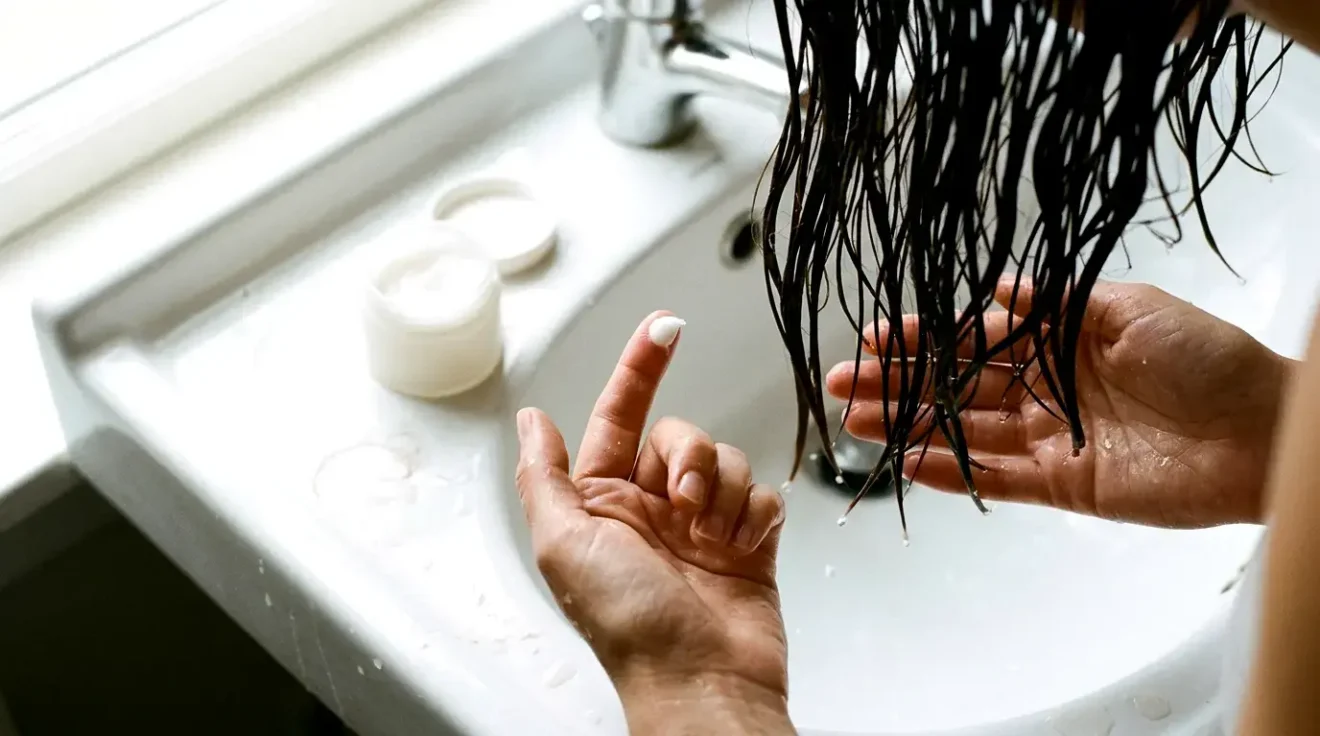
Allow the hair to dry before judging whether the quantity was sufficient. Damp hair frequently looks more compact than dry hair, so applying extra conditioner too early can produce unnecessary layering.
Observe the timing of limpness. If the hair becomes flat immediately after application, the quantity or placement may be unsuitable. If it remains weighed down even with a very small dose, the formulation itself may be too rich.
If hair looks flat even without leave-in products, investigate other explanations, including root oiliness, natural density, styling habits or insufficient cleansing. The conditioner should not automatically take the blame.
Consider the complete wash cycle: leave-in conditioner, oil and a refreshing mist can collectively create more residue than any one application suggests.
Temporary adjustments are particularly useful after environmental exposure, when hair may behave differently from its usual condition and require a short period of more attentive care.
When Should You Change Your Haircare Routine After a Beach Holiday?
Change your haircare routine temporarily after a beach holiday if the hair feels rougher, tangles more easily or retains salt, sunscreen or pool-product residue. Start with appropriate cleansing, then restore manageability using a suitable conditioner. If problems persist across several washes, reassess the everyday routine instead of repeatedly applying intensive masks or oils.
Beach holidays expose hair to several different stressors. Saltwater can leave deposits as it dries, swimming pools introduce additional chemicals, and sunscreen or styling products may contribute to surface residue.
Sunlight is also important. A scientific study of ultraviolet damage to human hair found increased protein loss and colour changes following radiation exposure. The effects varied with hair characteristics and the type of radiation.
These findings support the possibility of genuine UV-related hair damage, but they do not establish how much damage occurs during a particular holiday or guarantee that a cosmetic recovery routine can reverse it.
Choose the response according to what you observe:
- Hair feels coated: use an appropriate shampoo and rinse thoroughly before applying richer treatments.
- Hair feels rough or tangles: introduce a rinse-out conditioner that provides adequate slip.
- Ends remain brittle: reduce friction and heat exposure, and consider trimming visibly split or severely damaged ends.
- Hair remains dull after several washes: reconsider the regular cleansing and conditioning balance.
Cleaning first is important, but it is more accurate to say that applying a mask over residue may leave the hair coated than to claim that the mask permanently seals salt inside the fibre.
A short holiday may require only a thorough wash and a few conditioning sessions. More persistent roughness following repeated exposure may indicate weathering that needs ongoing protection rather than ever-richer treatment.
During the following weeks, reassess the quantity of conditioner and leave-in products. Hair that tangles more easily may benefit from better lubrication, while hair that becomes flat after treatment may need smaller doses.
Understanding why damaged surfaces feel rough and reflect light differently helps explain both the benefits and the limits of these cosmetic interventions.
Why Does Rough Hair Reflect Less Light Than Smooth Hair?
Rough hair generally reflects light less uniformly because an irregular outer surface scatters incoming light in multiple directions. Smoother, more consistently aligned hair surfaces produce more organised reflections, which the eye perceives as shine. Conditioning can improve this appearance temporarily, but it cannot reconstruct a severely damaged hair cuticle or reverse all structural changes.
The outermost layer of the hair shaft consists of overlapping cuticle cells. Their arrangement, surface chemistry and degree of wear influence friction, moisture interactions and light reflection.
Healthy-looking shine therefore depends on more than the presence of oils. Surface alignment, natural hair colour, curvature, styling and lighting all affect the visible result.
A scientific review of human hair friction and wear discusses the protective role of the hair’s surface lipid layer, including 18-methyleicosanoic acid, commonly called 18-MEA. Chemical, thermal and mechanical weathering can progressively alter this protection, increasing friction.
Botanical haircare can help manage the resulting feel and appearance. Aloe-containing products, flaxseed gels and preparations using mucilage-rich plants such as marshmallow root may create surface films that improve slip or styling.
However, their performance depends on extraction, formulation and concentration. Their botanical origin alone does not establish comparable effectiveness, nor does it prove that they physically realign damaged cuticle scales.
Rough or weathered hair can also show altered water uptake and retention. Repeated wetting, drying and mechanical handling may then make frizz and tangling harder to control.
Breaking this cycle requires two complementary measures: improving surface lubrication where needed and preventing further mechanical stress.
That means detangling gently, limiting excessive heat, avoiding rough towel drying and using enough conditioner to reduce friction without creating unwanted heaviness.
Importantly, a rough hair fibre does not biologically regenerate. Cosmetic treatments can improve surface feel and appearance, while severely damaged or split sections may ultimately require trimming.
Even effective smoothing ingredients have an important limitation: when multiple products remain on the hair simultaneously, the resulting deposits can begin to interfere with the appearance they were meant to improve.
Why Several Light Hair Products Can Still Create Heavy Buildup
Several lightweight hair products can create noticeable buildup because their deposited ingredients may accumulate between washes. A mist, leave-in conditioner and finishing oil can each feel unobtrusive when applied separately, yet their combined residue may leave hair coated, flat or difficult to style. The relevant measure is total product exposure across the wash cycle, not the texture of one product.
Product buildup depends on how ingredients interact with the hair, how readily they wash away and how much is reapplied before the next cleanse.
Some botanical gels contain predominantly water-compatible film-forming substances. Many rinse away with suitable cleansing, although certain polymers and styling formulations may resist plain water.
Oil-rich and butter-rich products can present different removal challenges. Their hydrophobic components may require an adequately cleansing shampoo, particularly when repeatedly applied.
However, the distinction is not absolute: ingredient solubility and the finished formulation matter more than a simple natural-versus-synthetic classification.
Imagine a hypothetical routine consisting of an aloe mist each morning, a small amount of leave-in conditioner after washing and a finishing oil every evening. None of those products necessarily feels heavy individually. Together, however, they may create more deposition than the hair needs.
Possible indicators include hair feeling coated when wet, losing volume increasingly quickly after washing or becoming less responsive to familiar styling products.
These observations suggest a need to investigate residue, but they are not diagnostic proof. Naturally oily roots, humidity and changes in styling can produce similar effects.
Five-step product buildup audit
- Record every application: write down all sprays, conditioners, oils and styling products used between two washes. Deliverable: a complete wash-cycle product list.
- Observe the hair before cleansing: note root volume, wet-hair texture and any coated sensation. Deliverable: three short condition notes.
- Perform an appropriate reset wash: use a suitable cleansing shampoo, following its instructions, and avoid unnecessary extra styling layers. Deliverable: a clean baseline.
- Reintroduce one optional product: apply the smallest useful amount and observe the result once dry. Deliverable: a recorded response to that product.
- Compare the next wash cycle: note whether shine, softness and volume remain satisfactory before adding anything else. Deliverable: a simplified product routine.
A reset wash need not be harsh. Choose a shampoo that can remove the residue present; a clarifying or chelating formulation may occasionally be appropriate, depending on whether the issue involves styling deposits or minerals. Plant-derived cleansing ingredients do not automatically make a shampoo more effective at clarifying.
Repeat deeper cleansing according to actual need rather than assuming every wash requires aggressive removal of all conditioning material.
Once unnecessary layers are removed, a shine routine becomes much easier to manage because each remaining product has a specific purpose.
Key takeaways before building your shine routine
- Begin with a clean baseline so that surface condition and product residue are easier to assess separately.
- Prioritise detangling when friction is a problem, but avoid adding richness solely to make fine hair appear glossier.
- Judge success by how the hair looks and behaves throughout the wash cycle, not only immediately after applying a treatment.
How to Make Dull Hair Look Naturally Shiny Without a Greasy Finish?
To make dull hair look naturally shiny without a greasy finish, combine appropriate cleansing, gentle conditioning and minimal surface smoothing. Concentrate most leave-in products on the mid-lengths and ends, keep unnecessary oils away from the roots and use low-friction drying techniques. The most reliable routine is one that improves light reflection and manageability without accumulating excess product.
Start by identifying the dominant problem. Hair that feels coated needs a different response from hair that feels rough, tangles easily or simply lacks volume.
Then build the routine in the following order:
- Cleanse according to need. Use a gentle but effective shampoo, and rinse thoroughly. Address significant residue with a suitable deeper-cleansing product when necessary.
- Condition selectively. Apply an appropriate rinse-out conditioner to areas that need detangling and softness, keeping it away from roots that flatten easily.
- Reduce mechanical friction. Blot with a soft towel, avoid aggressive rubbing and detangle with a technique suited to your hair texture.
- Add minimal surface smoothing. If necessary, use a tiny amount of lightweight aloe-containing gel or a suitable leave-in treatment.
- Check the dry result. Assess shine, softness and root movement before deciding whether additional product is justified.
Shine and grease can both involve surface films, but their visual effects depend on the amount, distribution and location of those films. An even, minimal coating along the lengths may improve the appearance of smoothness. Concentrated oil near the scalp can instead make strands clump and appear greasy.
For hair that tolerates oil well, a single drop spread thoroughly between the palms and touched onto dry or nearly dry ends may be sufficient. Other hair types may benefit from a non-oily conditioning formula or no finishing product at all.
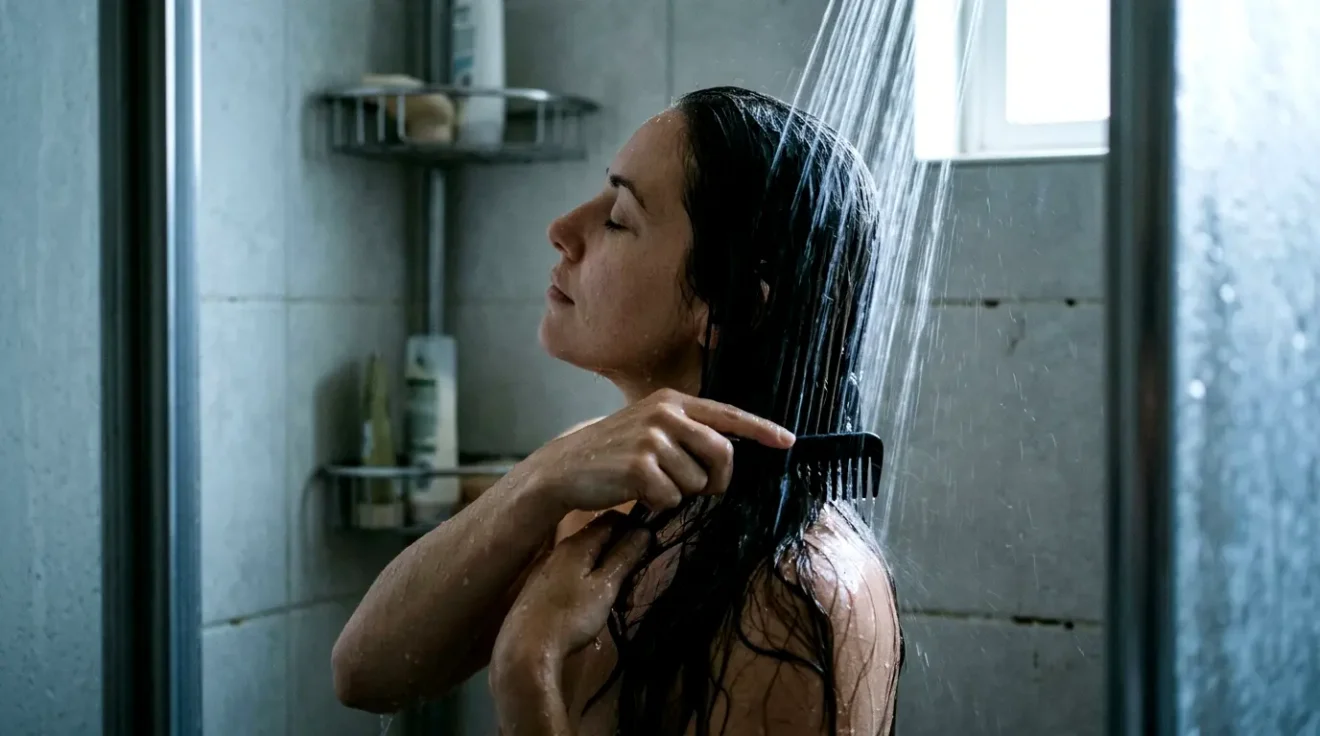
Mechanical handling remains important. Smoothing the hair gently while drying can improve its arrangement and reduce visible flyaways. A cool final rinse may feel comfortable and limit heat exposure, but there is insufficient evidence that cold water alone reliably seals the cuticle or produces lasting shine.
Use a wide-tooth comb where suitable, avoiding forceful pulling through knots. Curly, coily or fragile hair may require a different detangling technique, often with sufficient conditioning slip.
Compare the finished result under consistent lighting. A window in daylight is useful for observing changes without relying on the misleading reflections of bathroom spotlights or photographic filters.
Natural shine should not be confused with uniformly straight, mirror-like hair. Curvature, colour and fibre arrangement influence how light is reflected. Healthy-looking waves and curls may show shine in distinct bands rather than as one continuous glossy surface.
Over time, the most useful outcome is a routine that leaves hair comfortable, manageable and visually balanced with fewer products. A substantial improvement in appearance does not require an ever-growing collection of botanical treatments.
For your next wash, choose one unnecessary product to remove, maintain gentle cleansing and keep only the conditioning that demonstrably improves your hair. Observe the dry result and repeat the simplified approach before deciding whether anything else is needed.
Can naturally fine hair become shiny without losing volume?
Yes. Fine hair can look naturally shiny while retaining volume when conditioning is concentrated on areas that need it and unnecessary product deposits are minimised. Hair structure and lighting still influence the result. Prioritise appropriate cleansing, gentle handling and lightweight formulas rather than using oils as the default finishing treatment.
Is homemade aloe vera gel as suitable as a commercial hair product?
Not necessarily. Fresh aloe preparations can vary in consistency and may present contamination or preservation problems. A properly formulated cosmetic product offers more predictable stability and application characteristics. Even then, aloe-containing products differ in their additional ingredients and should be tested for suitability and skin tolerance.
Does a botanical shampoo remove hard-water mineral deposits?
Not automatically. Mineral removal depends on the shampoo formulation, including whether suitable chelating ingredients are present. Botanical extracts alone do not establish mineral-removal performance. If hard water is a suspected contributor, assess the cleansing formula rather than relying on a botanical marketing claim.
Can damaged hair regain its original shine permanently?
Conditioning products can temporarily improve lubrication, smoothness and visible shine, but the hair shaft cannot biologically regenerate damaged structures. Better handling can reduce further wear, while severely split or damaged ends may require trimming. A realistic routine aims to maintain an improved appearance rather than promise permanent structural restoration.
When should persistent dullness or hair changes be assessed professionally?
Seek advice from a qualified healthcare professional if hair changes are sudden, accompanied by unusual shedding or breakage, or associated with scalp pain, redness, scaling or persistent itching. These symptoms may involve issues beyond cosmetic residue or surface roughness and should not be managed simply by adding more haircare products.