
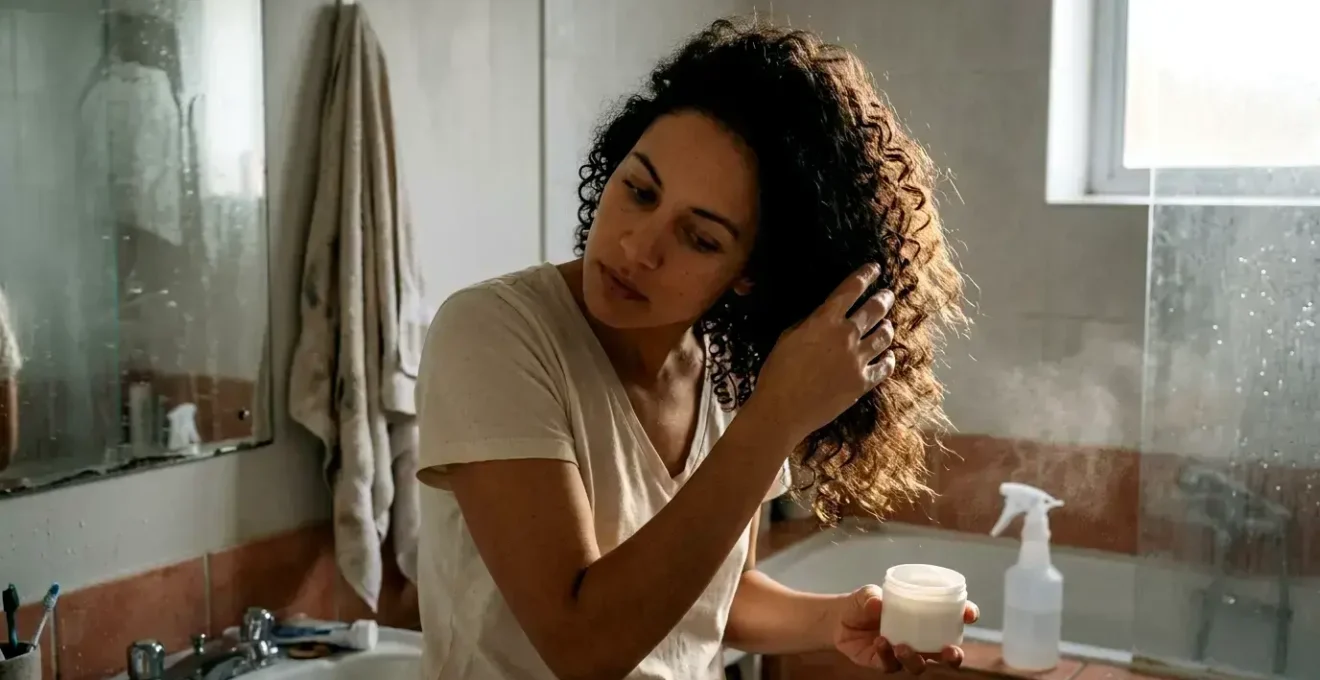
Hair that feels wonderfully soft after conditioning but rough again by evening is not necessarily lacking moisture treatments. The problem may be how its surface interacts with water, conditioning ingredients and the surrounding environment.
Hair porosity influences how readily water enters the fibre, while cuticle condition, accumulated damage and surface coatings affect its behaviour after washing. Dryness is also partly a matter of friction: a strand can feel dehydrated because its protective surface has become rough, even when its internal water content is not exceptionally low.
To help dry hair stay softer between wash days, concentrate on three things: effective conditioning during washing, appropriate surface protection afterward and fewer damaging exposures. The right combination depends on whether your hair is coarse or fine, naturally porous or chemically processed, regularly heat-styled or frequently exposed to swimming-pool water.
The goal is not to keep hair permanently wet. It is to maintain flexibility, reduce friction and limit avoidable damage for longer.
Dry hair moisture retention: the essentials
- High porosity and cuticle damage can change water absorption, drying behaviour and surface smoothness, but rapid drying alone does not diagnose porosity.
- Use a suitable rinse-out conditioner, then add a small amount of leave-in protection to damp, dry-prone lengths when needed.
- Adjust product weight to strand thickness, humidity and exposure to heat or pool water rather than applying increasingly rich treatments.
- Why Does High-Porosity Hair Feel Dry Soon After Conditioning?
- How to Condition Porous Hair Without Leaving Excessive Product Residue?
- Rinse-Out Conditioner or Leave-In Cream: Which Helps Dry Ends Stay Softer?
- Why Glycerin-Rich Hair Products Can Feel Different in Very Humid Weather
- When Should You Recondition Hair After Frequent Pool Sessions?
- Why Does Hair Become Brittle After Frequent Straightening?
- Hydrating Hair Mist or Lightweight Conditioner: Which Suits Fine Strands?
- Can Natural Hair Treatments Repair Heat-Damaged Hair or Only Improve Its Appearance?
Why Does High-Porosity Hair Feel Dry Soon After Conditioning?
High-porosity hair may feel dry soon after conditioning because its protective surface is less effective at maintaining smoothness and controlling interactions with water. Damaged cuticle layers can leave the fibre more vulnerable to friction and environmental changes. However, rapid water loss is not universal across high-porosity hair, and perceived dryness does not always reflect actual moisture content.
The cuticle consists of overlapping cells surrounding the hair’s internal cortex. When this surface is relatively intact, it helps protect the fibre against mechanical wear and regulates its interaction with surrounding substances.
Bleaching, excessive heat and repeated friction can disrupt this barrier. Damage to the hair’s external lipid layer can also increase its affinity for water, allowing more pronounced swelling during washing.
A scientific review of hair-conditioning formulations explains how surface damage changes hair-fibre properties and how deposited conditioning ingredients can temporarily improve the behaviour of damaged cuticles.
Importantly, an absorbent strand does not necessarily release water at a predictably faster rate. Drying also depends on fibre diameter, hair density, product deposits, airflow and environmental humidity.
Natural fibre characteristics, including diameter, curvature and individual structural differences, influence the way hair behaves. Acquired damage adds another factor: the ends have generally experienced more washing, brushing, sunlight and styling than newer growth near the scalp.
Consequently, porosity and surface condition may differ along the same strand. Hair can feel smooth at the roots and rough toward the tips without requiring the same treatment everywhere.
Three observations can help you investigate the problem:
- Wetting: Notice whether the lengths become saturated readily or initially resist water.
- Drying: Compare drying behaviour under similar conditions, without assuming that faster drying proves high porosity.
- Surface feel: Check whether the ends remain rough or catch against neighbouring strands after conditioning.
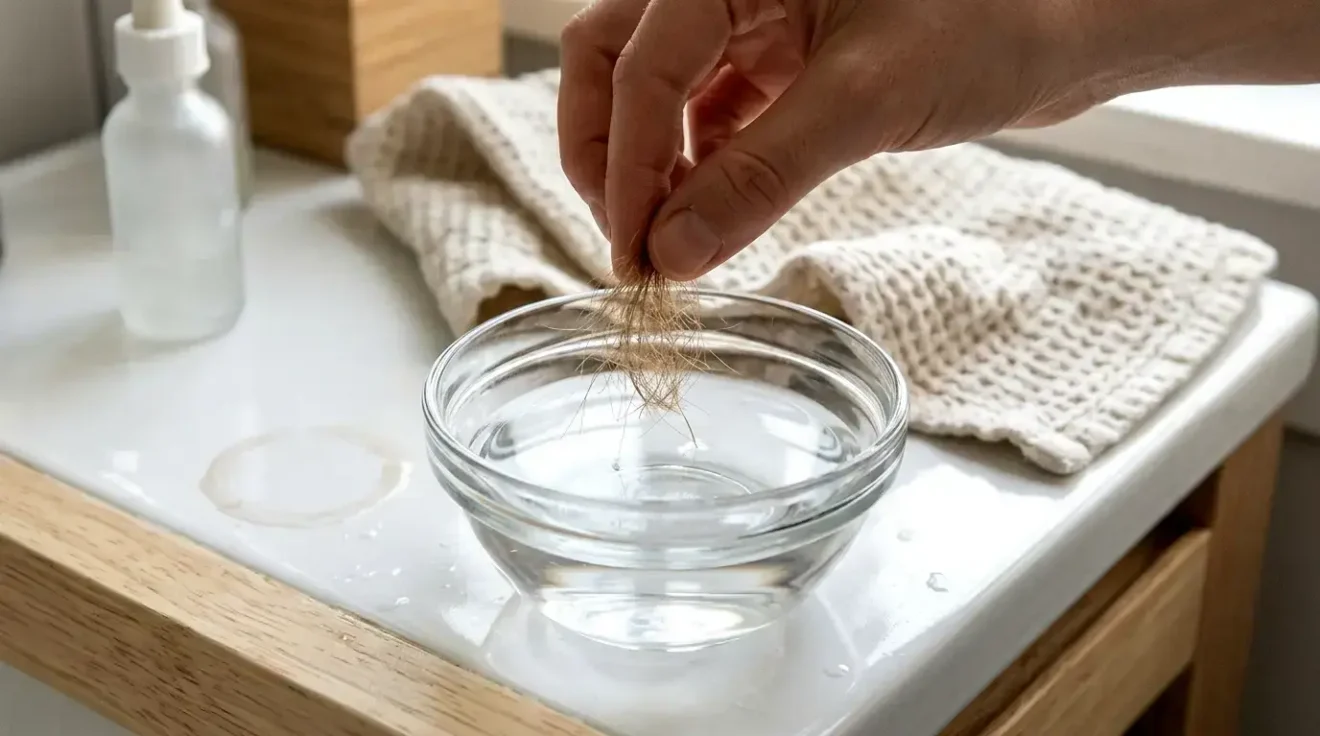
The familiar water-glass float test is unreliable as a definitive porosity assessment. Floating or sinking depends on surface tension, trapped air, product residues and strand characteristics. A strand slipping easily between your fingers is also a measure of surface feel, not a validated porosity reading.
For practical care, repeated observations across wash days are more useful than assigning a permanent porosity label from a single test.
Once the driest sections have been identified, the next priority is applying enough conditioner to reduce friction without leaving an unwanted coating.
How to Condition Porous Hair Without Leaving Excessive Product Residue?
Condition porous hair by concentrating a suitable formula on damaged lengths, distributing it evenly and rinsing until the unwanted excess is removed. Conditioning agents are designed to leave some beneficial material on the fibre, so a completely stripped feeling is not the objective. Good conditioning balances reduced friction with manageable product deposition.
Porous or damaged hair may interact strongly with certain conditioning ingredients because its surface chemistry has changed. Positively charged conditioning agents, including some cationic surfactants and polymers, can associate with negatively charged sites on damaged hair.
This is different from saying that porous hair absorbs every product more deeply. Many conditioners work predominantly through surface deposition, and that deposited layer can be beneficial rather than evidence of residue buildup.
A practical application method is straightforward:
- Wash the scalp and thoroughly wet the lengths.
- Separate thick or dense hair into manageable sections.
- Distribute conditioner from the mid-lengths toward the ends, adding more only where necessary.
- Use a little water to help spread the product evenly if the formula feels too concentrated.
- Rinse thoroughly while gently separating the strands with your fingers.
Emulsifying with water can improve distribution, although the effect depends on the formulation. Follow the product’s contact-time instructions rather than assuming that leaving every conditioner on longer improves performance.
Cool or lukewarm water may feel more comfortable and help avoid unnecessary heat exposure, but there is insufficient evidence that a cool final rinse reliably closes the cuticle or locks in moisture.
When evaluating ingredients, distinguish rich textures from inherently problematic ingredients. Butters, waxes and oils may benefit coarse, highly textured hair, while smaller amounts or lighter formulations may suit fine strands. Humectants such as glycerin contribute different properties from fatty alcohols, silicones and conditioning polymers.
If hair feels unusually coated, heavy or difficult to rinse, inspect how much product is being used before eliminating entire ingredient categories.
Hard water complicates this assessment. Calcium and magnesium minerals can contribute to deposits that affect hair feel, sometimes making conditioning less predictable. A persistent coated sensation, even after changing products, may justify investigating local water hardness.
An occasional clarifying or chelating shampoo may help where appropriate, but these products serve different purposes and can vary in cleansing strength. There is no universal schedule for their use.
Five steps to audit your conditioning routine
- Identify the driest areas before washing. Record whether they are the ends, mid-lengths or entire hair length.
- Apply conditioner to those areas in sections. Check that each section is coated without visible excess.
- Rinse carefully and note the wet-hair feel. Record whether strands separate easily or remain unusually coated.
- Assess the same sections once dry. Write down softness, weight, tangling and any dull residue.
- Compare the results at the next wash using one product or quantity adjustment. Keep a short record identifying what actually improved.
Effective rinse-out conditioning creates a useful foundation, but hair that becomes rough again after drying may benefit from additional protection left on the lengths.
Rinse-Out Conditioner or Leave-In Cream: Which Helps Dry Ends Stay Softer?
Rinse-out conditioner and leave-in cream perform complementary jobs. Rinse-out formulas improve lubrication and manageability during washing, while leave-in products provide continued conditioning after the hair dries. For ends that become rough within hours, a lightweight leave-in can extend the feeling of softness, although neither product guarantees that water remains inside the fibre for a particular period.
Conditioners do not biologically repair the fibre during washing. Instead, suitable ingredients deposit on the surface, reduce friction and improve how the strands interact with each other.
Leave-in creams may contain overlapping ingredients, but their formulations are intended to remain on the hair. Their benefits can include easier detangling, reduced friction, improved surface smoothness and a more manageable appearance.
The decision depends on how your hair responds:
| Hair behaviour | Likely priority | Practical adjustment |
|---|---|---|
| Ends remain rough immediately after washing | Rinse-out conditioning | Review formula, distribution and contact time. |
| Ends feel soft when dry but roughen later | Leave-in protection | Test a small amount on damp ends. |
| Hair is soft but noticeably flattened | Reduce product load | Use a lighter formula or less leave-in. |
| Roots feel healthy but tips tangle | Targeted conditioning | Concentrate products on older lengths. |
For dry-prone hair, begin with a modest amount of leave-in on clean, damp lengths. Distribute it evenly before considering an additional oil or richer cream.
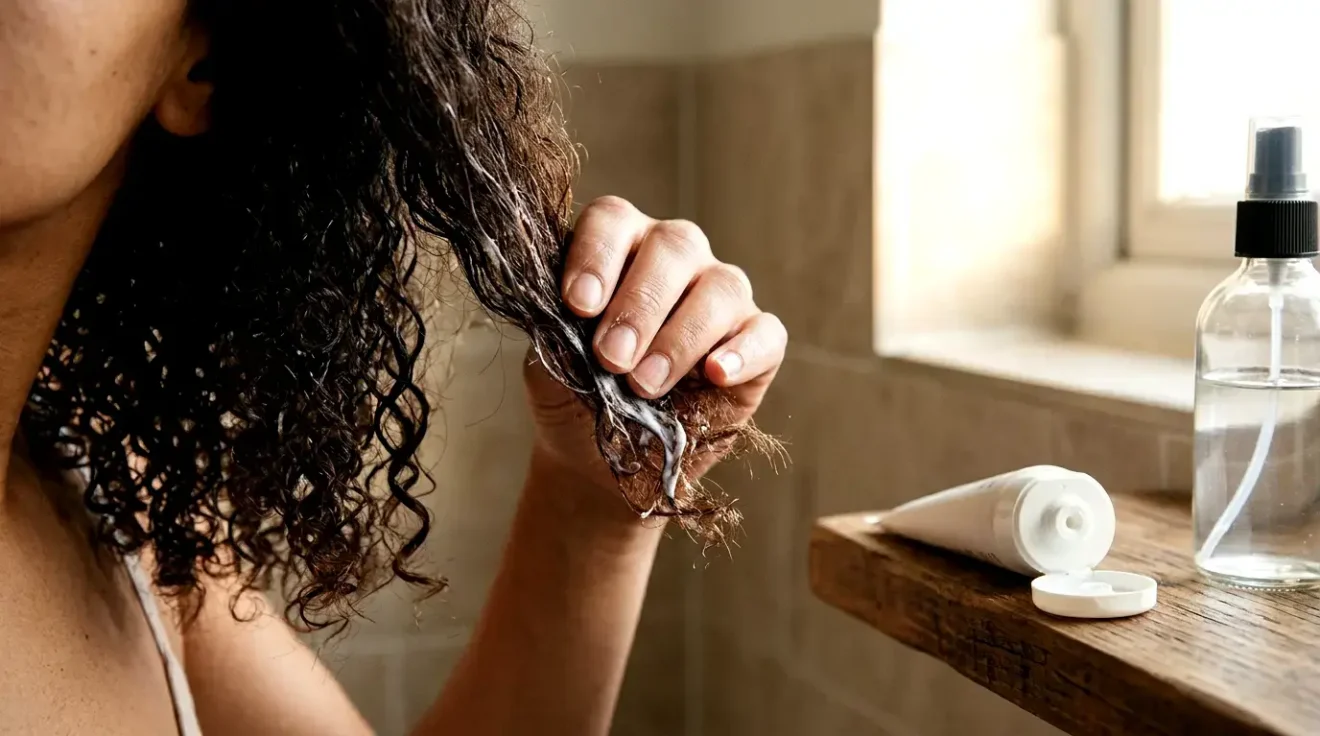
Applying leave-in while the hair is damp often makes distribution easier. If an oil-based finishing product is needed, a small amount afterward may provide additional lubrication and surface protection.
However, oils do not universally seal moisture inside hair. Their behaviour depends on molecular structure, formulation, amount used and the condition of the fibre. Likewise, applying an oil first does not automatically prevent subsequent water-based products from working.
The main risk of excessive layering is practical: too much deposited material can leave strands heavy, sticky or difficult to refresh.
Judge the result across several wash cycles. A product that creates immediate slip but persistent dullness may be less useful than a lighter formula that provides consistent manageability.
Even an effective combination may behave differently when humidity changes, particularly if the formulation contains substantial amounts of water-attracting ingredients.
Why Glycerin-Rich Hair Products Can Feel Different in Very Humid Weather
Glycerin-rich hair products can feel different in very humid weather because glycerin is a humectant that interacts strongly with water. Depending on the formulation and surrounding conditions, it may contribute to softness, increased swelling, frizz or a tacky surface feel. These effects cannot be predicted from glycerin’s position on an ingredient list alone.
Glycerin attracts and retains water through its chemical affinity for moisture. In a hair product, however, it operates alongside conditioning agents, polymers, oils and other ingredients that influence the final result.
In very humid air, hair fibres may absorb additional moisture and undergo changes in dimensions. For textured or previously styled hair, these changes can contribute to frizz and reduced style definition.
A glycerin-containing product might accentuate this sensation, but it would be inaccurate to assume that glycerin alone causes every humidity-related problem.
Weather-responsive product selection is more useful than a blanket ban on humectants.
| Environment | What to observe | Adjustment worth testing |
|---|---|---|
| Very humid, muggy weather | Tackiness, frizz or unwanted swelling | Try a less humectant-heavy finishing formula. |
| Dry indoor heating | Roughness, static or reduced flexibility | Test a conditioning leave-in with suitable emollients. |
| Variable daily conditions | Inconsistent softness or style definition | Keep the wash routine stable and adjust finishing products. |
Dew point can help describe the actual moisture content of outdoor air, but it should not be treated as a validated universal threshold for glycerin performance in hair products. Relative humidity, temperature and the complete formulation also matter.
In dry indoor environments, glycerin has less environmental water available than in humid conditions. Nevertheless, it does not necessarily pull water out of the hair in every dry environment. Its behaviour depends on the surrounding system and formulation.
If the ends become rough during winter heating, a conditioner containing both humectants and lubricating ingredients may be worth trying. If the same hair becomes sticky during muggy weather, changing the finishing product may be more effective than replacing the entire routine.
Compare results under similar styling conditions and avoid changing multiple products simultaneously.
Environmental moisture is only one variable. Repeated exposure to swimming-pool water can introduce additional surface damage that ordinary seasonal adjustments may not address.
When Should You Recondition Hair After Frequent Pool Sessions?
Recondition hair after swimming when it feels rough, tangles more easily or loses its usual manageability, rather than following an arbitrary deep-conditioning schedule. Rinsing promptly after pool exposure and applying an appropriate conditioner can help manage friction. Frequent swimmers may need consistent light conditioning, while richer treatments should depend on the hair’s actual response.
Swimming-pool exposure combines immersion, repeated wetting and drying, and contact with disinfecting chemicals. Chlorine-related oxidation can contribute to hair weathering, while pool-water chemistry and existing fibre damage influence the outcome.
A dermatological review of environmental factors affecting hair health discusses swimming-pool exposure among the influences associated with cuticle deterioration and protein damage.
This does not mean every swim causes substantial damage, or that chlorine is responsible for every change in hair colour or texture. Exposure duration, water composition, prior bleaching and the frequency of swimming all matter.
A useful protective sequence is:
- Before swimming: Thoroughly wet the hair with fresh water. This may reduce how much pool water it subsequently takes up, although the extent of protection varies.
- Immediately afterward: Rinse with fresh water to remove as much residual pool water as practical.
- During post-swim care: Use an appropriate cleansing product when needed, followed by conditioner on the lengths.
- After drying: Check whether the ends remain flexible, manageable and reasonably smooth.
For regular swimmers, conditioning after cleansing may be helpful even when a deep treatment is unnecessary. Adding a heavy mask after every pool session is not automatically better.
Watch for several changes: wet hair becoming harder to detangle, ends developing a rough feel, or softness disappearing unusually quickly after conditioning. These signs justify reassessing the routine, though none diagnoses chlorine damage on its own.
If hair consistently feels coated despite appropriate rinsing and cleansing, consider whether mineral deposits or accumulated cosmetic products are involved. An occasional suitable clarifying or chelating treatment may help, but excessive cleansing can also increase roughness.
Pool exposure can accelerate existing weakness, but repeated high-temperature styling introduces another important source of damage that moisture products cannot fully reverse.
Why Does Hair Become Brittle After Frequent Straightening?
Frequent straightening can make hair brittle because repeated exposure to high temperatures damages the protective cuticle and may alter internal hair proteins. These changes increase friction, weaken the fibre and make breakage more likely. Moisture-focused products can improve manageability, but they cannot restore the original structure once substantial thermal damage has occurred.
Hair is primarily composed of keratin-based structures protected by external cuticle layers. Straightening irons temporarily alter interactions within the fibre to reshape the hair, but excessive heat can also cause irreversible chemical and physical changes.
Damage is influenced by temperature, contact time, repeated passes, hair condition and the presence of water during styling.
The most important warning signs include loss of shine, increasing roughness, persistent tangling, ends that split readily and strands that snap during normal handling.
Drying time alone is not a reliable measure of heat damage. Changes in density, styling products and ambient humidity can alter drying behaviour independently.
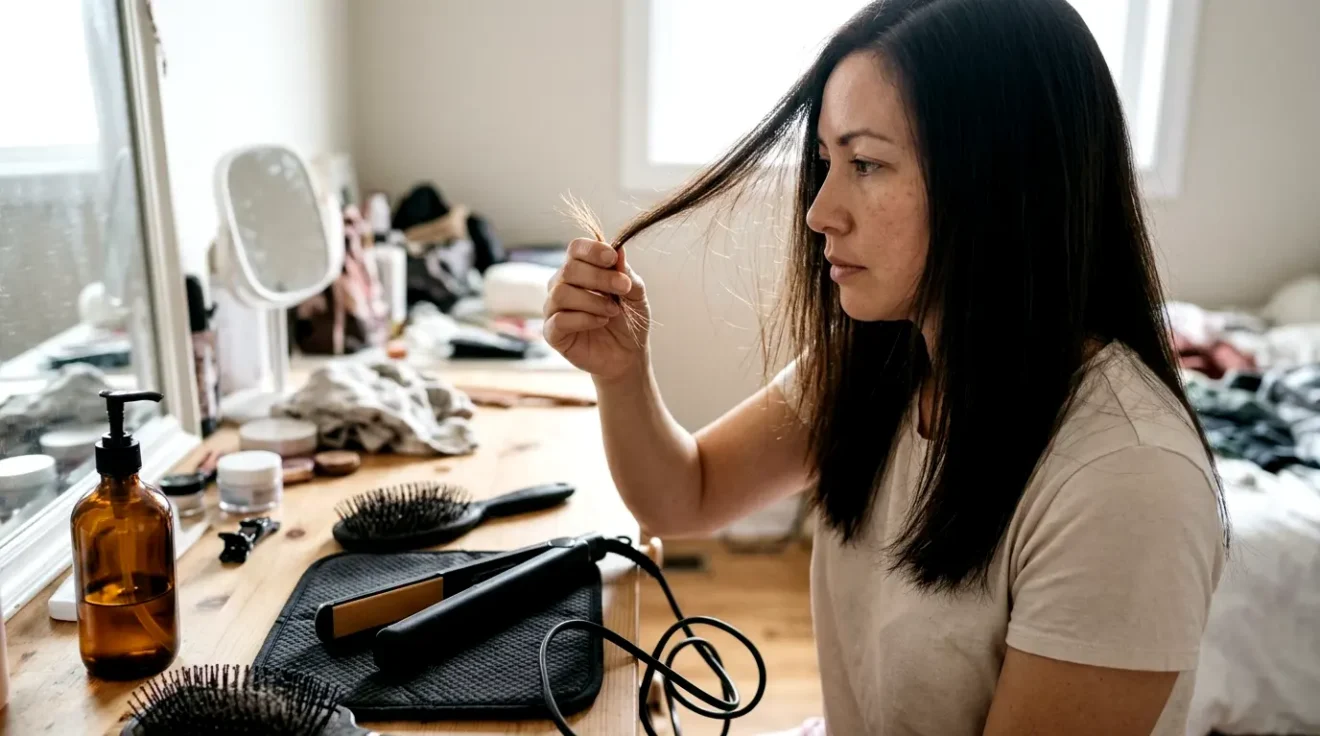
Applying a conventional straightening iron to damp hair presents a particular risk. Water inside the fibre can evaporate rapidly under intense heat, contributing to structural disruption.
An experimental study on water and heat-styling damage compared specific pretreatments and found greater structural damage under the investigated wet-hair straightening conditions.
These findings support thoroughly drying hair before conventional flat-iron use. They do not establish a universally safe styling temperature or imply that every water-based product is damaging.
Applying a product that is not designed for high-temperature styling immediately before a hot tool can also complicate the process. Follow the product and appliance instructions, including any requirement that treated hair be fully dry before styling.
To reduce further deterioration, limit unnecessary passes, avoid excessive heat and choose a heat-protection product suitable for the appliance and hair condition. A heat protectant can reduce certain forms of damage but cannot eliminate the risks of high temperatures.
Between washes, a lightweight conditioning product may help damaged lengths remain easier to handle. However, repeatedly wetting straightened hair to refresh it may disrupt the style and prompt additional heat styling.
That cycle can be counterproductive: more heat is used to correct the effects of moisture, causing further damage that makes the hair increasingly difficult to manage.
Reducing damage is especially important for fine hair, where small changes in product quantity can also determine whether the finished style feels light or overloaded.
Hydrating Hair Mist or Lightweight Conditioner: Which Suits Fine Strands?
Fine hair often benefits from lightweight rinse-out conditioning as its foundation, with a hydrating mist used selectively when the ends need refreshing between washes. Mists can add a small amount of moisture and conditioning ingredients, while rinse-out formulas provide more controlled conditioning during washing. The better choice depends on styling habits, residue tolerance and how quickly fine strands become weighed down.
Fine hair refers to individual strand diameter, not the overall amount of hair on the scalp. Fine strands can be dense, sparse, straight, curly, porous or relatively resistant to wetting.
Because each strand has a smaller diameter, an overly rich product may make fine hair feel limp or cause neighbouring strands to clump together.
A hydrating mist generally delivers a relatively light application of water-based ingredients. Depending on the formulation, it may briefly improve flexibility, control flyaways or provide light conditioning.
However, water alone does not guarantee lasting softness. Once it evaporates, the original surface roughness may return.
A lightweight conditioner, meanwhile, can provide useful lubrication during washing without requiring repeated applications throughout the week.
| Decision factor | Hydrating hair mist | Lightweight rinse-out conditioner |
|---|---|---|
| Best moment | Between washes | During washing |
| Main purpose | Selective refreshing and light conditioning | Detangling and surface conditioning |
| Most suitable area | Dry mid-lengths and ends | Lengths requiring conditioning |
| Potential drawback | Repeated layering or temporary frizz | Overconditioning if too rich or abundant |
| Practical priority | Low product load and even distribution | Suitable formula and thorough rinsing |
Choose a mist by examining the whole formula rather than assuming every water-based spray is weightless. Low-oil products can be suitable, but some polymers and conditioning agents may still accumulate through repeated use.
Apply sparingly to the mid-lengths and ends, avoiding roots that already become oily quickly. If spraying directly causes uneven saturation, distribute a small amount through your hands first.
One suitable conditioning product may be enough for fine strands. Combining a mist, leave-in cream, oil and styling serum is not inherently harmful, but unnecessary layers can compromise volume and cleanliness.
If the hair becomes flat or dull, simplify the routine before concluding that it needs stronger cleansing or additional moisture.
When dryness comes from significant heat damage rather than inadequate product choice, the next decision is how much natural treatments can realistically achieve.
Key takeaways before treating damaged hair
- Separate temporary roughness from structural weakness: hair that tangles may improve with conditioning, while repeated snapping suggests more serious damage.
- Choose treatments for a defined purpose, such as reducing friction or protecting lengths during washing, rather than relying on broad repair claims.
- For visibly damaged ends, preventing additional wear and assessing the need for trimming are often more useful than repeatedly adding products.
Can Natural Hair Treatments Repair Heat-Damaged Hair or Only Improve Its Appearance?
Natural hair treatments can improve the feel, manageability and appearance of heat-damaged hair, but they cannot permanently rebuild the original keratin structure or regenerate destroyed cuticle cells. Oils, conditioning masks and protein-containing treatments may provide temporary protection or surface improvement. Their realistic role is to reduce further wear and make damaged lengths easier to maintain between washes.
Hair fibres outside the scalp are not living tissues capable of biological regeneration. Once repeated heat has caused substantial structural damage, cosmetic ingredients cannot restore the strand to its untouched state.
This distinction matters because words such as “repair,” “restore” and “rebuild” can describe different outcomes. Some formulations temporarily improve mechanical behaviour or reinforce damaged areas, but that is not equivalent to reversing all microscopic damage.
Natural oils may act through different mechanisms. Certain oils largely provide surface lubrication, while others can penetrate the hair fibre under particular conditions.
An experimental study comparing coconut, sunflower and mineral oils on hair found that coconut oil reduced protein loss under the tested conditions. The study supports a potential protective role for that specific oil, not a claim that all natural oils repair heat-damaged hair.
Similarly, butter-based products can improve lubrication and reduce perceived roughness, but they do not necessarily prevent water evaporation completely. Humectant-containing masks may influence water interactions, while protein-containing formulas can temporarily modify surface feel or mechanical properties depending on their composition.
Choose treatments according to the problem you actually observe:
- Roughness without significant breakage: Prioritise suitable conditioning and gentle handling.
- Dry ends that tangle repeatedly: Try targeted leave-in protection and reduce friction during brushing and sleeping.
- Hair that becomes heavy after masks: Reduce the product amount or choose a lighter formulation.
- Persistent snapping and severe split ends: Limit further heat exposure and consider trimming the compromised lengths.
A useful distinction is that mild cosmetic deterioration may remain manageable for a long time with appropriate care, while severely weakened hair may continue to break despite excellent conditioning.
Trimming does not change the biological properties of remaining hair, but removing heavily damaged ends can reduce tangling and improve the overall appearance of the hairstyle.
For a natural-cosmetics approach, start with fewer products and assess each one against a measurable goal: less detangling resistance, better softness after drying or fewer visible signs of mechanical wear. Avoid assuming that a thicker coating means deeper or more permanent repair.
At your next wash, assess where roughness begins, choose one appropriate conditioning adjustment and observe the result before adding another treatment. Consistent conditioning, reduced heat exposure and gentle handling offer a more practical route to lasting manageability than repeatedly trying to force moisture into already damaged strands.
Can hair feel dry even when it contains enough water?
Yes. Hair can feel rough because its cuticle is damaged or its surface lacks sufficient lubrication. Friction between strands strongly influences perceived softness, so conditioning products may improve hair feel without substantially increasing internal water content. Persistent roughness should therefore prompt an assessment of both surface damage and conditioning effectiveness.
Should dry hair be sprayed with water every day?
Not necessarily. Lightly dampening the ends may help some hair types respond to leave-in conditioning, but water alone evaporates and may not provide lasting softness. Daily wetting can also disrupt heat-styled hair or cause unwanted frizz. Use a mist only when it improves manageability without producing residue or unnecessary restyling.
Does sleeping on a satin pillowcase help hair retain moisture?
A smooth pillowcase may reduce friction and tangling for some hair types, helping lengths remain easier to manage. However, there is insufficient evidence to promise a particular improvement in internal hair-water retention from satin alone. Fabric construction, hair texture and nighttime styling habits can all influence the result.
How can you tell whether hair needs more conditioner or less buildup?
Hair that remains rough and difficult to detangle after washing may benefit from improved conditioning, while hair that feels coated, limp or persistently dull may be carrying excessive deposits. These observations are not definitive diagnoses. Change one variable at a time, such as conditioner quantity or leave-in application, and compare results over subsequent washes.
Can damaged hair become less porous without cutting it?
Conditioning ingredients can temporarily modify the hair surface, reduce friction and change how a damaged fibre interacts with water. Some cosmetic treatments can improve mechanical properties, but they do not biologically regenerate destroyed cuticle cells. Reducing damaging exposure helps preserve remaining hair, while trimming removes the most compromised portions when necessary.