
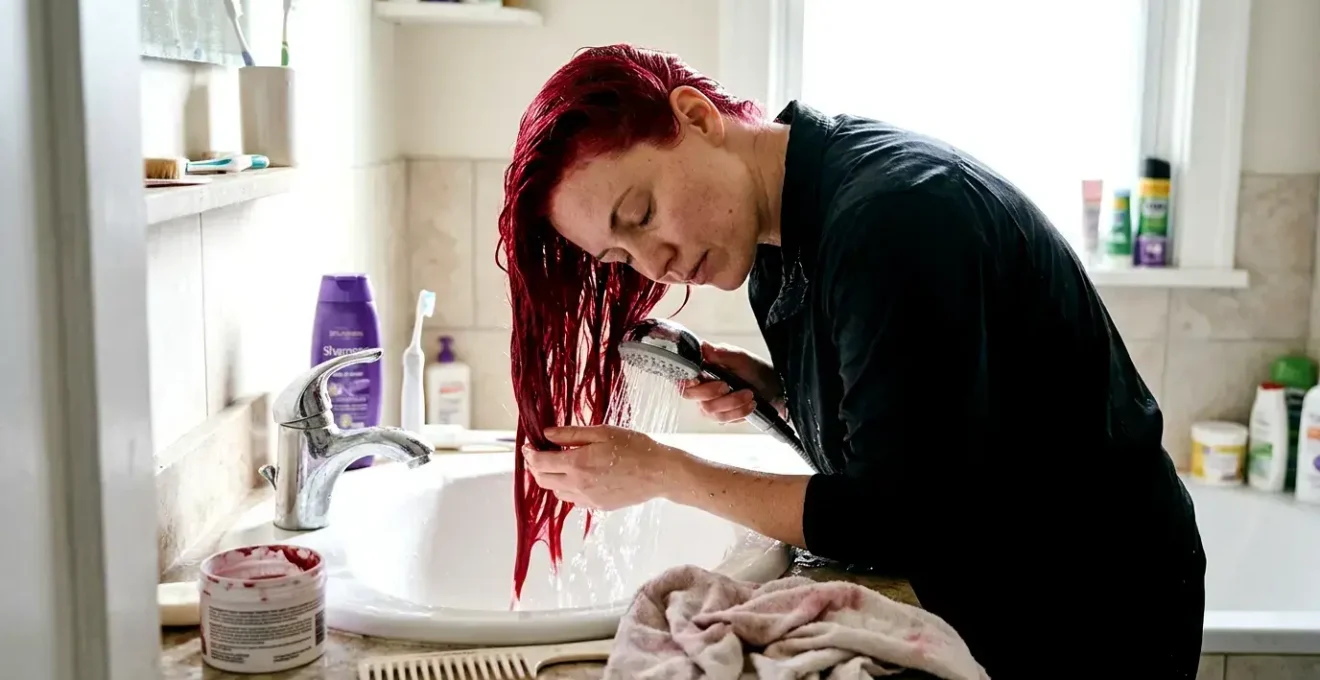
Keeping dyed hair vibrant between salon visits requires more than switching to a colour-safe shampoo. The most effective routine combines gentle cleansing, controlled pigment replenishment, conditioning and protection from environmental exposure. Crucially, it responds to the way your particular shade fades rather than treating every change in colour as the same problem.
Red tones may gradually turn coppery, blonde hair can develop unwanted yellow reflections, and semi-permanent shades may lose intensity unevenly. Previously lightened ends can also absorb corrective pigments more readily than healthier sections, producing darker or cooler patches.
A good maintenance routine therefore starts with observation. Check your colour in natural daylight, identify where the unwanted tone appears, and adjust only what needs correcting. Less frequent washing may help, but product formulation, hair condition and daily exposure matter too.
The aim is to preserve colour accuracy and shine without repeatedly depositing pigment or using harsh cleansing treatments that undermine the original result.
Essential habits for longer-lasting hair colour
- Use a gentle shampoo, comfortable lukewarm water and conditioning products appropriate for your hair’s condition to limit unnecessary colour loss.
- Apply purple products or colour-depositing masks when a visible tonal correction is needed, taking extra care with porous ends.
- Protect coloured hair from strong sunlight, swimming-pool exposure and avoidable friction, then refresh the shade according to its appearance rather than a fixed calendar.
- Why Does Red Hair Dye Often Fade Faster Than Dark Brown Shades?
- How to Apply a Colour-Depositing Mask Without Staining Porous Ends Unevenly?
- Purple Shampoo or Purple Mask: Which Works Better for Brassy Blonde Hair?
- Why Overusing Purple Shampoo Can Leave Blonde Hair Looking Dull or Violet
- When Should You Refresh a Semi-Permanent Hair Colour to Maintain Its Tone?
- Why Does Dyed Hair Change Shade After Repeated Sun Exposure?
- Hair Mask or Acidic Conditioner: Which Suits Rough, Newly Coloured Hair?
- How to Protect Dyed Hair From Sun, Swimming Pools, and Everyday Exposure?
Why Does Red Hair Dye Often Fade Faster Than Dark Brown Shades?
Red hair dye can lose its intensity faster than some dark brown formulations because certain red dye systems contain relatively small colour-forming molecules that may be less resistant to repeated washing. However, molecular size is not a universal explanation: dye chemistry, hair porosity, previous processing and the specific formulation all influence how long a shade remains vibrant.
The distinction matters because permanent and direct-deposit red colours do not behave identically. In some oxidative dye systems, smaller precursor molecules enter the fibre and react to form colour. The stability and retention of the resulting compounds depend on their chemistry and interaction with the hair.
An experimental investigation examining 55 red hair dyes reported significant fading after three weeks of daily washing under its laboratory conditions. The researchers proposed molecular characteristics as one possible reason for the relatively limited longevity of certain red shades.
These findings are described in the National Institute of Justice study on red hair dye. The results do not establish that every red formulation fades faster than every brown one.
Why porous hair loses red intensity unevenly
Previously bleached or heat-damaged sections can be more permeable and less effective at retaining artificial colour. That is why red hair sometimes develops brighter orange ends while the roots remain deeper and more saturated.
Hair that wets rapidly, tangles heavily or feels unusually stretchy when wet may have experienced damage. However, water absorption and a home stretch test cannot reliably measure porosity or establish its cause. Excessive elasticity, particularly when accompanied by breakage, deserves professional assessment.
A maintenance routine for red colour should prioritise:
- Washing only as often as necessary for scalp comfort and cleanliness.
- Using lukewarm rather than very hot water.
- Reducing repeated heat styling and unnecessary shampooing.
- Using an appropriately formulated acidic conditioner when suitable.
- Refreshing faded red pigment selectively rather than coating every section automatically.
The distinction between fading and tonal change is particularly important. A red shade becoming softer may benefit from additional red pigment, while an unwanted orange result may require a differently balanced colour formula. Adding more red indiscriminately can intensify warmth instead of correcting it.
Once the reason for fading is clearer, the next challenge is distributing replacement pigment without allowing damaged ends to absorb too much.
How to Apply a Colour-Depositing Mask Without Staining Porous Ends Unevenly?
To prevent patchy results from a colour-depositing mask, assess the condition of your ends before application, work in controlled sections and adjust the exposure time according to how quickly each area accepts pigment. Previously bleached or damaged lengths may take up more direct dye, so coating the entire head identically can exaggerate differences instead of evening them out.
Colour-depositing masks temporarily add pigments to the hair without providing the same lightening action as oxidative permanent colour. Their effect depends on the formula, existing shade, surface condition and application technique.
The ends often need special attention because they have experienced more washing, brushing and environmental exposure than newly grown hair. Some porous areas accept pigments rapidly, while others retain them poorly. Both behaviours can create uneven results.
A controlled application method
- Start with clean hair. Remove excessive styling residue using a compatible gentle cleanser. Follow the mask manufacturer’s instructions about whether hair should be wet, towel-dried or dry.
- Assess the ends. Look for sections that are noticeably lighter, rougher or more heavily processed. Test the colour on a concealed strand before treating the entire head.
- Consider a protective barrier. If a strand test confirms that the ends absorb too much colour, a small amount of plain conditioner may reduce deposition. This technique is product-dependent and should not replace manufacturer guidance.
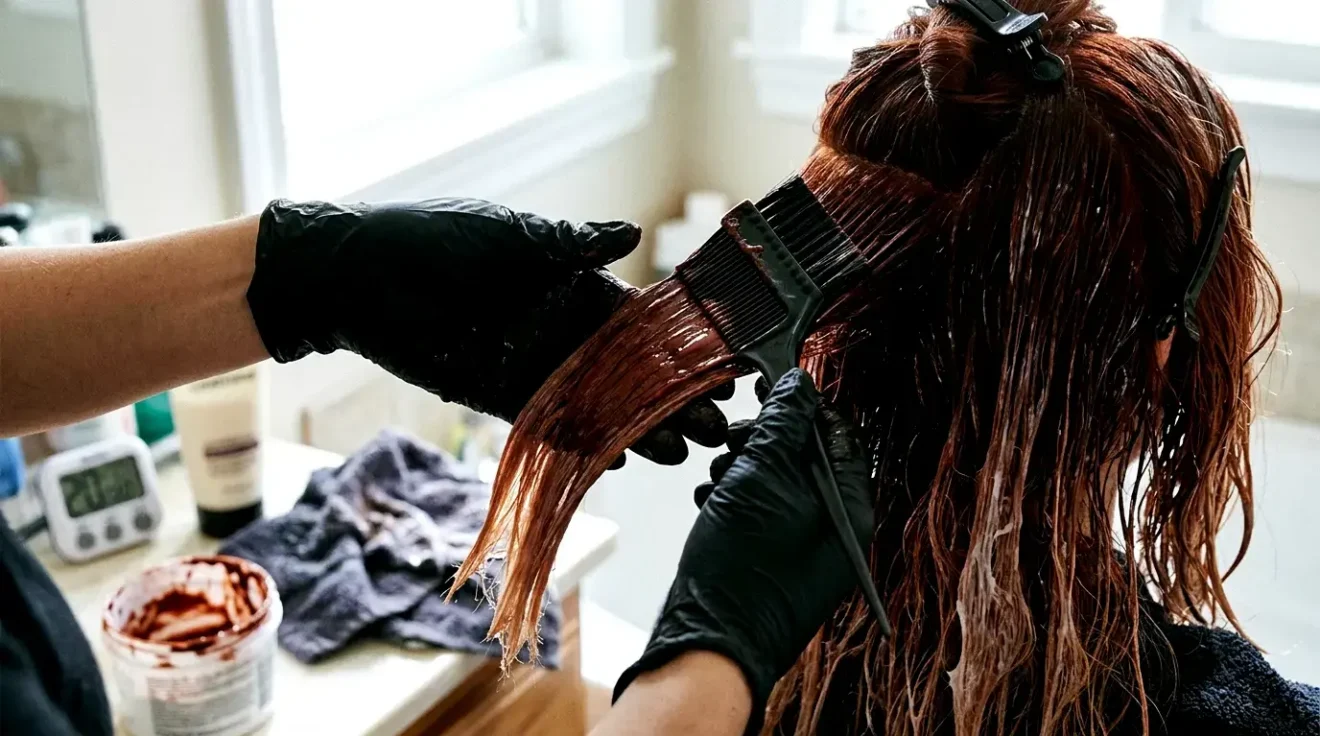
- Apply in sections. Start where pigment is most needed, often the mid-lengths, and work towards less faded areas. Treat highly absorbent ends later or for a shorter period when the product permits.
- Time and rinse carefully. Stay within the recommended processing range, check the result and rinse as directed. Avoid extending exposure merely to achieve a stronger shade.
Wet hair that stretches excessively, feels gummy or breaks easily may be significantly compromised. Do not interpret the stretch test as a precise porosity measurement. If the fibre is fragile, postpone additional colour treatment and seek advice from a qualified colourist.
If the ends have already become too dark, try a few ordinary gentle washes before attempting stronger removal. A clarifying shampoo may help with certain direct dyes, but it can also fade the rest of the colour and increase dryness. Avoid improvised baking-soda treatments.
For stubborn uneven staining, professional correction is safer than repeatedly alternating strong cleansing and pigment applications.
Five checks before your next colour-depositing mask
- Photograph your hair in indirect daylight and identify the faded zones; keep one baseline photo.
- Inspect the last few centimetres for roughness, breakage or previous bleaching; record which sections need extra care.
- Perform a concealed strand test following product instructions; note the resulting shade.
- Prepare sectioning clips, gloves and a timer; establish a simple application order for the areas requiring colour.
- Photograph the dry result in similar lighting and note the exposure used; keep a reference for your next application.
Even application matters particularly with corrective pigments, where a small change in concentration or contact time can visibly alter a blonde shade.
Purple Shampoo or Purple Mask: Which Works Better for Brassy Blonde Hair?
Purple shampoo is generally a convenient choice for mild yellow brassiness during an ordinary wash, while a purple mask may suit someone seeking more targeted pigment deposition alongside conditioning. Neither format is automatically stronger: pigment concentration, formulation and contact time determine the result. Both temporarily neutralise yellow tones without lightening the hair.
Purple works through colour balancing. On the colour wheel, violet opposes yellow, which explains why carefully controlled violet deposits can reduce the appearance of yellow warmth in blonde, silver or highlighted hair.
However, orange brassiness often requires a different corrective balance, frequently involving blue rather than violet pigment.
A laboratory investigation of Acid Violet 43 examined five experimental shampoos and five conditioners. Both formats deposited violet pigment on bleached hair, while the conditioners tested showed greater visible deposition.
The University of Ceará research on violet pigment in hair products supports the principle of pigment deposition, but it does not establish that all commercial purple masks outperform purple shampoos.
The following comparison provides a practical starting point rather than a universal product ranking.
| Hair condition or need | Purple shampoo | Purple mask |
|---|---|---|
| Mild yellow warmth | Convenient during a normal wash | May provide unnecessary additional deposition |
| Noticeable brassiness | May require repeated carefully spaced use | Can provide more targeted correction if sufficiently pigmented |
| Dry, rough lengths | Requires suitable conditioning afterwards | May combine conditioning with pigment deposition |
| Very porous ends | Still requires controlled contact | Greater risk of visible unevenness with heavily pigmented formulas |
| Low wash frequency | Useful when cleansing is needed | Can refresh tone without an additional shampoo session |
The choice should reflect the actual product rather than its category. A highly pigmented shampoo may have a stronger effect than a lightly tinted mask.
It is possible to alternate formats, but there is little benefit in layering both automatically. Start with one, assess the dry result in daylight and adjust only if yellow warmth remains.
Purple products cannot reverse insufficient lightening or permanently correct an unsuitable underlying shade. When the desired blonde cannot be achieved through surface colour balancing, a salon toner or a broader professional colour correction may be necessary.
Whichever product you choose, the next priority is avoiding the excessive violet deposit that can make blonde hair look less natural rather than brighter.
Why Overusing Purple Shampoo Can Leave Blonde Hair Looking Dull or Violet
Overusing purple shampoo can leave blonde hair with a violet, greyish or muted appearance because more corrective pigment may remain on the fibre than is needed to balance yellow tones. Very light and porous sections are particularly susceptible. Dullness may also involve product build-up, dryness or surface damage, rather than violet pigment alone.
The purpose of a purple shampoo is not to make hair progressively more purple. It is to introduce enough violet colour to balance visible yellow warmth.
Once the blonde looks neutral, further deposition can produce a lavender cast or reduce the brightness of the overall shade. This is especially noticeable on pale highlights, silver hair and heavily lightened ends.
How to recognise and correct over-toning
If blonde hair has developed an unwanted violet tint:
- Stop applying additional purple pigment temporarily.
- Wash with a suitable gentle shampoo as needed and monitor the colour after drying.
- Use a lightweight conditioner to maintain softness and manageability.
- Consider occasional clarifying only when compatible with the hair’s condition and existing colour.
- Seek professional advice if the cast persists or the hair is significantly damaged.
A chelating shampoo and a clarifying shampoo are not interchangeable. Chelating formulas target certain mineral deposits, while clarifying formulas primarily address selected types of residue and build-up. Neither guarantees removal of unwanted violet pigment.
If the blonde appears flat without an obvious purple cast, examine the condition of the fibre. Rough cuticles, residue and reduced surface smoothness can all affect how light reflects from the hair.
Correcting colour and restoring shine are different tasks. Adding more violet will not repair damaged fibres or remove heavy styling residue.
For future applications, perform a strand test, begin with a short manufacturer-permitted contact time and reserve purple products for occasions when brassiness is visible. On very pale hair, a less pigmented formula may offer better control.
Dilution with an ordinary conditioner is only appropriate if the product manufacturer allows mixing.
Once the shade is balanced, maintaining it becomes a question of timing: refreshing only when the colour needs it is more reliable than adding pigment at every wash.
When Should You Refresh a Semi-Permanent Hair Colour to Maintain Its Tone?
Refresh semi-permanent hair colour when its tone has visibly faded beyond your preferred result, not automatically after a predetermined number of weeks. Washing frequency, colour depth, formulation, hair condition and environmental exposure influence longevity. Check the shade in consistent daylight and apply additional pigment selectively to avoid unnecessary darkening or uneven build-up.
Traditional semi-permanent colour generally relies on direct dyes that deposit colour without the same oxidative chemistry used in permanent colouring. However, products marketed as semi-permanent vary, so their instructions and expected durability should be checked individually.
Fading may reveal itself in several ways:
- Red or copper hair loses saturation and becomes visibly warmer or softer.
- Fashion colours become more pastel or uneven between different sections.
- Previously lightened ends show a different tone from the mid-lengths.
- The overall colour appears less intense under comparable natural lighting.
Roughness can accompany fading, but it is not a reliable measure of how much pigment remains. Texture depends on fibre condition, conditioning and environmental exposure as well as the history of colouring.
Refresh the faded areas, not necessarily the whole head
Consider a hypothetical example: someone with semi-permanent burgundy hair notices that the mid-lengths have faded while the ends remain noticeably dark.
Reapplying the same formula everywhere could deepen the ends further without producing an even result. A more appropriate approach may be to treat the faded mid-lengths first and reduce or omit application on the already saturated ends, provided the manufacturer’s instructions permit this.
The strategy also depends on whether the new colour matches the existing shade. Repeatedly applying an unsuitable pigment can gradually alter the intended balance even when each individual treatment looks acceptable.
Take photographs after each refresh under similar lighting. Comparing results will reveal whether your current routine maintains the shade or progressively makes it darker.
If the colour becomes muddy, uneven or resistant to correction, avoid repeated home applications and discuss corrective options with a professional.
Timing alone cannot preserve colour if the fibre is repeatedly exposed to factors that accelerate fading, particularly sunlight and frequent washing.
Why Does Dyed Hair Change Shade After Repeated Sun Exposure?
Dyed hair changes shade after repeated sun exposure because light, including ultraviolet radiation, can alter colour-forming compounds and contribute to degradation of the hair fibre. Depending on the dye system, exposure may reduce colour intensity or change its tonal balance. The effect is cumulative and often most apparent on sections exposed directly to daylight.
Artificial colour is produced by molecules that absorb and reflect particular portions of visible light. Photochemical changes can alter their optical properties, reducing the appearance of the original shade.
Natural melanin is also vulnerable to photochemical change. Sun exposure can therefore affect both artificial colour and the underlying hair fibre, especially in previously lightened hair.
Research published in the International Journal of Cosmetic Science investigated artificial hair colour exposed to irradiation and repeated shampooing.
The International Journal of Cosmetic Science research on hair colour fading found that combined irradiation and shampooing produced particularly pronounced fading under the experimental conditions. The degree of change varied with the hair samples and colour formulations.
These laboratory findings help explain why outdoor exposure and regular washing can work together to shorten the visible life of a shade. They do not establish a universal fading rate for ordinary sun exposure.
Why the surface of the hair may fade first
The crown, parting and outer layers commonly receive more direct sunlight than the hair underneath. As a result, colour may appear lighter or warmer on the surface while protected sections retain greater depth.
A useful home comparison is to examine the top layer and a concealed underneath section in the same natural lighting. This can reveal uneven exposure, although it cannot prove that sunlight is the sole cause.
Product residue may be reduced through appropriate cleansing, and faded direct pigment may sometimes be replenished. By contrast, photochemical alteration of dye molecules and structural fibre damage cannot simply be reversed with a colour mask.
A mask may improve appearance or restore some colour visually, but persistent roughness and severe tonal changes may require professional treatment.
In sunnier periods, increase physical protection rather than compensating for every change with more dye.
Photoprotection is one part of maintaining vibrancy, but freshly coloured hair also needs conditioning that supports its surface condition without unnecessary heaviness.
Hair Mask or Acidic Conditioner: Which Suits Rough, Newly Coloured Hair?
An acidic conditioner is often useful when newly coloured hair feels rough because it can support surface smoothness and manageability, while a suitable hair mask may be preferable when the lengths also feel dry or difficult to detangle. Neither product permanently repairs severely damaged hair, and effectiveness depends on the complete formula rather than its category or pH alone.
Hair colouring, particularly when combined with lightening, can affect the cuticle and internal fibre structure. Roughness may reflect surface disruption, increased friction, altered moisture behaviour or pre-existing damage.
Acidic conditioners generally use a mildly acidic formulation that can help maintain a favourable surface environment for the hair. Their conditioning ingredients may reduce friction and improve softness.
However, it is inaccurate to claim that every acidic product physically seals the cuticle or permanently locks pigment inside the fibre.
Hair masks are typically richer conditioning treatments. Depending on their ingredients, they may temporarily improve lubrication, softness and manageability or help reduce some effects of damage.
A mask does not necessarily rebuild the hair’s internal structure or restore lost colour molecules.
| Main concern | Acidic conditioner | Hair mask |
|---|---|---|
| Surface roughness and tangling | Useful for regular smoothing and detangling | May provide extra conditioning |
| Dry-feeling lengths | May be sufficient for mild dryness | Often appropriate when richer conditioning is needed |
| Fine hair lacking volume | Lightweight formulas may be preferable | Heavy formulas can cause limpness |
| Heavily processed hair | Can improve manageability | May help cosmetically, but cannot reverse major damage |
| Colour preservation | Gentle conditioning may reduce avoidable friction | Benefits depend on formulation and washing routine |
The products can be combined when compatible. For example, someone with dry, coloured lengths might use a mask occasionally and a lighter conditioner for regular washes. Applying both in sequence is not automatically necessary, and the manufacturer’s directions should determine the order.
Avoid treating increased product quantity as a substitute for appropriate conditioning. Heavy build-up may make fine hair appear flat and reduce the visual brightness of the shade.
If hair becomes gummy, breaks repeatedly or feels unusually weak after colouring, cosmetic conditioning alone may not be sufficient.
With conditioning matched to the fibre, the final step is preventing daily exposure from undoing the visible improvements between appointments.
Key takeaways before building your protection routine
- Match protection to your dominant exposure: repeated swimming, prolonged sunlight and daily mechanical friction require different responses.
- Separate colour correction from damage prevention: pigment products adjust appearance, while protective habits aim to reduce further deterioration.
- Choose interventions proportionately: a hat or gentler detangling habit may be more useful than adding several additional cosmetic products.
How to Protect Dyed Hair From Sun, Swimming Pools, and Everyday Exposure?
Protect dyed hair by matching your routine to the exposure it faces most often: use hats or suitable photoprotective products outdoors, rinse and protect hair around swimming sessions, and reduce daily friction through gentle handling. Sunlight, chlorinated water and mechanical wear affect hair differently, so no single leave-in product can reliably address every cause of fading.
Three separate mechanisms deserve attention. Sunlight can contribute to photochemical changes in dyes and hair proteins. Chlorinated water may influence colour stability through oxidation and other interactions. Repeated friction can damage the cuticle, increase tangling and make the surface appear rougher.
A 2025 experimental study published in the Journal of the Society of Cosmetic Chemists of Japan found that residual chlorine in tap water contributed to fading in dyed hair samples. The size of the effect varied by shade and experimental conditions.
This research concerns residual chlorine in washing water. It supports considering chlorine as a potential contributor to fading but does not establish that all swimming pools or tap-water supplies produce the same effect.
Choose protection according to your exposure
For frequent outdoor exposure, a hat provides a physical barrier that does not depend on whether a cosmetic formula offers effective photoprotection. A leave-in product specifically formulated for hair exposed to sunlight may provide additional support, although its performance depends on the product and how it is used.
For swimming, saturating the hair with fresh water before entering the pool is a practical way to reduce immediate uptake of pool water. It does not create a waterproof barrier or eliminate chlorine exposure. A well-fitting swim cap may provide additional protection.
After swimming, rinse thoroughly with fresh water. A suitable swimmer’s or chelating shampoo may help remove certain deposits when necessary, but frequent strong cleansing can increase dryness and contribute to colour loss.
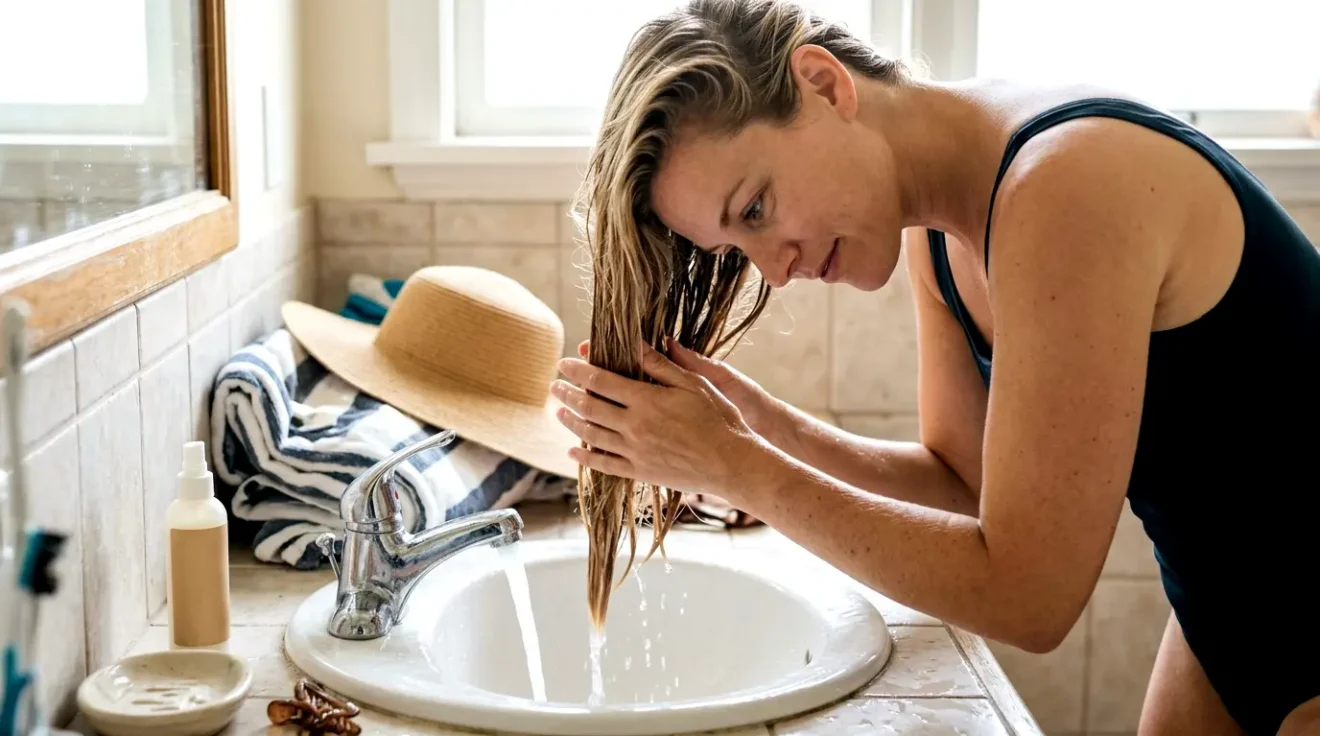
For everyday care, blot wet hair rather than rubbing it vigorously with a towel. Detangle gently, starting at the ends, using a suitable wide-tooth comb or detangling brush and enough conditioning slip to avoid pulling.
A smooth satin or silk pillowcase may reduce some friction during sleep, although it should not be regarded as a proven method of preventing dye loss. Loose protective hairstyles may also reduce tangling.
The best weekly routine depends on how you spend your time:
- Frequent swimmers: prioritise pre-swim wetting, a swim cap when practical, post-swim rinsing and appropriate cleansing.
- Outdoor commuters: prioritise physical shade, reduced unnecessary heat exposure and gentle washing.
- Mostly indoor routines: focus on cleansing frequency, appropriate conditioning and careful detangling rather than accumulating specialised products.
Always distinguish the function stated on a label from an assumed benefit. A UV-oriented leave-in does not necessarily remove chlorine, and a chelating shampoo does not provide protection against sunlight.
For your next wash, choose one adjustment based on the most visible problem: reduce unnecessary cleansing, protect exposed hair or correct a specific faded area. Compare the dry result in daylight before adding further products. Consistent, targeted care is more useful than an increasingly complicated routine.
Can colour-safe shampoo completely prevent hair dye from fading?
No. A gentle, colour-compatible shampoo can help limit unnecessary fading, but artificial pigments may still change through washing, light exposure and normal wear. Look for a formula that cleanses your scalp effectively without leaving your lengths excessively dry, and avoid washing more frequently than your scalp requires.
Does washing dyed hair with cold water make the colour last longer?
Using lukewarm rather than very hot water is a reasonable precaution because heat can affect hair swelling and product behaviour. However, cold water does not permanently seal the cuticle, and the evidence does not establish a universal colour-retention benefit from using very cold water. Gentle cleansing and appropriate conditioning remain important.
Can a colour-depositing mask replace a salon toner?
A colour-depositing mask can temporarily adjust or replenish certain tones when the starting shade is suitable. It cannot reliably replace every professional toner or correct substantial differences in lightness, underlying warmth or uneven processing. A colourist can assess whether a toner, corrective colour or another treatment is necessary.
Why does dyed hair look different in bathroom lighting and daylight?
Different light sources have different spectral characteristics, which can change the way warm, cool and muted pigments appear. A shade that looks neutral under warm bathroom lighting may seem more yellow or coppery in daylight. Compare your hair in consistent, indirect natural light before deciding that it needs another colour treatment.
Should you wait until the colour fades completely before booking another salon appointment?
Not necessarily. The appropriate interval depends on your colour technique, root regrowth, hair condition and desired appearance. A simple gloss or tonal adjustment may be sufficient for some shades, while other situations require more involved professional work. Seek advice earlier if the hair is breaking, becoming unusually fragile or developing persistent uneven colour.