
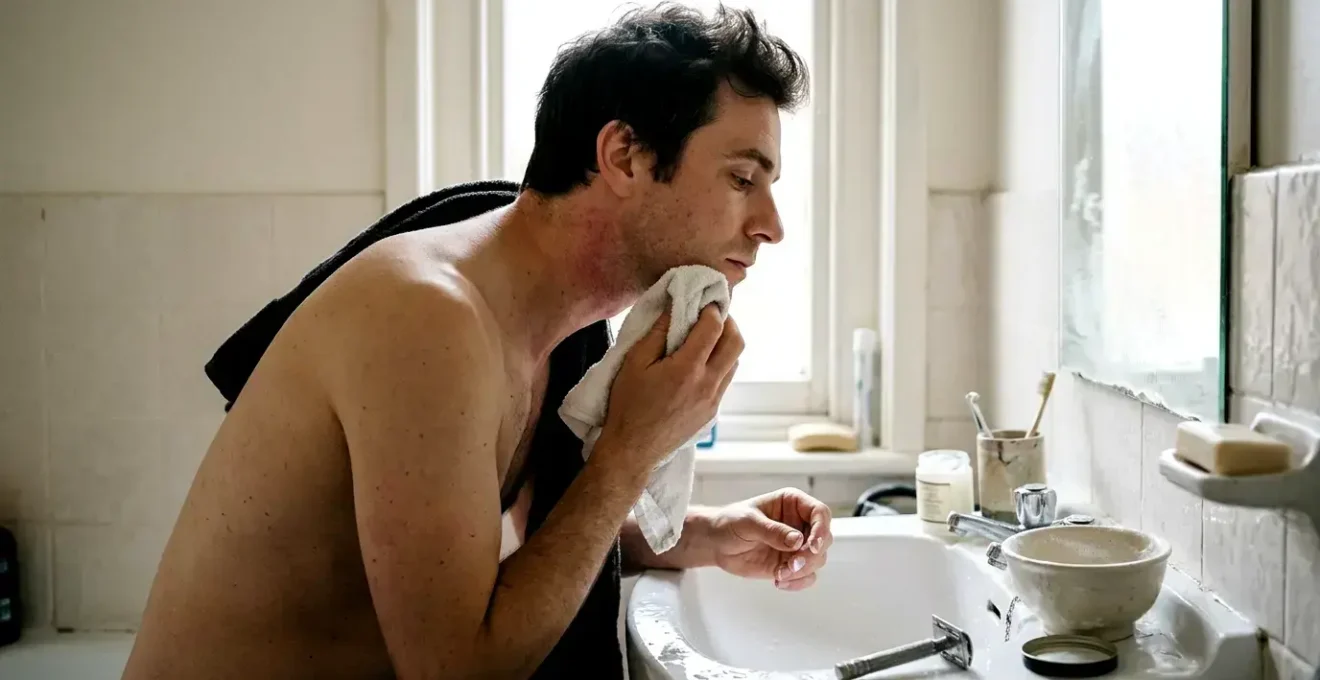
Freshly shaved skin does not necessarily need an alcohol-based aftershave to feel clean, comfortable or properly cared for. In fact, if your face regularly feels tight, dry or irritated after shaving, switching to a gentler routine may help reduce unnecessary irritation. The aim is to calm the skin, maintain hydration and support its protective barrier rather than create an intense cooling or stinging sensation.
A practical alcohol-free routine starts with a simple approach: rinse away shaving residue, pat the skin dry, apply a gentle soothing product and follow with a suitable moisturiser. Ingredients such as aloe vera, panthenol and colloidal oatmeal can be useful options, provided the finished formulation agrees with your skin. Fragrance, menthol and certain astringents may be less suitable immediately after shaving, particularly when the skin is already sensitive.
It is also important to recognise the difference between temporary post-shave redness, razor burn and ingrown hairs. Each can require a slightly different response. Understanding these reactions makes it easier to choose products that provide lasting comfort instead of simply masking irritation.
Gentle Aftershave Care: The Essentials
- Rinse with lukewarm water, remove shaving residue and pat your face dry without rubbing.
- Choose alcohol-free, fragrance-free skincare with soothing ingredients such as panthenol, aloe vera or colloidal oatmeal.
- Apply moisturiser while your skin is still slightly damp to help maintain hydration and reduce tightness.
- Why Does Aftershave Sting Even When You Have No Visible Cuts?
- How to Soothe Freshly Shaved Skin Without Using Strong Astringents?
- Aftershave Balm or Gel: Which Feels Better on Dry, Freshly Shaved Skin?
- Why Witch Hazel Aftershave Can Feel Too Drying for Some Skin Types
- When Should You Apply Moisturiser After Rinsing Away Shaving Cream?
- Razor Burn or Ingrown Hairs: Which Is Causing Red Bumps After Shaving?
- Why a Barrier Cream May Sting When Applied to Cracked or Inflamed Skin
- Why Does Your Face Stay Red After Shaving and What Can Help?
Why Does Aftershave Sting Even When You Have No Visible Cuts?
Aftershave can sting even when your face has no visible cuts because shaving affects more than the hairs themselves. The razor passes directly over the outermost layer of skin, creating friction and potentially disturbing the skin’s protective surface. This can make freshly shaved areas more sensitive to ingredients that would normally feel comfortable, including alcohol, fragrance and menthol.
The skin barrier is made up of specialised cells and lipids that help limit water loss and protect against external irritants. Shaving can disturb this surface, particularly when the blade is dull, too much pressure is applied or several passes are made over the same area. Consequently, a product can produce a burning sensation without an obvious wound being present.
Three reactions are worth distinguishing:
- Mechanical irritation: Repeated blade contact, friction and pressure leave the skin temporarily sensitive.
- Chemical irritation: Ingredients such as denatured alcohol, fragrance and menthol can cause discomfort on recently shaved skin, depending on the formulation and individual sensitivity.
- Temporary sensory sensitivity: Exposed or irritated skin may react more strongly to temperature changes and topical ingredients, even without a visible injury.
A useful way to investigate the cause is to compare how a product feels on a small area of unshaved skin with how it feels after shaving. If it causes discomfort in both situations, the formulation itself may be unsuitable. If the reaction occurs mainly on freshly shaved areas, shaving-related sensitivity is a plausible contributor. This is an informal observation, not a diagnostic test.
The idea that a product must sting to disinfect the skin is misleading. Burning is not evidence of better antibacterial protection. A well-formulated alcohol-free product can be suitable for everyday post-shave care without producing an aggressive sensation.
The most useful response is therefore to reduce irritation rather than seek the strongest possible aftershave sensation. Choosing a gentle formulation supports comfort while avoiding unnecessary exposure to ingredients that may aggravate freshly shaved skin.
Once the likely trigger is identified, the next step is to calm the skin with a simple routine that prioritises gentle cleansing, hydration and barrier support.
How to Soothe Freshly Shaved Skin Without Using Strong Astringents?
You can soothe freshly shaved skin without strong astringents by rinsing away shaving residue, patting your face dry and applying a gentle moisturising product. The most useful approach is to avoid additional friction and choose a formulation designed for sensitive skin. Products containing ingredients such as panthenol, aloe vera or colloidal oatmeal may help improve comfort without relying on a strong alcohol-based sensation.
Immediately after shaving, the skin benefits from a routine that avoids unnecessary cleansing and aggressive treatment. Hot water, rough towels and heavily fragranced products can add to irritation. A gentler sequence helps maintain the moisture already present in the skin while reducing further exposure to potential triggers.
Follow these three basic steps:
- Rinse: Use lukewarm water to remove shaving cream, loose hairs and residue. Avoid excessively hot water, which can worsen discomfort in sensitive skin.
- Pat dry: Use a clean, soft towel and gently press it against the face. Avoid rubbing or repeatedly wiping the same area.
- Apply soothing care: While the skin remains slightly damp, spread a small amount of a gentle, suitable moisturiser or soothing product over the shaved areas.
The choice of ingredients matters as much as the application method. Several commonly used skincare ingredients can be considered when looking for an alcohol-free aftershave alternative:
- Aloe vera: Used in topical skincare formulations for its moisturising and soothing properties. Choose a simple formulation without added fragrance or unnecessary irritants.
- Panthenol: Also known as provitamin B5, it acts as a humectant and supports skin conditioning, making it a useful ingredient in moisturising products.
- Allantoin: A skin-conditioning ingredient commonly included in products designed for dry or sensitive skin.
- Bisabolol: An ingredient used in cosmetic formulations for its soothing and skin-conditioning properties. Individual tolerance still matters.
- Colloidal oatmeal: Used in skincare for dry, irritated skin and can help support skin comfort and moisturisation.
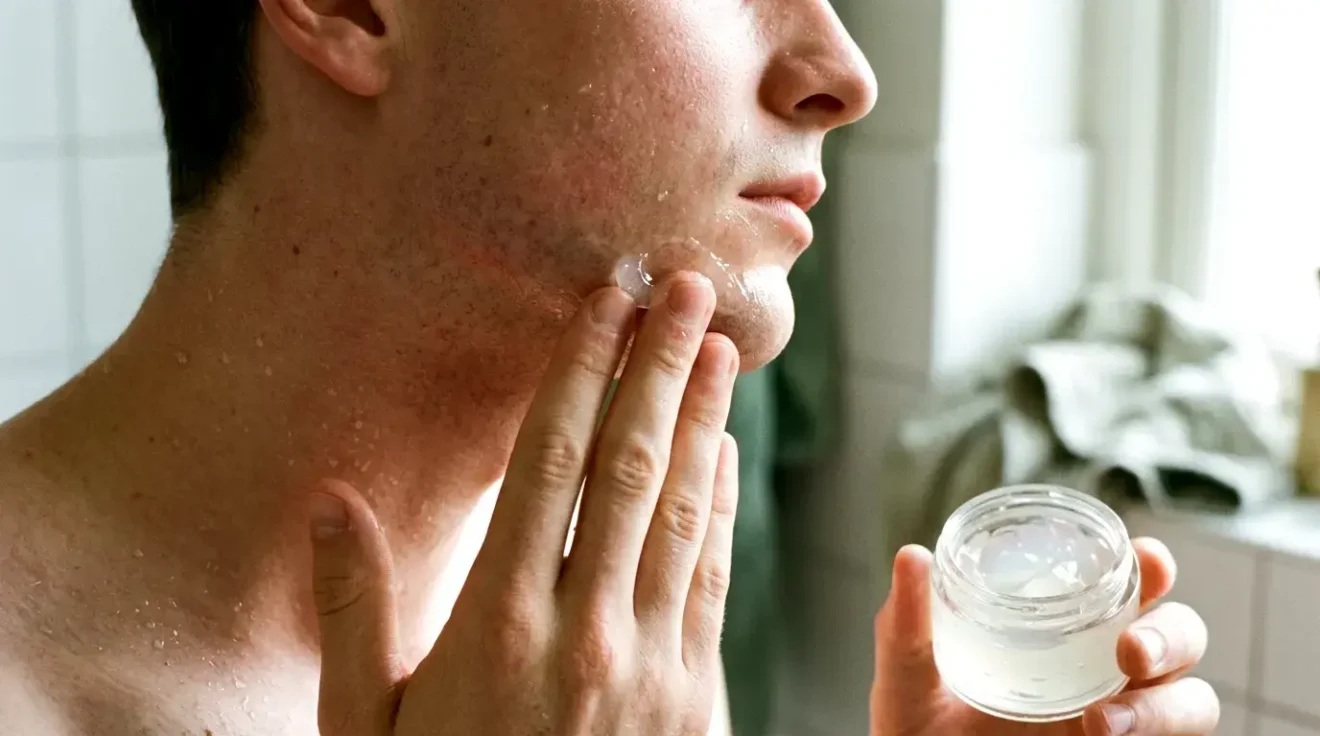
Some ingredients are better left out of an immediate post-shave routine, particularly if your skin already feels uncomfortable. Concentrated essential oils, menthol, camphor and strongly fragranced formulations may cause additional irritation. Natural origin does not automatically mean gentle. Even botanical ingredients can trigger sensitivity or allergic reactions in some individuals.
It is also worth distinguishing between a cooling sensation and actual skin comfort. Cold water can temporarily make the skin feel less warm, but it is not a substitute for moisturisation. Lukewarm water is generally a practical choice for removing shaving residue without introducing unnecessary temperature-related discomfort.
Once immediate discomfort is under control, choosing the right product consistency becomes important. A lightweight gel and a richer balm can both be appropriate, but their suitability depends on skin type and formulation.
Aftershave Balm or Gel: Which Feels Better on Dry, Freshly Shaved Skin?
For dry, tight or easily irritated skin after shaving, an aftershave balm will often feel more comfortable because it generally provides a richer moisturising finish. A gel may be preferable if you dislike heavier textures, have oilier skin or want a lightweight product. However, the ingredient list is more important than the texture alone: a gentle balm may be preferable to an alcohol-rich gel, but a well-formulated gel can also work effectively.
The difference comes down to how these products are formulated and how they feel on the skin. Balms are usually emulsions containing a combination of water, emollients and moisturising ingredients. Some also include occlusive ingredients that help reduce water loss from the skin surface.
Gels typically have a lighter, water-based consistency. They may contain humectants that attract and retain moisture, and their water content can create an immediate cooling sensation as the product spreads and dries. However, a gel that evaporates quickly may not provide enough lasting comfort for someone experiencing significant post-shave dryness.
| Criterion | Aftershave balm | Aftershave gel |
|---|---|---|
| Texture | Richer, cream-like consistency | Lightweight, often translucent |
| Dry skin | Often a suitable choice for tight or dry skin | May require additional moisturisation |
| Oily skin | Some formulations may feel too heavy | Often preferred for a lighter finish |
| Skin feel | Can leave a moisturising protective film | Usually absorbs or dries with a lighter feel |
| Best selection criterion | Gentle ingredients and suitable emollients | Gentle ingredients and suitable humectants |
Climate and application time can also influence the decision. In warm or humid conditions, a lightweight gel may feel more comfortable during the day. In colder weather, when skin is more likely to feel tight, a richer balm may offer a more satisfying finish. Neither option is universally better, and seasonal adjustments are a matter of personal comfort rather than a strict skincare rule.
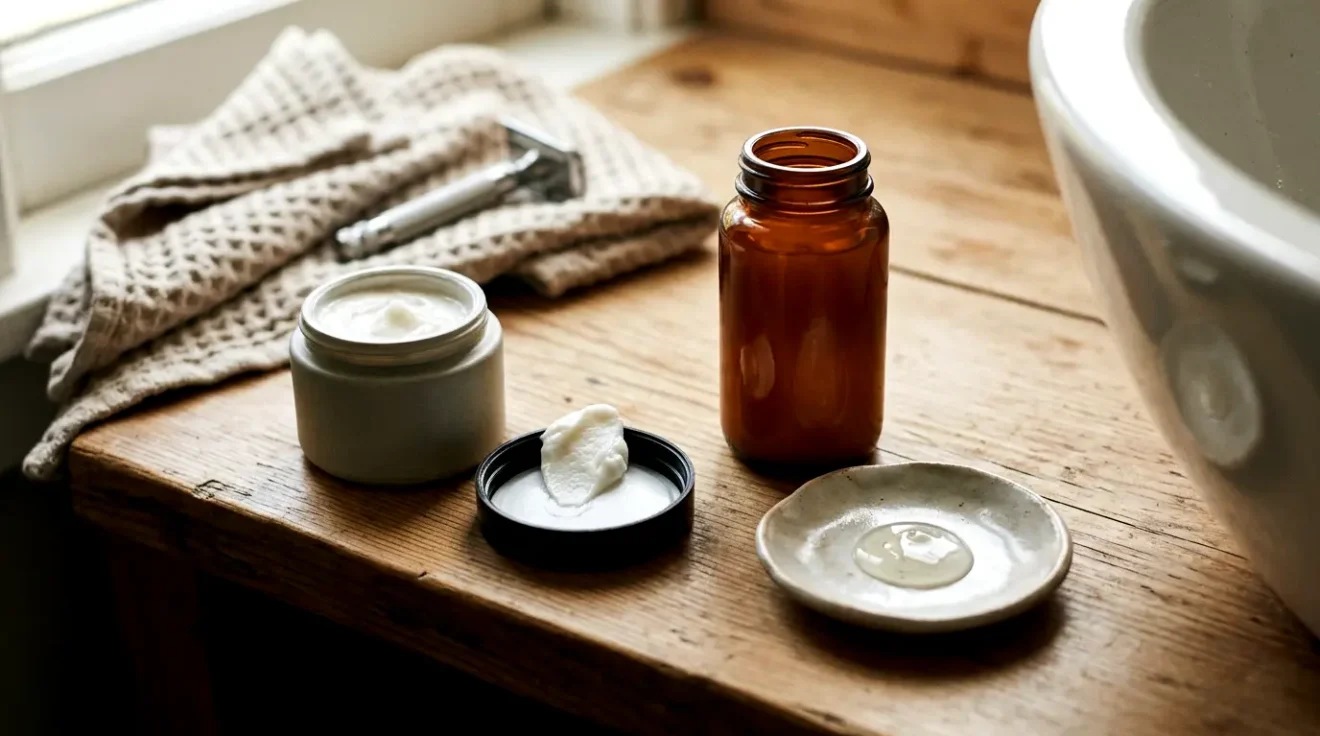
When comparing products, check the ingredient list before making a decision. Look for fragrance-free formulations if your skin is sensitive, and be cautious with products containing denatured alcohol high in the ingredient list if they repeatedly leave your face feeling tight or uncomfortable. Not every ingredient labelled as an alcohol is drying: fatty alcohols such as cetyl alcohol and stearyl alcohol are commonly used as emollients and texture stabilisers.
A useful approach is to apply a small amount of one product after shaving and observe how your skin feels over the following hours. If the product leaves persistent tightness, stinging or redness, discontinue it and consider a simpler formulation. Avoid introducing several new products at the same time, as this makes it harder to identify the source of a reaction.
For those who prefer botanical toners rather than conventional balms or gels, witch hazel is another ingredient worth examining. Its formulation, however, makes a considerable difference to how it feels after shaving.
Why Witch Hazel Aftershave Can Feel Too Drying for Some Skin Types
Witch hazel aftershave can feel drying because some formulations contain alcohol, while others have an astringent effect that may be uncomfortable on already sensitive skin. The term witch hazel does not describe one standardised cosmetic formula. Distilled preparations, botanical extracts and commercial toners can have different ingredient profiles, so checking the full label is essential before using one immediately after shaving.
Witch hazel, derived from the plant Hamamelis virginiana, is used in a range of topical skincare products. Some preparations contain botanical constituents such as tannins, which contribute to their astringent properties. This can produce a temporary sensation of tightened skin.
However, the feeling of tightness should not automatically be interpreted as improved skin health. Astringent products may be less comfortable when the skin barrier has already been disturbed by shaving. If a formulation also contains a substantial amount of alcohol, it may further contribute to dryness or stinging in susceptible individuals.
It is important to distinguish between alcohol-free witch hazel and products containing alcohol. For example, one specific US topical preparation documented in the National Library of Medicine‘s DailyMed database lists witch hazel at 86% and alcohol at 14% by volume. This is a product-specific composition, not a universal description of witch hazel products.
The DailyMed official witch hazel product labeling illustrates why it is important to distinguish between botanical ingredients and the complete formulation in which they are delivered.
For anyone who wants to keep a botanical toner in their routine, a cautious approach can help establish whether it is suitable:
- Check whether the product contains alcohol, fragrance or other ingredients that have previously caused discomfort.
- Apply a small amount to a limited area of skin, following the product’s instructions.
- Observe how the skin feels after five minutes, 30 minutes and two hours.
- Notice whether tightness, redness or discomfort disappears, remains or becomes more pronounced.
This observation can help identify a poorly tolerated product, although it cannot establish the cause of a skin reaction. If irritation develops, stop using the product rather than trying to build tolerance through repeated exposure.
Other botanical waters, including chamomile water and rose water, may appeal to those who prefer a refreshing toner. Nevertheless, these products are not automatically less irritating. Botanical extracts and fragrances can also trigger sensitivity, so simple, fragrance-free moisturising products are often a more predictable option for reactive skin.
Whether you choose a botanical toner, balm or gel, the next important consideration is when to apply moisturiser. Timing can make a noticeable difference to how comfortable freshly shaved skin feels.
When Should You Apply Moisturiser After Rinsing Away Shaving Cream?
Apply moisturiser within the first few minutes after rinsing away shaving cream, while your face is still slightly damp. This helps retain surface moisture and reduces the likelihood of leaving freshly shaved skin feeling tight. There is no need to wait for your face to become completely dry before moisturising, particularly if your skin is prone to dryness or irritation.
After shaving, rinsing removes foam and loose hair, but it can also leave the skin feeling temporarily exposed and uncomfortable. Applying moisturiser at this stage helps replenish hydration and supports the skin’s protective barrier.
The American Academy of Dermatology’s dry-skin care recommendations advise applying moisturiser while the skin is still damp. Although this is general dry-skin guidance rather than a dedicated post-shaving protocol, the principle is useful when building a gentle after-shave routine.
There are two practical ways to organise moisturising care:
- Immediate hydration: Apply a gentle moisturiser directly after rinsing and lightly patting the face. This is a straightforward option for most people experiencing dryness or tightness.
- Layered hydration: If using a separate lightweight, water-based soothing product first, apply it according to its instructions and follow with a moisturiser suited to your skin. A richer product can help reduce water loss where additional barrier support is needed.
More products do not necessarily produce better results. A common mistake is to wash the face again with a conventional cleanser immediately after shaving, even though the skin has already been cleaned during the shaving process. This additional cleansing may remove some of the skin’s surface lipids and contribute to further dryness.
In most ordinary shaving routines, rinsing away the remaining foam with clean water is sufficient. A second cleanser is unnecessary unless there is a specific reason to use one.
It is also useful to consider the moisturiser itself. For sensitive skin, a fragrance-free product with a relatively simple ingredient list may be preferable. Glycerin, panthenol and suitable emollients can contribute to hydration and skin conditioning. Avoid introducing exfoliating acids, retinoids or concentrated essential oils immediately after shaving if they tend to irritate your skin.
Your Five-Step Post-Shave Skin Comfort Checklist
- Inspect the shaved area and note any visible redness, dryness or unusual discomfort before applying skincare.
- Rinse away shaving cream and loose hairs using lukewarm water, leaving the skin free of visible residue.
- Pat the face gently with a clean towel and avoid rubbing the jawline, cheeks and neck.
- Apply a small amount of a suitable fragrance-free soothing moisturiser while the skin remains slightly damp; record the product and ingredients used.
- Check your skin after 30 minutes and again later in the day, noting whether tightness, stinging or redness has improved or worsened.
Keeping a simple record of these observations can help identify whether a particular moisturiser is suitable. It also makes it easier to distinguish irritation caused by shaving technique from discomfort associated with a skincare product.
However, moisturisation alone will not resolve every type of bump or redness. If individual red spots appear after shaving, it is worth identifying whether they are caused by razor burn or ingrown hairs before choosing the next treatment.
Key Points to Remember
- Diffuse redness and individual raised bumps are not necessarily the same skin problem, even when they appear after shaving.
- Razor burn generally calls for reduced friction and gentle moisturising, while ingrown hairs require attention to hair-growth direction and shaving technique.
- Persistent, painful or infected-looking bumps should not be managed with cosmetic products alone.
Razor Burn or Ingrown Hairs: Which Is Causing Red Bumps After Shaving?
Razor burn and ingrown hairs can both cause redness and discomfort after shaving, but their appearance and timing often differ. Razor burn typically produces a more diffuse area of redness or irritation shortly after shaving. Ingrown hairs are more likely to appear as individual raised bumps, sometimes with a visible trapped hair beneath the skin. Identifying the difference helps determine whether moisturising and soothing care are sufficient or whether shaving technique needs to change.
Razor burn is commonly associated with repeated blade contact, excessive pressure, poor lubrication or shaving against the direction of hair growth. It may involve redness, tenderness, itching and a burning sensation. The affected area can look inflamed without containing individual trapped hairs.
Ingrown hairs develop when a hair curls or grows back into the surrounding skin instead of emerging normally. They can produce distinct bumps that may itch, feel tender or become inflamed. Sometimes, a curved hair can be seen beneath the surface.
| Feature | Razor burn | Ingrown hairs |
|---|---|---|
| Typical appearance | Diffuse redness or irritated patches | Individual raised bumps |
| Onset | Often shortly after shaving | May become noticeable later as hair grows back |
| Common sensation | Burning, tenderness or general irritation | Itching, local tenderness or inflammation |
| Visible hair | Not usually a defining feature | A trapped or curved hair may be visible |
| Useful response | Reduce friction and use gentle moisturising care | Adjust shaving technique and avoid picking at the bumps |
The NHS guidance on ingrown hairs explains that these bumps can sometimes contain a visible trapped hair beneath the skin. The NHS also recommends avoiding blunt razors and shaving in the direction of hair growth to help prevent ingrown hairs.
This distinction matters because the treatments address different causes. A gentle moisturiser can improve the comfort of irritated skin, but it does not necessarily release a trapped hair. Similarly, aggressive exfoliation is not an appropriate response to freshly irritated skin, as it may increase inflammation.
For ingrown-hair prevention, consider adjusting the shaving process before changing your aftershave product. Shave in the direction of hair growth, use adequate lubrication, avoid repeatedly passing the blade over the same area and replace blades when they become blunt. The American Academy of Dermatology recommends replacing a blade or disposable razor after five to seven shaves as general irritation-prevention guidance.
Avoid squeezing, scratching or digging into an ingrown hair. These actions can damage the skin and increase the risk of infection or scarring. If bumps become increasingly painful, spread, feel hot or produce pus, seek medical advice rather than relying on cosmetic treatment. Recurrent or persistent problems also deserve professional assessment.
Even when the cause is straightforward, irritated skin does not always tolerate every moisturiser immediately. In particular, cracked or inflamed areas may sting when a barrier cream is applied.
Why a Barrier Cream May Sting When Applied to Cracked or Inflamed Skin
A barrier cream may sting when applied to cracked or inflamed skin because the skin’s protective outer layer is no longer functioning normally. When this layer is disrupted, sensory nerve endings can become more exposed to topical ingredients and external stimuli. Consequently, even a product that is generally well tolerated may produce temporary discomfort on particularly irritated areas.
This does not automatically mean that the product is unsuitable, but the duration and intensity of the reaction matter. A brief, mild sensation that quickly disappears is different from burning that becomes stronger or continues after application.
Two types of reactions deserve attention:
- Brief stinging: A mild sensation that settles quickly may occur when a product contacts already compromised skin. It should still be monitored, especially if it happens repeatedly.
- Persistent or worsening burning: Discomfort that continues, intensifies or is accompanied by increasing redness may indicate irritation, an ingredient sensitivity or a more significant skin problem.
Barrier creams are often formulated with emollients and occlusive ingredients designed to reduce moisture loss. However, richer is not always better immediately after shaving. A thick film can feel uncomfortable on inflamed areas, particularly if the skin is already warm or sensitive.
When the skin is very irritated, start with a small quantity of a simple, fragrance-free moisturiser. Apply it gently by pressing or lightly spreading it over the affected area rather than massaging vigorously. If the product causes persistent burning, rinse it off if appropriate and stop using it.
It is also advisable to avoid combining multiple active skincare ingredients during recovery. Exfoliating acids, retinoids, concentrated essential oils and other potentially irritating treatments may be poorly tolerated on recently shaved or damaged skin.
For someone who normally uses a richer barrier cream, temporarily choosing a lighter formulation may feel more comfortable. Once the skin has settled, a more substantial moisturiser can be reintroduced if needed and tolerated.
The distinction between dryness and inflammation is important here. Dry skin may benefit from richer emollients, whereas visibly inflamed or damaged skin may need a simpler approach and, when symptoms are significant, professional assessment.
Repeated reactions should not be dismissed as an unavoidable part of shaving. If even gentle products consistently cause burning, or the skin develops cracks, persistent scaling or worsening inflammation, a dermatologist can help identify whether an underlying condition or contact sensitivity is contributing.
Once the skin is more comfortable, attention can return to the overall pattern of redness. Occasional short-lived redness is different from inflammation that lasts throughout the day or repeatedly follows every shave.
Why Does Your Face Stay Red After Shaving and What Can Help?
Your face may remain red after shaving because the skin has experienced mechanical irritation, increased sensitivity or inflammation following repeated blade contact. A short-lived flush can be a temporary response, but redness that lasts throughout the day or returns after every shave deserves closer attention. Reducing friction, avoiding irritating products and maintaining hydration can help, although persistent symptoms may require assessment by a dermatologist.
Redness does not always have the same significance. Its duration, appearance and accompanying symptoms provide useful clues about what may be happening.
- Redness that fades within approximately 30 minutes to a few hours: This may reflect a temporary response to friction, temperature or shaving-related stimulation, particularly when no other symptoms are present.
- Redness that persists throughout the day: This may suggest ongoing irritation, sensitivity or a weakened skin barrier. Review the shaving technique and products being used.
- Redness that repeatedly returns after shaving: Recurrent reactions may indicate a consistent irritant, unsuitable technique or an underlying skin condition that needs further assessment.
One contributing factor is the temporary widening of superficial blood vessels, known as vasodilation. Heat, friction and inflammation can make these vessels more noticeable, producing a flushed appearance. If the skin remains irritated, the redness may persist beyond the immediate shaving period.
Several practical changes can help reduce unnecessary irritation:
- Use lukewarm rather than excessively hot water when preparing and rinsing the skin.
- Apply sufficient shaving cream or gel to reduce friction between the blade and skin.
- Shave in the direction of hair growth rather than repeatedly shaving against it.
- Use a clean, sharp blade and avoid excessive pressure or unnecessary passes.
- Finish with a gentle, fragrance-free moisturiser rather than an aggressively cooling or strongly fragranced aftershave.
The American Academy of Dermatology recommends shaving in the direction of hair growth, rinsing the razor after each stroke and keeping the razor clean and dry. These practical measures can help reduce irritation during the shaving process itself.
It is also useful to investigate which part of your routine is associated with the redness. Rather than changing every product at once, compare individual factors between shaving sessions. For example, note whether the reaction changes when using cooler water, reducing the number of passes, replacing the blade or switching to a fragrance-free moisturiser.
Keeping a short record of these observations makes it easier to identify recurring patterns. It is not a substitute for a medical diagnosis, but it can help provide useful information during a dermatology appointment.
Persistent redness accompanied by prolonged burning, visible scaling or worsening inflammation should not automatically be attributed to ordinary razor burn. Conditions such as rosacea or contact dermatitis can produce symptoms that resemble shaving irritation. A dermatologist can assess the skin and determine whether a different treatment approach is needed.
Seek medical advice promptly if redness is accompanied by spreading swelling, significant pain, warmth, pus or other signs suggesting infection. A cosmetic aftershave routine cannot treat an underlying infection or inflammatory skin condition.
The most sustainable approach is to treat freshly shaved skin gently rather than trying to eliminate every trace of redness immediately. Start with a mild rinse, a suitable moisturiser and a comfortable shaving technique, then observe how your skin responds over time. If redness or burning continues despite these adjustments, professional dermatological advice is the appropriate next step.
Is alcohol-free aftershave better for sensitive skin?
Alcohol-free aftershave may be a more comfortable option for people who experience dryness or stinging from certain alcohol-containing formulations. However, alcohol-free does not automatically mean irritation-free. Fragrance, essential oils and other ingredients can also cause reactions. Look for a simple, fragrance-free formulation that suits your skin.
Can I use aloe vera gel immediately after shaving?
Yes, a suitable aloe vera gel can be applied after shaving if your skin tolerates it. Choose a simple formulation without added fragrance, menthol or other ingredients that may cause irritation. Apply a small amount to clean, slightly damp skin and follow with moisturiser if additional hydration is needed.
Should I wash my face again after shaving before applying moisturiser?
In most ordinary shaving routines, a rinse with clean lukewarm water is sufficient to remove shaving cream and loose hairs. A second cleansing step is generally unnecessary unless there is a specific reason to use a cleanser. Avoid excessive washing if your skin is already dry or sensitive.
Can I apply sunscreen immediately after shaving?
Yes. If you shave in the morning, sunscreen remains an important part of daytime skincare. Apply a broad-spectrum sunscreen with SPF 30 or higher as the final step of your morning routine, following the product instructions. If freshly shaved skin is sensitive, choose a formulation that you tolerate well and avoid products that cause persistent stinging.
How can I prevent dryness and irritation when shaving every day?
Use adequate shaving lubrication, shave in the direction of hair growth, avoid excessive pressure and keep your razor clean. Replace blades regularly, especially when they become blunt. After shaving, rinse with lukewarm water, pat the skin dry and apply a gentle moisturiser. If daily shaving repeatedly causes irritation, consider reducing shaving frequency or discussing alternative hair-removal methods with a dermatologist.