
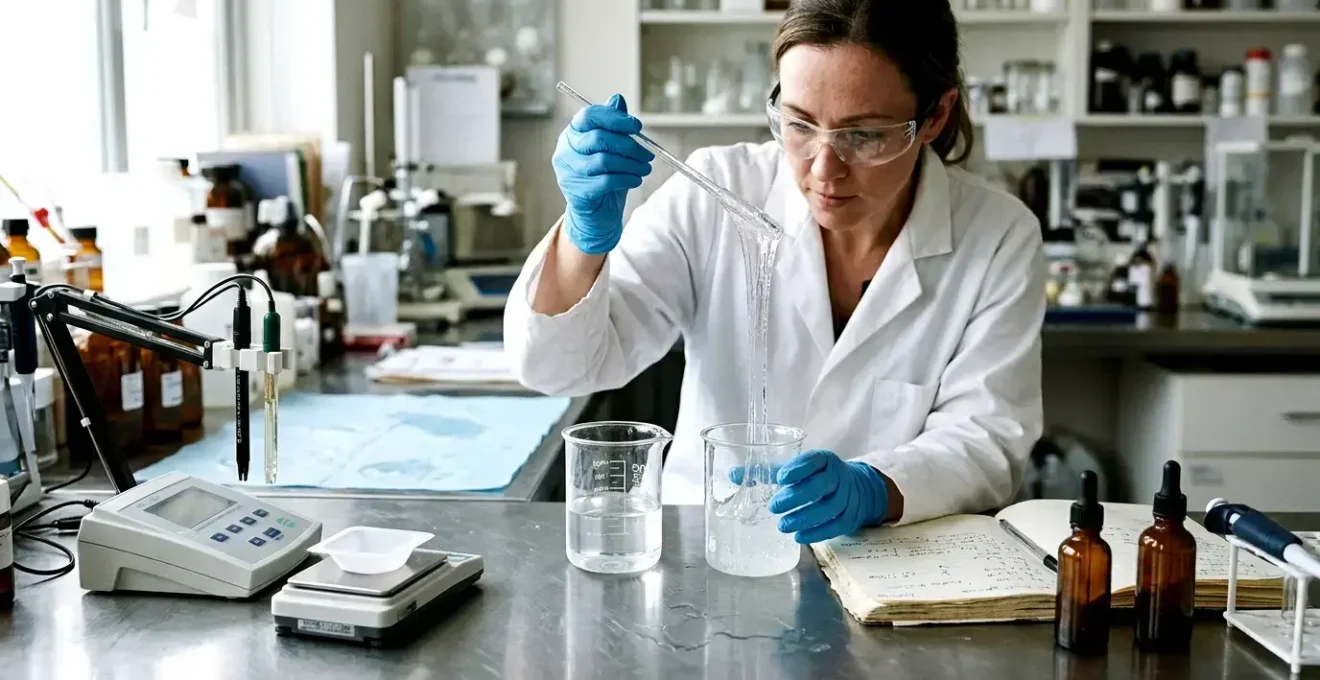
Bio-fermented hyaluronic acid is produced using microorganisms rather than extracted from animal tissues, but this distinction does not automatically make it more effective than conventional hyaluronic acid in a hydrating serum. Microbial fermentation is already an established industrial production method, and the performance of the resulting ingredient depends on factors such as purification, molecular weight distribution, concentration and formulation compatibility.
For ingredient-conscious consumers and natural cosmetic formulators, the important question is therefore not simply whether hyaluronic acid is fermented. It is how the ingredient is manufactured, what the fermentation medium contains, which molecular fractions are used and how the finished serum behaves on skin. A product marketed as bio-fermented may offer useful manufacturing and sourcing characteristics, but its label alone cannot establish superior hydration, better skin penetration or greater tolerability.
Understanding these distinctions helps separate meaningful ingredient transparency from marketing language. It also makes it easier to evaluate whether a hyaluronic acid serum offers lightweight hydration, an appropriate molecular profile and a formulation suited to its intended skin application.
Bio-Fermented Hyaluronic Acid: Key Facts
- Microbial fermentation is an established method of producing hyaluronic acid and is not necessarily a unique feature of premium or natural skincare.
- Molecular weight, concentration, purification and the surrounding formulation influence hydration, penetration and serum texture more directly than production origin alone.
- Vegan, non-GMO and plant-based sourcing claims require supplier documentation; fermentation does not automatically establish any of these attributes.
- How Can Deep Hydration Skincare Improve Dehydrated Skin Without Feeling Heavy?
- Why Does a Hydrating Serum Mainly Improve the Skin’s Outer Layers?
- Why Is Hyaluronic Acid Often Produced Through Bacterial Fermentation?
- How to Interpret High- and Low-Molecular-Weight Hyaluronic Acid Claims?
- Bio-Fermented Hyaluronic Acid or Beta-Glucan: Which Fits a Soothing Serum?
- Why Bio-Fermented Hyaluronic Acid Is Not Automatically More Effective
- How to Prevent Hyaluronic Acid Serums From Becoming Stringy or Uneven?
- Why Can the Same Botanical Ingredient Perform Differently Across Skincare Formulas?
How Can Deep Hydration Skincare Improve Dehydrated Skin Without Feeling Heavy?
Deep hydration skincare can improve dehydrated skin without feeling heavy by using lightweight humectants that increase water retention in the outer skin layers. The distinction between dehydration and dryness is important: dehydration describes insufficient water, whereas dryness generally involves insufficient skin lipids. A water-based hyaluronic acid serum can therefore address dehydration without requiring a rich, occlusive texture.
Humectants attract and retain water within the stratum corneum, the outermost layer of the skin. Hyaluronic acid is particularly useful because its polymer structure allows it to bind water and form a hydrated film at the skin surface. Glycerin and other compatible humectants can complement this action, creating a water-based system rather than relying on a high proportion of oils or waxes.
However, a lightweight formula is not necessarily a low-performance formula. The molecular weight distribution, polymer concentration, supporting ingredients and overall water phase all influence its sensory characteristics. Excessive polymer content can create tackiness, while an unsuitable combination of thickeners and humectants can make a serum difficult to spread.
There is also a distinction between hydration and reducing water loss. Humectants increase water retention, but a suitable emollient or occlusive product can help reduce transepidermal water loss, particularly when the skin barrier is compromised. This explains why a lightweight hydrating serum and a richer moisturiser can serve complementary purposes rather than competing with each other.
For consumers seeking a natural-positioned serum, the most useful evaluation criteria are the finished product’s spreadability, residue, ingredient compatibility and suitability for the intended skin condition. Ingredient quantity alone cannot predict whether a formula will feel comfortable.
A well-designed hydrating serum should therefore deliver a comfortable water-retaining film without unnecessary heaviness. Understanding where that hydration occurs is the next step in evaluating what hyaluronic acid can realistically achieve.
Why Does a Hydrating Serum Mainly Improve the Skin’s Outer Layers?
Topical hyaluronic acid mainly improves the skin’s outer layers because its molecular structure and size limit how readily it crosses the skin barrier. High-molecular-weight fractions primarily remain at the surface, where they form a moisture-retaining film. Some lower-molecular-weight fractions can diffuse beyond the stratum corneum, but this does not mean that every hyaluronic acid serum reaches the dermis.
The stratum corneum is the first major barrier encountered by a topical cosmetic ingredient. Its structure restricts the passage of many large hydrophilic molecules, including conventional high-molecular-weight hyaluronic acid. Consequently, the immediate cosmetic effects of most topical HA formulations are associated with surface hydration rather than direct delivery to deeper skin structures.
This surface-level action remains valuable. Better hydration in the stratum corneum can improve the appearance of dry patches, reduce the visible prominence of fine dehydration lines and make skin feel more supple. These effects do not require an ingredient to reach the dermis to be cosmetically meaningful.
Lower-molecular-weight hyaluronic acid behaves differently. Depending on molecular size, formulation and experimental conditions, smaller fractions may diffuse beyond the stratum corneum. A 2023 scientific review discusses low-molecular-weight fractions in the approximate 20–300 kDa range and contrasts their behaviour with that of larger fractions. This interval should not be treated as a universal classification or a guarantee of penetration for every formulation.
The review also highlights the limited skin permeability of high-molecular-weight HA. Its findings provide useful context for understanding why molecular weight matters more than whether an ingredient is described as bio-fermented or conventional.
For ingredient-conscious consumers, the distinction is important: surface hydration is a genuine cosmetic benefit, while claims of deep penetration require more specific evidence. A fermentation-derived ingredient does not automatically overcome the skin’s natural barrier.
The practical implication is that both conventional and fermentation-derived hyaluronic acid can support surface hydration. Their meaningful differences must be evaluated through production quality, molecular characteristics and finished-formula performance.
Why Is Hyaluronic Acid Often Produced Through Bacterial Fermentation?
Hyaluronic acid is often produced through bacterial fermentation because microbial biosynthesis offers an established alternative to extracting the polysaccharide from animal tissues. Traditional extraction methods have included rooster combs, whereas fermentation allows manufacturers to produce hyaluronic acid through controlled microbial cultivation. The resulting ingredient must still undergo appropriate purification and quality assessment before cosmetic use.
Historically, animal-derived hyaluronic acid presented practical sourcing challenges. Obtaining the ingredient from rooster combs involved animal tissue processing, which could raise concerns about supply, consistency, animal origin and suitability for vegan-oriented products. Microbial fermentation created another production route that could be controlled through microorganism selection, cultivation conditions and downstream processing.
Streptococcus zooepidemicus is among the microorganisms widely used in microbial hyaluronic acid production. Its ability to produce hyaluronic acid extracellularly makes it relevant to industrial biosynthesis. Research has also investigated alternative microorganisms and production strategies to improve manufacturing efficiency and process control.
A scientific review of microbial hyaluronic acid production explains how microorganism selection, fermentation conditions and cultivation media influence the production process. It also identifies manufacturing challenges, including broth viscosity, oxygen transfer and lactic acid accumulation. These factors demonstrate why fermentation is a controlled biotechnology process rather than a simple natural extraction step.
Importantly, the term bio-fermented does not establish that the ingredient is vegan, non-GMO or produced using plant-based nutrients. The fermentation medium may contain components that require further investigation. Even when the production microorganism is microbial, the complete supply chain must be assessed to substantiate sourcing claims.
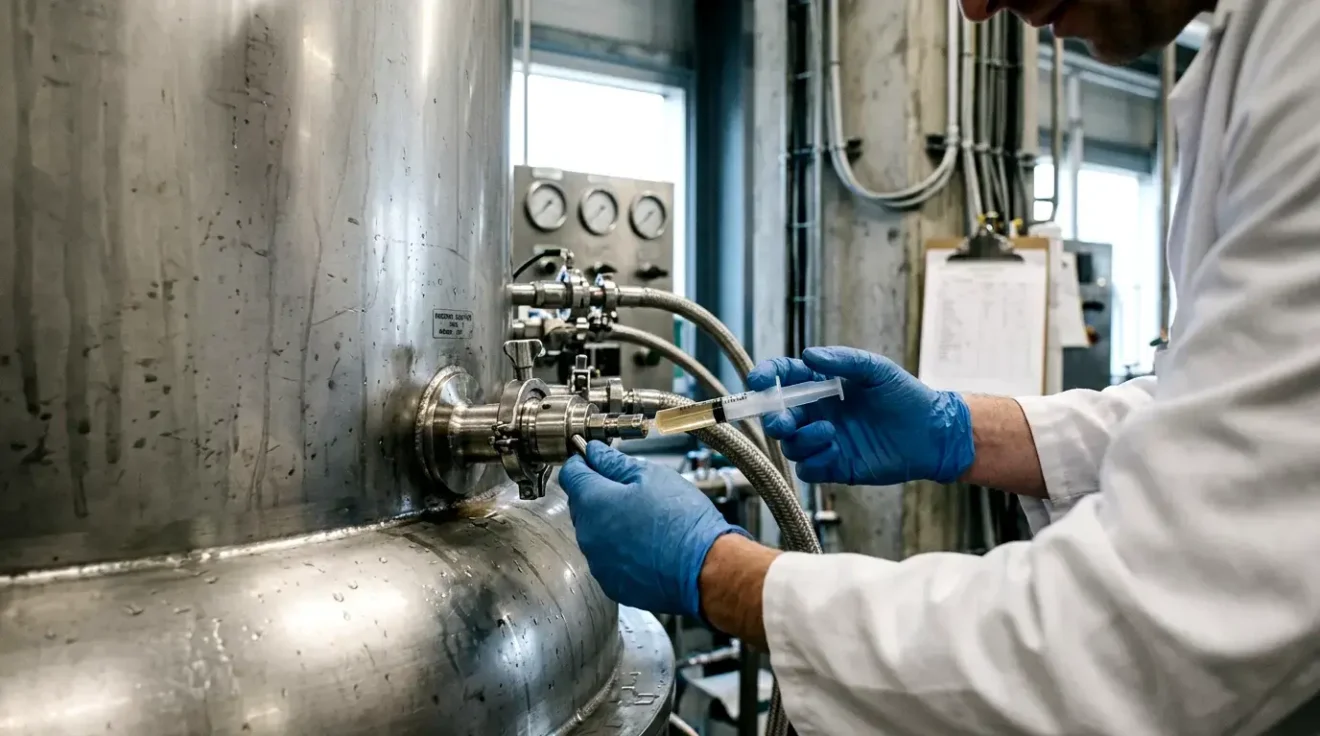
For natural cosmetic formulators, the relevant distinction is between the biological production method and the complete ingredient supply chain. A fermentation-derived ingredient can be compatible with a vegan formulation, but that status depends on the materials and processing aids used throughout manufacturing.
A supplier assessment should distinguish the following production and sourcing characteristics:
| Criterion | Animal-derived HA | Fermentation-derived HA |
|---|---|---|
| Production source | Animal tissues, historically including rooster combs | Microbial biosynthesis using selected microorganisms |
| Animal-origin considerations | Animal-derived raw material | Not inherently animal-free across the entire production chain |
| Culture medium | Not applicable to extraction-based production | Requires examination of nutrient and processing inputs |
| Purification | Required to remove unwanted material from the extraction process | Required to remove fermentation-related impurities and residual materials |
| Documentation | Source, processing and quality documentation | Microorganism, medium, purification and quality documentation |
How to Evaluate a Fermentation-Derived Hyaluronic Acid Supplier
- Request the ingredient’s manufacturing-origin statement and record whether the HA is produced through microbial fermentation or animal extraction.
- Obtain the fermentation-medium declaration and document the disclosed nutrient sources and processing aids.
- Request the certificate of analysis, including the available identity, purity and molecular-weight specifications.
- Ask for supporting documentation for vegan, non-GMO or plant-based sourcing claims and record which specific claims are substantiated.
- Review the supplier’s purification and quality-control documentation, retaining the relevant technical documents for the ingredient specification file.
Fermentation is therefore an important manufacturing distinction, but it is not a complete indicator of cosmetic quality. Once the production route has been established, molecular weight offers a more useful basis for evaluating how the ingredient behaves in a serum.
How to Interpret High- and Low-Molecular-Weight Hyaluronic Acid Claims?
High- and low-molecular-weight hyaluronic acid claims describe differences in polymer size that influence viscosity, film formation and potential skin diffusion. Larger fractions generally remain closer to the skin surface, while some smaller fractions can diffuse beyond the stratum corneum. However, a molecular-weight label alone cannot establish the overall effectiveness of a finished serum.
Molecular weight is expressed in Daltons (Da), often using kilodaltons (kDa) for larger polymers. One kilodalton corresponds to 1,000 Daltons. Because commercial hyaluronic acid can contain different molecular-size distributions, manufacturers may use several fractions to create a specific combination of texture and hydration characteristics.
High-molecular-weight HA generally forms a film at the skin surface. This can help retain moisture and create a smooth, conditioned feel. Its larger polymer structure also tends to contribute more strongly to the viscosity of aqueous formulations.
Low-molecular-weight HA contains smaller polymer chains. Some fractions can diffuse beyond the stratum corneum under appropriate conditions, although the extent depends on the formulation and the experimental model. Smaller molecular size should not be interpreted as proof of dermal delivery or superior cosmetic results.
Claims such as multi-molecular-weight hyaluronic acid, nano-hyaluronic acid or deep-penetrating HA require careful interpretation. These expressions do not necessarily disclose the actual molecular-weight distribution. A product may contain several fractions without identifying their individual ranges or relative proportions.
A 2023 scientific review of topical hyaluronic acid and skin quality discusses molecular-weight-dependent permeability, including the limited penetration of high-molecular-weight HA and the potential diffusion of smaller fractions. It provides a scientific basis for distinguishing surface hydration from deeper diffusion, but does not establish a universally optimal molecular-weight profile.
For ingredient evaluation, the most useful technical documents are the certificate of analysis and the supplier’s molecular-weight specification. Where available, these should identify the measured molecular-weight range, distribution and analytical method.
There is also a trade-off between polymer size and formulation objectives. Larger molecules may provide useful surface conditioning, while very small fractions require careful assessment of the available safety and tolerability evidence. More penetration is not automatically a better outcome for every skin type or cosmetic application.
| Characteristic | High-molecular-weight HA | Low-molecular-weight HA |
|---|---|---|
| Polymer structure | Larger polymer chains | Smaller polymer chains |
| Typical skin behaviour | Primarily surface-associated | Some fractions may diffuse beyond the stratum corneum |
| Formulation contribution | Film formation and viscosity | Different rheological behaviour and potential diffusion |
| Primary evaluation | Surface hydration and sensory properties | Verified molecular distribution and relevant penetration evidence |
| Key limitation | Limited penetration through the skin barrier | Smaller size does not guarantee better clinical or cosmetic performance |
Ultimately, molecular weight should be selected according to the desired skin feel, hydration mechanism and product architecture. This also helps clarify when another ingredient, such as beta-glucan, may be a more suitable addition to a soothing serum.
Bio-Fermented Hyaluronic Acid or Beta-Glucan: Which Fits a Soothing Serum?
Bio-fermented hyaluronic acid and beta-glucan can both contribute to hydration, but their functional profiles are not identical. Hyaluronic acid is primarily valued for water binding and surface film formation, whereas beta-glucan has been investigated for hydration, skin-barrier support and soothing potential. The better choice depends on whether the formulation prioritises lightweight hydration, comfort for sensitive skin or a combination of these objectives.
Hyaluronic acid is a well-established humectant in topical skincare. Its water-binding properties make it suitable for lightweight serums designed to improve the appearance and feel of dehydrated skin. Its molecular-weight distribution and concentration influence the resulting film, viscosity and sensory profile.
Beta-glucan is a polysaccharide that can be obtained from different biological sources, including oats, yeast and other microorganisms. Its structure and properties vary according to origin, extraction method and molecular characteristics. In skincare research, beta-glucan has attracted interest because of its potential contribution to hydration, barrier function and skin soothing.
A 2025 scientific review of beta-glucan in skincare discusses experimental and clinical evidence involving beta-glucan-containing formulations. The review includes a study involving 13 participants with sensitive skin and formulations containing 0.5–2% beta-glucan, as well as another study involving 20 men using a 1.5% formulation. These findings provide context for its potential applications, but they do not demonstrate universal superiority over hyaluronic acid.
The two ingredients also differ in formulation behaviour. Both can contribute to film formation, but their sensory properties depend on polymer characteristics, concentration and the complete formula. It would be misleading to assume that beta-glucan is consistently less tacky than HA at equivalent concentrations without comparative testing.
For a serum targeting redness-prone or sensitised skin, beta-glucan may be worth evaluating alongside established humectants. For a lightweight daily hydration product, hyaluronic acid remains a practical option. A combined system may provide complementary properties, although its viscosity, spreading behaviour and compatibility need to be assessed during development.
| Formulation objective | Hyaluronic acid | Beta-glucan |
|---|---|---|
| Lightweight hydration | Strong candidate | Potential complementary humectant |
| Surface moisture film | Well-established formulation role | Can contribute to film-forming behaviour |
| Sensitive-skin positioning | Can be included in a suitable formulation | Worth considering for its investigated soothing potential |
| Barrier-related formulation objectives | Supports surface hydration | Investigated for potential barrier-related benefits |
| Combined formulation | Can complement beta-glucan | Requires compatibility and sensory testing with HA |
The choice should also reflect the quality of the individual raw material. Oat-derived beta-glucan, yeast-derived beta-glucan and other microbial fractions should not be treated as interchangeable without checking their specifications. The same principle applies to fermentation-derived hyaluronic acid: ingredient identity alone does not fully describe formulation performance.
For a soothing serum, a carefully designed combination may be appropriate, provided that the finished product maintains acceptable stability, spreadability and skin feel. The next consideration is whether the bio-fermented label itself offers any additional performance advantage.
Key Takeaways Before Assessing Serum Performance
- Fermentation is an established production route, not independent evidence of superior cosmetic efficacy.
- Molecular-weight distribution, purification and concentration influence how hyaluronic acid behaves in the finished formula.
- Ingredient sourcing claims and finished-product performance must be assessed separately, using appropriate supplier documentation and formulation evidence.
Why Bio-Fermented Hyaluronic Acid Is Not Automatically More Effective
Bio-fermented hyaluronic acid is not automatically more effective than conventional hyaluronic acid because fermentation describes how the ingredient is produced, not how it performs on skin. Both fermentation-derived and animal-derived HA consist of the same fundamental polysaccharide structure. Their cosmetic behaviour depends on molecular characteristics, purity, concentration and the formulation in which they are used.
The expression bio-fermented can suggest a distinctive technological advantage, but microbial fermentation is already an established production method. A manufacturer using fermentation is not necessarily offering a more advanced or more effective ingredient than another manufacturer using the same production route.
It is also important to distinguish fermentation from the terms bio-based, organic, vegan and natural. These expressions refer to different sourcing, processing or certification considerations. A fermentation-derived ingredient is not automatically certified organic, non-GMO or suitable for every natural cosmetic standard.
Production quality nevertheless matters. The microorganism, fermentation medium, process conditions and purification steps can influence the resulting raw material. A well-controlled manufacturing process is therefore important for obtaining an ingredient with defined specifications and suitable quality characteristics.
However, the production origin alone cannot predict skin hydration. Two hyaluronic acid ingredients produced through different routes may have comparable performance if their molecular characteristics, purity and formulation conditions are comparable. Conversely, two fermentation-derived ingredients may behave differently because their molecular-weight distributions or processing specifications differ.
The finished serum introduces another layer of complexity. The surrounding water phase, humectant system, polymer concentration, pH and supporting ingredients influence how the product spreads and retains moisture. Application conditions also matter: a humectant-rich serum can benefit from an appropriate moisturiser or emollient layer, depending on skin condition and environmental factors.
For ingredient-conscious consumers, the most useful question is therefore whether the product provides transparent manufacturing information and a well-designed formulation. A bio-fermented label may communicate a relevant sourcing characteristic, but it should not replace evidence of ingredient quality or finished-product performance.
For cosmetic formulators, differentiation based solely on fermentation origin may also be limited. A stronger technical proposition can be built around documented molecular-weight specifications, reliable purification, traceable raw materials and demonstrable sensory performance.
A credible assessment therefore considers the entire ingredient-to-formula pathway. This approach also explains why two serums containing the same named ingredient can produce noticeably different textures, even when their production origins are similar.
How to Prevent Hyaluronic Acid Serums From Becoming Stringy or Uneven?
Hyaluronic acid serums become stringy or uneven when polymer concentration, molecular weight and formulation structure create excessive viscosity or poor spreadability. High-molecular-weight HA can form elongated polymer networks that stretch into visible strands. The problem is not inherently linked to fermentation: conventional and fermentation-derived hyaluronic acid can both produce undesirable textures when formulation parameters are unsuitable.
Hyaluronic acid is a large polysaccharide whose rheological behaviour changes with molecular weight and concentration. As polymer concentration increases, chains interact more strongly and can create a thicker, more elastic solution. Under certain conditions, this produces the characteristic stringy texture sometimes described as ropiness.
An experimental study published in 2024 examined nine pharmaceutical-grade hyaluronic acid samples with molecular weights ranging from 60 to 2,500 kDa. The researchers investigated 13 concentrations, ranging from 0.1 to 32 g/L, and evaluated properties including viscosity and shear-thinning behaviour. Their findings support the importance of molecular weight and concentration when designing HA-based aqueous systems.
These experimental concentrations are research conditions, not recommended cosmetic formulation levels. The study also examined aqueous solutions rather than finished consumer serums, so its results should not be interpreted as direct evidence of application performance on human skin.
Nevertheless, the underlying formulation lesson is useful. A high concentration of a large HA polymer may produce excessive viscosity, while an unsuitable combination of polymer fractions can make the serum difficult to spread. Formulators can therefore investigate several adjustments:
- Reduce total HA concentration: lowering the polymer content may improve flow and reduce excessive stringiness.
- Combine molecular-weight fractions: a carefully selected distribution can help balance surface film formation, viscosity and sensory characteristics.
- Evaluate suitable HA derivatives: ingredients such as hydroxypropyltrimonium hyaluronate can be assessed for their different formulation and conditioning properties.
- Review supporting thickeners: co-thickeners and other polymers can influence the overall rheological structure and must be evaluated for compatibility.
- Check pH and processing conditions: these factors can affect the stability and behaviour of the complete formulation.
Uneven application is a related but distinct problem. A serum may feel sticky or grab in certain areas when it is applied to dry skin and loses water before the film has spread uniformly. Application conditions, skin surface moisture and product quantity can influence the result.
Applying a water-based hyaluronic acid serum to slightly damp skin may help improve the spreading experience for some users. Following with a suitable moisturiser can also help support the skin’s moisture balance. These are practical application considerations, not guarantees that every HA formula will behave identically.

For product development, viscosity measurements alone are insufficient to establish consumer acceptability. A serum may perform well under laboratory conditions but still feel tacky during application. Practical spreadability testing should therefore examine both the physical behaviour of the formulation and its sensory characteristics on skin.
Useful evaluation conditions include:
- Spreadability on dry and slightly damp skin.
- Film formation and visible polymer strands during application.
- Residual tackiness after the initial application period.
- Consistency between repeated batches.
- Compatibility with the moisturiser or other skincare products intended for layering.
Ultimately, stringiness is a formulation-design issue rather than proof of ingredient quality or production origin. A well-balanced hyaluronic acid serum should combine appropriate viscosity, even application and comfortable hydration without relying on an exaggerated polymer film.
Why Can the Same Botanical Ingredient Perform Differently Across Skincare Formulas?
The same botanical ingredient can perform differently across skincare formulas because its chemical composition, extraction method, concentration and surrounding formulation influence its behaviour. An identical INCI name does not guarantee identical active fractions, stability or cosmetic performance. This principle also applies to fermentation-derived hyaluronic acid: the ingredient’s production and processing specifications matter alongside its identity.
Botanical extracts are complex mixtures rather than single, chemically uniform substances. Their composition can vary according to the plant species, the part used, cultivation conditions and extraction technique. Leaves, roots, flowers and seeds from the same plant may contain different concentrations and combinations of compounds.
The extraction solvent also plays an important role. Water, alcohol and other suitable extraction systems can recover different groups of constituents. Consequently, two suppliers may provide extracts with the same botanical name but substantially different chemical profiles.
Standardisation helps clarify these differences. A supplier may specify selected marker compounds or quantify particular active fractions, allowing formulators to compare raw materials more meaningfully. Without this information, an INCI declaration provides ingredient identity but limited detail about the actual composition of the extract.
Formulation conditions can further influence performance. The pH of the finished product, ingredient solubility, water and oil phase architecture, and interactions with other ingredients can affect extract stability and availability. A botanical constituent that is compatible with one serum may become unstable or less suitable in another formulation.
This is why ingredient evaluation should extend beyond marketing descriptions. A useful technical specification should identify the plant species, plant part, extraction solvent, standardisation method and relevant stability information. Where available, analytical documentation can help establish whether the supplier’s material meets the intended formulation requirements.
The same due-diligence approach used for fermentation-derived hyaluronic acid can therefore be applied to botanical ingredients. Both require a distinction between what an ingredient is called and what its documented specifications actually establish.
For consumers, this explains why two products featuring the same botanical extract may have different textures, tolerability or cosmetic effects. For formulators, it provides a practical reason to evaluate raw-material suppliers on transparency and reproducibility rather than relying exclusively on ingredient names.
Whether the featured ingredient is a botanical extract or fermentation-derived hyaluronic acid, the most useful assessment connects manufacturing evidence, compositional specifications and finished-product behaviour. Consumers can use the same logic when comparing natural hydrating serums: look beyond the front label and evaluate what the formulation can actually substantiate.
Is bio-fermented hyaluronic acid suitable for vegan skincare?
Fermentation-derived hyaluronic acid can be suitable for vegan skincare because microbial biosynthesis does not require extracting HA from animal tissue. However, vegan suitability depends on the complete manufacturing process, including fermentation nutrients, processing aids and other supply-chain inputs. A supplier’s vegan declaration or appropriate supporting documentation is needed to substantiate the claim.
Does bio-fermented hyaluronic acid penetrate the skin better than conventional hyaluronic acid?
Not necessarily. Skin penetration depends primarily on molecular weight, formulation characteristics and the skin barrier rather than fermentation origin alone. High-molecular-weight HA generally remains close to the surface, while some smaller fractions can diffuse beyond the stratum corneum. Fermentation does not automatically make a polymer smaller or improve its penetration.
Is fermentation-derived hyaluronic acid considered a natural cosmetic ingredient?
Fermentation-derived hyaluronic acid is produced through a biological manufacturing process, but whether it qualifies as natural under a particular cosmetic standard depends on the applicable definition, processing method and certification requirements. The word bio-fermented alone does not establish organic status, natural-origin certification or compliance with a specific natural cosmetics standard.
Can hyaluronic acid and beta-glucan be used together in one serum?
Yes. Hyaluronic acid and beta-glucan can be combined to provide complementary hydration and skin-conditioning properties. However, their concentrations, molecular characteristics, compatibility and effects on viscosity should be evaluated during formulation development. The finished serum should undergo stability, spreadability and sensory testing before its performance is assessed.
What should consumers check before buying a bio-fermented hyaluronic acid serum?
Consumers should examine the ingredient list, the manufacturer’s sourcing information, any disclosed molecular-weight specifications and the overall formulation. Claims such as vegan, non-GMO or plant-based should be supported by appropriate documentation. It is also useful to assess the serum’s texture, compatibility with other skincare products and suitability for the intended skin condition rather than relying on the bio-fermented label alone.