
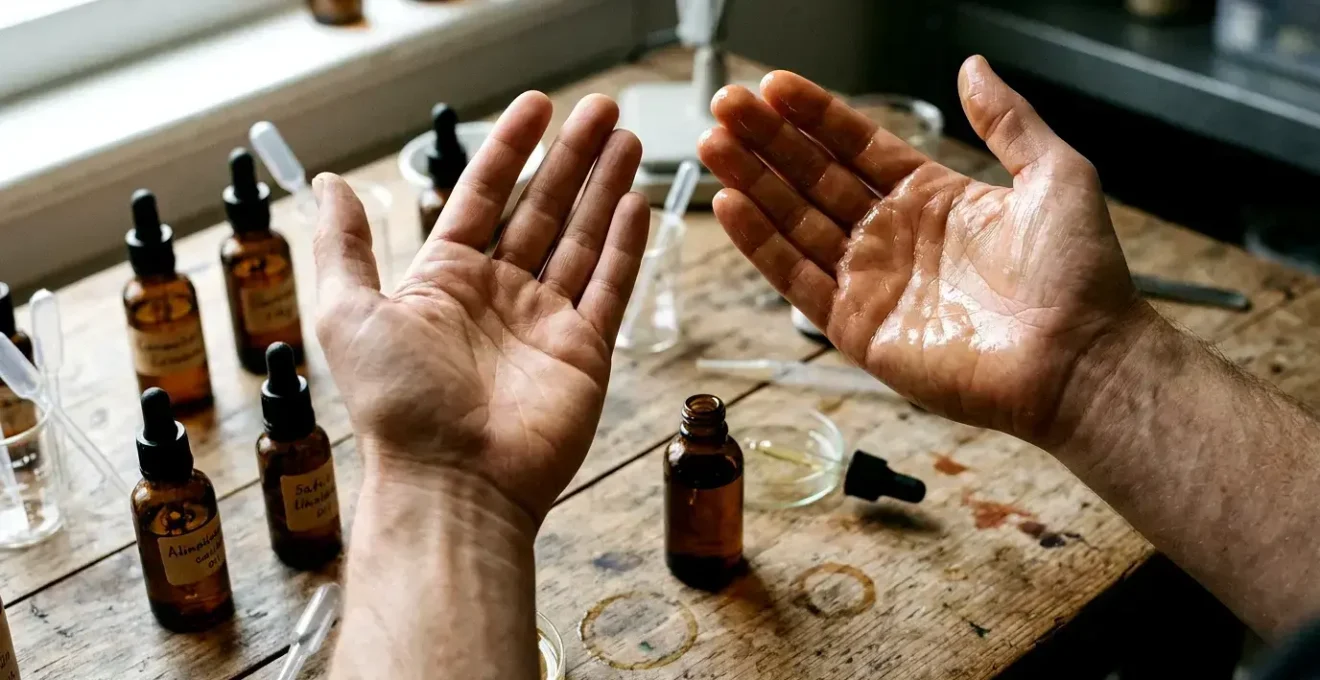
Choosing a cold-pressed carrier oil starts with understanding its fatty acid composition, but the best option also depends on skin condition, formulation and intended application. Grapeseed and hemp seed oils provide relatively high proportions of linoleic acid, while avocado and olive oils are generally richer in oleic acid. Sweet almond oil offers another option for everyday emollient care. These differences influence oxidative stability, spreading behaviour and the lipid profile delivered to the skin.
For oily or acne-prone skin, a lighter-feeling oil may be more comfortable, although fatty acid composition alone cannot guarantee fewer breakouts. Dry body skin may benefit from a richer emollient film, while sensitive or inflammation-affected skin requires additional consideration because some oleic-rich oils can adversely affect an already compromised skin barrier. Cold-pressed describes an extraction approach, not a guarantee of purity, stability or suitability for every skin type.
The practical approach is to compare the oil’s fatty acid profile, assess its sensory finish, check its freshness and select an application method appropriate to the skin’s condition.
Cold-Pressed Carrier Oils: Key Selection Principles
- Compare linoleic and oleic acid levels to understand the oil’s lipid profile and likely cosmetic characteristics.
- Match the oil’s emollient finish to the intended application, distinguishing lightweight facial care from richer body treatments.
- Protect oxidation-sensitive oils from light, oxygen and excessive heat, and test individual skin tolerance before regular use.
- Why Do Some Cold-Pressed Oils Feel Heavy While Others Absorb Quickly?
- How to Check Whether a Cold-Pressed Facial Oil Has Gone Rancid?
- Avocado Oil or Sweet Almond Oil: Which Is Better for Rough Body Skin?
- Why Clear Bottles Can Shorten the Useful Life of Sensitive Plant Oils
- When to Apply Carrier Oil After Bathing for Better Skin Comfort?
- Why Do Ceramides, Cholesterol, and Fatty Acids Work Together in Skin Creams?
- Why Comedogenicity Ratings Cannot Reliably Predict Your Personal Breakouts
- How to Build High-Performance Face and Body Care Without an Overcomplicated Routine?
Why Do Some Cold-Pressed Oils Feel Heavy While Others Absorb Quickly?
Cold-pressed oils feel different on the skin partly because their fatty acid composition influences their spreading behaviour, emollience and interaction with the skin surface. Linoleic-rich oils, such as grapeseed and hemp seed oil, often produce a lighter sensory finish, whereas oleic-rich options, such as avocado and olive oil, commonly leave a more substantial lipid film. However, absorption speed cannot be predicted reliably from one fatty acid percentage alone.
Linoleic acid (omega-6) and oleic acid (omega-9) are both unsaturated fatty acids, but they differ in molecular structure. Linoleic acid has two double bonds, while oleic acid has one. Their proportions influence the physical and chemical characteristics of the oil, including its susceptibility to oxidation. The triglyceride composition, minor components and processing conditions also contribute to its behaviour.
For example, grapeseed oil is commonly selected for lightweight facial formulations, while avocado oil is often used when a richer emollient finish is desirable. Hemp seed oil can offer a useful balance of essential fatty acids, although its polyunsaturated composition makes storage particularly important.
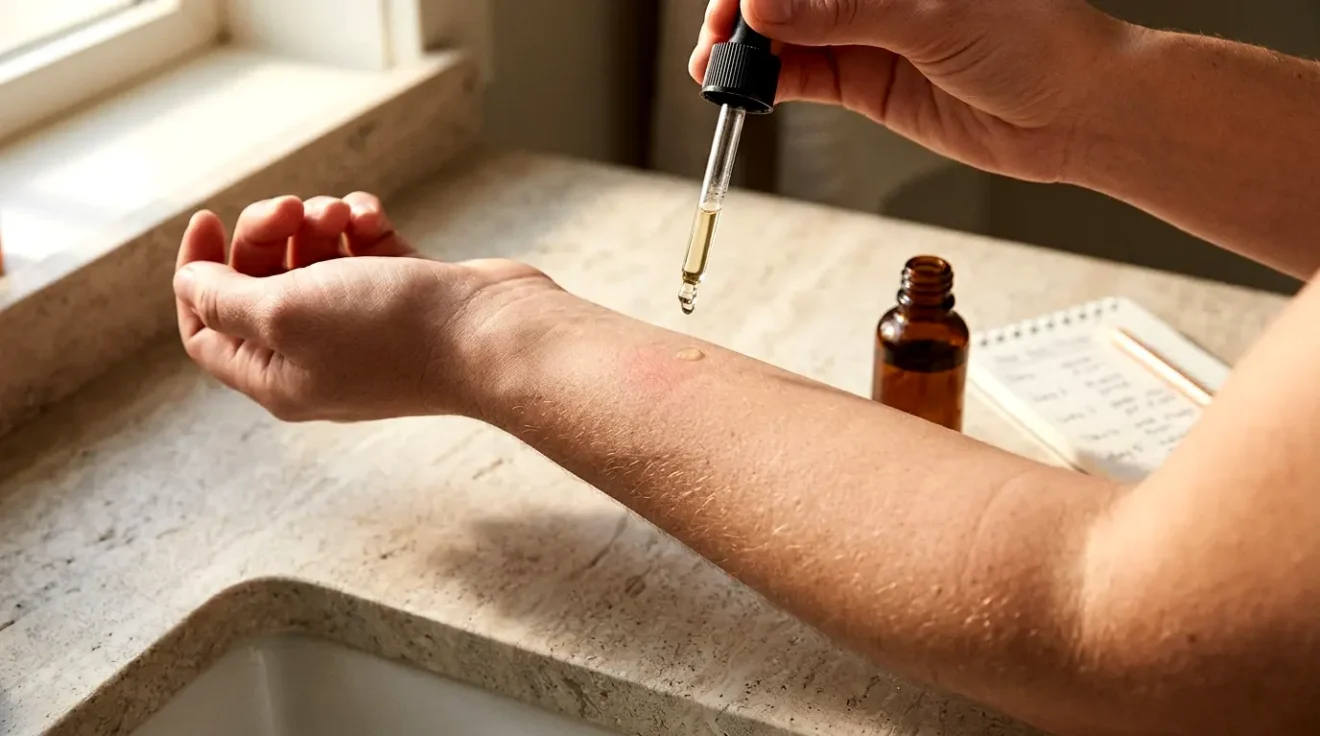
It is also important to distinguish absorption speed from residual emollience. An oil may spread easily but still leave a noticeable coating. Waxes, unsaponifiable compounds and the overall triglyceride profile can influence this sensation. A simple forearm test is therefore useful: compare spreading, initial slip, residual shine and how the skin feels after several minutes.
Clinical research does not establish a universal rule that linoleic-rich oils are better for oily skin or that oleic-rich oils are always preferable for dry skin. A clinical review of vegetable oils used in skincare examines different oils and dermatological conditions, while acknowledging that their mechanisms after topical application remain incompletely understood. The condition of the skin matters as much as the oil itself.
For facial formulations, start with a small amount of a lighter-feeling oil and assess tolerance. For dry body areas, a richer option may provide a more persistent emollient finish. These are practical starting points, not universal skin-type prescriptions.
How to Check Whether a Cold-Pressed Facial Oil Has Gone Rancid?
A cold-pressed facial oil may have deteriorated when its characteristic natural aroma changes noticeably, particularly if it develops an unpleasant stale, sour, paint-like or crayon-like smell. Changes in colour, consistency and application feel can also provide warning signs. However, no single sensory observation confirms oxidation, and an apparently normal smell does not guarantee that an oil remains chemically unchanged.
Rancidity is associated with the oxidation of unsaturated fatty acids. Exposure to oxygen can initiate autoxidation, while light can promote photosensitized oxidation. Both pathways contribute to chemical changes that affect oil quality. Primary oxidation products, including lipid hydroperoxides, can subsequently break down into secondary compounds responsible for undesirable odours and flavours.
The fatty acid profile influences oxidative stability. Oils containing higher proportions of polyunsaturated fatty acids, such as hemp seed and borage seed oil, are generally more oxidation-sensitive than oils dominated by monounsaturated fatty acids. This does not mean that oleic-rich oils cannot deteriorate: storage conditions remain important for every plant oil.
For skincare, using an oxidized oil is undesirable because its original composition has changed and its suitability as a cosmetic ingredient may have diminished. Oxidation products may also contribute to irritation in susceptible skin. However, the degree of risk depends on the oxidation products, exposure and formulation; an unpleasant smell alone does not establish a specific dermatological outcome.
A practical assessment should consider several observations together:
- Odour: Look for a marked departure from the oil’s characteristic fresh aroma.
- Texture: Check for unexpected thickening, stickiness or changes in spreading behaviour.
- Appearance: Look for unusual colour changes or visible abnormalities, while recognising that natural colour varies between batches.
- Storage history: Consider exposure to sunlight, warmth, air and repeated opening.
Prevention begins when purchasing the oil. Choose a volume that can reasonably be used within the manufacturer’s recommended period, favour protective packaging and close the cap immediately after dispensing. Hemp and borage oils deserve particular attention because of their polyunsaturated fatty acid content.
A scientific review of vegetable oil oxidation identifies light, temperature, oxygen concentration and fatty acid composition as important factors affecting oxidative stability. These mechanisms support careful storage, although they do not establish a universal shelf-life duration for individual cosmetic oils.
If an oil develops a distinctly unpleasant or abnormal smell, or its appearance and texture change unexpectedly, discontinue its cosmetic use rather than trying to disguise the change by blending it with another ingredient.
Avocado Oil or Sweet Almond Oil: Which Is Better for Rough Body Skin?
Avocado oil is generally the richer option for targeted care of rough body areas, while sweet almond oil is often easier to incorporate into larger body-care applications. Avocado oil typically contains a higher proportion of oleic acid and can leave a more substantial emollient film. Sweet almond oil also contains oleic acid but commonly offers a different spreading and sensory profile. Neither oil has been established as universally superior in a direct clinical comparison for rough elbows, knees or heels.
The practical distinction is the balance between spread rate and deposit rate. Spread rate describes how easily an oil distributes over a surface. Deposit rate refers, in this context, to the amount of lipid left behind after application.
Avocado oil can be useful when a more substantial coating is desirable on localised areas. Its richer feel may suit elbows, knees and other patches exposed to repeated friction. Sweet almond oil can be a convenient choice for daily application across larger areas because its sensory profile is often perceived as less heavy.
| Selection criterion | Avocado oil | Sweet almond oil |
|---|---|---|
| Typical fatty acid profile | Relatively oleic-rich | Generally oleic-rich, with linoleic acid also present |
| Typical sensory profile | Richer, more substantial emollient finish | Often smoother and easier to spread over larger areas |
| Practical application | Localised dry patches and rough areas | Everyday body moisturising |
| Potential limitation | May feel too rich for some users | May not provide the preferred persistent finish for very rough patches |
Application conditions also matter. Both oils can be applied to slightly damp skin after cleansing. The oil helps reduce moisture loss by leaving an emollient lipid layer, but it does not replace water or function as a complete moisturising formulation. Applying an appropriate moisturiser first may be more useful when the skin is particularly dry.
Persistent roughness deserves a separate assessment. Keratosis pilaris, eczema and other skin conditions can produce rough or uneven texture that a carrier oil alone will not resolve. If discomfort, inflammation or persistent roughness continues despite appropriate moisturising care, another product or professional assessment may be needed.
For everyday body care, sweet almond oil may be the more convenient starting point. For isolated rough areas, avocado oil is worth comparing, particularly when a richer finish is comfortable.
Why Clear Bottles Can Shorten the Useful Life of Sensitive Plant Oils
Clear bottles can expose cold-pressed plant oils to more light, potentially accelerating oxidation and shortening their useful storage life. Light can initiate photosensitized oxidation in unsaturated oils, while oxygen and temperature also influence deterioration. Amber or opaque packaging reduces light exposure and is therefore a practical consideration when selecting oxidation-sensitive facial oils.
Polyunsaturated oils are particularly vulnerable because their fatty acid structures contain multiple double bonds. Hemp seed, borage seed and grapeseed oils can therefore require more careful storage than oils with predominantly monounsaturated fatty acids. Nevertheless, packaging colour alone does not determine product quality: the oil’s initial condition, container closure, oxygen exposure and storage temperature also matter.
Packaging should be treated as a formulation-quality criterion. A transparent bottle may look attractive on a bathroom shelf, but it offers less protection against light than suitable opaque packaging. Before purchasing a cold-pressed oil, examine the container as well as the ingredient declaration, extraction method, product specifications and recommended storage instructions.
Air exposure is another consideration. Every time a bottle is opened, fresh oxygen can enter the headspace. Frequent opening, poorly sealed caps and dispensing practices can therefore undermine the protection provided by dark glass.

If an oil has already been purchased in a clear container, transferring it into a clean, completely dry, appropriately sized amber glass bottle can reduce subsequent light exposure. A small working bottle is preferable to repeatedly handling the entire supply. The main container can be kept in a cool, dark storage location, following the manufacturer’s instructions. Refrigeration may be appropriate for some oils, but it should not be assumed necessary or suitable for every formulation.
Good handling practices include:
- Keep the cap tightly closed between applications.
- Avoid placing bottles beside windows or near heat sources.
- Use clean, dry dispensing equipment.
- Limit unnecessary transfers and repeated opening.
Ultimately, dark glass is a useful precaution rather than a guarantee of freshness. A well-protected oil can still deteriorate, so packaging should always be considered alongside its production date, storage history and current condition.
When to Apply Carrier Oil After Bathing for Better Skin Comfort?
Applying carrier oil while the skin is still slightly damp after bathing is a practical way to support skin comfort. The remaining surface water provides moisture, while the oil creates an emollient layer that can reduce water loss. Applying it shortly after gently patting the skin dry is therefore a sensible routine, particularly for dry body areas. However, a pure oil does not hydrate the skin in the same way as a water-based moisturiser.
After bathing, the skin surface contains varying amounts of water depending on water temperature, cleansing products, bathing duration and individual skin condition. Allowing the skin to become completely dry before applying an oil may mean that less surface moisture remains to be retained. This does not make oil application to dry skin useless, but applying it to slightly damp skin can be a convenient way to combine residual moisture with an emollient layer.
For dry body skin, a richer oleic-rich oil such as avocado oil may provide a more substantial finish. Sweet almond oil offers another option for larger body areas. For facial use, a lighter-feeling linoleic-rich oil may be preferable when a heavy coating is uncomfortable. These choices should still be assessed against individual tolerance, especially when the skin barrier is compromised.
The bathing routine itself also matters. Prolonged exposure to hot water and harsh cleansing can increase dryness and discomfort. The 2024 clinical practice guidelines for atopic dermatitis recommend promptly applying moisturisers after bathing. They identify 38–40°C as a preferred bathing temperature in their clinical context and advise against temperatures of 42°C or higher. These recommendations concern atopic dermatitis and should not be interpreted as universal requirements for every cosmetic routine.
For practical application:
- Finish bathing and gently pat the skin with a towel.
- Leave the skin slightly damp rather than rubbing it completely dry.
- Apply an appropriate moisturiser when additional hydration and barrier support are needed.
- Distribute a small quantity of suitable carrier oil over the desired area.
- Allow the product to settle before dressing.
People with eczema or persistent irritation should prioritise their recommended skincare treatment rather than relying on pure carrier oils as a replacement.
Choosing the right oil is only one part of the process. Bathing habits, cleanser selection and the condition of the skin barrier determine how comfortable the finished routine feels.
Why Do Ceramides, Cholesterol, and Fatty Acids Work Together in Skin Creams?
Ceramides, cholesterol and free fatty acids work together because they form the principal lipid components of the skin’s outer barrier. These lipids organise into structured intercellular layers within the stratum corneum, helping regulate water loss and protect against external influences. A plant carrier oil supplies triglycerides and fatty acids, but it does not automatically provide the same composition or structure as a properly formulated barrier cream.
The stratum corneum is often described using a brick-and-mortar analogy. Corneocytes form the structural units, while organised intercellular lipids fill the spaces between them. Ceramides, cholesterol and free fatty acids contribute to this lipid matrix and its lamellar organisation.
A scientific review published in the International Journal of Cosmetic Science describes these three principal lipid classes as occurring in an approximate 1:1:1 molar ratio. This refers to molar proportions, not equal percentages by weight, and should not be mistaken for a universal recipe for manufacturing every moisturising cream.
Approximately 1:1:1
The approximate molar ratio of ceramides, cholesterol and free fatty acids in the stratum corneum lipid matrix. It describes biological lipid organisation, not a fixed cosmetic formulation formula.
International Journal of Cosmetic Science, 2024, scientific review of ceramides and skin-barrier formulation.
Cold-pressed carrier oils contribute useful fatty acids and emollient components. However, most plant oils are predominantly triglyceride mixtures and do not reproduce the full ceramide-cholesterol-free fatty acid system found in the skin barrier.
This distinction matters when selecting a routine for different skin conditions. A person with relatively comfortable skin may find that a suitable carrier oil provides sufficient emollience. Someone experiencing persistent dryness, sensitivity or barrier impairment may benefit more from a complete moisturising formulation containing appropriately selected barrier lipids.
In particular, an oil-rich routine cannot be assumed to compensate for missing ceramides or cholesterol. The overall formulation, lipid organisation and condition of the skin influence performance. A single botanical ingredient should therefore be considered a complement to skincare rather than an automatic replacement for a formulated barrier cream.
For sensitive or persistently dry skin, a combination of appropriate moisturising ingredients and carefully selected carrier oils may be more useful than increasing the amount of oil alone.
Why Comedogenicity Ratings Cannot Reliably Predict Your Personal Breakouts
Comedogenicity ratings cannot reliably predict whether a particular cold-pressed carrier oil will cause breakouts because they simplify a complex biological response into a single number. Traditional comedogenicity assessments have relied partly on experimental models, including rabbit-ear testing, whose results do not necessarily translate to human facial skin. The concentration, formulation, application frequency and condition of the individual skin also influence the outcome.
A rating displayed on a skincare website or product label may appear to offer a straightforward way to eliminate unsuitable oils. In practice, it does not capture the complete formulation or how a person will respond to repeated topical exposure.
For example, an oil with a relatively high published comedogenicity rating is not automatically guaranteed to cause clogged pores in every user. Conversely, an oil with a low rating is not guaranteed to be suitable for every acne-prone complexion.
Several variables can change the outcome:
- Application quantity: A thin application and a heavy coating create different conditions on the skin.
- Formulation: An oil used alone may behave differently when blended into a cream or combined with other ingredients.
- Skin condition: Sebum production, hydration and existing inflammation influence individual tolerance.
- Oil freshness: Oxidation can change the chemical composition of a plant oil.
- Application frequency: Occasional use and repeated daily application are not equivalent exposures.
For a more useful assessment, introduce one new product at a time. Apply a small amount to a limited area and observe the skin over several days. An inner forearm test can help identify obvious irritation or sensitivity, while a small facial-area trial is more relevant to assessing how the product feels on facial skin. Neither approach guarantees that breakouts will not occur later.
Keep other skincare products and application habits as consistent as possible during the trial. Record the amount used, frequency, skin comfort and any changes in texture or blemishes. If irritation develops, discontinue the product. Persistent or severe acne warrants appropriate dermatological advice.
The fatty acid profile remains a useful selection criterion, but it should be considered alongside real-world skin response. A linoleic-rich oil may be a reasonable starting point for someone who dislikes heavy products, yet individual tolerance must be established through use rather than inferred from a rating or composition chart alone.
The objective is not to avoid every oil with a potentially unfavourable rating. It is to identify a fresh, appropriately formulated product that the skin tolerates comfortably and consistently.
Key Takeaways Before Building a Routine
- Choose the oil according to its fatty acid profile and the sensory finish required for the application area.
- Protect oxidation-sensitive ingredients through suitable packaging, careful handling and appropriate storage.
- Consider the condition of the skin barrier and individual tolerance before deciding whether an oil alone or a more complete moisturising formulation is appropriate.
How to Build High-Performance Face and Body Care Without an Overcomplicated Routine?
A high-performance face and body routine does not require a large collection of carrier oils. It requires a small number of products selected according to skin condition, fatty acid composition, freshness and application needs. Start by identifying whether the skin is oily, balanced, dry or sensitive, then choose an appropriate emollient and assess its compatibility through consistent use.
The selection process can be organised into five practical stages:
- Identify the skin’s needs. Distinguish everyday dryness from persistent inflammation, acne or other skin concerns. Record the main issue the routine should address.
- Match the fatty acid profile. Compare the oil’s oleic and linoleic acid proportions, together with its other relevant formulation characteristics. Record why the selected profile suits the intended application.
- Check packaging and freshness. Examine the container, closure, storage instructions and condition of the oil. Note the product’s batch and recommended use period.
- Choose the application method. Decide whether the oil is intended for facial use, larger body areas or targeted rough patches. Consider applying it to slightly damp skin after bathing.
- Evaluate individual tolerance. Introduce one new product at a time and document skin comfort, texture and any unwanted reactions during a consistent trial.
Your Carrier Oil Selection Checklist
- Identify your primary skin concern and write down the intended application area.
- Compare the candidate oil’s fatty acid profile and record its main oleic and linoleic acid characteristics.
- Inspect the packaging, closure and freshness information, then record the storage instructions.
- Choose a small initial application amount and document the intended routine and frequency.
- Maintain a simple observation record of comfort, skin texture and any breakouts or irritation during the trial.
Once the selection criteria are clear, the routine can remain simple. A basic structure might include a gentle cleanser, one suitable moisturising product and a carrier oil when additional emollience is needed. For dry or barrier-compromised skin, a cream containing appropriate barrier-supporting ingredients may be more suitable than relying exclusively on plant oils.
For body care, a separate oil may be useful for localised rough areas without requiring several different facial oils. This keeps the product selection focused on actual needs rather than the number of ingredients available.
The assumption that natural automatically means harmless should also be avoided. Cold-pressed oils are chemically complex ingredients. Their fatty acid composition, oxidation state, storage conditions and individual skin compatibility all influence their suitability.
Evaluate the routine over a consistent period rather than changing several products simultaneously. Record whether the skin feels comfortable, whether the desired emollient finish is achieved and whether unwanted reactions develop. If the routine does not address persistent dryness, irritation or acne, reassess the underlying concern instead of simply adding more oils.
The most useful routine is the one that meets the skin’s actual needs with a manageable number of well-selected, fresh and appropriately formulated products. Begin with one suitable oil, assess its performance and make changes only when the results justify them.
Which cold-pressed carrier oil is best for oily skin?
Grapeseed and hemp seed oils are commonly considered when a lighter-feeling, linoleic-rich oil is desired. However, neither is guaranteed to suit every oily or acne-prone complexion. Start with a small amount, assess individual tolerance and prioritise a fresh, appropriately stored product.
Can cold-pressed carrier oils replace moisturising creams?
Not always. Carrier oils provide emollient lipids and can help reduce moisture loss, but they do not necessarily supply the water, humectants, ceramides and other ingredients found in a complete moisturising formulation. For compromised or persistently dry skin, a formulated moisturiser may be more appropriate.
Is cold-pressed oil always better than refined oil for skincare?
No. Cold-pressed oils can retain naturally occurring minor compounds, but their composition, aroma, colour and oxidative stability vary. Refined oils may offer different sensory or formulation advantages. The better option depends on the intended cosmetic application, quality specifications, stability and skin tolerance.
How should cold-pressed carrier oils be stored?
Keep oils tightly closed and away from direct light and excessive heat. Dark or opaque packaging can help limit light exposure. Polyunsaturated oils, including hemp and borage seed oils, deserve particular attention because they are more susceptible to oxidation. Follow the manufacturer’s storage instructions and discontinue use if the oil develops abnormal characteristics.
Can two different carrier oils be mixed together?
Yes. Two compatible carrier oils can be blended to adjust spreading behaviour, sensory finish and fatty acid composition. However, combining oils does not automatically improve their skin benefits or stability. Consider the oxidation sensitivity of each ingredient, maintain suitable storage conditions and test the finished blend for individual skin tolerance before regular application.