

Botanical skincare ingredients can offer genuine benefits, but a plant’s reputation is not proof that every cosmetic containing it will deliver the same results. Green tea catechins, plant-derived polyphenols and certain botanical lipids have attracted scientific interest, while the strength of the evidence varies considerably between ingredients, extracts and finished formulations.
The most useful distinction is between evidence that a plant contains biologically active compounds and evidence that a particular skincare product delivers those compounds at an effective concentration. Extraction methods, processing conditions, ingredient stability, molecular composition and compatibility with the surrounding formula all influence the outcome.
For ingredient-conscious consumers, evaluating botanical skincare therefore requires more than looking for familiar plant names or natural-origin percentages. Scientific research, INCI terminology, formulation details and realistic interpretations of clinical studies provide a more reliable basis for choosing products. The following sections examine these factors, including what current evidence can establish and where important uncertainties remain.
What matters when choosing evidence-based botanical skincare?
- A botanical’s efficacy depends on its chemical composition, extraction method, concentration, stability and delivery within the finished formula.
- INCI lists and standardization information help distinguish functional botanical extracts from ingredients included primarily for fragrance, colour or texture.
- Scientific evidence must match the actual ingredient, concentration, formulation and intended skin benefit; natural origin alone does not establish effectiveness.
- Why Can the Same Botanical Ingredient Perform Differently Across Skincare Formulas?
- How to Read a Botanical Skincare Ingredient List Beyond the Featured Plant Name?
- Green Tea or Grape Seed Extract: Which Suits Antioxidant-Focused Skincare?
- Why Natural Ingredient Claims Can Mislead Even When the Plant Is Genuine
- How to Assess Botanical Extract Stability in Water-Based Skincare Products?
- Why Bio-Fermented Hyaluronic Acid Is Not Automatically More Effective
- Wheat Ceramides or Rice Ceramides: Which Makes More Sense in Skincare?
- How Does Processing Change the Quality of Raw Plant Extracts in Cosmetics?
Why Can the Same Botanical Ingredient Perform Differently Across Skincare Formulas?
The same botanical ingredient can behave differently across skincare products because its chemical composition depends on extraction, processing and formulation. Two serums featuring the same plant may contain different proportions of active compounds, even when their labels use identical botanical names. The resulting differences affect stability, availability and potential skin benefits.
Extraction determines which compounds enter the formula. Plant materials contain multiple chemical families, and the selected solvent influences which fractions are recovered. Water, glycerin, ethanol, glycols and vegetable oils do not extract identical substances from the same raw material.
For example, an aqueous extract and an oil-based extract of the same plant can have substantially different chemical profiles. An alcohol-based process may recover compounds that are less soluble in water, while an oil-based process is suited to lipid-soluble constituents. Supercritical CO2 extraction also offers a different extraction environment, with results depending on the processing conditions.
These distinctions explain why the botanical name alone cannot establish equivalence between commercial ingredients. A scientific review of plant extracts in skincare discusses how extraction solvents, harvesting conditions, plant preparation and drying influence the resulting chemical composition.
The second consideration is the difference between the quantity initially incorporated and the quantity of intact active compounds remaining available in the finished product. A botanical may be present in a formula at a substantial inclusion level but lose some of its sensitive constituents through oxidation, heat exposure or incompatible formulation conditions.
Preservatives, surfactants and pH adjustments also influence the chemical environment. Their effects depend on the particular active compounds and formulation, so their presence should not automatically be interpreted as harmful. What matters is whether the finished system maintains the intended ingredient’s integrity and performance.
This creates an important distinction between ingredient concentration and effective delivery. A higher inclusion percentage does not necessarily produce a proportionally greater skin benefit. A smaller amount of a well-characterized, appropriately extracted and stabilized botanical may be more useful than a larger amount of an inadequately characterized extract. However, this is a formulation principle, not proof that lower concentrations are generally superior.
When comparing products featuring the same plant, examine three practical details:
- INCI position: Check where the botanical appears relative to other ingredients, while remembering that ingredient order does not reveal an exact concentration.
- Standardization: Look for information identifying the extract’s marker compounds or standardized active content.
- Extraction information: Check whether the manufacturer discloses the extraction solvent, plant part or extract specifications.
A 10:1 extraction ratio, for instance, describes a relationship between the starting plant material and the resulting extract. It does not independently demonstrate a tenfold increase in biological activity or establish an effective concentration in a finished serum.
Ultimately, the most credible comparison is between characterized ingredients in finished formulations with relevant stability and efficacy evidence. This is also why reading the complete ingredient list is more informative than comparing front-label percentages alone.
How to Read a Botanical Skincare Ingredient List Beyond the Featured Plant Name?
A botanical skincare ingredient list reveals more than the plant featured in a product’s marketing. The INCI name can identify the plant species, the part used and the form incorporated into the formula. These details help establish whether an ingredient is an extract, oil, powder, water or another preparation, although they do not independently establish its concentration or effectiveness.
The plant part matters because different tissues contain different chemical constituents. Green tea leaf and camellia seed, for example, should not be treated as interchangeable ingredients simply because they originate from related botanical material. Leaves, seeds, roots, flowers and bark have distinct compositions.
Botanical ingredient names also include qualifiers that provide useful information about their preparation:
- Leaf extract: A preparation obtained from leaves, potentially containing compounds recovered through the selected extraction process.
- Seed oil: A lipid-rich ingredient generally used for emollient and skin-conditioning functions.
- Flower water: An aqueous botanical preparation whose composition differs from a concentrated extract or essential oil.
- Leaf juice: A plant-derived liquid that may contribute water, soluble constituents or conditioning properties.
- Root powder: A powdered botanical material that may contribute physical, textural or functional properties depending on its composition and processing.
- Ferment: A preparation involving microbial fermentation, whose final composition depends on the substrate, microorganisms and production process.
The word extract is particularly important. It does not specify the solvent, extraction yield, concentration of marker compounds or proportion of biologically active constituents. Two products listing an extract from the same plant may therefore contain ingredients with different specifications.
Marketing claims should also be checked against the actual ingredient declaration. A product promoted as being enriched with a particular botanical should contain a corresponding ingredient in its INCI list, subject to the applicable ingredient-naming and disclosure rules.
In the United States, the FDA Cosmetics Labeling Guide explains that cosmetic ingredients are generally listed in descending order of predominance. Ingredients present at 1% or less may appear in any order after ingredients exceeding that threshold. Colour additives are subject to additional ordering provisions.
This qualification matters when interpreting botanical placement. An ingredient appearing near the end of a list may be present at a low concentration, but its precise percentage cannot be calculated from its position. Conversely, appearing near the beginning does not establish that its active compounds are present at a clinically studied level.
Another warning sign is a proprietary botanical blend that does not disclose the relative quantities of its components. The total percentage of a complex blend does not necessarily represent the percentage of its featured plant extract.
It is also useful to distinguish functional botanicals from fragrance and colouring ingredients. Some plant-derived materials primarily contribute scent, colour or sensorial properties rather than a demonstrated dermatological benefit. Their presence is not inherently undesirable, but their role should not be confused with that of a clinically supported active.
A five-step botanical ingredient label audit
- Identify the exact botanical INCI name and record the plant species and plant part where disclosed. Deliverable: a verified ingredient entry.
- Identify its preparation type, such as extract, oil, water, powder or ferment. Deliverable: an ingredient-form classification.
- Check its position in the ingredient declaration and note that exact concentration cannot be inferred from position alone. Deliverable: a relative-position assessment.
- Look for disclosed extraction solvents, standardization details or marker compounds on the manufacturer’s technical information. Deliverable: an extract-specification record.
- Compare the advertised skin benefit with evidence for the actual ingredient preparation and intended use. Deliverable: a claim-versus-evidence assessment.
These checks do not replace laboratory analysis or product-specific clinical testing. They do, however, make it easier to distinguish meaningful formulation information from attractive but incomplete botanical marketing.
Green Tea or Grape Seed Extract: Which Suits Antioxidant-Focused Skincare?
Green tea and grape seed extracts are both relevant to antioxidant-focused skincare, but neither is universally superior. Green tea is particularly studied for its catechins, including EGCG, while grape seed extract is associated with proanthocyanidins and other polyphenols. The better choice depends on the intended skin benefit, ingredient preparation and stability of the finished formula.
Green tea: catechins and topical research
Green tea leaves contain polyphenols known as catechins. Epigallocatechin gallate (EGCG) is one of the most extensively investigated compounds in this family and has attracted interest for antioxidant and other skin-related biological activities.
Research has examined green tea preparations in relation to oxidative stress, sebum production, inflammation and signs of skin damage. However, the strength of evidence varies according to the experimental model and formulation used.
A 2024 scientific review of green tea catechins and skin health discusses several topical investigations. One study included in the review evaluated an emulsion containing 3% ethanolic green tea extract in 10 male volunteers over eight weeks and reported reduced sebum production compared with a control cream.
Another investigation evaluated a cream containing 2.5% EGCG for six weeks in four volunteers presenting facial erythema and telangiectasia. These findings provide preliminary human evidence, but the small sample sizes make broad conclusions inappropriate.
The same research literature highlights an important formulation difficulty: green tea catechins can be unstable under certain conditions, particularly when exposed to heat. Their performance in a commercial serum therefore depends on more than the nominal percentage of green tea extract.
Grape seed: proanthocyanidins and antioxidant positioning
Grape seed extract is valued for its polyphenolic composition, particularly proanthocyanidins, sometimes referred to as oligomeric proanthocyanidins or OPCs. These compounds have attracted interest in antioxidant research.
However, grape seed extract and grape seed oil are different cosmetic ingredients. An extract can provide a polyphenol-rich fraction, depending on its extraction specifications, whereas grape seed oil is primarily a lipid ingredient with a different composition and formulation role.
Consequently, a grape seed oil cannot automatically be treated as equivalent to a standardized grape seed extract. Their suitability depends on whether the formulation aims to provide emollience, incorporate lipid-soluble constituents or deliver a characterized polyphenolic preparation.
The available sources do not establish a direct clinical comparison proving that grape seed extract outperforms green tea, or vice versa. A universal ranking would therefore go beyond the evidence.
The following comparison is more useful when choosing between the two:
| Criterion | Green tea | Grape seed |
|---|---|---|
| Associated compounds | Catechins, including EGCG | Proanthocyanidins and other polyphenols |
| Research focus | Antioxidant activity and preliminary topical investigations involving sebum and skin appearance | Antioxidant properties associated with polyphenolic constituents |
| Formulation consideration | Catechin stability, particularly sensitivity to heat and formulation conditions | Extract composition and distinction between seed extract and seed oil |
| Useful selection criterion | Characterized catechin content and appropriate stabilization | Defined polyphenolic composition and appropriate ingredient preparation |
| Evidence limitation | Small topical studies and limited generalizability | No direct comparative clinical evidence established by the supplied sources |
For a consumer prioritizing antioxidant-focused products, the practical decision should reflect the finished formula. A well-characterized green tea serum may be a sensible option when its catechin stability is addressed. A properly specified grape seed extract may also be relevant when its polyphenolic composition and intended formulation role are clear.
Importantly, results from oral supplementation, high-dose extracts or isolated compounds should not be presented as proof that a conventional leave-on cosmetic produces the same effect. Topical concentration, skin exposure and formulation are different experimental conditions.
When evidence does not support a direct ranking, ingredient transparency and finished-product performance provide a more defensible basis for choosing an antioxidant serum.
Why Natural Ingredient Claims Can Mislead Even When the Plant Is Genuine
A genuine botanical ingredient does not automatically make a skincare claim scientifically meaningful. A product can contain an authentic plant extract without including enough of its relevant compounds to reproduce the effects reported in research. Natural sourcing establishes origin, not effective concentration, clinical performance or product quality.
Presence and efficacy are separate questions. A botanical may be detectable in a formula, yet its active constituents may be present at low concentrations, poorly characterized or insufficiently stable. Without information about the extract and finished product, the presence of a plant name cannot establish a specific skin benefit.
Another common source of confusion is the difference between the percentage of an ingredient blend and the percentage of its botanical component. A product might advertise a high percentage of a botanical complex, but that figure may refer to a mixture containing water, glycerin, solvents and several extracts.
Similarly, the phrase infused with does not specify the concentration of the plant’s active constituents. It describes a product narrative rather than a standardized measure of biological activity.
Natural and organic claims also require careful interpretation. In the United States, USDA Organic certification relates to applicable organic production and certification standards; it should not be interpreted as proof of cosmetic efficacy. COSMOS and ECOCERT are certification frameworks encountered in international natural and organic cosmetics markets, but their presence does not establish that a finished product has demonstrated a particular dermatological benefit.
These distinctions are especially important in English-speaking markets because the applicable labelling and certification frameworks are not identical across the United States, United Kingdom, Canada, Australia and New Zealand. A regulatory explanation specific to one market should not be presented as a universal rule.
Scientific references can also be selectively presented in marketing. A study may demonstrate antioxidant activity in isolated cells, but that does not establish that a finished cream produces the same result on human skin.
Three questions help assess any botanical claim supported by research:
- What was actually tested? Was it an isolated compound, a standardized extract, a laboratory cell model or a finished cosmetic product?
- Under what conditions? What concentration, formulation, exposure period and study population were involved?
- Does the evidence match the advertised benefit? Does the research support the specific claim being made, or only a broader biological mechanism?
For example, evidence that EGCG demonstrates antioxidant activity in a laboratory setting does not independently prove that every green tea serum reduces visible signs of ageing. The ingredient’s concentration, stability, delivery and clinical evaluation all matter.
There is also a practical consequence for product selection. A formula can devote considerable marketing attention to a genuine botanical while giving less prominence to ingredients with more directly relevant functional roles. A simpler product with clearly characterized and appropriately formulated ingredients may offer a more convincing evidence profile than a complex formula with numerous under-documented botanical additions.
This does not mean that botanical ingredients are inherently less effective than synthetic ingredients. Origin is not a reliable measure of efficacy in either direction. The relevant questions concern composition, safety, formulation and evidence.
The most credible brands explain what their botanical ingredients are, why they are included and which evidence supports their intended function. When those details are missing, cautious interpretation is more appropriate than assuming that natural automatically means effective.
How to Assess Botanical Extract Stability in Water-Based Skincare Products?
Botanical extracts in water-based skincare can lose some of their sensitive constituents through oxidation, hydrolysis and other degradation processes. The risk depends on the plant compounds, pH, temperature, light exposure, oxygen and the surrounding formulation. A serum can therefore contain a genuine botanical extract at manufacture without maintaining exactly the same chemical composition throughout storage.
Water is not automatically incompatible with botanical ingredients. Many water-based formulations can maintain sensitive ingredients when appropriately designed. However, the aqueous environment introduces specific formulation challenges, particularly for polyphenol-rich extracts and other compounds susceptible to environmental degradation.
Green tea catechins provide a useful example. Research has highlighted their potential skin-related benefits while also identifying stability difficulties in topical preparations. This means that the presence of green tea extract alone does not demonstrate that the intended catechins remain intact throughout the product’s shelf life.
Oxidation can alter susceptible plant compounds, while hydrolysis can affect molecules containing chemical bonds vulnerable to water-mediated reactions. Changes in pH, exposure to light and elevated temperatures may further influence stability.
The first practical consideration is packaging. Opaque containers reduce light exposure, while airless pumps can limit repeated contact between the formula and surrounding air. Neither packaging type guarantees stability, but both can form part of a suitable protection strategy.
Colour and odour changes also deserve attention. A water-based botanical serum that gradually darkens, develops an unusual smell or changes appearance may have undergone chemical or physical deterioration. These signs are not definitive analytical tests, because some extracts naturally vary in colour and some changes may have other causes.
Ingredient lists can provide additional clues about formulation strategy. Chelating agents can bind certain metal ions that may contribute to oxidation processes. Co-antioxidants may also help protect susceptible compounds, depending on the formulation and the specific chemical interactions involved.
However, the presence of a chelator or antioxidant does not prove that a product has passed stability testing. Only appropriate testing of the finished formula can establish its stability under defined storage conditions.
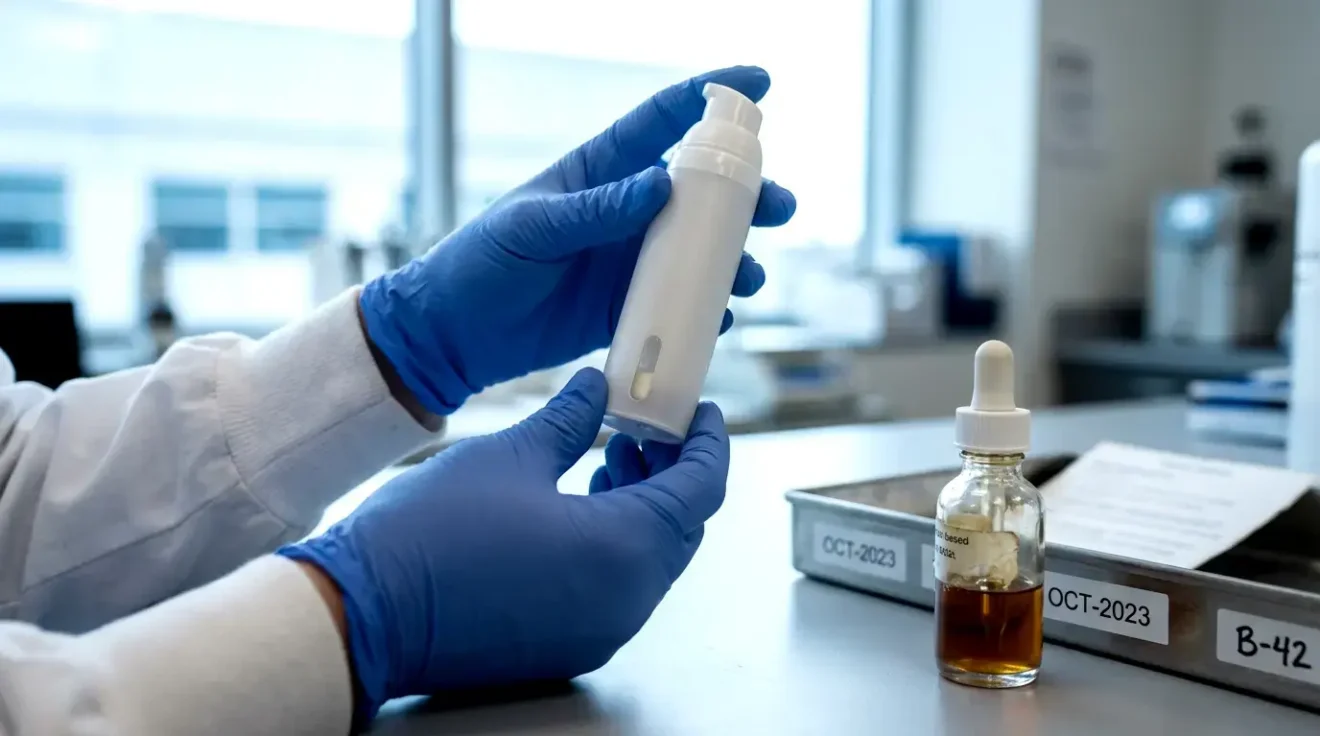
Stability expectations should also reflect the ingredient’s intended function. A botanical extract used mainly to provide colour, fragrance or texture may not require the same preservation of a specific marker compound as a product marketed around a sensitive antioxidant constituent.
Anhydrous products offer another interesting comparison. Removing water can reduce certain water-dependent degradation pathways, but it does not eliminate oxidation, light sensitivity or temperature-related deterioration. Oil-based formulas can also contain ingredients susceptible to degradation.
Consequently, a water-free version of a botanical product is not automatically more effective than its water-based counterpart. The relevant comparison is whether the finished formula preserves its intended chemical constituents over time.
Consumers should favour transparent manufacturers that explain their packaging and formulation choices and provide appropriate product stability information. Visible changes can prompt caution, but the absence of colour or odour changes is not proof that every active constituent remains intact.
Key considerations before evaluating biotechnology-derived skincare
- Determine whether a production term describes a genuinely distinctive ingredient or an already-established manufacturing process.
- Prioritize measurable characteristics, such as molecular composition, over vague claims about natural or biological origin.
- Assess whether the ingredient’s physical and chemical properties match the skin benefit being advertised.
Why Bio-Fermented Hyaluronic Acid Is Not Automatically More Effective
Bio-fermented hyaluronic acid is not automatically more effective than other hyaluronic acid preparations because fermentation describes a production process rather than the ingredient’s final molecular characteristics. Most commercial hyaluronic acid is already produced through bacterial fermentation. Molecular weight, concentration, formulation and product performance are more informative comparison criteria than the word bio-fermented alone.
Hyaluronic acid is a water-binding polysaccharide used in skincare for its humectant properties. It helps attract and retain water within the superficial environment of the skin, contributing to hydration and a smoother appearance.
Its molecular weight influences its physical behaviour and interaction with the skin. Higher-molecular-weight hyaluronic acid generally forms larger polymer structures that remain closer to the skin surface, while lower-molecular-weight fractions have different penetration characteristics and formulation behaviour.
These distinctions should not be simplified into a claim that smaller molecules are always better. Molecular weight can influence hydration, film formation, sensory properties and interactions with other ingredients. The outcome depends on the overall formula and the intended application.
The term fermented is particularly easy to misinterpret. Microbial fermentation is an established production approach for commercial hyaluronic acid. Consequently, describing an ingredient as bio-fermented may simply communicate a standard manufacturing method rather than a unique technological advantage.
Fermentation does not independently reveal:
- The molecular weight or distribution of molecular sizes.
- Whether the product contains high- or low-molecular-weight fractions.
- The concentration of hyaluronic acid in the finished formula.
- The ingredient’s purity or final specification.
- Whether the formulation produces a measurable improvement in skin hydration.
When comparing two hyaluronic acid serums, look for explicit molecular-weight information, the presence of different molecular fractions and meaningful concentration disclosures. A manufacturer that provides these details offers more useful information than one relying exclusively on fermentation terminology.
The same principle applies to other biotechnology-related skincare claims. Plant-derived, bio-based, fermented and biotechnologically produced are descriptions of origin or production methods. Their scientific relevance depends on whether they identify a meaningful difference in the final ingredient.
For instance, a fermentation process may genuinely modify a raw material’s composition, generate metabolites or improve a particular production characteristic. In that situation, the manufacturer should be able to explain what changes and provide appropriate supporting evidence. Without that information, the process label should not be interpreted as proof of superior cosmetic efficacy.
For consumers, the most useful question is not whether a hyaluronic acid ingredient sounds more advanced, but whether its molecular characteristics, concentration and finished formulation support the intended hydration benefit.
Wheat Ceramides or Rice Ceramides: Which Makes More Sense in Skincare?
Wheat-derived and rice-derived ceramide ingredients should be compared according to their actual lipid composition and formulation, not simply their botanical origin. Skin barrier performance depends on the organization of ceramides alongside cholesterol and free fatty acids. Current evidence does not establish that rice-derived ceramides are universally more effective than wheat-derived alternatives.
Ceramides are important lipids in the stratum corneum, the outermost layer of the skin. They contribute to the intercellular lipid structures that help limit excessive water loss and protect the skin against external environmental stressors.
However, the term ceramide can describe ingredients with different molecular structures and sources. A botanical ingredient promoted as rice ceramides may contain rice-derived lipid fractions or rice bran components rather than exclusively isolated ceramide molecules. The same caution applies when interpreting wheat-derived ingredient claims.
This distinction matters because the plant source alone does not establish the final lipid profile. Manufacturers may use different extraction, purification and processing methods, producing ingredients with different compositions.
The surrounding lipid system is especially important. The skin barrier contains ceramides, cholesterol and free fatty acids arranged in organized intercellular structures. A scientific review of ceramide formulation and skin barrier function describes their approximate 1:1:1 molar relationship in the model discussed and explains why their physical organization influences barrier performance.
This ratio should not be interpreted as a universal mandatory recipe for every cosmetic. It describes an important aspect of skin lipid organization and provides a useful scientific reference for understanding barrier-repair formulation.
Research also highlights the importance of solubilization and dispersion. Ceramides that are not properly incorporated into a formulation can form crystalline structures, potentially compromising the performance of the lipid system.
The review reports experimental findings in which formulations containing ceramides, cholesterol and free fatty acids improved several barrier-related parameters in specific skin models. These findings support the importance of formulation quality, but they do not establish universal clinical efficacy for every commercial ceramide product.
The practical comparison between wheat and rice therefore requires attention to ingredient specifications:
| Criterion | Wheat-derived ingredients | Rice-derived ingredients |
|---|---|---|
| Ingredient identity | Verify whether the material contains identified ceramides or a broader wheat-derived lipid fraction. | Verify whether the material contains identified ceramides or a broader rice-derived lipid fraction. |
| Composition | Request information about lipid species and ingredient standardization. | Request information about lipid species and ingredient standardization. |
| Formulation role | Assess compatibility with cholesterol and fatty acids in the finished product. | Assess compatibility with cholesterol and fatty acids in the finished product. |
| Consumer considerations | Consider ingredient-specific wheat sensitivities and seek appropriate professional advice when necessary. | Consider individual ingredient sensitivities and the actual composition of the ingredient. |
| Evidence limitation | No established universal superiority over rice-derived alternatives. | No established universal superiority over wheat-derived alternatives. |
For consumers concerned about wheat-related sensitivities or coeliac disease, topical exposure should not be assumed to have the same implications as dietary exposure. The supplied scientific evidence does not establish a universal tolerance rule for wheat-derived cosmetic ceramides. Anyone with a known ingredient allergy or specific medical concern should seek individualized advice and check the manufacturer’s complete ingredient information.
INCI lists can also help identify whether a formula contains a coherent barrier-supporting system. Depending on the formulation, useful markers include ceramides, cholesterol, phytosphingosine and fatty acids. Their presence is informative, but the complete lipid composition, proportions, dispersion and stability still determine how the formula behaves.
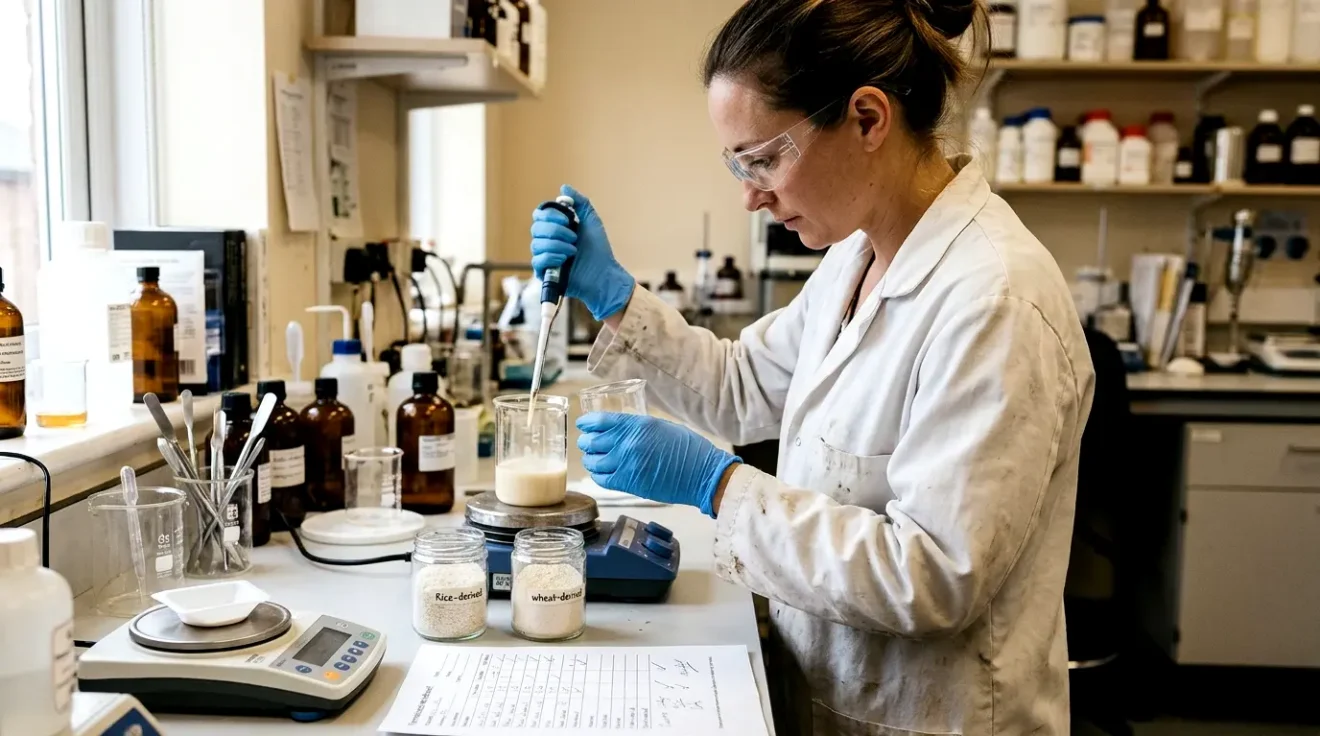
Ultimately, a well-formulated barrier cream with appropriately dispersed ceramides and complementary lipids may be more relevant than choosing a product solely because its ceramides come from rice or wheat. The quality of the finished lipid system is the more useful measure of potential performance.
How Does Processing Change the Quality of Raw Plant Extracts in Cosmetics?
Processing determines much of a botanical extract’s final quality because the chemical composition of raw plant material changes during harvesting, drying, extraction, refining and standardization. These steps influence which compounds are recovered, how much of each remains intact and whether the resulting ingredient can be meaningfully compared with scientific research.
Botanical quality begins before extraction. Plant species, growing conditions and harvest timing can influence the initial concentration of relevant compounds. Differences in cultivation and environmental conditions may produce variations even when the same plant part is collected.
After harvesting, preparation and drying become important. Exposure to heat, light and unsuitable storage conditions can affect sensitive constituents. The degree of change depends on the plant material and the chemical stability of its compounds.
The extraction stage then determines which fractions are recovered. Water, ethanol, glycerin, glycols and vegetable oils can produce different chemical profiles. The solvent is therefore not simply a technical detail: it influences the identity and proportions of compounds entering the final extract.
Further refining can remove unwanted constituents, concentrate selected fractions or alter the composition of the ingredient. However, greater refinement does not automatically mean better cosmetic performance. Its value depends on the intended active compounds and the requirements of the finished formulation.
Standardization is particularly useful for evidence-based ingredient evaluation. A standardized extract is characterized against a specified marker compound or other defined compositional parameter. This gives manufacturers and researchers a more consistent reference point when comparing batches.
For example, a botanical extract standardized to a stated percentage of a particular polyphenol provides more compositional information than an extract identified only by its plant species. It becomes easier to assess whether the material resembles the preparation used in a published study.
However, standardization is not equivalent to clinical validation. A marker compound may help identify an extract’s composition without proving that the finished cosmetic produces a specific skin benefit. The marker must also be relevant to the intended biological activity.
Evidence-based sourcing therefore requires more than a natural-origin statement or a general certificate. Useful information includes:
- Botanical identity: The species, plant part and origin of the raw material.
- Harvest and preparation: Available information about harvesting, drying and storage conditions.
- Extraction method: The solvent and relevant extraction specifications.
- Standardization: The identity and concentration of marker compounds, where applicable.
- Quality documentation: Technical specifications and appropriate quality-control information for the extract.
Certification marks can provide additional information about sourcing or production standards. USDA Organic is relevant to qualifying organic products in the United States, while COSMOS and ECOCERT are encountered in natural and organic cosmetics certification contexts. Their scope should be checked rather than interpreted as a universal guarantee of extract potency or skin efficacy.
Manufacturers that disclose extraction methods, standardization details and ingredient specifications make it easier to evaluate whether their raw materials are appropriate for the claims being made. This transparency also helps distinguish reproducible ingredients from botanical preparations whose chemical composition remains poorly characterized.
Processing quality connects directly to the formulation issues discussed earlier. An extract with an inconsistent chemical profile makes it difficult to compare products featuring the same plant. An inadequately characterized ingredient also complicates interpretation of the INCI list and makes scientific claims harder to verify.
For consumers, the strongest purchasing decision is based on identifiable botanical ingredients, transparent processing information and evidence that matches the finished product’s intended function. When manufacturers cannot provide these details, the absence of information should be treated as uncertainty rather than proof of poor quality. Comparing products through these criteria is a practical next step towards choosing botanical skincare for demonstrated functionality rather than natural beauty marketing alone.
Which botanical ingredients have the strongest scientific evidence for skincare benefits?
Green tea catechins, particularly EGCG, have attracted substantial scientific interest for their antioxidant and potential skin-related activities. However, the strength of evidence varies between laboratory investigations and human studies. Some other botanical ingredients also have promising research, but evidence must be assessed according to the exact extract, concentration, formulation and intended benefit rather than the plant name alone.
Does a higher percentage of botanical extract mean better skincare results?
No. A higher percentage does not automatically mean greater effectiveness. Extraction quality, marker-compound concentration, chemical stability, compatibility with other ingredients and delivery all influence potential performance. A higher inclusion level may also refer to a diluted botanical blend rather than a concentrated active extract.
Can an ingredient’s position in the INCI list reveal its effectiveness?
Not by itself. Ingredient lists provide useful information about ingredient identity and, in some jurisdictions, relative predominance. In the United States, ingredients present at 1% or less may appear in any order after ingredients exceeding that threshold. INCI position does not establish exact concentration, active-compound content or clinical effectiveness.
Are natural botanical extracts safer than synthetic skincare ingredients?
Not necessarily. Natural origin does not automatically establish safety or better skin tolerance. Botanical extracts can contain complex mixtures of chemical compounds, and individual ingredients may cause irritation or allergic reactions. Safety depends on ingredient identity, quality, concentration, exposure and the finished formulation, regardless of whether an ingredient is natural or synthetic.
How can consumers identify a genuinely evidence-based botanical skincare product?
Start by checking the complete INCI list, botanical species and plant part, extract type, disclosed standardization and formulation information. Then compare the manufacturer’s claims with studies involving the same ingredient preparation and a relevant concentration. Give greater weight to appropriately conducted human studies of finished formulations than to isolated laboratory findings or general claims about natural origin.