
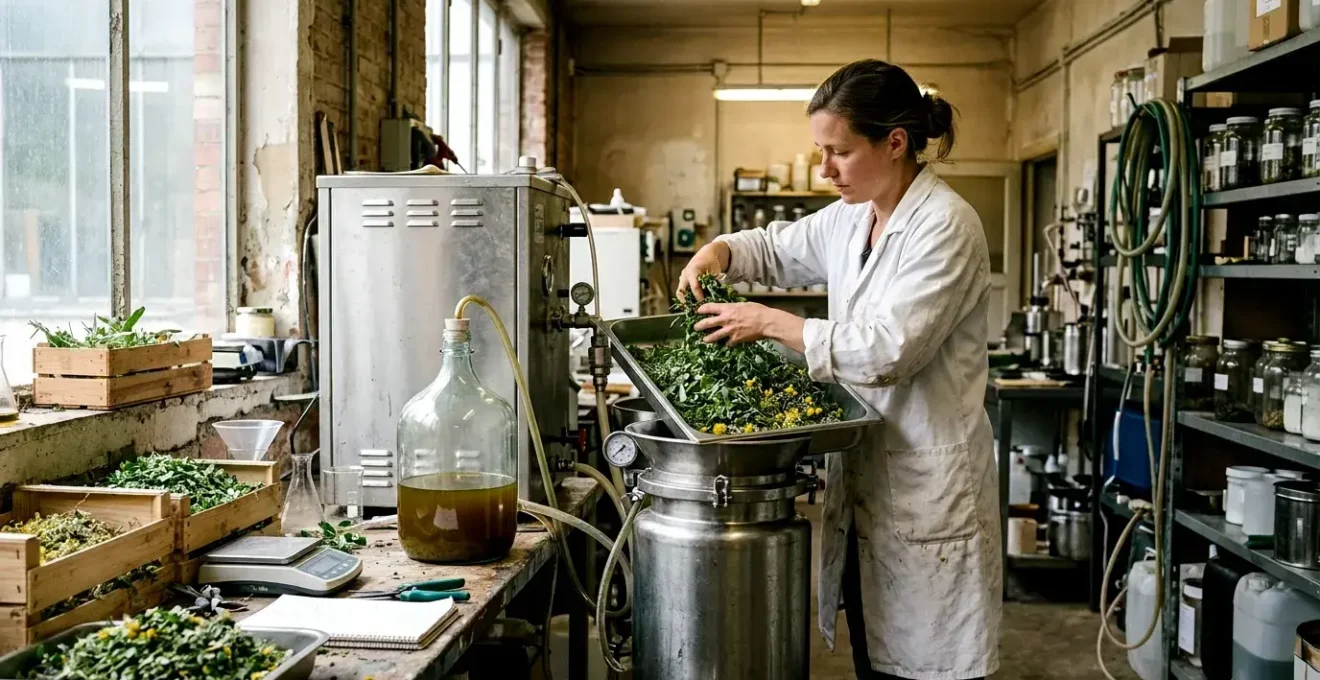
Raw botanical extracts are not chemically fixed ingredients: their composition depends on the plant material, the conditions under which it was harvested and the processing methods used to obtain the final extract. Temperature, extraction solvents, processing time, filtration and storage can all influence which compounds remain available for cosmetic formulation.
Understanding these transformations is essential when assessing minimally processed botanical ingredients. A crude extract may retain a broad range of naturally occurring constituents, but that does not automatically make it purer, safer or more effective than a concentrated or filtered alternative. Conversely, additional processing can improve consistency while removing compounds that contribute to the extract’s original chemical profile.
For natural beauty enthusiasts and emerging formulators, the most useful approach is to evaluate an extract through its botanical identity, extraction conditions, chemical characterisation, physical properties and stability. Its appearance or commercial description alone cannot establish quality.
What determines the quality of a botanical cosmetic extract?
- Harvest conditions and plant maturity influence the initial concentration and proportions of botanical compounds.
- Extraction methods and solvents selectively recover different chemical fractions, while processing conditions can alter sensitive constituents.
- Filtration, concentration, preservation and storage determine important aspects of physical consistency, chemical stability and microbiological quality.
- Why Does Harvest Season Change the Composition of Cosmetic Plant Extracts?
- How Do Botanical Extraction Methods Affect Ingredient Purity and Performance?
- Why Does the Extraction Solvent Change Which Plant Compounds End Up in Cosmetics?
- When Should a Raw Plant Extract Be Filtered Before Cosmetic Formulation?
- Powdered or Liquid Plant Extracts: Which Works Better in a Facial Formula?
- Why Fresh Plant Extracts Can Create Microbial Risks in Homemade Cosmetics
- How to Store Unrefined Botanical Extracts Without Accelerating Oxidation?
- How to Check Whether a Cold-Pressed Facial Oil Has Gone Rancid?
Why Does Harvest Season Change the Composition of Cosmetic Plant Extracts?
Harvest season can change the composition of cosmetic plant extracts because botanical compounds fluctuate throughout a plant’s development and in response to environmental conditions. Polyphenols, flavonoids, terpenes and volatile constituents do not necessarily reach their highest concentrations at the same time. The plant’s developmental stage is therefore often more informative than the calendar date alone.
During flowering, fruit development or vegetative growth, plants redistribute resources and produce different secondary metabolites. A leaf collected before flowering may have a different phytochemical profile from one collected after flowering, even when both originate from the same species. The relevant changes depend on the plant and the compounds being investigated.
Environmental conditions add another layer of variability. Sunlight exposure, rainfall, temperature, soil composition and water stress can influence plant metabolism. Two batches harvested during the same month may therefore produce extracts with different chemical characteristics if they grew under different conditions.
Post-harvest handling is equally important. Delays before processing can expose fresh material to enzymatic activity and oxidation. Drying can improve storage convenience, but excessive heat or prolonged exposure to light may affect sensitive compounds and volatile constituents. Freeze-drying and controlled low-temperature drying may help preserve certain components, although neither guarantees complete chemical integrity.
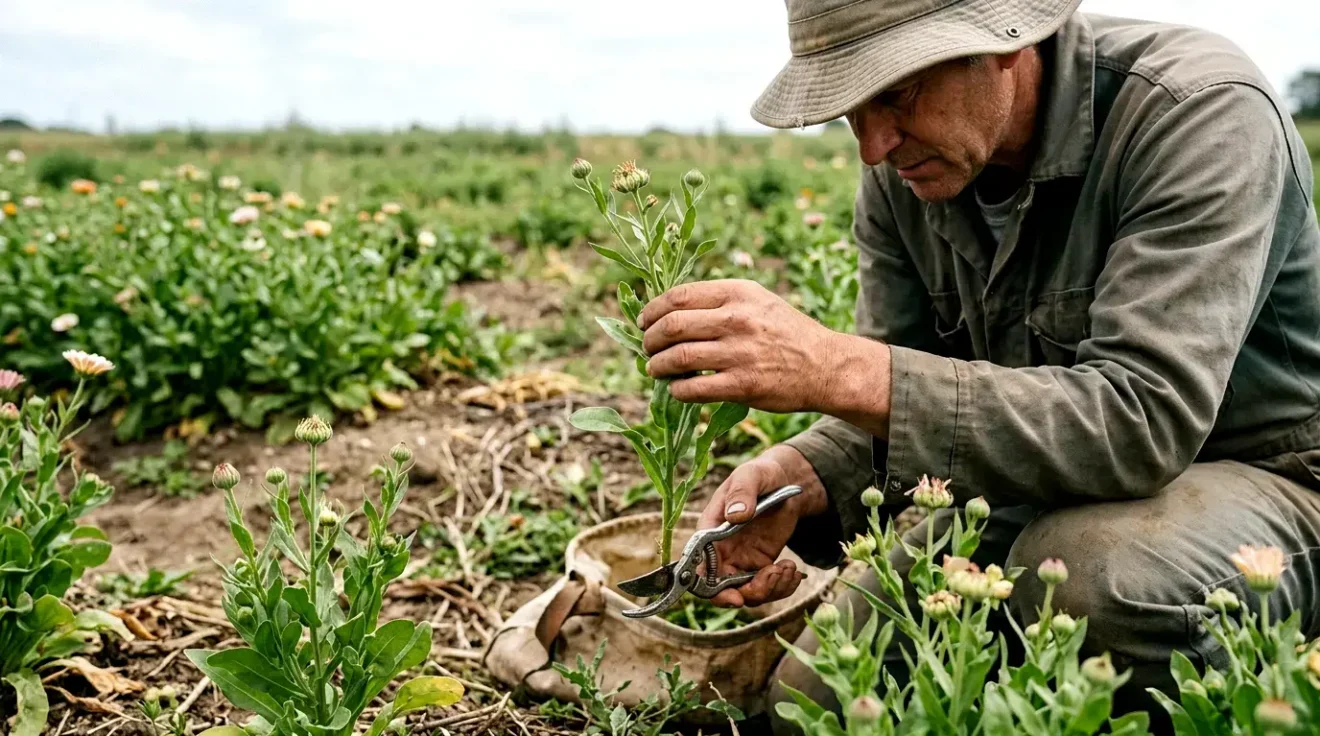
Harvest traceability helps formulators interpret these differences instead of assuming that every batch of a named botanical ingredient is chemically identical. Useful records include the botanical identity, plant part, geographical origin, harvest date, developmental stage and drying conditions. These details provide context when subsequent batches differ in colour, odour or analytical composition.
For commercial ingredients, traceability should ideally be complemented by chemical characterisation. A harvest record explains where variability may originate; analytical testing helps determine whether that variability is reflected in the finished extract.
Ultimately, a consistent harvesting schedule is useful only when it reflects the biological requirements of the plant. Evaluating developmental stage and post-harvest handling provides a stronger foundation for reproducible cosmetic ingredients.
How Do Botanical Extraction Methods Affect Ingredient Purity and Performance?
Botanical extraction methods affect ingredient purity and performance by determining which chemical fractions are recovered, which constituents remain intact and which unwanted materials accompany the extract. No single technique preserves every compound in a plant. The most appropriate method depends on the botanical material, the target constituents and the intended cosmetic application.
Traditional maceration involves placing plant material in a solvent for a defined period. Water, vegetable oils, ethanol and mixed solvents can all be used, producing different extracts from the same starting material. Infusion and decoction rely on water, but differ in their heating conditions: infusion generally uses hot water poured over the botanical material, while decoction involves heating the material in water for longer.
Steam distillation and hydrodistillation primarily recover volatile compounds, particularly those associated with essential oils. They should not be considered methods for obtaining the complete chemical composition of a plant. Cold pressing, meanwhile, mechanically releases oil from suitable botanical materials, with the resulting composition depending on the plant part and its lipid content.
More advanced methods offer different processing possibilities. Ultrasound-assisted extraction uses acoustic energy to facilitate the release of compounds into a solvent. Supercritical CO2 extraction uses carbon dioxide under conditions above its critical point, allowing relatively nonpolar constituents to be recovered. Its selectivity can be modified through operating conditions and the use of suitable modifiers.
These techniques involve trade-offs between extraction yield and chemical integrity. A larger quantity of recovered material does not necessarily indicate a higher concentration of desirable cosmetic constituents. Excessive heat, prolonged extraction or oxygen exposure may degrade sensitive compounds even when the total extract yield increases.
It is also important to distinguish crude extracts, concentrated extracts and purified fractions. Additional purification can remove waxes, pigments, residual solvents or unwanted constituents, depending on the process. However, it may also remove naturally occurring compounds that contribute to antioxidant activity, solubility or compatibility with a particular formulation.
31°C
The approximate critical temperature of pure carbon dioxide. Supercritical CO2 extraction also requires pressure above the critical pressure; the temperature alone does not establish supercritical conditions.
Scientific review: Zhang, Lin and Ye, scientific review of natural-product extraction techniques.
Reproducibility depends on documenting processing parameters, including temperature, duration, pressure, particle size and solvent-to-plant ratio. The ConPhyMP guidelines recommend reporting the starting material, extraction procedure, extract ratios, physical consistency and additional processing steps. They also support complementary analytical methods, including HPTLC, HPLC and GC-MS, to describe complex botanical compositions.
Chromatographic fingerprints can help determine whether two extracts have comparable chemical profiles. However, a similar fingerprint does not automatically prove equivalent cosmetic performance, safety or complete chemical identity. Analytical methods have different detection limits and selectivity; a single technique may overlook significant constituents.
For formulators, the practical objective is not to select the most technologically advanced process, but to identify a reproducible extraction method that produces an ingredient with suitable composition, stability and formulation behaviour.
Why Does the Extraction Solvent Change Which Plant Compounds End Up in Cosmetics?
The extraction solvent changes which plant compounds enter a cosmetic ingredient because different solvents dissolve molecules according to their chemical properties, particularly polarity. Water generally favours hydrophilic constituents, vegetable oils recover lipophilic compounds, and hydroalcoholic mixtures can extract a broader range of moderately polar phytochemicals. Solvent selection must therefore match the intended botanical fraction and formulation.
Water is commonly used to extract water-soluble constituents, including certain polyphenols, sugars and polysaccharides. However, an aqueous extract can also contain substances that contribute to microbial growth, making preservation an important consideration when the extract is stored or incorporated into a finished cosmetic product.
Ethanol can recover many moderately polar constituents and is often used alone or in hydroalcoholic mixtures. Changing the proportion of water and ethanol changes the solvent environment and therefore the compounds recovered. A glycerin-based extract offers another option for hydrophilic and some moderately polar constituents, while vegetable oils preferentially recover lipophilic materials.
Supercritical CO2 is particularly useful for relatively nonpolar fractions, including certain lipids and volatile compounds. Its selectivity depends on pressure, temperature and possible modifiers. It is not a universal replacement for water- or alcohol-based extraction.
The practical differences can be summarised as follows:
| Solvent system | Typical extraction preference | Formulation considerations |
|---|---|---|
| Water | Hydrophilic constituents | Suitable for aqueous systems; microbial preservation is important. |
| Ethanol | Many polar and moderately polar constituents | Residual solvent and compatibility with the final formula require assessment. |
| Glycerin | Hydrophilic and some moderately polar constituents | Can serve as both extraction medium and ingredient carrier. |
| Vegetable oil | Lipophilic constituents | Suitable for oil-based formulations and certain emulsions. |
| Supercritical CO2 | Relatively nonpolar constituents | Requires specialised pressure equipment and appropriate processing controls. |
Solvent choice also affects selectivity among compounds that coexist in the same plant. A solvent may recover desirable antioxidants alongside unwanted constituents. A chemically richer extract is therefore not automatically safer or more effective for topical use. Botanical identity, potentially undesirable compounds and intended exposure all remain relevant.
After extraction, solvent removal may involve evaporation or other separation techniques. However, an ingredient described as a liquid botanical extract may intentionally retain water, glycerin, ethanol or another carrier. A solvent-free extract is not necessarily equivalent to a carrier-free ingredient, and these terms should not be used interchangeably.
Technical specifications should identify the solvent system, extract concentration, relevant residual solvent information and added carriers or excipients. The ConPhyMP guidelines provide a useful framework for documenting these characteristics, although they are research guidelines rather than cosmetic regulatory requirements.
The best solvent is consequently the one that produces a suitable, well-characterised fraction while remaining compatible with the formulation’s physical, chemical and preservation requirements.
When Should a Raw Plant Extract Be Filtered Before Cosmetic Formulation?
A raw plant extract should be filtered when suspended particles, plant fibres, sediment or waxes could interfere with its intended application, stability or manufacturing process. The required filtration level depends on the extract’s composition and the finished product. A clear facial serum may require finer clarification than a botanical cream or a deliberately formulated suspension.
Coarse filtration removes larger insoluble particles such as leaves, stems and fibres. Fine filtration can remove smaller suspended materials and improve physical appearance. More advanced separation processes may target specific fractions, but their suitability depends on the material and the equipment used.
Filtration is not chemically neutral in every situation. Some botanical ingredients contain naturally dispersed or suspended components that contribute to their appearance and functional properties. Removing these fractions can change the final extract’s composition, colour, texture or behaviour in a formulation.
The appropriate level of clarification should therefore reflect the intended product:
- Clear facial serums: Suspended particles may create visible sediment, affect appearance or interfere with dispensing. Greater clarification may be appropriate.
- Botanical creams: Some insoluble particles can be tolerated depending on their size, concentration and compatibility with the emulsion.
- Suspension-based products: Particles may be intentionally retained, provided their distribution and physical stability are adequately controlled.
Viscosity, particle load and sediment formation also influence the choice. A highly viscous extract may be difficult to filter through fine media, while wax-rich or oily materials can behave differently from aqueous extracts. The selected filtration method should not unintentionally remove the botanical fraction that the formulator wants to retain.
Most importantly, ordinary filtration must not be confused with sterilisation. Removing visible particles does not demonstrate that an extract is free from microorganisms. Dissolved chemical impurities also generally remain in the liquid unless a separate process is designed to remove them. Even specialised membrane filtration requires validated operating conditions before any microbiological claim can be justified.
The FDA’s cosmetic GMP inspection checklist specifically addresses contamination risks associated with vegetable-derived materials and cold-processing methods. It also highlights raw-material handling, laboratory controls and the adequacy of finished-product preservation. These considerations reinforce why filtration alone cannot establish microbiological safety.
Before incorporating a raw extract into a formula, assess its physical characteristics and the risks associated with its preparation and storage. Where relevant, chemical and microbiological testing should complement visual inspection and filtration.
Filtration should therefore be treated as a formulation decision, not an automatic quality improvement. The correct endpoint is an extract that behaves consistently in its intended product without unnecessary removal of useful botanical fractions.
Powdered or Liquid Plant Extracts: Which Works Better in a Facial Formula?
Powdered and liquid plant extracts can both work effectively in facial formulations, but neither physical form is inherently superior. Their suitability depends on botanical solids content, marker-compound concentration, carrier composition, solubility, preservation requirements and compatibility with the finished product. Comparing them requires more than looking at their appearance or commercial concentration.
A liquid extract may contain a substantial proportion of water, glycerin, ethanol or vegetable oil. Its total weight therefore does not necessarily represent the quantity of botanical solids it supplies. A powdered extract may contain concentrated botanical material, but it can also include drying agents, carriers or standardising ingredients.
Drying methods can influence the final chemical profile. Spray drying is commonly used to transform liquid extracts into powders through rapid moisture removal. Freeze-drying removes water through freezing and sublimation and can be useful for materials sensitive to conventional drying conditions. Neither technique guarantees complete preservation of volatile, heat-sensitive or oxidation-prone compounds.
Physical behaviour also differs. Powders may require careful dispersion or dissolution and can create sediment when their constituents are not sufficiently soluble. Liquid extracts may integrate more easily into certain aqueous or oil-based systems, depending on their carrier, but can alter viscosity, pH and preservation requirements.
For an oil-in-water emulsion, a glycerin-based extract may be convenient if its composition is compatible with the aqueous phase. An oil-based extract may be more appropriate for the lipid phase. A powder may work well in either system if its solubility, dispersion and recommended addition conditions are understood.
To compare commercial ingredients accurately, examine the following information:
- Dry extract content: The actual amount of botanical solids present.
- Extraction ratio: The relationship between starting botanical material and the resulting extract, interpreted alongside the production method.
- Marker-compound concentration: The measured quantity of selected characteristic constituents.
- Carrier composition: Water, glycerin, oils, drying agents or other excipients.
- Recommended use level: The supplier’s guidance for incorporating the material into a finished formula.
Extraction ratios should not be confused with guaranteed active-compound concentrations. Two extracts with the same nominal ratio may have different chemical profiles because their starting materials, solvents and processing conditions differ.
A practical comparison should therefore use equivalent botanical-solids content or marker-compound content wherever suitable analytical data are available. Price per kilogram alone can be misleading when one ingredient contains significantly more carrier than another.
The ConPhyMP guidelines recommend documenting extract consistency, extraction ratios, processing conditions and added excipients. Their approach is useful when assessing whether two commercial ingredients are genuinely comparable, although chemical similarity does not independently prove equivalent performance in a finished cosmetic.
Ultimately, the better extract is the one that provides a suitable chemical profile and predictable formulation behaviour at an appropriate use level, regardless of whether it arrives as a powder or a liquid.
Why Fresh Plant Extracts Can Create Microbial Risks in Homemade Cosmetics
Fresh plant extracts can create microbial risks in homemade cosmetics because botanical material and water can introduce bacteria, yeasts and moulds during preparation. Fresh leaves, flowers and roots may carry microorganisms from soil, water, harvesting equipment and handling. Once introduced into an aqueous extract, these microorganisms may multiply if storage and formulation conditions allow growth.
Infusions and water-based macerations deserve particular attention because they combine moisture with naturally occurring plant constituents. Sugars, polysaccharides and residual organic matter can provide conditions that support microbial development. Storage temperature and pH also influence microbial behaviour, although their effects vary between organisms and botanical materials.
Contamination during extraction is different from microbial growth during storage. Clean equipment and suitable handling practices can reduce the initial contamination burden, but they cannot guarantee that the resulting extract remains microbiologically stable.
Appearance and smell are unreliable indicators of safety. An extract may look clear, retain its original colour and have no noticeable off-odour while still containing microorganisms. Sensory inspection is therefore not a substitute for appropriate microbiological assessment.
Adding a preservative does not automatically solve the problem. Preservation depends on the preservative system, concentration, pH, solubility and compatibility with the other ingredients. The finished formula can also affect preservative performance through interactions with botanical compounds, oils, emulsifiers and other materials.
For products intended for repeated use and extended storage, preservation must be evaluated in the context of the complete formulation. Appropriate microbiological testing, including challenge testing where relevant, helps determine whether the preservation system can control microbial growth under defined conditions.
The FDA cosmetic GMP inspection checklist highlights contamination risks associated with vegetable-derived raw materials and cold-processing methods. It also identifies finished-product preservation assessment as an important laboratory control. This guidance concerns manufacturing practices in the United States and should not be mistaken for a universal legal standard governing every market or homemade preparation.
Refrigeration, clean equipment and filtration can contribute to risk reduction, but none independently establishes microbiological safety. Refrigeration slows the growth of many microorganisms without eliminating them, while filtration may remove some particles and organisms depending on the process but does not necessarily remove all microbial contamination.
Freshly prepared botanical extracts should consequently be treated as potentially unstable materials. Their use in products intended for storage requires a preservation strategy and suitable quality assessment rather than reliance on visual clarity or a short period of refrigeration.
The distinction matters because an extract can be chemically attractive yet unsuitable for prolonged storage. Microbiological quality must be considered independently of botanical composition and physical appearance.
Key considerations before assessing botanical storage
- Identify whether the extract contains unsaturated lipids or oxidation-sensitive phytochemicals.
- Distinguish chemical deterioration from microbial instability, as they require different controls.
- Evaluate packaging, oxygen exposure and storage conditions according to the extract’s actual composition.
How to Store Unrefined Botanical Extracts Without Accelerating Oxidation?
Unrefined botanical extracts should be stored in conditions that limit unnecessary exposure to oxygen, light, heat and other factors that accelerate chemical deterioration. Airtight closures, suitable opaque containers and controlled storage temperatures can help protect sensitive constituents. However, the best conditions depend on whether the extract is aqueous, oil-based or a more complex botanical preparation.
Oxidation involves chemical reactions that can change the composition of botanical ingredients. In oils, unsaturated fatty acids can react with oxygen and form hydroperoxides, which may subsequently decompose into secondary oxidation products. Certain polyphenols, pigments and volatile compounds can also undergo oxidative or other degradation reactions.
Light and heat can accelerate some degradation pathways, while traces of metals may promote oxidation in susceptible materials. The extent of deterioration depends on the chemical structure of the constituents and the conditions under which the extract is handled.
Packaging is an important protective measure. Opaque or light-resistant containers can reduce exposure to light. Airtight closures limit contact with the surrounding atmosphere, while reducing headspace can help minimise the amount of oxygen present inside a container.
Repeated opening also matters. A container that is initially filled and sealed under appropriate conditions may experience additional oxygen exposure every time it is opened. Smaller dispensing containers can sometimes reduce repeated exposure of the main storage batch, provided the transfer process itself is controlled.
Storage temperature requires a more specific assessment. Lower temperatures can slow certain degradation reactions, but refrigeration is not universally suitable. Some extracts may precipitate, separate into phases or undergo changes in viscosity. Repeated temperature fluctuations can also create condensation when containers are opened.
Visual and sensory monitoring can provide preliminary warning signs. Changes in colour, odour, viscosity, sedimentation or phase separation may indicate that an extract has changed. However, the absence of these changes does not prove chemical stability or microbiological safety.
For oil-based extracts, appropriate analytical measurements may include peroxide value and acid value, interpreted alongside the botanical oil’s characteristics. For aqueous botanical extracts, other chemical and microbiological assessments may be more relevant. No single visual observation or analytical measurement describes every possible form of deterioration.
Supplier specifications, batch records and stability information provide a stronger basis for determining whether an extract remains suitable for formulation. The FDA’s cosmetic GMP guidance also highlights storage conditions intended to reduce raw-material deterioration and contamination, including protection from excessive heat, cold, sunlight and moisture.
Stable storage cannot reverse damage that has already occurred. It is a preventive measure that preserves ingredient quality as far as the material’s chemical properties and validated storage conditions allow.
How to Check Whether a Cold-Pressed Facial Oil Has Gone Rancid?
A cold-pressed facial oil can be assessed for rancidity through changes in odour and appearance, but reliable evaluation may require laboratory measurements. Peroxide value indicates primary lipid oxidation, while acid value provides information about free fatty acids and hydrolytic deterioration. These measurements are complementary, and neither independently establishes the complete oxidative condition of an oil.
Cold pressing mechanically extracts oil from suitable seeds, fruits or other plant materials without relying on conventional high-temperature refining. The resulting oil may retain naturally occurring minor constituents, including tocopherols and certain polyphenols. However, cold pressing does not make an oil immune to oxidation.
The condition of the starting material, residual moisture, extraction and handling conditions, filtration and subsequent oxygen exposure can all influence stability. The fatty acid profile is also important: oils with higher proportions of polyunsaturated fatty acids are generally more susceptible to oxidation than oils dominated by more saturated fatty acids, although naturally occurring antioxidants and other constituents also influence stability.
Primary oxidation produces hydroperoxides. These compounds are associated with increasing peroxide values during early oxidative deterioration. However, hydroperoxides are not stable indefinitely. As oxidation progresses, they can decompose into secondary products, some of which contribute to unpleasant or rancid odours.
This explains why peroxide value cannot be interpreted in isolation. A value may change as oxidation advances, and a declining peroxide value does not necessarily indicate that an oil has recovered its original quality.
Acid value measures the free fatty acids present in an oil and is useful for assessing aspects of hydrolytic deterioration. It does not directly quantify all secondary oxidation products. Other measurements, including p-anisidine value, can provide additional information about secondary oxidation.
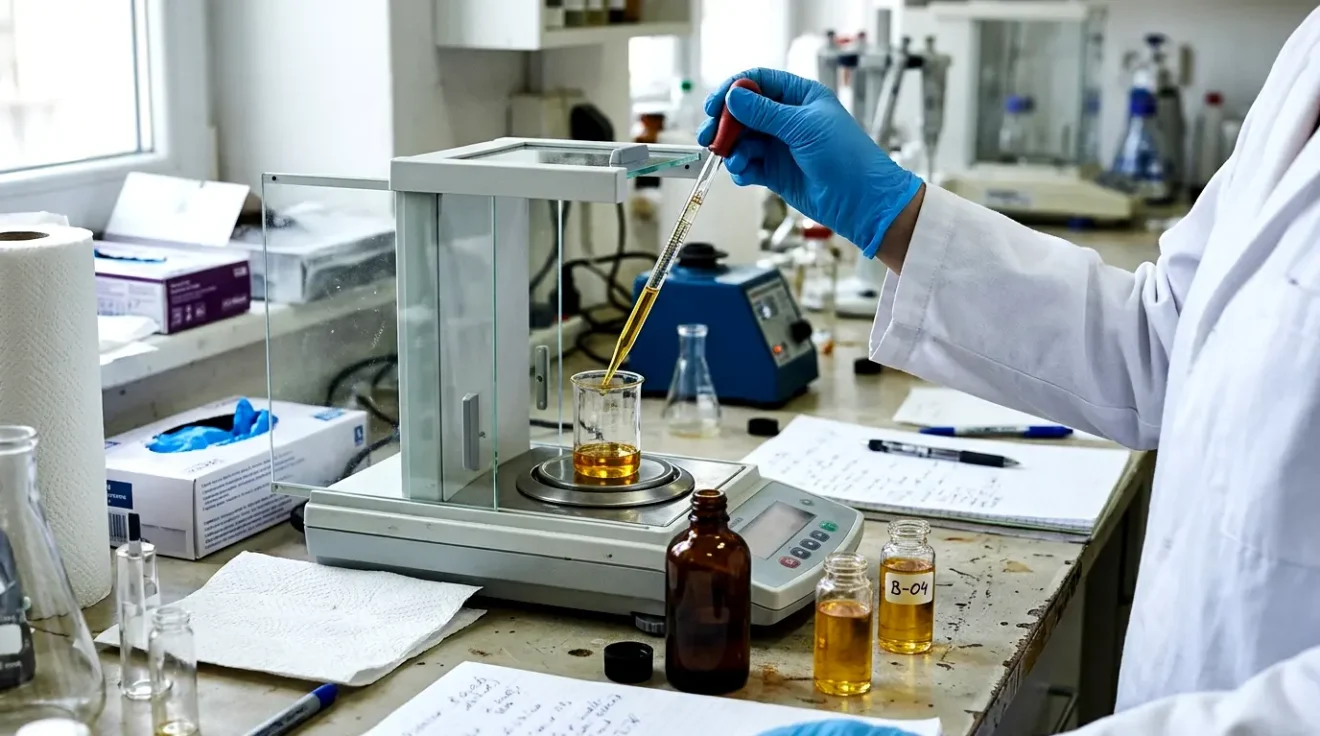
A 2023 experimental study published in Foods examined oxidative stability in ten vegetable oils using several complementary indicators, including peroxide value, acid value and p-anisidine value. It also investigated naturally occurring constituents such as tocopherols, sterols, polyphenols and squalene. Its findings demonstrate that both fatty acid composition and endogenous antioxidant components influence oxidative stability, although its results do not establish shelf-life limits for cosmetic facial oils.
Adding tocopherol to a formulation can help protect susceptible oils against oxidation under appropriate conditions, but it does not reverse existing rancidity or guarantee indefinite stability. The effectiveness of an antioxidant depends on the oil composition, concentration, processing conditions and storage environment.
When assessing a cold-pressed facial oil, consider the following practical quality checks:
A practical checklist for assessing cold-pressed facial oil quality
- Identify the oil and its botanical origin: record the species, plant part and supplier information as a traceable ingredient identity.
- Review the batch documentation: retain the lot number, production information and available supplier specifications.
- Inspect the stored oil: document unusual changes in odour, colour, clarity or consistency as preliminary warning signs.
- Review analytical indicators: obtain relevant peroxide value and acid value results, and consider additional oxidation measurements when appropriate.
- Verify storage and formulation suitability: document the packaging, handling conditions and available stability evidence before approving the ingredient for use.
There are no universal rejection thresholds established by the cited study for every cosmetic cold-pressed oil. Interpretation should consider the specific botanical oil, its fatty acid profile, supplier specifications and intended application. Results from accelerated oxidation experiments should not be converted directly into a consumer shelf life without additional validation.
For formulators, the central question is not simply whether an oil still looks fresh. It is whether the available analytical and batch information supports its continued suitability for the intended cosmetic formulation.
Does an unrefined botanical extract contain more active compounds?
Not necessarily. An unrefined extract may retain a broader range of naturally occurring constituents, but it can also contain more waxes, insoluble materials or unwanted compounds. Refining and purification can increase the concentration of selected constituents while removing others. The actual composition must be established through suitable analytical characterisation rather than inferred from the degree of processing.
Can two extracts from the same plant have different cosmetic properties?
Yes. Differences in harvest maturity, geographical origin, environmental conditions, extraction solvents, temperature and processing time can produce different chemical profiles. Their solubility, colour, odour and formulation compatibility may also differ. Comparing extraction documentation and relevant chemical fingerprints helps identify these variations.
Does a natural plant extract need a preservative?
Not every extract requires the same preservation approach. Aqueous botanical preparations are particularly susceptible to microbial contamination and growth, while an anhydrous oil extract presents different preservation considerations. The requirements depend on water content, composition, processing, storage and intended use. Products intended for repeated use and extended storage require an appropriate, validated preservation strategy and relevant microbiological assessment.
Is a higher extraction ratio always better for cosmetic formulation?
No. An extraction ratio describes the relationship between starting botanical material and the resulting extract, but it does not independently establish the concentration of a specific compound. Two extracts with similar ratios can differ in solvent selectivity, marker content and chemical composition. Supplier specifications and analytical results are more informative when comparing ingredients.
How can formulators compare the quality of two commercial botanical extracts?
Compare botanical identity, plant part, origin, extraction solvent, processing conditions, drug-to-extract ratio, dry solids content, marker-compound concentration, carrier composition and relevant stability or microbiological information. Chromatographic fingerprints can provide additional evidence of chemical similarity. No single specification independently proves equivalent cosmetic performance or safety, so the comparison should reflect the intended formulation and use.