
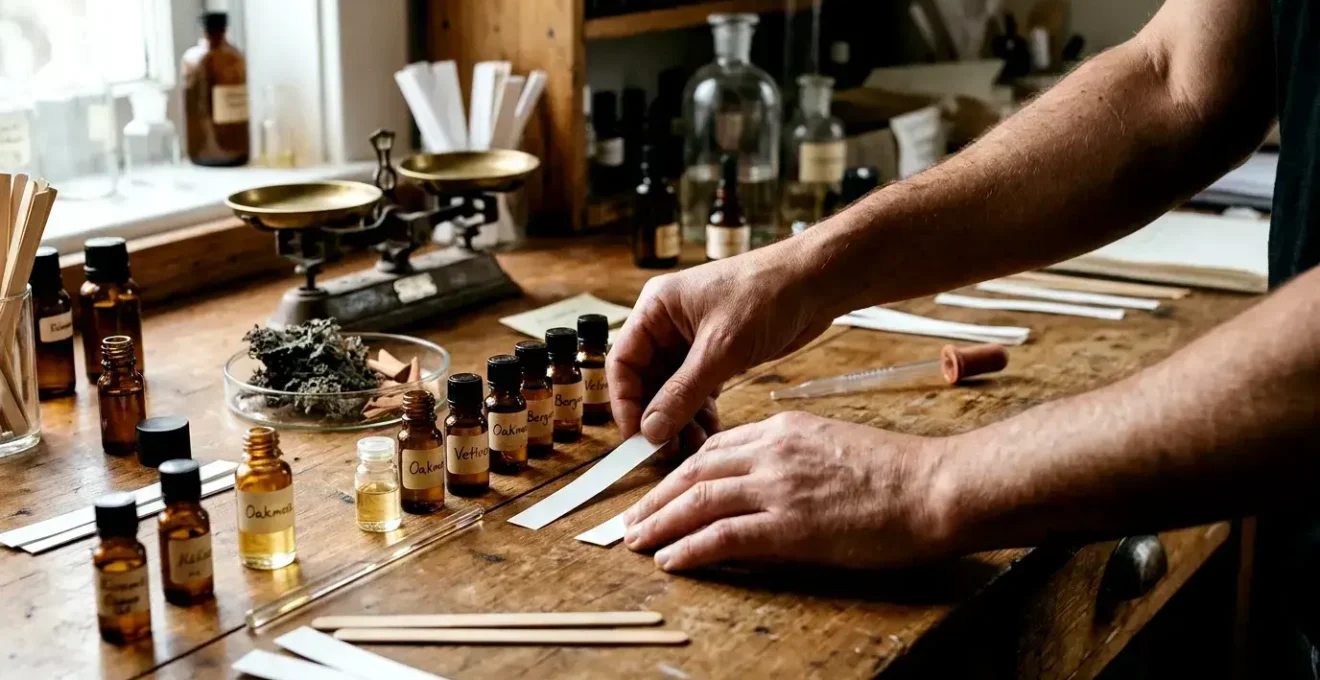
Classic woody fragrances derive their enduring character from the balance between dry woods, creamy textures, earthy materials and warm resins. Sandalwood, cedarwood, vetiver and oakmoss each contribute a different olfactory signature, shaping how a perfume develops, feels and remains recognizable over time. These ingredients are not interchangeable: their botanical origins, chemical compositions and interactions with other fragrance materials influence the character of the finished composition.
Understanding traditional woody bases means looking beyond the names printed on perfume bottles. A sandalwood accord may be built from natural essential oil or synthetic materials, while a modern chypre may reproduce the structure of an older oakmoss composition without using the same ingredients. For perfume enthusiasts, recognizing these distinctions makes it easier to identify established fragrance styles, compare reformulations and choose a composition that genuinely reflects a traditional aesthetic.
Classic Woody Fragrance Foundations at a Glance
- Sandalwood brings a smooth, creamy and warm woody character associated with traditional oriental compositions.
- Cedarwood contributes a drier, more structured woody impression, while vetiver introduces earthy, root-like and often smoky nuances.
- Oakmoss and labdanum help define the traditional chypre structure, while modern ingredient restrictions have influenced how contemporary versions are composed.
- Why Has Sandalwood Remained a Signature Ingredient in Classic Perfumery?
- How to Identify a Classic Cedarwood Dry-Down During a Fragrance Test?
- Oakmoss-Style Chypre or Sandalwood Oriental: Which Feels More Traditional?
- Why Traditional Oakmoss Formulas May Differ From Modern Perfume Versions
- When Does a Dry Cedar Fragrance Suit an Evening Occasion Better Than Creamy Sandalwood?
- Vetiver or Cedarwood: Which Creates a Drier Perfume Base?
- Why Can Wild-Harvested Sandalwood Create Serious Conservation Concerns?
- What Makes a Fine Fragrance Feel Refined Rather Than Overpowering?
Why Has Sandalwood Remained a Signature Ingredient in Classic Perfumery?
Sandalwood has remained a signature of classic perfumery because its warm, smooth and persistent woody character provides a versatile foundation for complex fragrance compositions. Its association with traditional oriental perfumes comes from its ability to complement floral, spicy and resinous materials without introducing the sharpness often associated with drier woods. Its importance is therefore both olfactory and structural.
The characteristic scent of sandalwood is closely associated with its major sesquiterpenoids, particularly alpha-santalol and beta-santalol. These compounds contribute substantially to the distinctive woody odor of sandalwood oil. However, the precise sensory profile depends on the botanical species and the composition of the extracted oil.
Indian sandalwood (Santalum album) and Australian sandalwood (Santalum spicatum) illustrate these differences. A scientific review of sandalwood oil composition reports approximately 41–55% alpha-santalol and 16–24% beta-santalol in Indian sandalwood oil. The corresponding reported ranges for Australian sandalwood are approximately 15–25% and 5–20%. These figures describe reported compositional ranges rather than guaranteed specifications for every commercial batch.
41–55%
Reported alpha-santalol content in Indian sandalwood oil. The proportion varies with the material and its botanical characteristics.
Scientific review of sandalwood oil composition, PubMed Central.
These chemical differences help explain why the expression sandalwood does not identify a single, uniform fragrance material. Indian sandalwood is commonly associated with a richer, creamier impression, whereas Australian sandalwood can offer a comparatively drier profile. Synthetic sandalwood materials and reconstructed accords provide additional possibilities for perfumers seeking particular textures or more consistent formulation characteristics.
Historically, sandalwood has also occupied an important place in South Asian traditions involving incense, aromatic preparations and powdered wood. Its later prominence in Western perfumery reflects the compatibility of its woody warmth with rose, jasmine, spices and balsamic materials. It became particularly recognizable in compositions built around warm, enveloping bases.
Nevertheless, its classic status should not be confused with unrestricted availability. Botanical sourcing, commercial value and conservation concerns influence the materials available to modern perfumers. A fragrance described as sandalwood-inspired may therefore contain natural sandalwood oil, synthetic sandalwood molecules or a combination of materials.
Ultimately, sandalwood remains timeless because its recognizable warmth can support different fragrance architectures. Its identity survives changes in sourcing and formulation, even when the exact materials used in a modern perfume differ from those of an older composition.
How to Identify a Classic Cedarwood Dry-Down During a Fragrance Test?
A classic cedarwood dry-down is identified by its dry, woody and relatively restrained character after the brighter opening notes have faded. Rather than relying exclusively on the perfume’s advertised ingredients, the most useful approach is to evaluate its development over several hours. The late-stage impression often reveals whether the composition has a genuinely cedar-like foundation or simply a general woody accord.
Cedarwood is not a single botanical material. Several species are commercially associated with the name, and their chemical compositions differ. Virginia cedarwood, obtained from Juniperus virginiana, is particularly well documented in technical literature.
Its essential oil contains characteristic sesquiterpenes and sesquiterpene alcohols, including alpha-cedrene, beta-cedrene, thujopsene, cedrol and widdrol. These constituents help characterize the material chemically, although they should not be interpreted as a direct sensory intensity scale.
The distinction between cedarwood materials is important when evaluating traditional woody fragrances. Virginia cedarwood is frequently associated with a dry, pencil-like woody impression. Other cedarwood materials, including Atlas cedarwood (Cedrus atlantica), may produce different olfactory impressions, with their precise character depending on the oil and formulation.

A useful fragrance evaluation separates the development into three observation periods:
- After approximately 15 minutes: Record the opening impression, including citrus, aromatic or spicy notes that may initially obscure the woody base.
- After 1–2 hours: Evaluate the transition into the heart and identify whether the composition is becoming drier, warmer or more resinous.
- After 4–8 hours: Examine the remaining woody impression. Note whether a recognizable cedar-like dryness persists or whether the fragrance becomes predominantly musky, ambery or creamy.
These intervals are practical observation points, not universal chemical stages. Skin chemistry, application quantity, concentration and environmental conditions can alter the development of a perfume.
Another important consideration is the distinction between essential oil and a finished fragrance accord. A commercial perfume may use cedarwood oil alongside materials such as methyl cedryl ketone or cedrol. The resulting effect can be smoother and more abstract than the impression of an isolated essential oil.
The National Toxicology Program‘s technical report on Virginia cedarwood oil provides useful botanical and chemical background for understanding this material. It identifies the principal constituents and discusses the variability of cedarwood oil composition.
For a purchase decision, a dry cedar foundation may appeal to someone seeking a restrained, structured woody fragrance rather than an enveloping, sweet composition. However, the perceived projection and longevity must be evaluated independently; cedarwood does not guarantee a particular performance level.
Once the late-stage character has been identified, cedarwood can be compared more meaningfully with creamy sandalwood, earthy vetiver and the more complex structure of traditional chypre perfumes.
Oakmoss-Style Chypre or Sandalwood Oriental: Which Feels More Traditional?
An oakmoss-style chypre generally feels more traditional within the established vocabulary of classic Western perfumery, while a sandalwood oriental reflects a different tradition built around warmth, spices, resins and creamy woods. Neither is universally more traditional. The distinction depends on which historical fragrance aesthetic is being considered and how the materials are combined.
The traditional chypre structure is commonly associated with a fresh citrus opening, a floral or aromatic heart and a contrasting base involving labdanum, oakmoss and patchouli. Its characteristic effect comes from the relationship between freshness and a darker, earthy foundation.
The modern historical reference point is Chypre by Coty, introduced in 1917. The fragrance helped establish a recognizable compositional framework that subsequently influenced generations of perfumers. Oakmoss became an important part of the vocabulary associated with this family, contributing an earthy, mossy dimension.
By contrast, the sandalwood oriental family emphasizes warmth and continuity. Sandalwood can be combined with vanilla, amber-like materials, resins and spices to create a rounded and enveloping foundation. Rather than the contrast between citrus freshness and mossy depth, the emphasis often falls on richness, softness and warmth.
The practical distinction can be understood through fragrance context:
| Criterion | Oakmoss-style chypre | Sandalwood oriental |
|---|---|---|
| Structural foundation | Citrus, labdanum, oakmoss and patchouli | Sandalwood, spices, vanilla and resins |
| Dominant impression | Contrasting, earthy and structured | Warm, smooth and enveloping |
| Traditional association | Classic Western perfumery | Warm oriental fragrance aesthetics |
| Stylistic preference | Dry elegance and aromatic contrast | Softness and rounded warmth |
| Modern interpretation | Reconstructed mossy accords | Natural or synthetic sandalwood accords |
These categories describe compositional tendencies rather than rigid rules. A contemporary perfume can use a traditional chypre architecture while introducing modern fruity, woody or musky materials. Likewise, a sandalwood-centered perfume can feel minimalist rather than overtly oriental.
Regulatory developments also complicate the comparison. Oakmoss extracts contain atranol and chloroatranol, substances that have prompted specific fragrance safety restrictions. The European Union and the International Fragrance Association have addressed these substances through different regulatory and industry frameworks. Their requirements should not be treated as identical or as evidence of a worldwide ban on oakmoss.
The distinction is important for vintage enthusiasts. A modern chypre can preserve the structural relationship between citrus, labdanum and mossy materials without reproducing the exact ingredients of an older perfume.
For someone seeking a recognizable historical fragrance aesthetic, the choice comes down to preference: mossy contrast and tailored dryness, or creamy warmth and a more enveloping woody foundation.
Why Traditional Oakmoss Formulas May Differ From Modern Perfume Versions
Traditional oakmoss formulas may smell different from modern perfume versions because safety requirements have changed the ingredients that formulators can use and the concentrations at which certain materials may appear. The most important distinction is that restrictions on specific constituents do not automatically mean that every oakmoss extract has been prohibited. Modern chypres can retain their traditional structure while using different material combinations.
Oakmoss, botanically identified as Evernia prunastri, is a lichen-derived fragrance material associated with earthy, damp and mossy olfactory impressions. It has historically played an important role in the development of chypre compositions.
The regulatory discussion focuses particularly on atranol and chloroatranol, naturally occurring constituents identified in oakmoss and treemoss extracts. These substances became the subject of significant safety restrictions because of their sensitisation concerns.
At the European Union level, Commission Regulation (EU) 2017/1410 added atranol and chloroatranol to Annex II of Regulation (EC) No 1223/2009, which lists prohibited substances in cosmetic products. The prohibition concerns the identified compounds, not an automatic prohibition of every ingredient derived from oakmoss.
The International Fragrance Association also established specific technical requirements through IFRA Standard 067, concerning oakmoss extracts. Its Amendment 49 document specifies restrictions according to product category and limits for atranol and chloroatranol in the extracts themselves.
The IFRA Standard 067 on oakmoss extracts illustrates how industry safety requirements influence the formulation options available to perfume creators. Amendment 49 is a historical standard published in 2020, however, and should not be treated as a complete statement of the applicable IFRA requirements in November 2026.
These developments can influence the olfactory character of modern chypres. When a formulator changes the quantity or type of oakmoss material, the balance between earthy, woody, resinous and patchouli-like facets may change. Nevertheless, the precise sensory result depends on the entire formula. It would be inaccurate to claim that every reformulation necessarily removes the damp-earth impression or replaces oakmoss with one particular substitute.
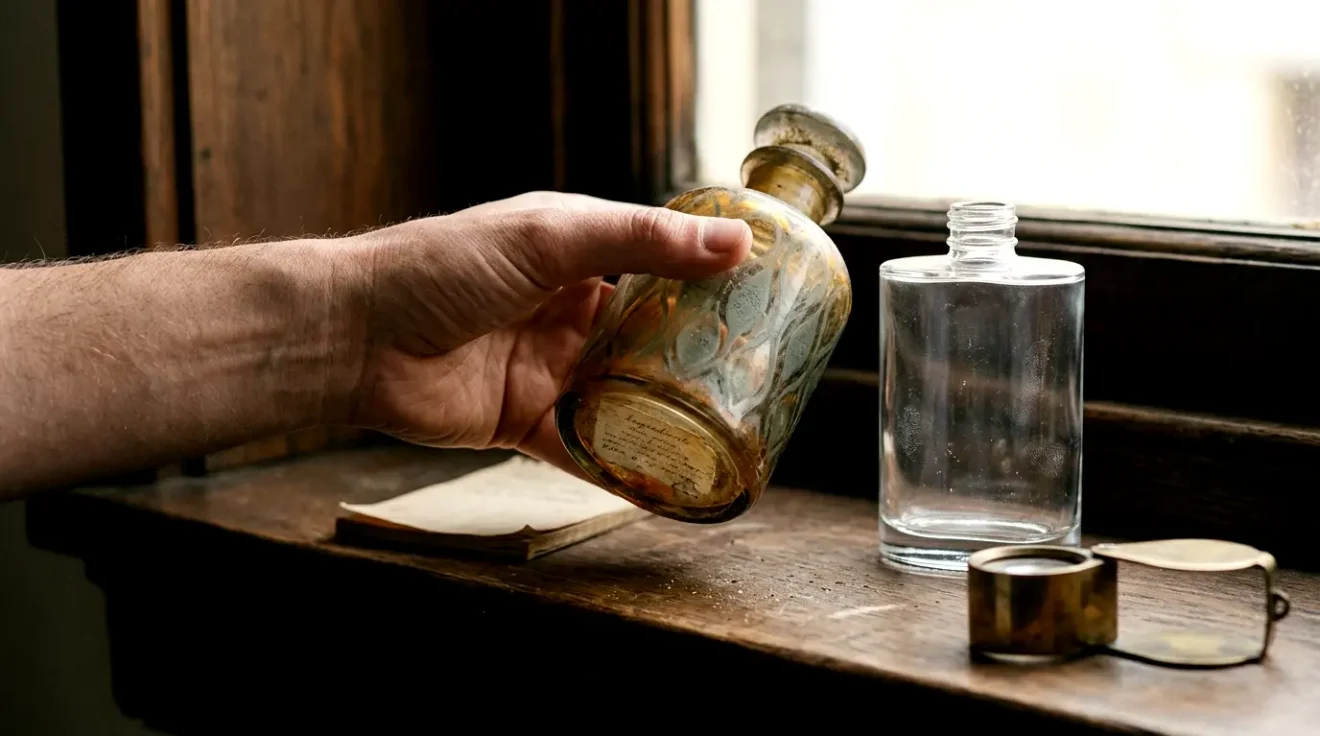
For enthusiasts comparing an older bottle with a contemporary edition, several observations are useful:
- Check the available ingredient information, particularly whether Evernia prunastri extract is identified.
- Compare the opening, heart and dry-down rather than judging the fragrances from the first application.
- Pay attention to whether the modern version has a different balance of earthy, resinous, woody or patchouli-like notes.
- Consider storage conditions when evaluating vintage bottles, since their current smell may have changed during years of storage.
A vintage perfume is not automatically a chemically or olfactorily perfect reference. Oxidation, evaporation and storage conditions can alter its composition and perceived character. An older bottle may therefore differ from both its original formulation and a carefully preserved contemporary example.
There is also an important geographical distinction. European Union cosmetic legislation applies within its own jurisdiction; it should not be presented as a universal legal requirement for the United States, United Kingdom, Canada or Australia. IFRA standards are industry standards rather than national legislation.
Understanding these distinctions prevents a common mistake: assuming that every modern chypre is a weakened version of an older perfume. A reformulation may change the materials while preserving the essential compositional identity of the fragrance family.
When Does a Dry Cedar Fragrance Suit an Evening Occasion Better Than Creamy Sandalwood?
A dry cedar fragrance may suit an evening occasion better than creamy sandalwood when the desired impression is restrained, clean and structured. Sandalwood is often preferable when a warmer, softer and more enveloping atmosphere is appropriate. The decision depends less on whether the occasion takes place during the day or at night than on temperature, clothing, setting and the desired fragrance presence.
Cedarwood and sandalwood create different stylistic effects. A dry cedar composition can evoke the clean lines of tailored clothing, understated formality and a relatively minimal aesthetic. Its woody character may be particularly appealing when a fragrance should complement rather than dominate an evening outfit.
Creamy sandalwood tends to suggest a different atmosphere. Its rounded warmth can complement richer fabrics, intimate settings and colder weather. When combined with spices, vanilla or balsamic notes, it can contribute to a more enveloping fragrance profile.
Temperature is an important consideration. In a warm, enclosed environment, a composition with prominent creamy woods, sweet notes and resins may feel heavier than expected. A comparatively dry cedar-led fragrance can offer a more restrained alternative. In a cold setting, the warmth of sandalwood may become more appealing.
However, these are tendencies rather than fixed rules. The overall formula, concentration, dosage and other materials can change the behaviour of either fragrance family.
Another distinction worth considering is longevity versus projection. Longevity describes how long a fragrance remains perceptible, whereas projection describes how far its scent extends from the wearer. A perfume can last for many hours without producing a particularly noticeable trail.
For an evening event, this distinction is often more useful than simply choosing the fragrance advertised as the strongest. A discreet composition may remain perceptible to the wearer and nearby people without filling an entire room.
Layering can also bring the two woods together. Cedarwood can provide a dry, linear structure, while sandalwood can soften the overall impression. The final effect depends on the proportions and compatibility of the two compositions.
For a practical comparison, evaluate both fragrances on skin rather than relying exclusively on scent strips. Observe whether the combined dry-down remains predominantly dry and structured or develops into a warmer, creamier impression.
Ultimately, cedarwood is a natural choice for an understated, architectural style, while sandalwood is particularly appealing when warmth and softness are central to the desired evening character.
Vetiver or Cedarwood: Which Creates a Drier Perfume Base?
Vetiver generally creates a drier and more earthy impression than cedarwood, particularly when its root-like, smoky and bitter facets are prominent. Cedarwood usually contributes a more linear woody character, sometimes with a pencil-like quality. However, the distinction depends on the botanical origin, processing and supporting ingredients used in the finished fragrance.
The word dry can describe several different olfactory sensations. In woody perfumery, it often refers to a relative absence of creamy, lactonic, sugary or heavily balsamic characteristics. A dry fragrance may feel crisp, angular, earthy or slightly austere rather than smooth and sweet.
Vetiver is obtained from the roots of Chrysopogon zizanioides. Its fragrance profile can include earthy, smoky, green, woody and bitter impressions. The balance between these characteristics varies with origin and processing.
Cedarwood, by comparison, generally provides a recognizable woody foundation with a more linear character. Virginia cedarwood contains constituents such as cedrol and cedrene compounds, contributing to the chemical identity of its essential oil.
The practical distinction can be summarized as follows:
| Criterion | Vetiver | Cedarwood |
|---|---|---|
| Botanical material | Root of Chrysopogon zizanioides | Wood from several botanical species |
| Typical olfactory impression | Earthy, root-like, smoky and sometimes bitter | Dry, woody and sometimes pencil-like |
| Dryness character | Often earthy and angular | Often linear and structured |
| Stylistic association | Classic earthy and aromatic woody compositions | Understated and structured woody compositions |
| Important variable | Origin and processing | Botanical species and composition |
A useful home comparison involves applying one vetiver fragrance to one forearm and one cedarwood fragrance to the other. Use comparable quantities and avoid applying other scented products to the test areas.
Record the impression after two hours and again after six hours. Rather than asking which fragrance smells stronger, evaluate which retains a more angular, earthy or bitter character. Also note whether the cedar becomes smoother or whether the vetiver develops a softer woody dimension.
The results should not be interpreted as a universal performance comparison. A vetiver perfume may be softened by amber, musks or sweet materials, while a cedarwood fragrance may be made particularly dry through its supporting accords.
Both materials belong to the vocabulary of timeless woody perfumery. Vetiver is particularly appropriate when an earthy, bitter dimension is desired, whereas cedarwood provides a more straightforward woody structure.
Key Takeaways Before Exploring Sandalwood Sustainability
- A traditional woody signature depends on the actual material and its place within the composition, not simply the ingredient name.
- Natural sandalwood sourcing raises questions of botanical origin, traceability and conservation that cannot be answered by fragrance descriptions alone.
- Modern synthetic alternatives can reproduce aspects of traditional sandalwood character, but their sensory profiles should not automatically be considered identical.
Why Can Wild-Harvested Sandalwood Create Serious Conservation Concerns?
Wild-harvested sandalwood can create serious conservation concerns because some species grow slowly, valuable aromatic heartwood takes time to develop, and commercial demand can encourage unsustainable extraction. Indian sandalwood, Santalum album, is particularly associated with these concerns. Responsible sourcing therefore requires more than identifying a fragrance as natural or botanical.
Sandalwood is a commercially valuable aromatic wood. Its heartwood and essential oil are used in fragrance applications, incense and other traditional aromatic preparations. The long development of valuable heartwood can make mature trees economically attractive targets for harvesting.
When demand exceeds the capacity of natural populations to regenerate, pressure on wild trees can become a conservation issue. Illegal harvesting and difficulties in controlling the origin of traded materials can further complicate sustainable management.
For perfume enthusiasts, the important distinction is between botanical identity and sourcing transparency. A bottle labelled sandalwood does not necessarily reveal whether the ingredient originates from wild trees, managed plantations, cultivated material or a synthetic reconstruction.
Several alternatives exist within modern perfumery:
- Indian sandalwood: Santalum album, associated with the traditional sandalwood profile and subject to sourcing and conservation considerations.
- Australian sandalwood: Santalum spicatum, a distinct botanical material with a different reported chemical composition.
- Cultivated sandalwood: Plantation-grown material can provide an alternative to uncontrolled wild harvesting, although its sustainability depends on actual management and traceability.
- Synthetic sandalwood accords: These can reproduce selected woody characteristics without requiring the same quantities of natural sandalwood oil.
None of these options should automatically be considered olfactorily interchangeable. Botanical species, extraction and formulation all affect the resulting fragrance profile.
There is also a difference between a sustainable production claim and evidence of sustainable sourcing. A perfume described as natural does not necessarily use a responsibly harvested ingredient, just as a synthetic sandalwood accord is not automatically proof of a brand’s overall environmental performance.
When evaluating sandalwood-based products, useful questions include:
A Practical Sandalwood Sourcing Verification Checklist
- Identify the botanical species mentioned by the supplier and record whether it is Santalum album or another species.
- Request the geographical origin of the raw material and keep the supplier’s written response.
- Ask whether the sandalwood comes from managed plantations, cultivated sources or wild harvesting, and record the stated production method.
- Request available traceability documentation, such as supplier declarations and relevant sourcing records.
- Compare the declared natural material with the actual fragrance composition and record whether the product uses essential oil, synthetic materials or a reconstructed accord.
These questions do not independently certify that an ingredient is sustainable, but they provide a more meaningful basis for evaluating sourcing claims than vague descriptions such as oriental sandalwood or natural woody essence.
For traditional perfumery, the objective is not simply to preserve the smell of an ingredient at any cost. It is to maintain access to recognizable woody fragrance aesthetics while making informed decisions about the materials used to create them.
What Makes a Fine Fragrance Feel Refined Rather Than Overpowering?
A fine fragrance feels refined rather than overpowering when its materials are balanced, its transitions are coherent and its projection suits the setting. Concentration alone does not determine whether a perfume feels elegant or excessive. The interaction between the opening, heart and base is more important, particularly when prominent woods, resins and sweet materials are involved.
Woody base notes play an important role in this balance. Sandalwood can soften sharper elements with a rounded impression, while cedarwood can provide a more structured foundation. Vetiver and oakmoss-style materials can introduce earthy and dry contrasts that prevent a composition from becoming excessively sweet or uniform.
However, a base note does not automatically make a perfume refined. If a composition uses too much of a particular material, or combines incompatible textures without sufficient balance, the resulting fragrance may feel heavy, abrasive or monotonous.
Another important distinction is the difference between fragrance concentration and perceived intensity. An eau de parfum or extrait de parfum is not necessarily more intrusive than a lighter concentration. The formula, the materials selected, their volatility and the amount applied all influence the final experience.
Refinement also involves transitions. A well-constructed composition should develop in a way that allows its different facets to remain perceptible without abrupt or unpleasant changes. A citrus opening may gradually reveal a floral heart before settling into a woody base. In a traditional composition, the relationship between these stages often contributes more to the overall elegance than any individual ingredient.
For perfume enthusiasts, a practical evaluation should consider several questions:
- Does the fragrance remain balanced after the opening notes disappear?
- Does the woody base complement the heart rather than overwhelm it?
- Does the dry-down retain interesting nuances or become monotonous?
- Is the projection appropriate for the intended environment?
- Does the fragrance remain pleasant after several hours of wear?
Natural materials can contribute subtle variations that make a woody composition feel complex. Nevertheless, natural origin alone is not a guarantee of refinement. A carefully constructed synthetic accord may provide greater balance than an unsuitable or poorly integrated natural ingredient.
The most useful test is to evaluate the perfume over a full wearing period rather than immediately after spraying. A composition that initially seems powerful may become smoother as it develops, while another that begins softly may reveal an excessively heavy base later in the day.
It is also worth distinguishing personal preference from objective performance. Some enthusiasts enjoy pronounced projection and rich woody accords, while others prefer a fragrance that remains close to the skin. Neither approach is inherently more refined.
For anyone exploring classic woody perfumery, the next useful step is to test fragrances on skin, compare their dry-downs and identify which balance of dryness, warmth and projection best reflects the desired fragrance character.
Which woody notes are most associated with classic perfumery?
Sandalwood, cedarwood, vetiver and oakmoss are among the most recognizable materials associated with traditional woody fragrance styles. Sandalwood contributes creamy warmth, cedarwood provides dry structure, vetiver introduces earthy and sometimes smoky facets, and oakmoss is an important component of traditional chypre compositions. Their effects depend on the complete fragrance formula.
Is sandalwood considered a base note in traditional perfumes?
Yes. Sandalwood is commonly used as a base material because of its characteristic woody profile and its compatibility with floral, spicy and resinous ingredients. Its presence can contribute to the warmth and continuity of a composition, although the actual longevity and projection depend on the complete formula.
Can a modern perfume smell like a vintage oakmoss chypre?
Yes. A modern perfume can reproduce the structural characteristics of a traditional chypre using permitted oakmoss materials and other ingredients. However, restrictions concerning atranol and chloroatranol have influenced the materials available to contemporary formulators. A modern interpretation may therefore differ from a vintage formula in its earthy, mossy and resinous balance.
Is cedarwood or sandalwood better for an understated signature fragrance?
Cedarwood is often a good choice for someone who prefers a dry, structured and relatively minimal woody character. Sandalwood may suit someone who prefers a warmer, smoother and creamier impression. Neither guarantees understated projection, since the supporting ingredients and concentration also influence the fragrance’s presence.
How can perfume enthusiasts recognize a genuine sandalwood ingredient?
The most useful starting point is the ingredient information and supplier documentation. Look for the botanical name, such as Santalum album or Santalum spicatum, and ask whether the fragrance uses natural essential oil or a synthetic reconstruction. A sandalwood-inspired scent description alone does not establish that natural sandalwood is present.