

Citrus fragrances have a distinctive ability to make a daytime scent feel clean, lively and refreshing. Lemon brings a sharp, sparkling impression, sweet orange introduces juicy warmth, and bergamot combines bright citrus character with a more complex aromatic profile. Yet their appeal is not simply a matter of smelling like freshly peeled fruit. It comes from the interaction between volatile aromatic molecules, the way fragrance develops on skin, and the balance between fleeting top notes and longer-lasting materials.
In natural perfumery, understanding these characteristics helps explain why a citrus fragrance can feel particularly uplifting in the morning but become much quieter after an hour. It also helps when choosing between different citrus oils, building a balanced composition or selecting a suitable fragrance format for warm weather. The chemistry matters, but so do extraction methods, concentration, formulation and skin compatibility. A genuinely refreshing daytime fragrance is therefore not necessarily the strongest or longest-lasting one. It is a composition whose aromatic evolution suits the wearer, the temperature and the setting.
What Makes Citrus Fragrances Feel Refreshing?
- Citrus oils contain volatile aromatic compounds that create an immediate, bright impression but can evaporate relatively quickly.
- Lemon, mandarin, bergamot, grapefruit and sweet orange offer different interpretations of freshness, from sharp and sparkling to soft and juicy.
- Natural citrus fragrances require thoughtful formulation, particularly regarding phototoxicity, oxidation, fragrance concentration and reapplication in warm weather.
- Why Does Bergamot Smell Bright at First but Fade Quickly on Skin?
- How to Balance Lemon and Mandarin Notes in a Light Daytime Fragrance?
- Grapefruit or Sweet Orange: Which Gives a Fresher Summer Fragrance?
- Why Cold-Pressed Bergamot Oil Can Be Risky in Leave-On Skin Products
- When to Reapply a Citrus Fragrance on Hot Days Without Overwhelming Others?
- How to Improve the Balance Between Fresh and Resinous Notes in Natural Perfume?
- Why Solvent-Free Botanical Extracts Are Not Automatically Safer for Skin
- Is Eau de Cologne the Right Fragrance for Hot Weather and Everyday Wear?
Why Does Bergamot Smell Bright at First but Fade Quickly on Skin?
Bergamot often smells exceptionally bright immediately after application because its volatile aromatic constituents create a strong initial impression before gradually evaporating. This short-lived opening is a normal characteristic of citrus perfumery, not necessarily evidence of poor quality or dilution. As the lighter components dissipate, the fragrance changes character, leaving a different balance of aromatic materials behind.
Bergamot essential oil, generally obtained from the fruit peel, contains a complex mixture of volatile compounds. Limonene is an important constituent, while linalyl acetate contributes to the oil’s characteristic aromatic complexity. Their proportions vary according to the botanical material, geographical origin and extraction conditions.
A scientific review of volatile compounds in citrus essential oils describes the chemical diversity of these materials. Across the citrus peel oils examined, limonene commonly represents 60–95% of the composition, although substantially lower proportions are reported for certain oils, including bergamot and lemon. The review also identifies the importance of other volatile constituents, demonstrating why citrus oils should not be understood as single-molecule ingredients.
Evaporation explains much of the difference between a fragrance’s opening and its later development. Experimental research on lemon, sweet orange and mandarin oils found that their more volatile constituents rapidly disappeared during evaporation. The remaining material consequently developed a different relative chemical composition. Importantly, this experiment examined oils under controlled conditions rather than measuring perfume longevity on human skin.
In practical perfumery, a citrus opening can be supported by less volatile heart and base materials. Petitgrain, light musks and selected resins can contribute structure to a composition after the initial citrus impression has softened. The objective is not to prevent every volatile molecule from evaporating, but to create a coherent transition rather than an abrupt olfactory disappearance.
Skin also makes fragrance wear less predictable. Temperature, skin condition and the characteristics of the finished formulation can influence how a composition develops. Two people wearing the same bergamot blend may therefore perceive differences in its intensity and evolution. However, these observations should not be confused with a quantified prediction of fragrance longevity based on sebum or hydration alone.
For a natural perfumer, the useful distinction is between the duration of the opening and the overall development of the perfume. A fragrance that becomes quieter after an hour may still have a recognisable aromatic structure. Increasing the amount of citrus oil is not automatically the best solution, because the composition may become unbalanced without solving its underlying volatility.
Ultimately, bergamot’s fleeting brightness is part of its olfactory appeal. The craft lies in deciding how much of that immediate freshness should remain perceptible as the perfume moves towards its heart and base.
How to Balance Lemon and Mandarin Notes in a Light Daytime Fragrance?
Lemon and mandarin can create a beautifully balanced daytime fragrance when their contrasting aromatic personalities are considered together. Lemon delivers a sharper, more sparkling impression, while mandarin generally brings a softer, sweeter and sometimes greener character. The best balance depends on whether the desired result is crisp and energetic or rounded and gentle.
In a natural perfume, lemon can provide the initial lift that makes a composition feel immediately fresh. Mandarin helps soften that sharpness, introducing a more approachable fruit-like quality. When lemon dominates, the blend may feel particularly incisive; when mandarin takes the lead, the impression becomes warmer and sweeter.
Rather than relying on a universal numerical ratio, a useful starting method is to build the composition gradually. Prepare small trials, keeping the total quantity of the citrus blend consistent while adjusting the relative contribution of each oil. This makes it easier to identify whether an additional amount of lemon improves clarity or simply makes the fragrance too sharp.
Evaluation should take place on both a fragrance blotter and, where the ingredients and formulation are appropriate for skin use, on skin. A blotter makes it easier to compare the initial aromatic profiles without introducing differences between individual skin conditions. Skin testing then provides a more realistic impression of how the finished composition develops during wear.

The fragrance carrier also changes the experience. An alcohol-based cologne generally allows volatile ingredients to disperse readily after application, producing a relatively immediate impression. An oil-based roll-on behaves differently: its carrier can alter the release and perceived intensity of the aromatic materials. Consequently, the same lemon-and-mandarin combination should not be expected to smell identical in every format.
Another important consideration is what happens after the citrus opening. Adding more lemon or mandarin may strengthen the initial impression without improving the overall structure. A restrained heart built around neroli, petitgrain or light floral materials can create continuity as the brightest notes become less prominent.
A useful blending sequence is:
- Evaluate lemon independently to understand its sharpness and aromatic character.
- Introduce mandarin gradually until the opening feels sufficiently rounded.
- Compare the composition immediately after application and during its later development.
- Introduce a suitable heart material if the transition feels too abrupt.
The objective is a balanced progression rather than the maximum possible citrus intensity. This is particularly important in daytime fragrances, where a composition should feel comfortable over several hours rather than remain aggressively sharp.
A successful daytime citrus blend therefore combines the immediate clarity of lemon with the softer character of mandarin and a supporting aromatic structure. The result feels more complete without losing the freshness that makes citrus so appealing.
Grapefruit or Sweet Orange: Which Gives a Fresher Summer Fragrance?
Grapefruit generally gives a crisper, more bitter and sparkling impression, whereas sweet orange feels juicier, rounder and warmer. Neither is universally fresher: the choice depends on the sensory effect desired. Grapefruit suits compositions built around an energetic, sharp citrus character, while sweet orange works particularly well when freshness should feel softer and more comforting.
Although both oils belong to the citrus family, their olfactory personalities are noticeably different. Grapefruit often combines a tart, slightly bitter quality with a lively peel-like character. It can make a fragrance feel particularly crisp, especially when paired with green or aromatic materials.
Sweet orange, by contrast, has a more recognisable juicy-fruit impression. Its sweetness makes it approachable and versatile, but it can also lead a composition towards a gourmand direction when combined with vanilla, warm spices or other sweet materials.
The difference becomes particularly useful in warm weather. Someone looking for a clean, sparkling fragrance may prefer grapefruit, while someone who wants an easygoing daytime scent may find sweet orange more comfortable. This is a matter of olfactory preference, not a universal chemical measurement of freshness.
Longevity is another consideration. Both oils contain volatile constituents, and neither should be treated as a guaranteed long-lasting base material. Grapefruit’s characteristic opening can be especially fleeting in a composition, while sweet orange may retain a softer fruity impression for longer depending on the complete formulation. Actual wear time cannot be established from the oil’s name alone.
| Comparison criterion | Grapefruit | Sweet orange |
|---|---|---|
| Initial impression | Sharp, tart and sparkling | Juicy, sweet and rounded |
| Perceived freshness | Crisp and energetic | Sunny and gentle |
| Potential formulation direction | Green notes, herbs and light woods | Spices, vanilla and soft florals |
| Suitable sensory preference | Bright, dry and refreshing | Comforting, fruity and warm |
| Important consideration | Volatility and potential phototoxicity of expressed oil | Volatility and potential sweetness in the overall blend |
There is also a safety consideration that matters in summer. Expressed grapefruit oil, like expressed bergamot and certain other citrus materials, can contain phototoxic constituents. The precise risk depends on the material’s composition, processing and concentration in the finished product. A fresh-smelling oil should never be assumed suitable for unrestricted application to sun-exposed skin.
For an energetic unisex fragrance, grapefruit can be combined with petitgrain or restrained aromatic notes. For a softer composition, sweet orange can be supported by neroli, gentle spices or a carefully balanced resinous base.
Both materials can contribute to an appealing summer fragrance. The better choice is the one that produces the intended sensory effect while remaining compatible with the formulation’s safety requirements.
Why Cold-Pressed Bergamot Oil Can Be Risky in Leave-On Skin Products
Cold-pressed bergamot oil can present a phototoxicity risk when applied to skin that is subsequently exposed to ultraviolet radiation. This is particularly relevant to daytime leave-on products because expressed bergamot may contain furanocoumarins, including bergapten, which can contribute to phototoxic skin reactions. The risk depends on the material’s composition, concentration and conditions of exposure, making formulation assessment essential.
The issue begins with the extraction method. Cold-pressed, also called expressed, bergamot oil is obtained mechanically from the fruit peel. Depending on the raw material and processing conditions, this method can retain naturally occurring furanocoumarins.
Bergapten, also known as 5-methoxypsoralen, is one of the compounds associated with the phototoxicity of bergamot oil. Following skin exposure, certain furanocoumarins can interact with ultraviolet radiation and contribute to phototoxic reactions. These reactions may involve redness, inflammation and subsequent changes in skin pigmentation.
This is not simply an issue of fragrance strength. A material can smell pleasant, feel natural and still require specific safety controls when used in a leave-on formulation. The fact that a perfume is designed for daytime use makes the assessment particularly important.
The extraction distinction is therefore significant. Cold-pressed bergamot and bergamot oil processed to reduce furanocoumarins are not interchangeable from a safety perspective.
- Cold-pressed bergamot: May retain naturally occurring furanocoumarins and therefore requires phototoxicity assessment.
- FCF bergamot: FCF means furanocoumarin-free and refers to material processed to remove or substantially reduce these compounds.
- Bergapten-free bergamot: Indicates a reduction or absence of a specific phototoxic constituent, but does not automatically establish the complete safety profile of the oil.
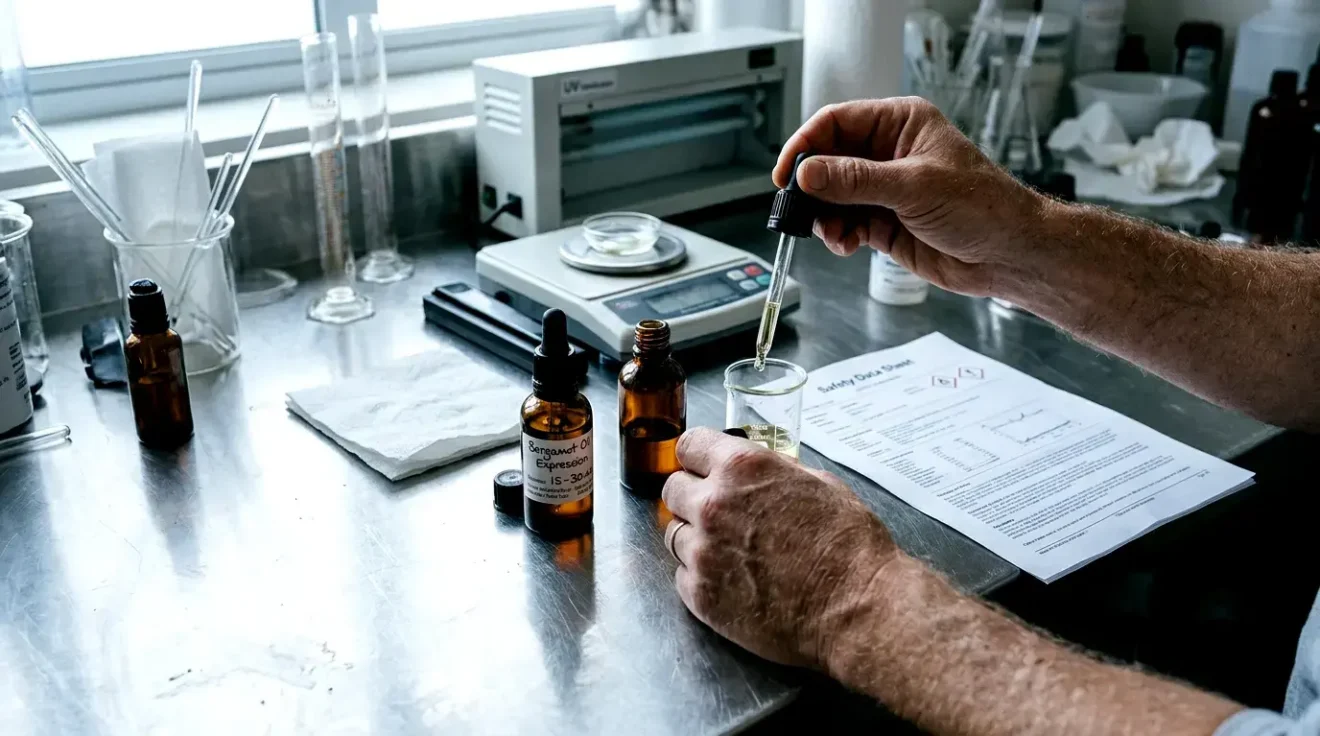
The distinction should be verified through supplier documentation rather than inferred from a product name. The relevant information includes the actual material specification, analytical documentation and applicable restrictions for the intended product category.
The IFRA guidance for the use of fragrance safety standards identifies expressed bergamot and other citrus materials among ingredients requiring phototoxicity risk management. Its guidance explains why restrictions can apply to products used on body areas reasonably likely to be exposed to sunlight.
IFRA is an international fragrance industry organisation, not a government regulator. Its standards provide an important professional reference, but they do not replace applicable national cosmetic legislation. The cited guidance relates to the 51st Amendment notified in June 2023; formulators working in 2026 should consult the current applicable standards rather than assume that an older guidance document contains every current restriction.
Concentration matters because phototoxicity risk is assessed in relation to the amount of relevant constituents in the finished product and the category of use. It would therefore be inaccurate to claim that every amount of expressed bergamot is necessarily dangerous, or that every diluted application is automatically safe.
For natural perfumers developing leave-on products, the appropriate response is to obtain the supplier’s technical and safety documentation, establish the material’s relevant furanocoumarin content and assess the finished formula against current applicable standards. Applying a potentially phototoxic blend only to clothing-covered areas should not replace a proper formulation assessment.
A practical bergamot safety verification checklist
- Identify the extraction method and material designation. Record whether the ingredient is expressed, distilled or processed as FCF.
- Obtain the supplier’s safety data and technical specification. Keep the documents associated with the exact material and batch.
- Check the relevant furanocoumarin information. Record available analytical data, including bergapten content where applicable.
- Identify the intended finished-product category and exposure conditions. Document whether the product is leave-on and likely to be worn in daylight.
- Verify the applicable current IFRA restrictions and national cosmetic requirements. Retain the completed formulation safety assessment before use or sale.
Natural perfumery can make excellent use of bergamot, but the extraction method, analytical information and finished-product concentration must be considered together. Freshness should never come at the expense of responsible skin safety.
When to Reapply a Citrus Fragrance on Hot Days Without Overwhelming Others?
A citrus fragrance may need refreshing more often in hot weather because its volatile constituents can dissipate relatively quickly. However, heat can also make a fragrance feel more pronounced when it is first applied. Reapplying the same quantity used in the morning may therefore produce an unnecessarily strong result, particularly in shared spaces and workplaces.
Temperature influences the behaviour of volatile fragrance materials. In general, warmer conditions can accelerate evaporation, contributing to a shorter-lived opening. At the same time, a fresh application may feel more intense in warm surroundings, especially when the wearer applies several sprays close together.
This creates a practical challenge: a fragrance can become less noticeable to its wearer while remaining perceptible to other people nearby. Repeated exposure to the same scent can also lead to olfactory adaptation, making it difficult to judge its actual intensity objectively.
A useful approach is to treat reapplication as a small adjustment rather than a complete repetition of the morning routine.
- Start with a restrained application. Use an amount appropriate to the fragrance concentration and setting.
- Allow the fragrance to develop. Avoid adding more immediately because the initial impression seems to disappear.
- Consider the environment. Outdoor heat, enclosed transport and air-conditioned offices create different wearing conditions.
- Reduce the quantity during touch-ups. A smaller application may be sufficient to restore a light citrus impression.
- Respect shared spaces. Choose a subtle result rather than trying to make the fragrance continuously noticeable to everyone.
Application location also deserves attention. Pulse points are traditional fragrance application areas, but their warmth can influence the development of a composition. Clothing can offer another option when the fragrance formulation is suitable for fabric use. Before applying perfume to a garment, check whether its ingredients may stain, discolour or damage the material.
Direct application of citrus products to freshly sun-exposed skin requires particular caution. This is especially important when the formulation contains expressed citrus oils with phototoxic constituents. Reapplication should never be used as a reason to disregard the product’s safety instructions.
Concentration and format also influence the experience. A light cologne may suit a person who prefers occasional refreshing applications, while a stronger fragrance concentration may require greater restraint in hot weather. An oil-based product can have a different release profile, but it should not automatically be considered safer or more suitable for repeated application.
The social dimension is equally important. On public transport, in meeting rooms and in shared workplaces, a fragrance that feels pleasantly subtle to its wearer may be much more noticeable to someone sitting nearby. A good daytime fragrance should complement the environment rather than dominate it.
There is no universal reapplication interval suitable for every citrus composition, concentration or climate. The most considerate strategy is to use the smallest effective amount, follow the product’s safety guidance and accept that a refreshing fragrance does not need to remain continuously prominent.
Key Takeaways Before Choosing a Daytime Citrus Fragrance
- Citrus freshness depends on the balance between volatile top notes and the materials supporting the fragrance’s later development.
- Formulation choices matter: a balanced lemon-and-mandarin composition or a grapefruit-based blend can create different experiences of freshness.
- Daytime suitability involves more than scent character. Phototoxicity, oxidation, product concentration and considerate reapplication all deserve attention.
How to Improve the Balance Between Fresh and Resinous Notes in Natural Perfume?
Resinous materials can help a natural citrus perfume develop a warmer and more persistent character after its initial brightness begins to fade. Frankincense, benzoin and labdanum offer different aromatic profiles that can complement fresh citrus notes. The key is restraint: the supporting base should give the composition continuity without suppressing the sparkling character that makes citrus appealing.
Resins are valued in natural perfumery for their distinctive aromatic complexity and their contribution to the base of a composition. Frankincense can introduce an aromatic, balsamic quality, benzoin often contributes a sweeter, warm impression, and labdanum can create a deeper, ambery character.
When combined with bergamot, lemon or mandarin, these materials can create a more layered olfactory experience. Instead of presenting freshness as an isolated opening, the composition develops towards a warmer aromatic structure.
However, adding resin does not automatically guarantee a longer-lasting citrus impression. The effect depends on the complete formulation, the materials used and their relative proportions. A resin may support the overall development of a fragrance without preventing the most volatile citrus constituents from evaporating.
The main formulation challenge is avoiding excessive heaviness. Too much benzoin, labdanum or another dense base material can make a light daytime fragrance feel sweet, balsamic or overly warm. This can undermine the very freshness that the composition was designed to preserve.
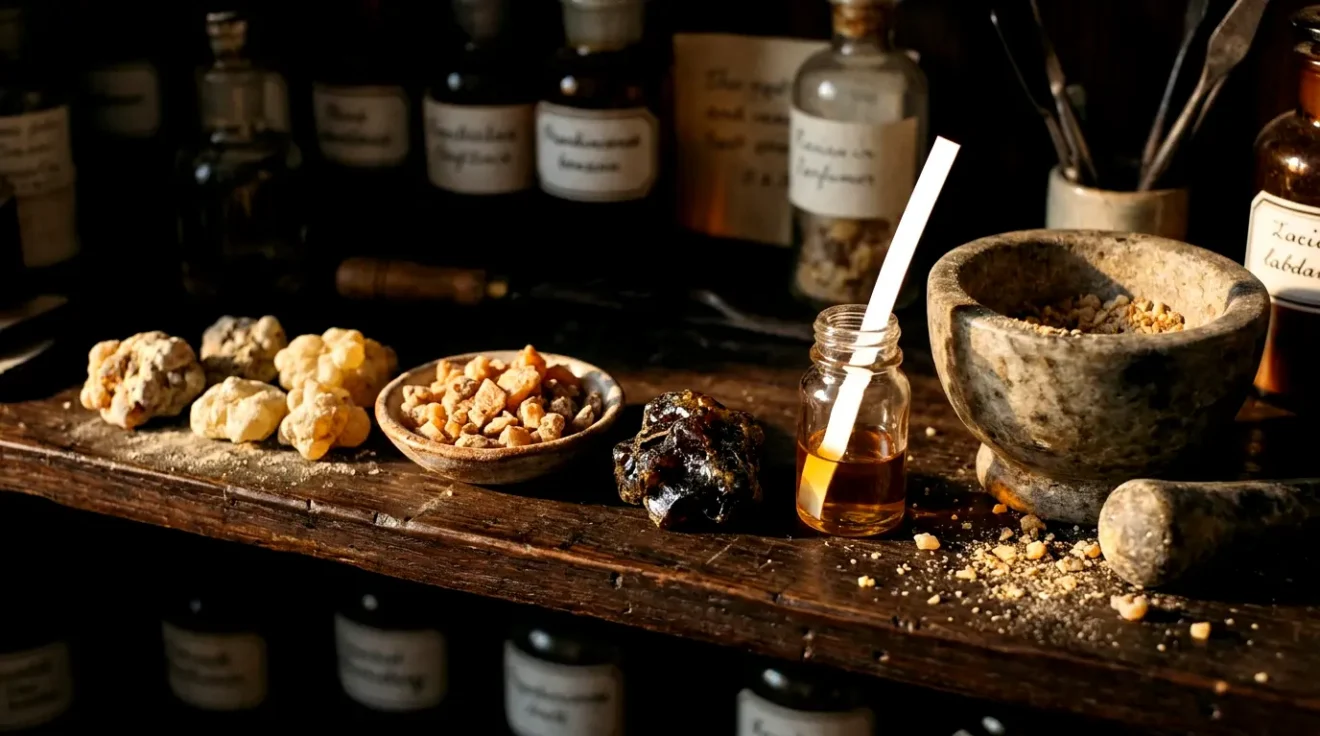
A controlled blending method makes the process easier to evaluate. Start with the intended citrus character and introduce the resinous component in small increments. Keep a written record of each adjustment so that differences between trials can be attributed to the formulation rather than memory alone.
Evaluate the result at several stages:
- Immediately after application: Check whether the citrus opening remains recognisable and sufficiently bright.
- After approximately 30 minutes: Observe whether the transition towards the heart and base feels balanced.
- After approximately one hour: Evaluate whether the resinous character supports the composition or has become too dominant.
These intervals are practical evaluation points, not scientifically established longevity standards. They provide a consistent framework for comparing small formulation trials.
Different resins also create different stylistic directions. Frankincense can work well when an aromatic, dry impression is desired. Benzoin is useful when a softer, sweeter warmth is appropriate, while labdanum can add a deeper, more pronounced base character. The choice should be guided by the intended fragrance rather than the assumption that every citrus perfume needs the same fixative.
Another consideration is the overall balance between fresh, floral, woody and resinous materials. Petitgrain and neroli can help create continuity between the citrus opening and the deeper elements. This approach can be more effective than trying to solve every longevity issue by adding increasingly large quantities of resin.
The most successful natural compositions preserve contrast. A bright citrus opening followed by a subtle aromatic heart and a restrained resinous base can feel more sophisticated than a fragrance in which every component competes for attention.
The purpose of a resinous foundation is to support the fragrance’s evolution, not to eliminate the transient nature of citrus. A carefully balanced composition can retain its refreshing identity while gaining depth and aromatic continuity.
Why Solvent-Free Botanical Extracts Are Not Automatically Safer for Skin
A botanical extract is not automatically safe for skin simply because it is natural or produced without conventional solvents. Essential oils and other botanical materials contain biologically active compounds that can cause irritation, allergic sensitisation or phototoxic reactions under particular conditions. Their safety depends on their chemical composition, concentration, quality, processing and intended use.
The distinction between extraction method and skin safety is fundamental. A solvent-free process may be desirable for certain production objectives, but it does not remove every naturally occurring constituent associated with skin reactions.
Citrus oils illustrate this point particularly clearly. Some expressed citrus oils contain furanocoumarins associated with phototoxicity. Other constituents can also present sensitisation concerns, depending on their chemical structure, concentration and condition.
Oxidation introduces another important consideration. Certain fragrance terpenes, including limonene and linalool, can undergo chemical changes when exposed to air. The oxidation products of these compounds have been associated with allergic contact reactions.
The European Commission’s Scientific Committee on Consumer Safety discusses these mechanisms in its scientific opinion on fragrance allergens in cosmetic products. The opinion reports clinical observations involving oxidised fragrance terpenes, including D-limonene and linalool. These findings concern selected dermatological populations and should not be interpreted as estimates of allergy prevalence among the general population.
Oxidation is particularly relevant to citrus materials because many essential oils contain substantial quantities of unsaturated volatile constituents. Exposure to air and light can contribute to deterioration over time, potentially changing both the fragrance profile and the material’s safety characteristics.
Appropriate storage therefore supports more than fragrance quality. For citrus essential oils, sensible precautions include:
- Keeping containers tightly closed to limit unnecessary air exposure.
- Protecting materials from direct light.
- Following the supplier’s recommended storage temperature.
- Avoiding unnecessarily large amounts of air in partially filled containers.
- Recording purchase, opening and batch information to support traceability.
These measures help manage avoidable exposure to conditions associated with deterioration, but they do not guarantee that an oxidised material will become safe again or establish a universal shelf life for every citrus oil.
Ingredient verification is equally important. A responsible buyer or formulator should look beyond claims such as natural, pure, organic or solvent-free. Such descriptions do not independently establish the absence of allergens, phototoxic constituents or other potential hazards.
Useful supplier information includes the botanical identity, plant part, extraction method, batch identification, production information, technical specification, safety data and relevant allergen documentation. Where necessary, analytical information should be requested to clarify the composition of the actual material.
It is also important to distinguish between the safety of an ingredient and that of the finished cosmetic product. An essential oil may be suitable for a particular application at an assessed concentration while remaining unsuitable for another product category or exposure condition.
Natural materials offer considerable creative possibilities, but responsible formulation requires evidence, traceability and attention to the way ingredients change over time. The absence of synthetic solvents is only one production characteristic, not a complete safety assessment.
Is Eau de Cologne the Right Fragrance Format for Hot Weather and Everyday Wear?
Eau de Cologne is often a suitable format for hot weather because its traditional style emphasises a relatively light, fresh and short-lived fragrance experience. Citrus materials fit this approach particularly well: their volatile character creates an immediate impression of freshness without requiring the composition to remain intense throughout the day. Whether it is the right choice depends on the desired concentration, formulation and wearing environment.
The historical association between cologne and citrus reflects a particular approach to perfumery. Traditional cologne compositions are often built around bright citrus materials and supporting aromatic ingredients, creating a clean and relatively uncomplicated opening.
Unlike a fragrance designed primarily for strong projection and extended wear, a light cologne can be appreciated for its temporary character. Its appeal lies in offering a refreshing aromatic experience that does not necessarily need to remain prominent for many hours.
Concentration is one part of this distinction. Eau de Cologne generally refers to a lighter fragrance concentration than stronger formats, although exact concentrations and product definitions vary between brands and markets. The designation alone does not establish the precise composition, safety or expected longevity of an individual fragrance.
In hot weather, a lighter composition may feel more comfortable than a dense fragrance with a pronounced sweet, resinous or woody structure. However, temperature affects perception and evaporation in different ways, and a strong citrus fragrance is not automatically unsuitable for summer.
The choice becomes clearer when comparing the main wearing characteristics of different formats.
| Format | Typical wearing character | Potential advantage | Consideration |
|---|---|---|---|
| Eau de Cologne | Light and refreshing | Suitable for a short, bright fragrance experience | May require refreshing applications |
| Eau de Toilette | Moderate fragrance intensity | Can offer a balance between freshness and presence | Actual performance depends on formulation |
| Eau de Parfum | Often more concentrated | Can provide a more pronounced fragrance experience | May feel more noticeable in hot conditions |
| Oil-based fragrance | Carrier-dependent release and skin feel | Offers an alternative application format | Does not guarantee longer wear or greater skin safety |
These categories describe common tendencies rather than fixed technical rules. Fragrance concentration, ingredient selection and formulation can produce considerable differences between products carrying the same designation.
For someone who enjoys bergamot, lemon or sweet orange, a cologne-style composition can be particularly appealing in the morning. Its light character makes it suitable for everyday situations where a strong fragrance presence is unnecessary.
For longer wear, a composition with a carefully constructed heart and base may be preferable. Petitgrain, neroli, light woody notes and restrained resins can contribute aromatic continuity while preserving the citrus character. However, a stronger concentration is not always the best answer, especially when the fragrance will be worn in high temperatures or shared indoor environments.
Skin safety remains essential regardless of the chosen format. A lower fragrance concentration does not automatically remove phototoxicity or allergen concerns. Expressed bergamot and other potentially phototoxic citrus materials still require appropriate assessment, while oxidised ingredients should not be treated as harmless simply because they are used in a cologne.
For natural fragrance enthusiasts, the most useful selection criteria are therefore:
- The desired sensory character: sharp, sparkling, juicy, floral or warm.
- The fragrance concentration and expected intensity.
- The balance between volatile citrus notes and supporting materials.
- The suitability of the formulation for the intended application and sun exposure.
- The practical environment in which the fragrance will be worn.
Ultimately, Eau de Cologne can be an excellent choice for warm-weather and everyday fragrance when its lightness is treated as an advantage rather than a weakness. A refreshing daytime scent is not defined by how long it remains powerful, but by how well its composition, concentration, safety profile and application suit the person wearing it. Exploring citrus materials through careful blotter evaluation and responsible formulation is a practical way to discover that balance.
Why do citrus perfumes smell stronger immediately after application?
Citrus perfumes often contain volatile aromatic compounds that create an immediate, noticeable opening. As these compounds evaporate, the fragrance changes composition and its initial brightness becomes less prominent. This is a normal part of fragrance development rather than necessarily an indication of poor quality or adulteration.
Which citrus essential oil is best for a refreshing daytime perfume?
The best choice depends on the desired character. Lemon offers a sharp and sparkling impression, bergamot combines brightness with aromatic complexity, mandarin introduces softer sweetness, grapefruit creates a tart and crisp character, and sweet orange brings a warmer, juicier quality. The overall formulation determines how these materials perform together.
Can bergamot essential oil be used in a daytime perfume?
Yes, but the extraction method and furanocoumarin content matter. Expressed bergamot may contain phototoxic constituents, including bergapten, which can cause reactions when skin is exposed to ultraviolet radiation. FCF or appropriately processed bergamot can be considered as an alternative, but the supplier documentation, finished-product concentration and applicable safety restrictions must still be assessed.
How can a natural citrus perfume last longer without losing its freshness?
A natural citrus composition can be given greater aromatic continuity through a carefully balanced heart and base. Petitgrain, neroli, light musks and selected resinous materials such as frankincense or benzoin can support its development. The proportions should remain restrained so that the base does not overwhelm the sparkling citrus opening.
Are natural citrus oils safer than synthetic fragrance ingredients?
Not automatically. Natural citrus oils can contain phototoxic constituents and fragrance allergens, and some of their components can form sensitising oxidation products during storage. Safety depends on the ingredient’s composition, quality, concentration, condition and intended use. Supplier documentation and an appropriate finished-product safety assessment are more meaningful than whether an ingredient is labelled natural or synthetic.