
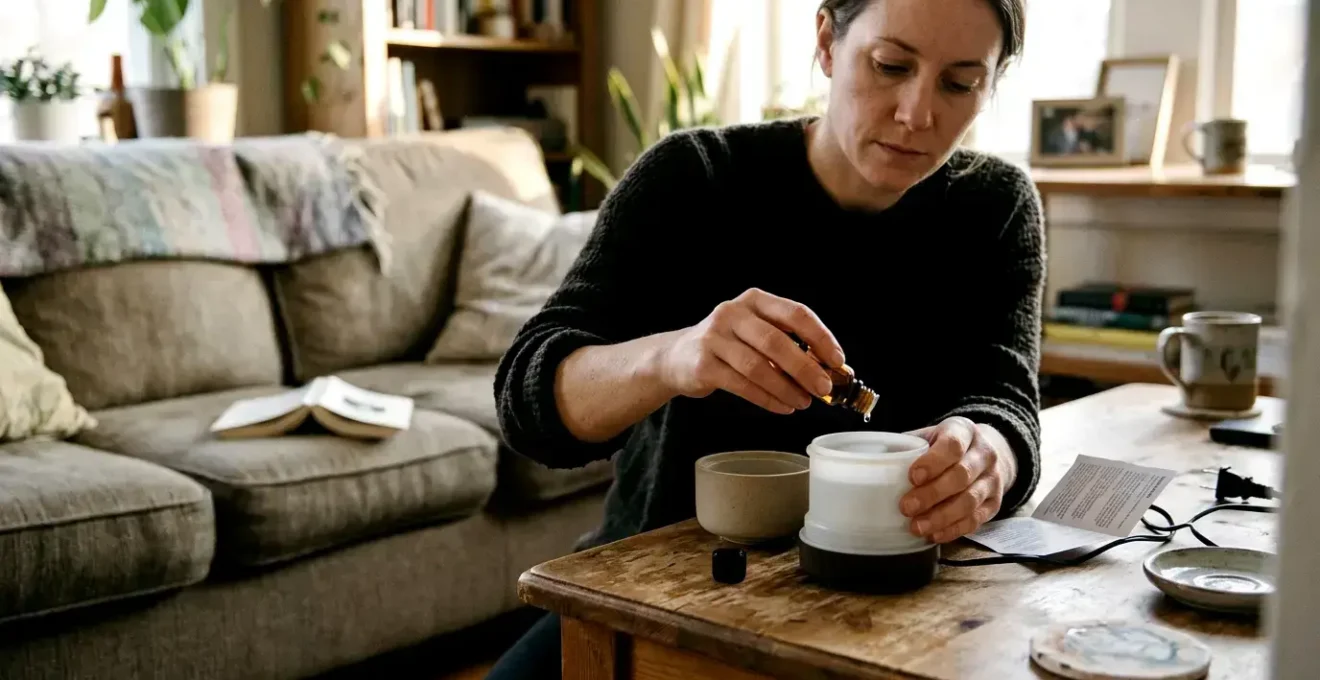
Aromatherapy can support everyday relaxation by making familiar, pleasant scents part of a calming routine. Smell is closely connected to brain regions involved in emotion and memory, which helps explain why an aroma can bring an immediate sense of familiarity or comfort. However, this does not mean essential oils treat anxiety, improve mental health conditions or replace established approaches to managing stress.
The most realistic way to approach aromatherapy is as a complementary wellbeing practice. A short diffusion session, a familiar bedtime fragrance or a quiet moment with an aroma stone may help create a more intentional transition between activities. The experience is personal: a scent that one adult finds comforting may feel overwhelming or unpleasant to someone else.
Scientific research offers encouraging but qualified findings. A 2023 systematic review examined clinical studies involving inhaled aromatherapy, but differences in methods, essential oils and dosages limit how confidently those findings can be applied to everyday home use. Practical decisions should therefore consider both the potential enjoyment of aromatherapy and its safety boundaries, particularly around respiratory sensitivities, pets and skin exposure.
Everyday Aromatherapy: The Essential Points
- A familiar aroma may encourage relaxation through emotional associations, memory and the calming context in which it is experienced.
- Short, intermittent and low-intensity diffusion is generally more sensible than continuously scenting an enclosed room.
- Essential oils are not automatically harmless because they are natural. Respiratory sensitivities, animal exposure and contact allergies deserve particular attention.
- Why Can a Familiar Aroma Feel Calming During a Stressful Day?
- How to Use an Essential Oil Diffuser in a Small Room Without Overdoing It?
- Aroma Stone or Electric Diffuser: Which Suits a Small Home Office?
- Why Essential Oil Diffusion Needs Extra Caution Around Pets and Asthma?
- When Should You Take a Break From Diffusing Essential Oils Indoors?
- How to Create a Gentle Bedtime Aroma Ritual Without Applying Essential Oils to Skin?
- Why Botanical Perfumes Can Still Cause Allergic Skin Reactions
- How to Build a Holistic Wellness Routine That Fits a Busy Working Week?
Why Can a Familiar Aroma Feel Calming During a Stressful Day?
A familiar aroma can feel calming because the sense of smell has direct connections with brain networks involved in emotion, memory and behavioural responses. When a scent is associated with pleasant experiences, encountering it again may bring back some of the feelings linked to those moments. This can make an ordinary fragrance feel comforting during a demanding day, although it does not establish that an essential oil has a medical effect.
When airborne aromatic molecules enter the nose, they interact with olfactory receptors. These receptors send signals to the olfactory bulb, which processes smell information and communicates with other brain regions, including the amygdala and hippocampus. These structures are involved in emotional processing and memory formation.
This connection helps explain why a particular aroma can trigger a response before someone has consciously identified the fragrance. The smell of lavender might remind one person of a relaxing evening, while another associates it with an entirely different experience. The emotional response depends partly on personal history rather than simply on the botanical origin of the oil.
Learned associations offer another plausible explanation. If the same pleasant scent regularly accompanies a bath, quiet reading or an evening without screens, the brain may gradually associate that aroma with the surrounding restful context. Eventually, encountering it can become a familiar cue that signals a transition away from work or daily demands.
Expectation and context also matter. Research on aromatherapy for relaxation often reports positive outcomes, but the findings are not uniform. The experience of taking a deliberate pause, choosing a pleasant fragrance and creating a peaceful environment may contribute to the perceived benefit. This does not make the experience meaningless. Enjoyment, attention and a comforting routine are legitimate elements of everyday wellbeing.
A 2023 systematic review published in Complementary Therapies in Clinical Practice examined 76 studies involving 6,539 patients across 15 countries. More than 70% of the included studies reported positive anxiety-related outcomes following inhalation aromatherapy. However, the authors identified methodological heterogeneity, potential bias and inconsistent reporting of essential-oil dosages. These findings concern clinical settings, not a guarantee of relaxation at home. The review also does not establish that essential oils treat anxiety disorders.
76 studies · 6,539 patients
The 2023 systematic review covered clinical inhalation aromatherapy research conducted between 2000 and 2021 in 15 countries. Its results are encouraging but cannot be directly translated into a predictable benefit from everyday home diffusion.
Evidence: Systematic review of inhalation aromatherapy in clinical settings.
A simple personal experiment can help establish whether an aroma has become a useful relaxation cue. Choose a fragrance that is already enjoyable and use it consistently during genuinely restful moments for a couple of weeks. Keep the exposure gentle and notice whether the scent itself begins to evoke a sense of familiarity or calm.
Pay attention to the circumstances as well as the fragrance. If the experience feels pleasant only when the room is quiet and work has finished, the surrounding ritual may be just as important as the aroma. There is no need to increase the intensity or change essential oils to chase a stronger response.
Once the association has been established, the next practical question is how to introduce scent into a room without making the experience overwhelming.
How to Use an Essential Oil Diffuser in a Small Room Without Overdoing It?
Using an essential oil diffuser in a small room requires a restrained approach: begin with a low quantity of oil, use shorter sessions, allow fresh air to circulate and take regular breaks. The objective is a subtle aroma rather than a continuously scented environment. If the fragrance causes discomfort or becomes unpleasant, switch the device off and ventilate the room.
Small rooms present a particular challenge because their limited air volume can make a fragrance feel more concentrated. A diffuser placed near a desk, sofa or bed may also create a noticeable local exposure even when the rest of the room smells relatively mild.
A practical starting method is to follow the manufacturer’s instructions while choosing the lowest reasonable operating intensity and a shorter initial session. Device designs vary, so there is no universal number of drops or diffusion duration that can be described as safe for every essential oil, diffuser and room.
Intermittent operation is generally more sensible than leaving a diffuser running continuously. Pause between sessions and allow the room to air. Opening a window when outdoor conditions permit or keeping the door open can help reduce the persistence of fragrance in an enclosed environment.
One important detail is olfactory adaptation. After repeated exposure, the nose may become less sensitive to a particular fragrance. The scent can seem to disappear even though aromatic compounds remain in the air. Adding more oil because the fragrance is no longer noticeable can therefore increase exposure without improving the experience.
Instead, switch off the device and avoid topping up the oil simply to restore the original intensity. When preparing another session, refresh the water and oil according to the diffuser manufacturer’s instructions rather than adding successive quantities to the existing mixture.
Personal tolerance is a better reason to stop than the assumption that a fragrance must be strong to be effective. Possible warning signs include:
- A headache developing during or after diffusion.
- Irritation of the nose, throat or airways.
- Nausea, dizziness or an unpleasant feeling of heaviness.
- A fragrance that becomes distracting or no longer enjoyable.
- Coughing, wheezing or breathing discomfort.
These reactions should not be treated as something to overcome through repeated exposure. Turn the device off, move away from the scented area and ventilate the room. Anyone experiencing persistent or significant breathing symptoms should seek appropriate medical advice.
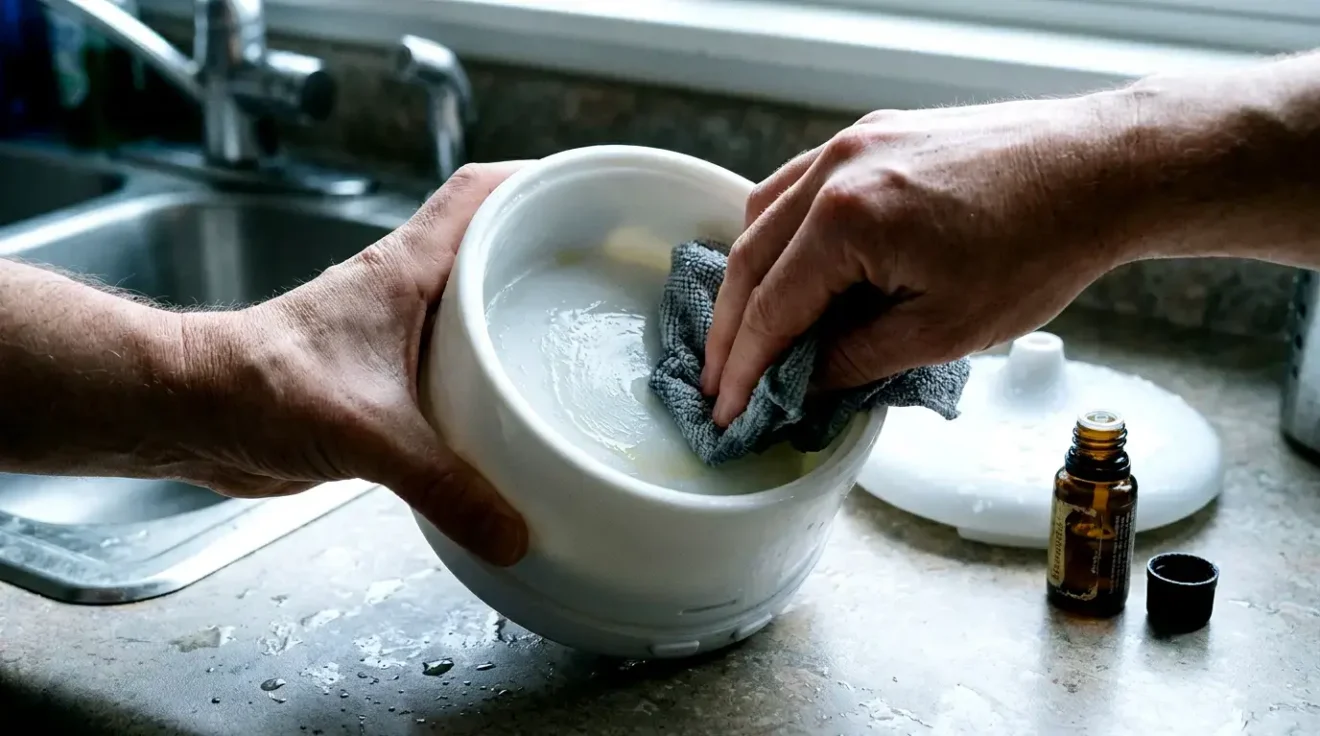
Regular maintenance also matters. Follow the manufacturer’s cleaning instructions, empty the tank when appropriate and avoid leaving stagnant water or oil residues inside the device. Residue can affect fragrance quality and make cleaning more difficult over time.
Once the basic principles of low-intensity diffusion are understood, choosing the right device becomes a question of convenience, room coverage and personal preferences.
Aroma Stone or Electric Diffuser: Which Suits a Small Home Office?
An aroma stone is generally better suited to someone who wants a simple, localized fragrance without electricity or equipment maintenance. An electric diffuser offers greater room coverage and, depending on the model, adjustable operation and timing. For a small home office, the better choice depends on whether simplicity or greater control is the priority.
An aroma stone usually works through passive evaporation. A few drops of essential oil are absorbed into its porous surface and gradually released into the surrounding air. It does not require a power supply, produce an operating noise or contain a water tank that needs cleaning.
Its main limitation is reach. The fragrance is usually more noticeable close to the stone, and there is no built-in intensity control. The scent gradually fades as the volatile components evaporate, although the remaining fragrance can vary according to the material, oil and surrounding conditions.
An electric diffuser is designed to disperse fragrance more widely. Ultrasonic models use water and vibration to release a fine mist, while other designs use different diffusion mechanisms. Some offer adjustable output, timers or intermittent settings. These features can make it easier to adapt operation to a particular room and working schedule.
The trade-off is additional upkeep. An ultrasonic diffuser requires regular cleaning because water and oil residues can accumulate inside its tank. It also occupies desk or shelf space, needs electricity and may produce a low operating hum that becomes noticeable during concentration-heavy tasks or video calls.
The following comparison highlights the practical differences rather than suggesting that one device is universally superior.
| Criterion | Aroma Stone | Electric Diffuser |
|---|---|---|
| Scent reach | Localized, usually best near the stone. | Can distribute fragrance across a larger area, depending on the model. |
| Duration | Gradual passive evaporation; depends on the material and oil. | Depends on the operating mode, tank and device settings. |
| Intensity control | No built-in adjustment. | Some models offer adjustable output and timers. |
| Noise | Silent operation. | May produce a gentle mechanical or ultrasonic operating sound. |
| Electricity | Not required. | Required for powered operation. |
| Cleaning | Minimal equipment maintenance, although the stone may retain fragrance. | Regular cleaning is necessary, particularly for ultrasonic models. |
| Cost of use | No electricity consumption; oil replacement depends on use. | Includes electricity where applicable, maintenance and essential oils. |
Workspace habits should influence the decision. In a shared office or a room frequently used for video calls, a discreet aroma stone may be less intrusive. A private office occupied by one person offers more flexibility for occasional electric diffusion, provided the fragrance remains comfortable and does not affect other household members.
Neither option should be treated as automatically safe for every indoor environment. Passive diffusion can still release fragrance into the air, while electric devices may disperse compounds more actively. The distinction is practical rather than a guarantee of respiratory safety.
For anyone who dislikes maintenance, the simplicity of an aroma stone can outweigh the broader coverage of an electric diffuser. Conversely, someone who values adjustable operation may find that an electric model offers more control, provided its cleaning requirements are manageable.
Device choice becomes especially important in shared homes, where an otherwise pleasant aroma can affect people or animals who have not chosen to be exposed to it.
Why Essential Oil Diffusion Needs Extra Caution Around Pets and Asthma?
Essential oil diffusion requires additional caution around pets and people with asthma because airborne fragrances can affect respiratory systems differently. Cats and birds are particularly vulnerable to certain exposure pathways, while fragranced air can trigger symptoms in some people with sensitive airways. The sensible approach is to avoid exposing vulnerable household members and provide an accessible fragrance-free environment.
Essential oils contain concentrated volatile compounds. Their biological effects depend on the particular substances, exposure route, concentration and duration. An aroma that seems mild to a person does not necessarily represent the same level of exposure for an animal living in the same environment.
Cats deserve particular consideration. Their ability to metabolize certain compounds through glucuronidation is limited, and essential-oil exposure can occur through inhalation, contact with contaminated surfaces or grooming after substances settle on their fur.
Birds are also especially vulnerable because of their highly specialized respiratory physiology. Airborne fragrances and aerosolized particles can create respiratory concerns even when people in the same room do not notice any immediate discomfort.
The type of diffuser also matters. Active ultrasonic and nebulizing devices can release tiny oil-containing droplets into the surrounding environment. These droplets may settle on fur or feathers, creating an additional route of exposure through contact and subsequent grooming or preening.
Professional veterinary guidance from the Merck Veterinary Manual discusses essential-oil toxicity in companion animals, including cats, dogs and birds. Its prevention advice emphasizes keeping animals away during diffusion and ventilating the room afterwards. The publication also provides veterinary guidance recommending diffusion periods of less than 30 minutes in its prevention context. This should not be interpreted as a universally validated safe exposure limit for every animal, oil or device.

A person can choose to leave a scented room, but a household animal cannot necessarily make the same decision. This is why relying on an open door or a separate shelf is insufficient as a general safety strategy. A pet should have access to an environment that remains free from intentional fragrance exposure.
For households with animals, avoiding diffusion in rooms where pets sleep, eat or spend most of their time is a prudent starting point. If diffusion is considered elsewhere, animal access should be prevented and the area ventilated afterwards. Even these measures do not guarantee that exposure is harmless, particularly for birds and sensitive animals.
Asthma requires a slightly different but equally careful approach. Fragrances, whether natural or synthetic, can contribute to indoor air pollution and provoke symptoms in some individuals. The American Lung Association identifies possible reactions including headaches, dizziness, irritation of the eyes, nose and throat, coughing, wheezing and shortness of breath.
People with asthma do not all react identically to every fragrance. Some may tolerate particular scents, while others experience symptoms with relatively low exposure. A person’s established triggers and preferences should take priority over assumptions that essential oils are inherently gentle.
For households where someone has asthma, the most cautious option is to avoid diffusion in shared indoor spaces unless the person concerned is comfortable with the arrangement and has considered their individual triggers. Anyone who experiences coughing, wheezing or breathing difficulty should leave the exposure area and stop the diffusion. Significant or persistent respiratory symptoms warrant medical attention.
For animals, stop diffusion immediately if coughing, breathing changes, unusual lethargy or behavioural changes appear. Contact a veterinarian for advice, particularly if exposure is suspected. Do not assume that the absence of visible symptoms means every exposure is harmless.
Even in households without obvious sensitivities, continuous fragrance exposure can become unnecessary or unpleasant, making periodic breaks an important part of responsible indoor use.
When Should You Take a Break From Diffusing Essential Oils Indoors?
A break from indoor essential-oil diffusion is sensible when the fragrance becomes persistent, the room feels uncomfortable or the same amount of oil no longer produces the experience you want. Pausing also allows time to ventilate the space, clean the device and reassess whether regular diffusion is still serving a useful purpose.
One reason for taking a break is olfactory adaptation. Repeated exposure can make the nose less responsive to a particular aroma, even though the fragrance remains present in the environment. This can create the impression that the diffuser needs more oil or longer operating sessions.
Increasing the quantity is not necessarily the answer. A fragrance that is no longer noticeable to its regular user may remain obvious to visitors or other household members. Continuing to increase the output can turn a pleasant ritual into a persistent indoor exposure.
Another consideration is the accumulation of residues. Some aromatic compounds can settle on fabrics and other surfaces. Curtains, cushions, bedding and clothing may retain fragrance after the diffuser has been switched off. This can make it difficult to identify where a persistent smell is coming from.
Several observable signs suggest that it is time to pause:
- The same fragrance seems weaker: stop increasing the oil quantity and allow your sense of smell to recover.
- The aroma lingers on fabrics: air the room and wash affected textiles when appropriate.
- The room develops a persistent fragrance: stop diffusion and ventilate before considering another session.
- A stuffy nose or dull headache appears: discontinue exposure and assess whether the fragrance is contributing to discomfort.
- The ritual feels like background noise: take a break instead of treating continuous scent as a necessary part of the environment.
Periodic pauses also protect the psychological value of the ritual. If an aroma is present all day, every day, it may become part of the background rather than a distinctive signal associated with a restful moment. Occasional use can preserve the contrast between ordinary working time and an intentional break.
Cleaning is another reason to interrupt the routine. Ultrasonic diffusers should be maintained according to their manufacturer’s instructions. Emptying the tank, removing accumulated residue and allowing components to dry as directed can help prevent maintenance problems.
Room maintenance matters too. Ventilate regularly when outdoor conditions allow, and wash textiles that retain fragrance. Otherwise, the environment itself may continue releasing aromatic compounds after the device has been switched off.
There is no universal schedule that every household must follow. The appropriate frequency depends on the diffuser, room size, oil, household sensitivities and how the space is used. A pause should also be immediate when someone develops respiratory or other unwanted symptoms.
For people who particularly enjoy scent in the evening, the next step is to create a bedtime routine that does not depend on continuous exposure or direct skin application.
Key Considerations Before Creating a Bedtime Aroma Ritual
- Choose an exposure method that does not require applying concentrated essential oils to the skin.
- Keep the bedroom fragrance subtle and avoid continuous overnight diffusion.
- Use a consistent evening sequence rather than increasing fragrance intensity to pursue a stronger effect.
How to Create a Gentle Bedtime Aroma Ritual Without Applying Essential Oils to Skin?
A gentle bedtime aroma ritual can be created without applying essential oils directly to the skin. Passive aroma stones, carefully positioned scent sources or a brief pre-bedtime diffusion session can introduce a familiar fragrance while avoiding direct topical exposure. The safest approach for sensitive sleepers is to keep the aroma subtle, avoid continuous overnight diffusion and never place concentrated oils where the face rests.
A small aroma stone or passive diffuser can offer a localized fragrance without requiring an electrical device. Placing it away from the pillow and breathing area may help keep the scent less intrusive. However, passive diffusion still releases aromatic compounds into the room, so it should not be assumed to eliminate inhalation exposure.
An electric diffuser provides another option. Rather than leaving it running through the night, consider a brief session before bedtime and switch it off before sleeping. Continuous overnight exposure offers no established additional relaxation benefit and can become uncomfortable for people who are sensitive to fragrances.
For anyone who prefers not to use a diffuser, a few drops on a tissue positioned away from the pillow may provide a localized scent. The tissue should be placed where it cannot touch the face, bedding or skin. Keep concentrated oil bottles securely closed and out of reach of children and pets.
A lightly scented linen spray is another possible alternative, but it needs particular restraint. Spraying bedding introduces fragrance close to the nose for an extended period. Even when the product is marketed for textiles, its ingredients can still be inhaled, and some formulations may cause skin or respiratory irritation.
Similarly, bedding washed with a familiar fragranced laundry product may carry a subtle scent. However, people with sensitive skin or airways may prefer fragrance-free laundry products. A scent-free bedroom can be equally suitable for a restful bedtime routine.
The most useful element is often consistency rather than the particular essential oil. Repeating a short sequence each evening, such as dimming the lights, putting away electronic devices and reading for a few minutes, creates a recognizable transition towards sleep.
If the same pleasant fragrance is occasionally included in that sequence, it may gradually become associated with the evening routine. This uses the same learned-association mechanism described earlier without requiring any claim that the oil itself induces sleep or treats insomnia.
Nighttime exposure deserves extra caution because people spend several uninterrupted hours in a bedroom, often with windows and doors closed. A fragrance that seems pleasant during a short daytime session may become distracting when experienced continuously throughout the night.
For that reason, avoid applying essential oils directly to pillows or sheets, especially in areas where the face rests. Concentrated products can remain in contact with skin and may release fragrance close to the breathing zone for extended periods.
Anyone sharing a bedroom with another person should also consider their preferences and sensitivities. The same applies to households with pets: the sleeping environment should remain appropriate for every occupant rather than being designed solely around one person’s fragrance preferences.
Because inhaling fragrance and applying it to the skin involve different exposure routes, the final safety distinction concerns botanical perfumes and their potential to cause allergic reactions.
Why Botanical Perfumes Can Still Cause Allergic Skin Reactions
Botanical perfumes can cause allergic skin reactions because natural plant extracts contain fragrance molecules capable of sensitizing the immune system. A product’s botanical origin does not guarantee that it is hypoallergenic or suitable for every skin type. Some fragrance substances, including linalool and limonene, are recognized contact allergens, particularly when susceptible ingredients undergo oxidation over time.
The word natural describes where an ingredient comes from, not how the human body will respond to it. Essential oils and botanical fragrance extracts can contain numerous aromatic compounds, some of which are also used in conventional perfumery.
Linalool and limonene are examples of fragrance ingredients that can become associated with allergic contact dermatitis. Oxidation during storage and exposure to air can change certain fragrance substances and increase their sensitizing potential. This is one reason why the age and storage conditions of a fragranced product matter.
Allergic contact dermatitis is different from simple irritation. Irritant reactions can occur when a substance directly damages or disrupts the skin barrier. Allergic contact dermatitis involves an immune response following sensitization to a particular substance.
Symptoms may include delayed redness, itching, swelling and small bumps around the area where a product was applied. The reaction can appear after a delay rather than immediately. In some cases, symptoms become noticeable one or two days after exposure.
A botanical perfume can therefore cause a reaction even when it contains no synthetic fragrance ingredients. Likewise, someone who enjoys inhaling an aroma may still react when the same fragrance materials are applied to the skin.
Exposure route matters. Inhalation and topical application are not interchangeable. Skin exposure introduces ingredients into direct contact with the skin barrier, while inhalation involves respiratory exposure. Each route has its own potential risks and sensitivities.
Someone who tolerates a fragrance in a ventilated room may reasonably choose not to use a perfume containing that fragrance on their skin. Equally, a person with respiratory sensitivity may prefer to avoid diffusion while having no history of reactions to a particular topical product.
Ingredient labels can help consumers identify potential allergens. However, the exact labelling requirements depend on the market in which a cosmetic product is sold.
In the European Union, Commission Regulation (EU) 2023/1545 expands the individual labelling requirements for specified fragrance allergens in cosmetic products. The regulation establishes individual declaration thresholds of 0.001% for leave-on products and 0.01% for rinse-off products, subject to the applicable transitional provisions.
These requirements are part of the EU Cosmetics Regulation framework and should not be assumed to apply identically in the United States, United Kingdom, Canada, Australia or other English-speaking markets. Consumers should consult the applicable local cosmetic-labelling requirements.
The EU regulation also recognizes that certain fragrance substances can become contact allergens through oxidation or bioactivation. Consequently, a botanical ingredient is not exempt from safety considerations simply because it comes from a plant.
When reading a cosmetic ingredient list, look for recognized fragrance allergen names where individual disclosure is required. A general term such as fragrance or parfum may describe a fragrance composition without revealing every constituent individually, so the label may not provide enough information for someone with a known allergy.
If a product causes a suspected allergic reaction, stop using it and avoid applying additional fragranced products to the affected area. Do not attempt to test a suspected allergen by repeatedly applying it to the skin.
Recurrent reactions deserve professional assessment. A dermatologist can help distinguish allergic contact dermatitis from other skin conditions and may recommend formal patch testing to identify the relevant allergen. Products should also be avoided on damaged or inflamed skin unless a healthcare professional advises otherwise.
For consumers who already know they react to a particular fragrance substance, checking ingredients and seeking appropriate dermatological guidance is more reliable than choosing products based on natural, organic or botanical marketing descriptions.
Once fragrance safety is considered in the context of everyday use, aromatherapy can be placed more realistically within a broader wellness routine that prioritizes sustainable habits.
How to Build a Holistic Wellness Routine That Fits a Busy Working Week?
A holistic wellness routine for a busy working week should prioritize sustainable habits that support everyday functioning, such as regular sleep, movement, nourishing meals and meaningful breaks. Aromatherapy can complement these habits as a simple sensory cue, but it should not replace activities with stronger evidence of broader health benefits or become another obligation on an already crowded schedule.
The most effective way to introduce aromatherapy into an existing routine is to attach it to a transition that already happens every day. Examples include starting the first coffee, closing a laptop after work or preparing for bed. A familiar fragrance can become a small signal that one part of the day is ending and another is beginning.
This approach is more practical than creating an entirely new activity requiring additional time, equipment and planning. Established habits provide natural opportunities for small rituals, making them easier to maintain when the working week becomes demanding.
For example, someone who regularly finishes work at the same desk might choose to close their laptop, put away work materials and take a few minutes for a quiet break. If a pleasant aroma is part of that experience, it becomes an optional cue rather than the main event.
The distinction matters because aromatherapy has limitations. A fragrance cannot compensate for persistent sleep deprivation, replace physical activity or resolve an overwhelming workload. Nor should it be presented as a treatment for anxiety, depression or other medical conditions.
When time and energy are limited, a useful prioritization question is: which habit provides the greatest personally felt benefit for the time invested?
Sleep regularity, appropriate physical activity and opportunities to take breaks deserve particular attention. These practices have stronger established support as components of general health and wellbeing than everyday essential-oil diffusion.
Aromatherapy can still have a place if it makes an existing habit more enjoyable. A short fragrance ritual during a break, for example, may encourage someone to pause rather than continue working without interruption. Its contribution lies in supporting the behaviour, not replacing the behaviour itself.
It is also important to consider practical constraints. A person working in a shared environment may not be able to diffuse essential oils without affecting colleagues. Someone with pets or household respiratory sensitivities may prefer a fragrance-free routine. Others may simply dislike the maintenance associated with electric devices.
In all these situations, the broader wellness routine can continue without aromatherapy. A few minutes of quiet, a walk outside, gentle stretching or an evening without work notifications can provide useful alternatives.
Reviewing the routine every few weeks helps prevent unnecessary complexity. Ask whether each habit still feels useful, whether it is taking more effort than expected and whether it fits the current working schedule.
A simple review can focus on three questions:
- Does the habit make a noticeable and positive contribution to daily life?
- Is it practical to maintain during a particularly busy week?
- Does it remain compatible with personal preferences, health considerations and the needs of other household members?
Five Practical Steps to Build a Sustainable Wellness Routine
- Choose one existing daily transition. Write down a routine already performed consistently, such as making morning coffee or closing the laptop after work. Deliverable: one clearly identified daily anchor.
- Define a realistic wellbeing action. Attach a short activity to that transition, such as taking a quiet break, stretching or preparing for bed. Deliverable: one action that can be completed without additional scheduling.
- Decide whether aromatherapy is appropriate. Check personal fragrance preferences, household sensitivities, pets and available ventilation before introducing an essential-oil product. Deliverable: a clear decision to use a fragrance, choose a fragrance-free alternative or avoid diffusion.
- Set a simple routine. Establish when the activity happens and how it fits into the existing habit without creating a new obligation. Deliverable: a short daily routine with a defined starting point.
- Review the routine regularly. Every few weeks, assess whether it remains useful and remove activities that have become inconvenient or uncomfortable. Deliverable: an updated routine that reflects actual needs rather than idealized expectations.
A sustainable routine should also leave room for change. Workloads fluctuate, household circumstances evolve and personal preferences shift. A practice that feels useful during a quiet period may become inconvenient during a demanding week.
There is no need to maintain every wellness habit indefinitely. Removing an unnecessary activity can be just as valuable as introducing a new one. The objective is a manageable collection of habits that support everyday life rather than a complicated programme that creates additional pressure.
Ultimately, the value of aromatherapy lies in whether a fragrance makes an ordinary moment more pleasant without creating discomfort, unnecessary exposure or unrealistic expectations. A modest, informed approach allows scent to remain an enjoyable part of everyday wellbeing while keeping its limitations clear.
Can essential oils help reduce everyday stress?
Essential oils may contribute to a relaxing experience through pleasant sensory stimulation, personal memories and learned associations. Clinical studies have reported positive anxiety-related outcomes in some settings, but the evidence is heterogeneous and does not establish that essential oils treat anxiety disorders. Everyday benefits are best understood as individual and complementary rather than medical.
How long should an essential oil diffuser run in a small room?
There is no universal safe operating duration for every diffuser, essential oil and room. Follow the manufacturer’s instructions, start with a short, low-intensity session and allow regular breaks with ventilation. Avoid continuous diffusion, particularly in small enclosed rooms. Stop immediately if the fragrance causes headaches, irritation or breathing discomfort.
Is an aroma stone safer than an electric essential oil diffuser?
An aroma stone avoids electricity, water tanks and active mist generation, but it still releases fragrance into the surrounding air. An electric diffuser can provide greater room coverage and adjustable operation, depending on the model. Neither option is automatically safe for people with respiratory sensitivities or households with pets. Room conditions and individual tolerance remain important.
Can essential oil diffusion affect cats and other household pets?
Yes. Some essential oils can be harmful to animals, and cats and birds deserve particular caution. Active diffusers may release oil-containing droplets that settle on fur or feathers, creating additional exposure through contact and grooming. Avoid exposing pets to intentional diffusion, maintain fragrance-free spaces and consult a veterinarian if an animal shows unusual symptoms following suspected exposure.
Can natural perfumes cause allergic contact dermatitis?
Yes. Botanical fragrance ingredients can contain substances such as linalool and limonene that are associated with allergic contact dermatitis. Oxidation can increase the sensitizing potential of certain fragrance compounds. Stop using a product if a suspected reaction develops, and consult a dermatologist if symptoms persist or recur. Natural origin does not guarantee that a perfume is hypoallergenic.