
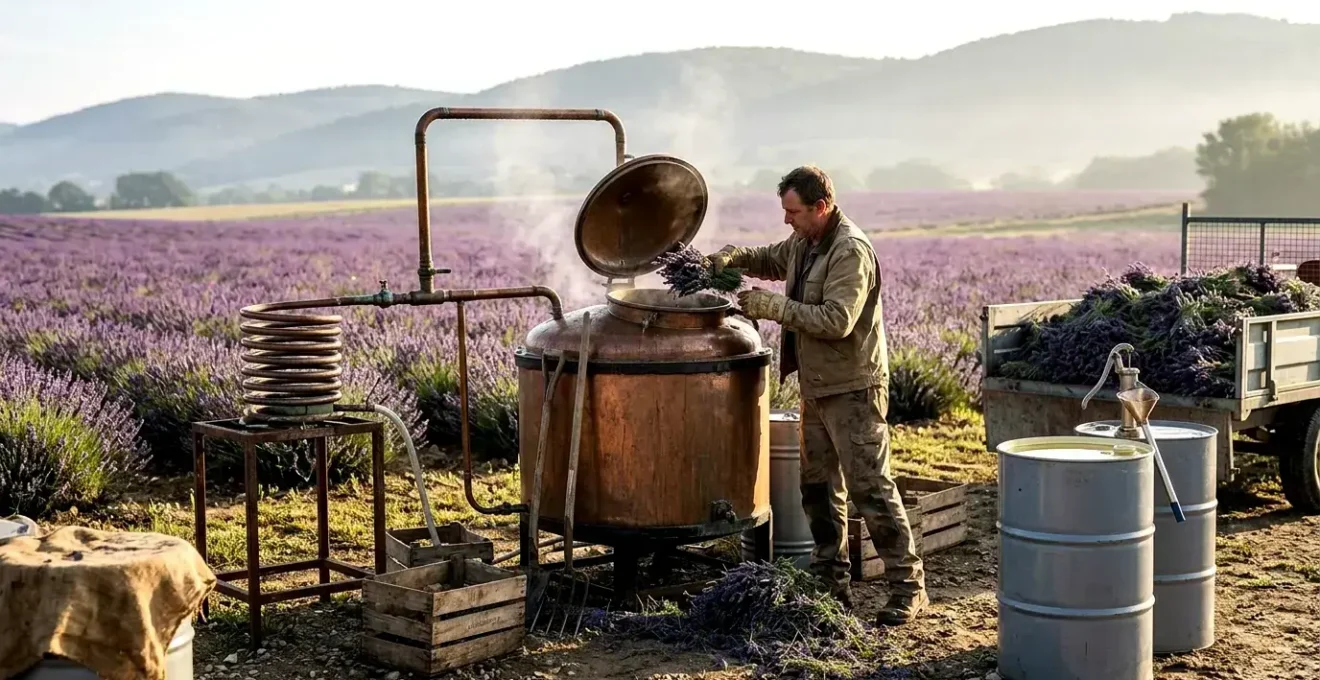
Lavender essential oil quality depends on more than the botanical species or the location where the plants grow. Harvest maturity, plant condition, steam pressure, temperature and distillation duration all influence which aromatic compounds reach the final oil and in what proportions. These variables can change the balance between fresh, sweet, floral and herbaceous notes, even when the same lavender cultivar is processed.
For artisanal fragrance makers, understanding these relationships makes it possible to select oils according to their actual aromatic characteristics rather than relying exclusively on labels such as fine lavender, high altitude or steam-distilled. For botanical enthusiasts, it also explains why two apparently similar lavender oils can smell noticeably different.
The distinction is important: a higher extraction yield does not automatically indicate better quality, and a familiar botanical name does not guarantee a particular chemical profile. Comparing production records, botanical identity and GC/MS results provides a more reliable assessment of what a lavender oil can contribute to a fragrance formulation.
Lavender Distillation: The Essential Quality Factors
- Botanical identity determines the starting chemical profile: true lavender and lavandin have different proportions of camphor, 1,8-cineole and linalyl acetate.
- Harvest maturity and distillation duration influence both oil yield and the relative concentration of aromatic compounds.
- Batch documentation and GC/MS analysis help establish whether production conditions are consistent with the oil’s declared origin and intended aromatic profile.
- Why Does Lavandin Oil Smell Sharper Than True Lavender Oil?
- How to Interpret Steam Distillation Records for a Batch of Lavender Oil?
- Lavender Essential Oil or Lavender Absolute: Which Suits a Soft Floral Accord?
- Why Excessive Heat Can Distort the Aroma of Distilled Lavender Oil
- When Should Lavender Be Harvested for Steam Distillation?
- When Should Heat-Sensitive Plant Compounds Be Extracted at Lower Temperatures?
- When Should Cosmetic Brands Audit Seasonal Botanical Suppliers?
- How Can Botanical Fragrance Create a Distinctive Scent Without Synthetic Aroma Chemicals?
Why Does Lavandin Oil Smell Sharper Than True Lavender Oil?
Lavandin oil generally smells sharper and more penetrating than true lavender oil because its chemical composition often contains higher proportions of camphor and 1,8-cineole. True lavender (Lavandula angustifolia) is generally associated with a sweeter, softer floral-herbaceous profile, partly linked to its linalyl acetate content. However, cultivar and growing conditions influence the final aroma, so botanical identity alone cannot predict every batch.
Lavandin (Lavandula × intermedia) is a hybrid of Lavandula angustifolia and Lavandula latifolia. Its hybrid characteristics are reflected in its volatile composition. Camphor contributes a recognisably penetrating, camphoraceous impression, while 1,8-cineole adds an aromatic, fresh and eucalyptus-like dimension. These compounds can make lavandin smell more medicinal or pronounced than a softer fine lavender oil.
A comparative study published in Agronomy in 2025 examined seven lavender and lavandin cultivars grown at two locations in Tuscany. The reported average camphor concentration was approximately 0% in true lavender and 8.9% in lavandin. Average 1,8-cineole concentrations were approximately 0.7% and 7%, respectively. Linalyl acetate averaged 22.7% in true lavender and 14.2% in lavandin.
Importantly, the same experiment found higher average linalool concentrations in lavandin: 23.4%, compared with 12.8% in true lavender. This contradicts the oversimplified assumption that lavandin always contains less linalool. The results demonstrate why individual compounds and their proportions matter more than broad botanical generalisations. These averages describe the investigated Tuscan cultivars, not universal species specifications. The 2025 Agronomy study comparing lavender and lavandin essential oils provides the experimental detail.
The commercial distinction also matters. Lavandin generally offers higher essential oil production potential than true lavender, making it attractive for larger-volume applications and often more economical for manufacturers. However, this does not establish that every inexpensive lavender product contains lavandin. Buyers should verify the botanical declaration and applicable ingredient documentation rather than assuming that a generic product description identifies the species.
In cosmetic ingredient declarations, the distinction can appear through names such as Lavandula Angustifolia Oil and Lavandula Hybrida Oil. The botanical identity should also be checked against supplier specifications and batch documentation.
For fragrance makers, the practical consequence is straightforward: a lavandin-rich material can provide a more assertive aromatic character, while true lavender may be preferable when a softer floral-herbaceous balance is required. Neither is inherently superior. The intended accord determines the appropriate choice.
Distillation further influences this distinction. A process suitable for one raw material cannot automatically be transferred to another without considering its chemical profile. In particular, the ester balance that contributes to the characteristic softness of true lavender deserves attention throughout extraction and storage.
Once the botanical starting point is established, the next challenge is determining whether the actual distillation process preserved the expected characteristics. That requires examining the production history of each individual batch.
How to Interpret Steam Distillation Records for a Batch of Lavender Oil?
A lavender steam-distillation record should identify the botanical material, harvest date, plant condition, distillation start and finish times, operating conditions, oil yield and batch identification. These details help explain how the oil was produced and provide context for interpreting its chemical composition. A complete record is not proof of quality by itself, but it makes production decisions traceable and allows analytical results to be assessed against the declared process.
The first step is to establish the identity and condition of the raw material. Records should distinguish Lavandula angustifolia from lavandin and identify the cultivar or chemotype where that information is available. Harvest date, flowering stage, geographical origin and plant moisture provide additional context because the composition of lavender can vary with environmental and agricultural conditions.
Distillation duration is another essential variable. The operator should document when steam was introduced, when distillation ended and, ideally, how the oil fraction was collected. A single total duration may conceal differences in the extraction profile over time.
A 2013 experimental investigation published in the Journal of Oleo Science examined twelve distillation durations, ranging from 1.5 to 240 minutes, using dried Lavandula angustifolia flowers. Under those experimental conditions, maximum reported oil yield was reached at 60 minutes. The researchers also observed changes in the concentrations of characteristic aromatic compounds throughout extraction.
60 minutes
The maximum reported lavender essential oil yield was reached at 60 minutes in one controlled experiment using dried flowers. This is an experimental finding, not a universal distillation setting for every still, harvest or production scale.
2013 experimental research in the Journal of Oleo Science.
The study reported different concentration patterns for 1,8-cineole, camphor and linalool acetate. This illustrates an important point: extraction time can influence the relative composition of an oil even when the plant material remains unchanged. However, the findings do not establish that every extended distillation destroys desirable esters or produces defective oil.
Operating pressure and temperature should be recorded alongside duration. Pressure influences the temperature at which steam is generated, while equipment design, plant loading and steam distribution influence extraction efficiency. These values should be interpreted within the actual apparatus and operating procedure rather than compared against an assumed universal setting.
Yield also requires context. A high yield combined with an unusual aromatic profile deserves investigation, but it does not independently prove over-distillation or adulteration. Similarly, a low yield accompanied by a harsh smell is a reason to examine raw-material condition and process records, not sufficient evidence that excessive pressure caused the problem.
GC/MS analysis provides the next layer of verification. It can identify and estimate the relative proportions of compounds such as linalool, linalyl acetate, camphor and 1,8-cineole. Comparing these results with botanical specifications and the declared production conditions helps identify inconsistencies. However, chromatographic data cannot independently verify a claimed harvest altitude, geographical origin or absence of rectification. Those details require traceability documentation and appropriate supplier controls.
For buyers and fragrance producers, a practical batch review should therefore connect five elements: raw-material identity, harvest history, operating conditions, yield and chemical analysis.
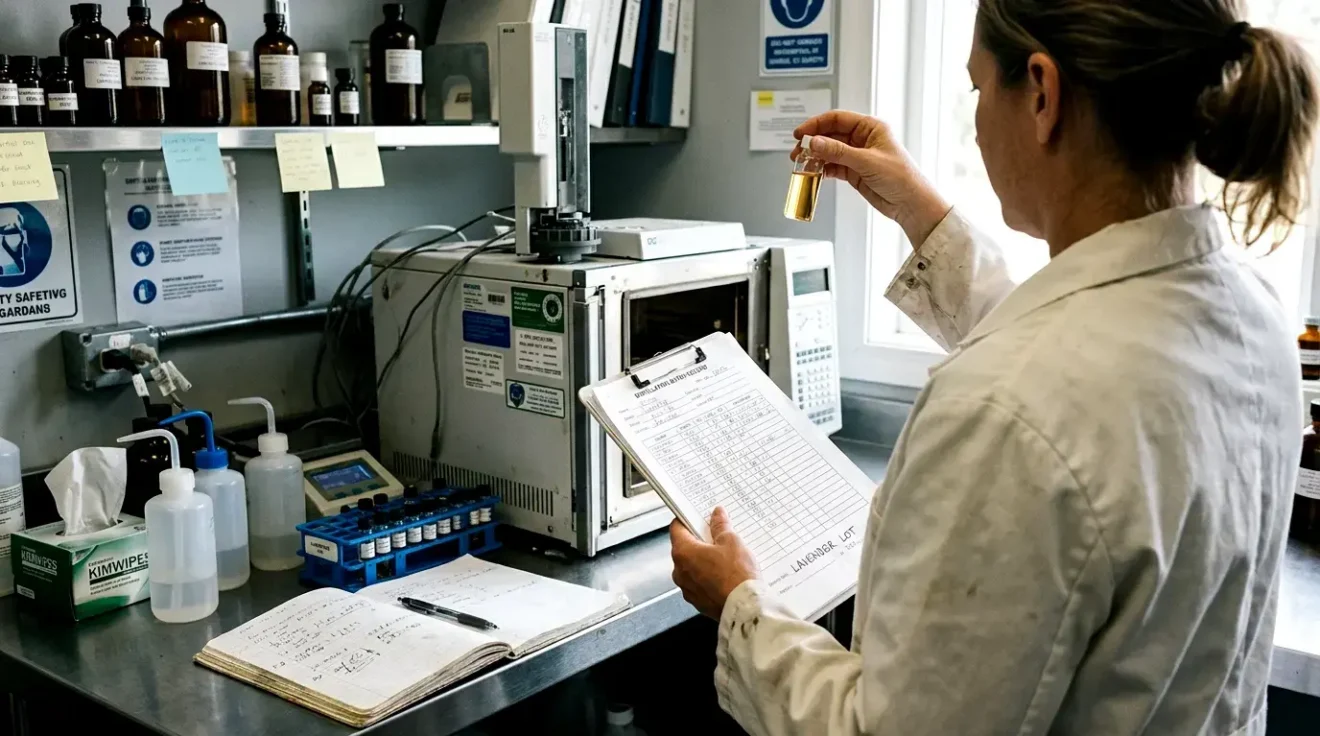
Five Actions for Evaluating a Lavender Oil Batch
- Verify botanical identity: obtain the declared Latin species name, cultivar information where available and raw-material lot reference. Deliverable: a documented botanical specification.
- Check harvest traceability: request harvest date, plant condition, geographical origin and the recorded interval between cutting and distillation. Deliverable: a harvest traceability record.
- Review distillation parameters: obtain start and finish times, duration, recorded temperature, pressure and plant loading information. Deliverable: a completed distillation log.
- Compare analytical results: review the available GC/MS report, paying particular attention to linalool, linalyl acetate, camphor and 1,8-cineole. Deliverable: a batch composition comparison.
- Reconcile the documentation: compare the batch number across the production log, oil container, certificate of analysis and supplier specification. Deliverable: a traceable batch review with any discrepancies recorded.
These records establish how an oil was produced, but they also highlight a broader consideration: steam distillation is only one way to obtain lavender’s aromatic profile. Choosing another extraction method can produce a substantially different perfumery material from the same botanical species.
Lavender Essential Oil or Lavender Absolute: Which Suits a Soft Floral Accord?
Lavender essential oil is generally the better choice when a soft floral accord needs freshness, herbal brightness and diffusion. Lavender absolute is worth considering when the composition requires greater aromatic depth and a different floral texture. The two extracts are not interchangeable: steam distillation and solvent extraction recover different portions of the plant’s aromatic constituents, producing materials with distinct chemical and olfactory characteristics.
Steam distillation uses water vapour to release and transport volatile compounds from lavender flowers. After condensation, the essential oil separates from the aqueous phase. The resulting material is dominated by volatile aromatic compounds, including linalool and linalyl acetate, whose proportions influence the familiar fresh, floral and herbaceous character of lavender.
Absolute production follows another route. The flowers are extracted using a suitable solvent, producing a concrete that can subsequently be treated with ethanol to obtain the absolute. Depending on the raw material and extraction process, this method can retain a wider variety of aromatic constituents than conventional steam distillation.
These differences matter because the aromatic impression of lavender is not limited to the most volatile compounds. Less volatile constituents and other components can contribute to the perceived complexity and persistence of an extract.
A 2022 study published in Plants examined seven industrial Bulgarian lavender absolute samples using GC/MS and GC-FID. The researchers identified 111 compounds, including oxygenated monoterpenes, sesquiterpenes and coumarins. The study also demonstrated substantial variation between samples, including a chemically unusual absolute obtained from previously exhausted lavender inflorescences.
In the six conventional absolute samples, reported linalool concentrations ranged from 27.33% to 38.24%, while linalyl acetate ranged from 26.58% to 37.39%. The seventh sample differed considerably and did not show detectable linalyl acetate in the reported analysis. These results demonstrate that extraction history and raw-material condition can influence the resulting absolute. They should not be interpreted as universal specifications for all lavender absolutes.
The scientific analysis of Bulgarian lavender absolutes provides useful analytical evidence for understanding these differences.
For practical formulation, the choice depends on the role of the lavender material within the composition:
| Formulation criterion | Lavender essential oil | Lavender absolute |
|---|---|---|
| Extraction method | Steam distillation | Solvent extraction, followed by further processing |
| Aromatic emphasis | Fresh, herbaceous and volatile floral notes | More complex extract character, potentially including honeyed and green facets |
| Formulation role | Freshness, aromatic lift and diffusion | Depth, body and aromatic complexity |
| Material considerations | Volatile composition and oxidation stability | Residual solvent assessment, extract composition and applicable formulation requirements |
| Best suited to | Fresh floral and aromatic accords | More rounded and textural floral compositions |
The distinction is not a simple quality hierarchy. Essential oils are often easier to integrate into formulations that require a volatile botanical ingredient, whereas absolutes may provide a different aromatic dimension. However, absolute composition, residual solvent specifications and applicable regulatory requirements must be assessed before use.
A useful approach for a soft floral accord is to evaluate both materials independently before considering a blend. Essential oil can establish the fresh aromatic opening, while a carefully selected absolute may contribute a richer middle or base impression. Their relative proportions should be determined through formulation trials rather than an assumed universal blending ratio.
The extraction method therefore defines more than the quantity of oil obtained. It determines which parts of the botanical aroma are represented in the final ingredient. The same principle becomes especially important when managing temperature during steam distillation.
Why Excessive Heat Can Distort the Aroma of Distilled Lavender Oil
Excessive thermal exposure can alter lavender essential oil by changing the stability of its volatile compounds and encouraging unwanted chemical reactions. Prolonged exposure to heat, particularly in the presence of water and oxygen, can affect sensitive constituents such as linalyl acetate and linalool. The resulting oil may have a less balanced aromatic profile, although the extent of any change depends on the actual processing and storage conditions.
One relevant mechanism is ester hydrolysis. Linalyl acetate, an important contributor to the characteristic sweet and floral impression of lavender, is an ester. Under suitable conditions, prolonged contact with water and heat can promote hydrolysis, changing the chemical balance of the material. This is one reason why the management of steam exposure and extraction duration deserves attention.
Oxidation presents another concern. Linalool and other unsaturated terpenes can undergo oxidation when exposed to oxygen. Although oxidation is particularly relevant during storage, inappropriate thermal handling and prolonged exposure to air can also contribute to chemical deterioration. Oxidised material may smell less fresh and may develop an altered aromatic character.
Terpenes can also undergo other transformations under certain processing conditions. However, it would be inaccurate to attribute every sharp, flat or turpentine-like note directly to heat damage. Raw-material quality, botanical identity, oxidation, equipment cleanliness and storage history can all influence the final smell.
Distillation conditions should therefore be considered as a combination of interacting variables:
- Steam temperature: determines the thermal conditions under which volatile compounds are released and transported.
- Pressure: influences steam temperature and must be interpreted according to the equipment configuration.
- Duration: affects which fractions are recovered and how long the material is exposed to the extraction environment.
- Plant loading density: influences steam distribution and the consistency of extraction through the plant charge.
- Plant moisture and condition: influence how the raw material behaves during extraction.
The relationship between distillation duration and composition has been demonstrated experimentally. In the 2013 Journal of Oleo Science investigation, different distillation times produced different relative concentrations of characteristic lavender compounds. Nevertheless, the research does not establish a universal temperature threshold for linalyl acetate degradation or prove that extending distillation always produces unpleasant off-notes.
The practical objective is to avoid treating yield as the only performance indicator. Continuing extraction simply to recover additional oil may change the relative composition of the collected material. A distiller should evaluate whether the additional fraction improves the intended aromatic profile, rather than assuming that every increase in recovered volume is beneficial.
Sensory assessment is useful when comparing batches. A sample can be evaluated against an established reference oil, paying attention to its initial freshness, floral character and dry-down. Unexpected harshness or an unusually flat profile should trigger an investigation rather than an immediate conclusion about its cause.
GC/MS analysis can then help identify compositional differences, including changes in the relative proportions of linalool, linalyl acetate, camphor and 1,8-cineole. However, chromatography does not independently establish the sensory acceptability of an oil. Analytical interpretation and controlled olfactory assessment should complement one another.
Storage conditions are equally important after extraction. Finished lavender oil should be protected from unnecessary exposure to oxygen, heat and light. Appropriate containers, careful filling practices and consistent storage conditions help preserve the aromatic profile established during production.
Managing thermal exposure begins even before the still is loaded. The maturity and condition of the harvested flowers influence the composition available for extraction, making harvest timing another important quality decision.
When Should Lavender Be Harvested for Steam Distillation?
Lavender should generally be harvested according to its flowering stage, the intended oil profile and the local growing conditions. Harvesting around full flowering is commonly associated with strong oil production, while earlier flowering stages may provide a different aromatic balance. The optimum timing is not identical for every cultivar or region, because oil composition and yield respond to both plant development and environmental conditions.
Flower maturity influences the distribution of volatile compounds within the plant. As flowering progresses, the relative proportions of aromatic constituents can change, affecting the character of the extracted oil. Producers therefore need to decide whether their priority is maximising the amount of recovered oil or obtaining a particular aromatic profile.
For fragrance makers seeking a softer lavender character, earlier harvesting may be worth investigating. However, the claim that harvesting before full bloom always produces a finer, lower-camphor oil should not be treated as a universal rule. Species, cultivar, growing location and harvest conditions can all affect the result. Chemical analysis of representative batches is more reliable than assuming a specific composition from flowering stage alone.
Field observations help establish whether the timing is appropriate. Harvesters can assess:
- The proportion of open flowers along each spike.
- The condition and development of the calyx.
- The overall maturity and health of the plants.
- Weather conditions during cutting, including excessive heat or wet conditions.
- The consistency of flowering across the field.
Weather matters because the condition of freshly harvested botanical material can change between field and still. Wet plant material may require different handling from material harvested in dry conditions, while very hot weather can complicate the management of volatile compounds and harvested biomass.
Another important variable is the interval between cutting and distillation. Lavender left in trailers, exposed field piles or poorly ventilated storage conditions may undergo unwanted changes before extraction. Prolonged delays can also allow volatile compounds to escape. For this reason, harvest and distillation records should contain separate timestamps rather than a single harvest date.
For suppliers selling high-altitude or fine lavender oil, traceability should connect the geographical origin, botanical identity, harvest stage and processing records. A commercial description alone cannot establish that the oil was harvested under the conditions implied by its label.

For an artisanal producer, recording the actual flowering stage and the time between cutting and distillation makes subsequent quality comparisons much more meaningful. If a supplier cannot explain these elements, the buyer has limited evidence for evaluating the relationship between harvest conditions and the finished oil.
Harvest timing is one part of the broader extraction strategy. Where the target material contains particularly heat-sensitive constituents, the appropriate processing temperature must also be considered in relation to the stability of the compounds being recovered.
When Should Heat-Sensitive Plant Compounds Be Extracted at Lower Temperatures?
Heat-sensitive botanical compounds should be extracted under carefully controlled thermal conditions when excessive heat or prolonged exposure could alter their chemical structure or reduce the desired aromatic characteristics. Fragile esters, certain aldehydes and some lactones may require particular attention. The appropriate extraction method depends on the stability of the target compounds, the plant matrix and the need to recover a representative aromatic profile.
The first step is to identify the compounds responsible for the desired sensory characteristics. An extraction method should be selected according to the stability of those target molecules, rather than according to convenience or maximum extraction speed.
For lavender, linalyl acetate is especially relevant. This ester contributes to the familiar sweet and floral character associated with many true lavender oils. Its presence and relative proportion influence the balance of the resulting material, making careful control of extraction and subsequent storage important.
Different extraction techniques offer different thermal environments:
| Method | Thermal considerations | Main formulation consideration |
|---|---|---|
| Cold maceration | Generally avoids deliberate high-temperature extraction | Extraction efficiency and solvent or carrier compatibility |
| Supercritical CO2 extraction | Can operate under relatively low-temperature conditions, depending on process design | Pressure, selectivity, equipment and production cost |
| Controlled low-pressure steam distillation | Allows adjustment of operating pressure and associated steam conditions | Balance between volatile compound recovery and extraction completeness |
| Higher-pressure or prolonged distillation | Can involve greater thermal exposure depending on the apparatus and operating conditions | Potential changes in composition and the recovery of different fractions |
Lower-temperature extraction is not automatically better. A process that is too gentle or insufficiently long may fail to recover important fractions of the plant’s aromatic material. The resulting extract could be incomplete or chemically unbalanced, even if the most sensitive compounds remain intact.
This creates an important distinction between minimising thermal exposure and optimising extraction conditions. The goal is not to use the lowest possible temperature under all circumstances. It is to find the appropriate operating window that protects important compounds while still recovering the intended aromatic profile.
Steam distillation also requires an understanding of pressure and temperature as related variables. Reducing pressure changes the conditions under which steam is generated, but equipment design, steam distribution and the physical behaviour of the plant charge still determine the practical effectiveness of extraction.
For lavender, the composition of the final oil should be evaluated alongside the extraction conditions. A process that produces a high linalyl acetate proportion may be desirable for one formulation, but it does not automatically prove that every other aromatic fraction has been recovered optimally.
Production trials can help establish the most appropriate conditions. Samples collected at different extraction stages can be compared using consistent sensory evaluation and chromatographic analysis. This provides a more defensible basis for process optimisation than relying on a single yield measurement.
Artisanal fragrance makers should also distinguish between extraction-related changes and post-extraction deterioration. An oil that has oxidised during storage may show an altered aromatic profile even if its original distillation conditions were appropriate.
These technical requirements have consequences beyond the distillation room. Cosmetic brands sourcing natural botanical ingredients need to establish whether supplier practices remain consistent from one harvest season to another, particularly when product specifications depend on a reproducible aromatic profile.
When Should Cosmetic Brands Audit Seasonal Botanical Suppliers?
Cosmetic brands should schedule botanical supplier audits around the actual production cycle, particularly before and after harvest and distillation. These periods provide opportunities to assess field conditions, raw-material handling, extraction practices and batch traceability. A seasonal audit is especially useful when an ingredient’s chemical composition depends on flowering conditions, harvest maturity or processing choices that can change between growing years.
Auditing only when a purchase order is being prepared may provide an incomplete picture. Supplier documentation should be assessed against the conditions under which the botanical material was actually grown, harvested, processed and stored.
Before harvest, a brand can examine the supplier’s botanical specifications, cultivation practices, declared geographical origin and expected harvest window. This establishes a reference point against which actual production can later be evaluated.
After harvest and distillation, the review can focus on the handling of plant material, production records, oil yield, batch identification and analytical results. These checks help establish whether the supplier’s declared practices are reflected in the material delivered to the brand.
A comprehensive review of a lavender essential oil supplier should consider several elements:
- Botanical identity: confirmation of the species, cultivar and chemotype where applicable.
- Harvest traceability: geographical origin, harvest date, flowering stage and raw-material condition.
- Distillation documentation: duration, operating conditions, equipment identification and batch references.
- Storage practices: protection of plant material and finished oil from unnecessary moisture, heat, light and oxygen exposure.
- Analytical consistency: comparison of GC/MS results across batches and harvest seasons.
Seasonal variability deserves particular attention. Drought, altered rainfall, frost and changes in flowering conditions can affect botanical production. Even when a supplier works with the same species and geographical area, the chemical composition of its essential oil may vary between growing years.
For this reason, a single satisfactory certificate of analysis should not be treated as evidence of permanent supplier consistency. Reviewing results across several harvests can reveal whether the supplier maintains a stable specification or whether normal agricultural variability requires more flexible acceptance criteria.
Storage deserves equal attention. An essential oil can undergo oxidation after distillation if containers are poorly sealed, inadequately filled or exposed to unsuitable storage conditions. Brands should therefore examine the supplier’s storage practices as well as the quality of the oil immediately after extraction.
Supplier audits also support cosmetic compliance. Natural origin does not automatically establish that an ingredient is suitable for every cosmetic formulation or market. Brands remain responsible for assessing the composition, safety documentation and labelling implications of the ingredients used in their products.
For example, the European Union has introduced additional fragrance allergen labelling requirements through Commission Regulation (EU) 2023/1545. From 31 July 2026, products that do not comply with the applicable new requirements may no longer be placed on the EU market, subject to transitional provisions for eligible products already placed on the market. The relevant individual allergen declaration thresholds are 0.001% for leave-on products and 0.01% for rinse-off products.
The European Commission guidance on fragrance allergen labelling explains these requirements and their regulatory scope. These European rules should not be assumed to apply identically in the United States, United Kingdom, Canada or Australia.
Supplier audits cannot replace laboratory testing, product safety assessment or regulatory review. Their value lies in connecting the supplier’s declared production practices with the documentation and analytical evidence used by the brand to approve an ingredient.
Once production consistency and traceability are established, they become more than quality-control requirements. They provide fragrance makers with the information needed to select specific botanical extracts and create distinctive compositions using natural aromatic materials.
Key Considerations Before Formulating a Botanical Fragrance
- Choose extracts according to their actual aromatic profiles, not simply their botanical names or natural-origin claims.
- Use production history and analytical data to understand seasonal variation and select materials with complementary characteristics.
- Build formulation distinctiveness through informed combinations of botanical extracts, controlled proportions and transparent ingredient provenance.
How Can Botanical Fragrance Create a Distinctive Scent Without Synthetic Aroma Chemicals?
Botanical fragrance can create a distinctive scent without synthetic aroma chemicals by combining natural extracts with different chemical profiles, extraction histories and aromatic functions. The key is to treat formulation as a deliberate process of balancing volatility, texture and persistence. Understanding how production variables affect each botanical ingredient allows a perfumer to select more precise materials and develop a recognisable olfactory identity.
Working exclusively with botanical materials presents specific formulation challenges. Many conventional perfumery compositions use synthetic ingredients such as Hedione or Iso E Super to provide particular effects involving diffusion, transparency, volume or persistence. A botanical-only palette cannot be assumed to reproduce those effects through a direct one-to-one substitution.
Instead, distinctiveness comes from understanding what each extract contributes and how its characteristics interact with the other materials in the composition.
Lavender illustrates this approach particularly well. Two extracts from the same botanical species can produce different aromatic impressions because of their extraction methods and processing histories.
A carefully selected steam-distilled lavender oil may provide a fresh, herbaceous and floral opening. A lavender absolute may offer a different degree of aromatic depth, potentially including greener, honeyed or more textural facets depending on the sample. These differences allow a formulator to create variations within a single botanical family rather than relying on a larger number of unrelated ingredients.
Lavandin offers another useful example. Its more pronounced camphor and 1,8-cineole profile can provide a stronger aromatic dimension than a softer true lavender oil. Used selectively, it can contribute contrast and definition to an accord. However, its intensity needs to be considered in relation to the other ingredients and the intended fragrance character.
Concentration is equally important. A material that dominates a composition at one level may provide a subtle structural contribution at another. Small formulation trials can help determine the proportions required to preserve the intended balance between floral, green, herbaceous and aromatic notes.
Natural fragrance materials also present limitations that require realistic expectations. Their volatility can restrict the longevity of certain accords, and their chemical profiles may change between harvests. Seasonal variability can therefore influence both the aromatic character and reproducibility of a finished fragrance.
Several formulation strategies can help manage these challenges:
- Combine complementary extracts: use essential oils and absolutes to explore different dimensions of the same botanical material.
- Balance aromatic intensity: adjust proportions to prevent particularly assertive materials from dominating softer floral components.
- Evaluate multiple origins: compare botanical materials from different growing areas where traceability and analytical documentation are available.
- Assess harvest variation: review different seasonal batches before establishing a long-term formulation specification.
- Protect finished materials: use appropriate storage and handling practices to limit deterioration of sensitive aromatic constituents.
Blending multiple harvest origins may help manage natural variation, but it should not be treated as a guarantee of uniformity. Each batch requires evaluation, and any blending strategy should remain consistent with the intended product specification and applicable labelling requirements.
Transparency also creates a meaningful point of differentiation. A botanical fragrance can communicate its composition through identifiable plant species, geographical origin, extraction method and producer information. This makes production traceability part of the fragrance’s identity rather than simply an internal procurement exercise.
However, a natural formula is not automatically safer, more sustainable or compliant than a synthetic one. Botanical ingredients can contain fragrance allergens, and their suitability depends on their composition, intended use and the requirements of the target market.
For brands selling cosmetic fragrances in the European Union, botanical origin does not remove the need to assess fragrance allergen labelling. The same principle applies to the broader evaluation of ingredient safety and product documentation in other markets, although the relevant regulatory frameworks differ.
For artisanal fragrance makers, the strongest creative advantage comes from connecting technical knowledge with olfactory experimentation. Understanding why a particular lavender oil smells softer, sharper, greener or richer makes it possible to choose ingredients according to their actual characteristics rather than their marketing descriptions.
The quality of a botanical fragrance ultimately begins before formulation. Harvest conditions, extraction choices, analytical verification and supplier transparency determine the materials available to the perfumer. When these elements are understood together, even a relatively focused botanical palette can support a distinctive and reproducible aromatic direction.
What is the most important factor affecting lavender essential oil quality?
There is no single factor that determines lavender essential oil quality. Botanical identity, cultivar, growing conditions, harvest maturity, distillation duration and thermal management all influence the final composition. The most reliable assessment combines batch traceability, sensory evaluation and GC/MS analysis rather than relying on yield or production method alone.
Does longer steam distillation always produce more lavender essential oil?
No. In a 2013 experimental study using dried Lavandula angustifolia flowers, maximum reported yield was reached at 60 minutes, and the authors found that yield might not increase after that point under their experimental conditions. The optimum duration depends on the plant material and equipment, while extraction time can also influence the relative proportions of aromatic compounds.
How can a buyer distinguish true lavender oil from lavandin oil?
Check the declared botanical name, supplier specification and batch documentation. True lavender is Lavandula angustifolia, whereas lavandin is Lavandula × intermedia. GC/MS analysis can provide additional evidence through the relative proportions of compounds such as camphor, 1,8-cineole and linalyl acetate. No single compound should be treated as definitive proof of botanical identity.
Can lavender essential oil and lavender absolute be blended together?
Yes, provided both materials are suitable for the intended formulation and meet the applicable quality and safety requirements. Essential oil can contribute fresh, volatile aromatic characteristics, while an absolute may add a different degree of floral depth and complexity. Their proportions should be established through formulation trials, as the composition and sensory profile of individual absolutes can vary.
Why should lavender essential oil be accompanied by a GC/MS report?
A GC/MS report provides information about the chemical composition of a specific oil batch. It helps buyers assess the proportions of characteristic compounds, compare batches and investigate inconsistencies with the declared botanical specification. However, GC/MS cannot independently verify geographical origin, harvest altitude, processing history or the absence of adulteration. It should be interpreted alongside supplier documentation and appropriate quality controls.