
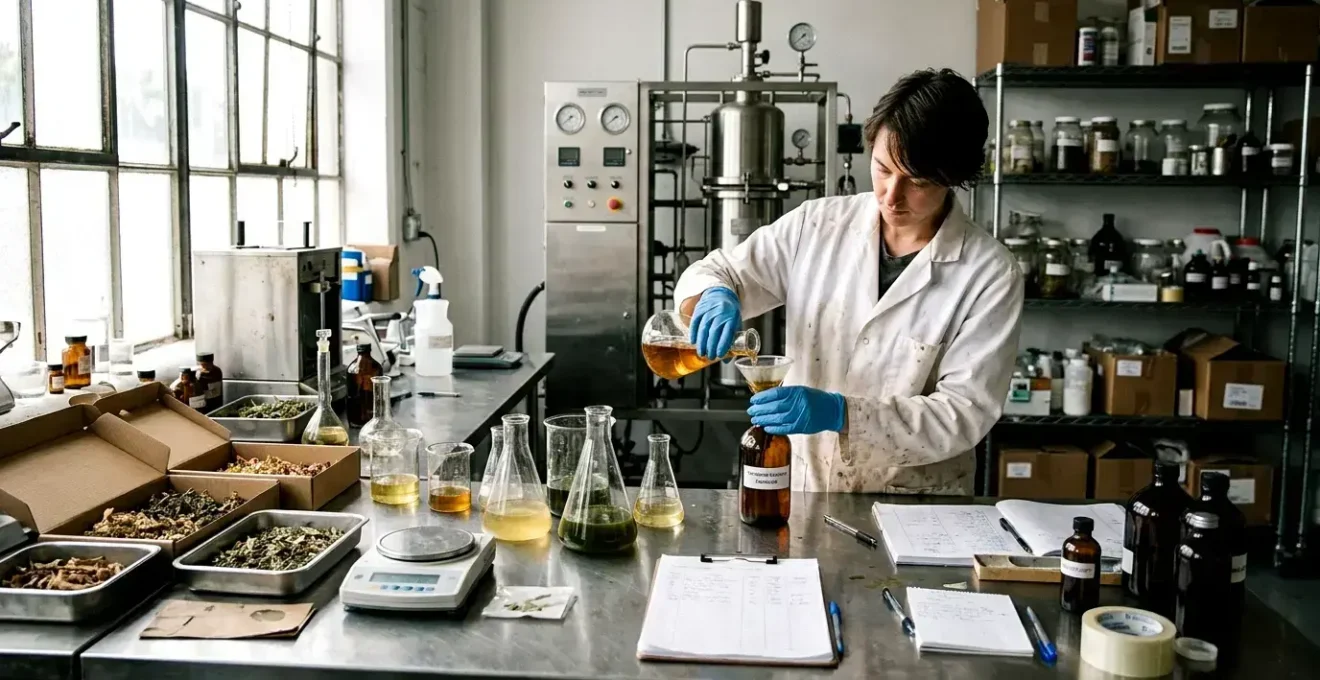
Botanical extraction determines which compounds are transferred from a plant into a cosmetic ingredient, which remain in the discarded material and which may be altered during processing. Consequently, two extracts made from the same species can have substantially different chemical profiles, sensory properties and potential skincare functions.
The extraction solvent, temperature, pressure, processing duration and botanical starting material all influence the result. Supercritical carbon dioxide, ethanol, water and glycerin each have different extraction capabilities. None guarantees complete purity or superior cosmetic performance in every application.
For natural cosmetics enthusiasts and ingredient buyers, the most useful approach is to assess the actual composition and documentation of an extract rather than relying on labels such as natural, solvent-free, cold-processed or premium. Botanical identity alone does not establish ingredient equivalence, and a supplier’s extraction claim is not a substitute for analytical evidence.
Evaluating an ingredient therefore requires three connected questions: which plant compounds were extracted, how consistently their composition can be reproduced, and whether the resulting material is appropriate for its intended formulation and skin exposure.
Botanical Extraction: The Essential Points
- Extraction selectivity determines which chemical families enter an extract. Solvent polarity, temperature and processing conditions can substantially change its composition.
- Ingredient purity and reproducibility require documentation, analytical testing and batch traceability, not simply a solvent-free or natural label.
- CO2, ethanol and low-temperature extraction serve different purposes. The appropriate method depends on the target compounds, processing constraints and intended cosmetic application.
- Why Does the Extraction Solvent Change Which Plant Compounds End Up in Cosmetics?
- How to Read a Botanical Extract Specification Before Using It in Skincare?
- CO2 Extraction or Ethanol Extraction: Which Better Suits Delicate Botanicals?
- Why Solvent-Free Botanical Extracts Are Not Automatically Safer for Skin
- When Should Heat-Sensitive Plant Compounds Be Extracted at Lower Temperatures?
- Why Does Harvest Season Change the Composition of Cosmetic Plant Extracts?
- How to Interpret Steam Distillation Records for a Batch of Lavender Oil?
- Which Botanical Skincare Ingredients Have Evidence Behind Their Benefits?
Why Does the Extraction Solvent Change Which Plant Compounds End Up in Cosmetics?
The extraction solvent changes which plant compounds enter a cosmetic ingredient because different molecules dissolve more readily in different chemical environments. Polar solvents generally favour polar constituents such as many polyphenols, flavonoids and sugars, while non-polar solvents favour lipophilic compounds such as certain terpenes, resins and fatty constituents. The same botanical species can therefore produce extracts with different compositions and potential functions.
This behaviour is commonly described by the principle that like dissolves like. Water, glycerin and ethanol are polar solvents, although their extraction properties are not identical. Their ability to interact with plant molecules depends on solvent composition, concentration, temperature and the physical structure of the botanical material.
Non-polar extraction systems, including supercritical CO2 under suitable conditions, favour less polar compounds. They can be useful when the objective is to recover aromatic, resinous or lipid-soluble constituents rather than a broad water-soluble fraction.
Selectivity is not the same as completeness. A solvent that extracts a wider range of compounds may also transfer unwanted material, including chlorophyll, waxes and certain tannins. These additional constituents can influence colour, odour, solubility, stability and formulation compatibility. A darker or more concentrated extract is not necessarily a purer or more effective one.
The distinction matters when evaluating functional claims. An antioxidant effect associated with a particular polyphenol fraction cannot automatically be attributed to an oil-soluble extract of the same plant. Likewise, the aromatic profile of an extract depends on its volatile and semi-volatile constituents, not simply on its botanical name.
Residual solvent assessment also requires chemical specificity. Water, glycerin and ethanol are widely used in cosmetic extraction, but their presence and final concentration still matter for formulation design and product quality. Other processing solvents may require additional controls under applicable standards and legislation. There is no single universal residual-solvent limit that can be inferred from the extraction method alone.
In the United States, the FDA list of prohibited and restricted cosmetic ingredients describes specific regulatory restrictions and manufacturers’ safety responsibilities. It should not be mistaken for a comprehensive table of acceptable residual-solvent concentrations in botanical extracts.
A practical comparison should therefore consider the target compound family, extraction selectivity, unwanted co-extracted substances, residual processing materials and intended formulation. These parameters explain why two extracts bearing the same plant name may not be interchangeable.
Ultimately, the best solvent is the one that produces a sufficiently characterised, stable and suitable extract for the intended cosmetic purpose, rather than the one that extracts the greatest quantity of material.
How to Read a Botanical Extract Specification Before Using It in Skincare?
A botanical extract specification should establish exactly which plant material was processed, how extraction was performed and which chemical characteristics define the resulting ingredient. The most useful documents identify the botanical species, plant part, solvent, extraction ratio, analytical markers, testing method and batch information. Without these details, it is difficult to assess reproducibility or compare two commercial extracts reliably.
Start with the botanical identity. The scientific name should identify the species, while the plant part should specify whether the extract comes from leaves, roots, flowers, seeds, bark or another material. An INCI name helps establish cosmetic ingredient identity, but it does not necessarily disclose the complete extraction process or chemical composition.
The extraction solvent and carrier should be considered separately. An ingredient may be extracted with ethanol and subsequently supplied in glycerin or another carrier. These are different processing and formulation details, and confusing them can lead to incorrect assumptions about the composition of the supplied material.
The extraction ratio also deserves attention. A stated 4:1 ratio may indicate that four parts of starting botanical material were used to produce one part of extract, depending on the supplier’s declared convention. It does not establish that the final ingredient contains four times the active compounds of the original plant. The actual interpretation requires the definition of the ratio, moisture basis and extraction yield.
Standardization provides another important distinction. A standardized extract guarantees a specified concentration or range of selected marker compounds, subject to the supplier’s analytical method and specification. A non-standardized extract may have a broader or more variable chemical profile.
However, a marker is not automatically the compound responsible for a marketed cosmetic benefit. It may serve as an identification or consistency indicator rather than a proven functional active. HPLC, GC, GC-MS and LC-MS provide different analytical information, so the method must suit the compounds being investigated.

The ConPhyMP guidelines published in Frontiers in Pharmacology provide a scientific framework for botanical extract characterisation. They recommend reporting the botanical species, plant part, plant-to-solvent ratio, drug-to-extract ratio, extraction solvent, method and relevant processing conditions, alongside appropriate chemical characterisation. Their recommendations are particularly useful when assessing the quality of scientific documentation, although they are not a substitute for cosmetic regulatory requirements.
The ConPhyMP scientific guidelines for botanical extract characterization also highlight the importance of chemical markers and fingerprinting for reproducibility. Different analytical techniques can complement one another because no single method necessarily captures every relevant constituent.
Common specification weaknesses include an unidentified plant part, an undefined solvent, a total-extract figure without an analytical method, missing residual-solvent information and no clear batch identification. These omissions make it harder to establish consistency between deliveries or reproduce a formulation at commercial scale.
Regulatory classification must also be checked independently. A botanical extract, essential oil and oleoresin are not interchangeable categories. Their composition, naming and applicable requirements depend on the ingredient and the relevant market. An INCI declaration alone does not resolve every regulatory question.
Five Checks Before Approving a Botanical Extract
- Verify the botanical species and plant part. Deliverable: a specification identifying the scientific name and harvested material.
- Identify the extraction solvent, extraction method and final carrier. Deliverable: a documented processing and composition statement.
- Check the extraction ratio and its calculation basis. Deliverable: a clearly defined plant-to-extract or drug-to-extract ratio.
- Review marker concentrations and analytical methods. Deliverable: an assay report or chemical fingerprint suitable for the relevant compound families.
- Verify batch traceability and relevant impurity information. Deliverable: a batch-specific certificate of analysis and supporting quality documentation.
Before incorporating an ingredient into skincare, buyers should also establish whether the documented extract is the same grade and composition used in any supporting efficacy or safety studies. This distinction becomes particularly important when comparing extraction technologies.
CO2 Extraction or Ethanol Extraction: Which Better Suits Delicate Botanicals?
Supercritical CO2 extraction is often better suited to delicate botanicals when the target compounds are lipophilic, aromatic or sensitive to prolonged heat exposure. Ethanol extraction is generally more versatile when the desired fraction includes polar constituents such as many polyphenols and flavonoids. Neither method is universally superior: the appropriate choice depends on the plant matrix, target molecules and required extract profile.
Supercritical carbon dioxide is produced when CO2 is maintained above its critical temperature and pressure. Its critical temperature is approximately 31.1 °C and its critical pressure is approximately 72.8 bar. These conditions allow it to behave as a supercritical fluid, with solvent properties that can be adjusted through operating pressure and temperature.
This tunability is one of the method’s principal advantages. Depending on operating conditions, CO2 can selectively recover certain volatile and lipophilic constituents while limiting exposure to conventional organic solvents. After extraction, pressure reduction allows the CO2 to separate from the recovered material.
However, supercritical CO2 is predominantly effective for non-polar compounds. Its ability to extract highly polar phytochemicals is limited. An ethanol co-solvent can improve extraction of some polar constituents, but the resulting process is no longer accurately described as relying exclusively on CO2.
Ethanol offers a different extraction profile. Its polarity makes it useful for a broad range of plant constituents, and its concentration can be adjusted to influence selectivity. It can recover many polyphenols and flavonoids, although it may also transfer tannins, pigments and other compounds that influence colour, taste, odour or formulation compatibility.
Unlike a process designed to release CO2 through pressure reduction, ethanol extraction normally requires a solvent-removal step when the final ingredient is intended to be concentrated. Residual-solvent assessment and control of processing conditions are therefore relevant quality considerations.
A peer-reviewed scientific review of supercritical fluid extraction technologies discusses the selectivity, operating conditions, co-solvent options and industrial limitations of this technology. It identifies equipment investment as an important practical constraint and emphasises that extraction performance depends on the material and process parameters.
| Criterion | Supercritical CO2 | Ethanol |
|---|---|---|
| Typical target fraction | Lipophilic constituents, certain terpenes and resins | Many polar and moderately polar constituents |
| Temperature considerations | Can operate near moderate temperatures, depending on pressure and process design | Can operate at ambient temperature or use controlled heating |
| Polarity | Predominantly non-polar extraction behaviour | Polar solvent, with selectivity influenced by concentration |
| Solvent separation | CO2 can be separated through pressure reduction | Usually requires a solvent-removal process for concentrated extracts |
| Co-solvent options | Ethanol can improve extraction of some polar compounds | Water can be combined with ethanol to adjust extraction polarity |
| Equipment investment | Specialised high-pressure equipment | More accessible conventional extraction equipment |
CO2 is therefore a strong candidate for volatile, resinous or lipophilic fractions when solvent separation is an important consideration. Ethanol is often more appropriate when the objective is to recover a broader polar fraction or when manufacturing scale and processing economics are significant constraints.
A premium extraction label cannot establish ingredient superiority by itself. A documented chemical profile, suitable processing conditions and application-specific performance evidence remain more meaningful than the extraction method’s marketing appeal.
Why Solvent-Free Botanical Extracts Are Not Automatically Safer for Skin
A solvent-free botanical extract is not automatically safer for skin because solvent residues are only one part of ingredient safety. Skin tolerance also depends on the compounds extracted, their concentrations, the finished formulation and the conditions of use. A process that removes conventional organic solvent residues can still concentrate naturally occurring constituents associated with irritation, sensitisation or other unwanted effects.
The expression solvent-free is particularly easy to misunderstand. It generally refers to the absence of detectable or relevant residual solvent in the final ingredient, rather than proving that no solvent was used during manufacture. CO2 extraction may involve an ethanol co-solvent, while water and glycerin are themselves solvents in extraction processes.
The label therefore needs a precise definition. A supplier should clarify whether the claim concerns the extraction process, the final ingredient or a specific analytical detection threshold. Without this information, the phrase provides limited evidence about either processing history or final composition.
Composition is often the more important safety consideration. A non-polar CO2 extract can concentrate lipophilic terpenes and other naturally occurring constituents. Certain botanical materials also contain compounds such as furanocoumarins, some of which can contribute to phototoxicity under relevant exposure conditions.
Conversely, an appropriately manufactured and characterised ethanol extract may be suitable for a cosmetic application despite having been produced with an organic solvent. The relevant question is whether the final ingredient meets appropriate quality and safety requirements, not whether a solvent was ever involved.
Microbiological quality introduces another distinction. Water-rich botanical extracts can support microbial growth if they are not adequately controlled and preserved. Glycerin-based systems have different water-activity and formulation characteristics, while anhydrous CO2 extracts present a different contamination profile. None should be assumed microbiologically safe without appropriate assessment.
Supplier documentation should therefore include relevant microbiological specifications, stability information, residual-solvent testing where applicable and data supporting the intended cosmetic use. For potentially sensitising or phototoxic materials, the composition and available toxicological or dermatological evidence should also be reviewed.
In practice, the following questions help distinguish a meaningful safety claim from a marketing statement:
- Does solvent-free refer to the extraction process or the final ingredient?
- Which analytical method was used to assess residual solvents, and what are its detection or quantification limits?
- Has the botanical material been characterised for relevant potentially irritating or phototoxic constituents?
- What microbiological and stability controls apply to the supplied extract?
- Is there appropriate safety information for the intended concentration, formulation type and exposure conditions?
A dermatological patch test may provide useful information about skin compatibility under its specific test conditions. However, a negative result does not guarantee that every user will tolerate the ingredient or that all exposure-related risks have been assessed.
Ultimately, an ingredient should be assessed as a complete chemical and microbiological material, with evidence appropriate to its intended application. The absence of residual organic solvent is one quality consideration, not a comprehensive safety conclusion.
When Should Heat-Sensitive Plant Compounds Be Extracted at Lower Temperatures?
Lower-temperature extraction is particularly useful when the target botanical constituents are vulnerable to volatilisation, oxidation or heat-driven chemical changes. Many aromatic terpenes and certain vitamins, enzymes and phenolic compounds may require careful temperature control. However, not every plant compound is equally heat-sensitive, so cold processing should be selected according to the target chemistry rather than assumed to be universally beneficial.
Volatile aromatic compounds can be lost during prolonged exposure to elevated temperatures, especially when the process involves evaporation or open handling. This may change the extract’s odour profile by reducing delicate top notes. The resulting material can retain a recognisable botanical identity while having a different aromatic composition.
Oxidation is another concern. Higher temperatures can accelerate oxidation reactions in susceptible molecules, particularly when oxygen, light and other favourable reaction conditions are present. The consequences may include changes in colour, chemical fingerprint and antioxidant properties.
In aqueous extraction systems, heat can also influence hydrolysis. Certain chemical bonds, including ester bonds, may be susceptible to hydrolytic changes under suitable conditions. The extent of degradation depends on temperature, pH, water availability and exposure duration.
By contrast, many tannins, polysaccharides and other relatively robust botanical constituents can tolerate processing conditions that would be unsuitable for more sensitive aromatic compounds. Resins also vary considerably in their thermal behaviour. A universal low-temperature rule would therefore oversimplify botanical chemistry.
Several extraction approaches can help limit thermal exposure:
- Ambient-temperature maceration: plant material is immersed in an appropriate solvent without deliberate heating. It is relatively straightforward but can require extended processing time.
- Ultrasound-assisted extraction: ultrasonic energy helps improve mass transfer and can reduce extraction time in suitable systems. Temperature still requires monitoring because ultrasound can generate local heating.
- Low-temperature percolation: solvent passes through botanical material under controlled conditions, with temperature management selected for the target compounds.
- Supercritical or subcritical CO2: pressure and temperature conditions can be adjusted to recover selected constituents while limiting exposure to conventional high-temperature processing.
Lower processing temperatures involve trade-offs. Extraction may become slower, mass transfer can be reduced and yields may change. A method that protects one sensitive compound may also recover less of another. The optimal conditions must therefore be established for the plant matrix and target chemical profile.
Another important consideration is what happens after extraction. A low-temperature extraction process offers limited benefit if the recovered material is subsequently exposed to excessive heat during solvent removal, concentration, drying or cosmetic formulation. Oxygen exposure, light and storage conditions can also undermine the stability of sensitive constituents.
For this reason, process evaluation should extend beyond the extraction vessel. Temperature records, processing duration, solvent-removal conditions and storage specifications help establish whether the chemical profile is likely to remain consistent throughout production.
The objective is not to achieve the lowest possible temperature, but to maintain the relevant constituents throughout extraction, concentration, formulation and storage while preserving an acceptable and reproducible ingredient profile.
Key Considerations Before Comparing Botanical Extracts
- Extraction conditions cannot compensate for variable starting material: harvest stage, geography and botanical identity influence the compounds available for extraction.
- A batch-specific chemical profile is more informative than a generic plant name or extraction-method claim, particularly when evaluating aromatic ingredients.
- For essential oils, harvest information, distillation records and chromatographic analysis help establish whether a batch is consistent with its declared botanical identity and intended use.
Why Does Harvest Season Change the Composition of Cosmetic Plant Extracts?
Harvest season changes the composition of cosmetic plant extracts because a plant’s chemical profile evolves with its growth stage and environmental conditions. Daylight exposure, temperature, water availability and geographical conditions can influence the production and accumulation of essential oils, phenolic compounds and other secondary metabolites. Consequently, the same species harvested at different times may produce chemically different starting materials.
Plants do not maintain a fixed concentration of every constituent throughout their life cycle. Flowers, leaves, roots and seeds develop according to different biological processes, and their chemical composition can change as the plant matures. In aromatic species, essential oil composition may vary with flowering stage and environmental conditions.
Temperature, sunlight and water stress can also influence plant metabolism. These effects are species-dependent, and they should not be interpreted as a universal rule that a particular environmental condition always increases a particular active compound.
Harvest traceability is therefore an important part of extract quality assessment. A supplier may document the harvest year, season, geographical origin and, where relevant, chemotype. Chemotype information is particularly useful for aromatic plants such as lavender and thyme, where plants belonging to the same species can display different dominant chemical profiles.
These variables interact with extraction conditions. A process that consistently extracts a target compound from one harvest cannot automatically guarantee the same concentration from another harvest if the starting botanical material has changed.
This variation can affect formulation reproducibility. If a formulator uses the same inclusion percentage for two extracts with different concentrations of relevant constituents, the delivered amount of those constituents may also differ. Standardised extracts and controlled blending of batches can help reduce variability when supported by appropriate analytical testing.
The ConPhyMP characterisation guidelines identify seasonal and geographical differences as factors that can contribute to variation in botanical compound concentrations. This reinforces the need to document the raw material’s origin and processing history rather than treating the botanical species as a complete description of an ingredient.
Harvest information also matters when interpreting scientific studies. Two studies examining the same plant may report different chemical profiles because they used material from different origins, harvest periods or chemotypes. Extraction methods and analytical techniques may introduce further differences.
For ingredient buyers, a meaningful supplier comparison should therefore include the harvest origin and season, plant part, chemotype where relevant, extraction method and batch-specific analytical results. This makes it easier to distinguish genuine processing differences from variation already present in the raw material.
Reliable formulation depends on managing both raw-material variability and processing variability. Harvest traceability is consequently a practical quality-control measure rather than merely an additional piece of supplier information.
How to Interpret Steam Distillation Records for a Batch of Lavender Oil?
A lavender steam-distillation record helps establish how a batch was produced, while its accompanying gas chromatography analysis provides evidence about the resulting chemical composition. The most useful records identify the harvest date, plant condition, distillation duration, operating conditions, oil yield and lot number. These details should be interpreted together rather than used as isolated indicators of quality.
The harvest date establishes when the botanical material was collected. The record should also clarify whether the lavender was processed fresh or dried, because the condition of the starting material influences the interpretation of yield and extraction performance.
Distillation duration and recorded steam conditions provide information about the process applied to the plant material. Excessive or insufficient processing may affect recovery and the resulting aromatic profile, but a single duration or temperature value cannot independently establish whether a batch is satisfactory.
The oil yield is another important field. It generally expresses the amount of recovered essential oil relative to the quantity of botanical material processed. However, comparisons require a consistent basis: fresh or dry plant weight, moisture content and the precise calculation method should be known.
Lot identification connects the operational record to the finished oil and its analytical documentation. Without a reliable batch reference, it becomes difficult to establish whether a certificate of analysis actually corresponds to the material supplied.
Gas chromatography adds chemical information that a production record alone cannot provide. GC or GC-MS analysis can identify and quantify volatile constituents within the method’s analytical scope. For Lavandula angustifolia, linalool and linalyl acetate are important characteristic constituents.
A published analytical study comparing cultivated lavender essential oil with commercial products identified linalool and linalyl acetate as dominant components across the samples examined. The reported linalool concentrations ranged from 20.0% to 45.0%, while linalyl acetate ranged from 20.79% to 39.91%. These figures illustrate variation within the particular samples studied; they are not universal specifications for every lavender oil.
The research also identified 35 compounds in the cultivated sample, representing 94.13% of the total oil. The commercial samples contained between 28 and 42 identified compounds, representing 93.03% to 98.69%. These findings demonstrate why botanical identity alone cannot establish the complete chemical profile of an essential oil.
The GC-MS study comparing lavender essential oil compositions provides original analytical evidence, but its findings should remain limited to the samples examined. It does not establish universal distillation parameters or prove that differences between samples were caused by harvest season or processing temperature.
Several warning signs justify requesting additional documentation:
- Missing harvest date or unclear information about the condition of the plant material.
- An unusually high reported yield without a clear explanation of the calculation basis.
- Missing or incomplete GC or GC-MS results.
- A declared lavender type that appears inconsistent with the reported chemical profile.
- Unclear batch identification or analytical documentation that cannot be linked to the supplied lot.
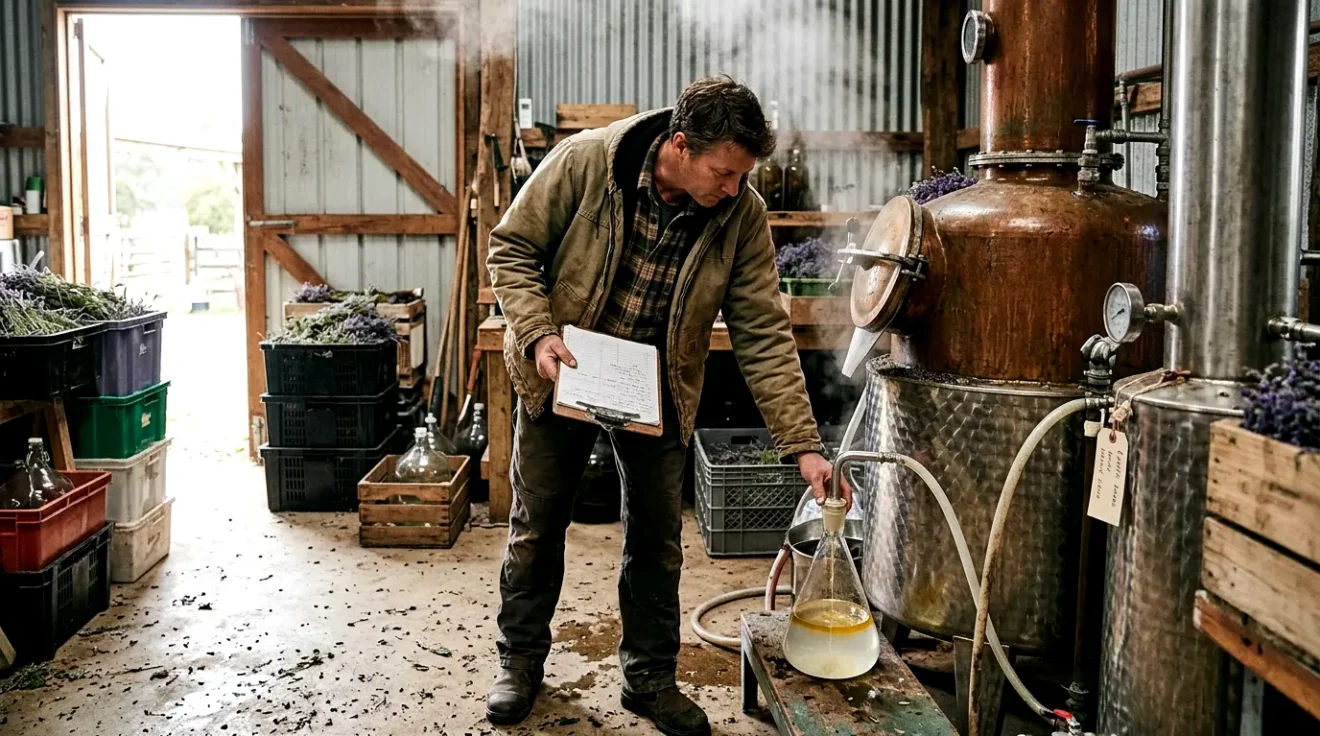
Interpreting the chromatogram requires attention to the entire chemical fingerprint, not simply the percentage of one major constituent. Relative proportions, minor compounds and unexpected peaks can prompt further investigation. Nevertheless, a chromatogram alone cannot prove adulteration or dilution without appropriate reference information and additional analytical evidence.
For sensitive-skin applications, the batch record and chemical analysis are useful for assessing consistency and identifying constituents that may require further safety evaluation. They do not independently establish that an essential oil is suitable for every skin type or cosmetic concentration.
When documentation is incomplete, requesting the missing batch information and analytical report is preferable to assuming that the oil meets a particular quality or safety standard. Traceability, composition and intended use must remain connected throughout ingredient approval.
Which Botanical Skincare Ingredients Have Evidence Behind Their Benefits?
Botanical skincare ingredients have the strongest evidence behind their benefits when research evaluates a chemically characterised extract, uses relevant concentrations and demonstrates effects in an appropriate skin model or controlled human study. Laboratory antioxidant activity alone does not establish a clinical skincare benefit. Evidence must be interpreted according to the extract actually tested, its composition and the formulation in which it was used.
Botanical evidence can be organised into several levels. In-vitro studies investigate biological activity in isolated cells, enzymes or chemical systems. They can identify promising mechanisms, but they do not reproduce the full complexity of human skin.
Ex-vivo studies use biological tissues outside the living organism and can provide additional information about skin-related effects. Controlled human studies offer more direct evidence about performance under real exposure conditions, while clinical testing of the finished cosmetic formula evaluates the ingredient in the product consumers actually use.
These evidence levels answer different questions. A compound that demonstrates antioxidant activity in a laboratory assay may not penetrate the relevant skin layer, remain stable in a formulation or produce a measurable benefit at the concentration used in a cosmetic product.
Several botanical ingredients illustrate why the evidence must be evaluated at extract level.
- Green tea extracts: Certain characterised extracts containing catechins, including epigallocatechin gallate, have been investigated for antioxidant and skin-related properties. The composition, stability and concentration of the tested extract remain important when interpreting findings.
- Soy extracts: Soy-derived preparations containing isoflavones have been investigated in relation to skin appearance and biological activity. Results from a specific preparation cannot automatically be generalised to every soy extract.
- Licorice root extracts: Certain characterised preparations containing constituents such as glabridin or liquiritin have been studied for skin-related properties, including effects on pigmentation pathways. The exact constituent profile and supporting human evidence must be checked before making a cosmetic performance claim.
These examples are not blanket endorsements of every product containing green tea, soy or licorice. Traditional use, mechanistic plausibility and laboratory activity may justify further investigation, but they do not independently establish the efficacy of a finished skincare product.
Extraction technology is directly relevant to this distinction. A clinical study evaluating a standardised green tea extract with a defined marker profile supports conclusions about that particular preparation under the study conditions. Replacing it with an ethanol extract, a CO2 fraction or an unstandardised botanical powder may substantially change the composition.
Similarly, a study using a high concentration may have limited relevance to a commercial cosmetic formula containing a much smaller amount. The formulation vehicle, stability, exposure duration and study population also affect the interpretation of results.
For ingredient buyers, supplier literature should therefore be examined carefully. A supplier may provide useful application data, but independently published research and controlled human studies provide different levels of evidence. References should identify the exact extract grade, the tested concentration and the outcome measured.
A credible botanical claim should also distinguish between the evidence for an isolated marker, the evidence for a complete extract and the evidence for the finished cosmetic product. These are related but not interchangeable forms of proof.
The most reliable purchasing decision combines chemical characterisation with evidence relevant to the intended application. A well-documented extract with modest but directly applicable evidence can be a more defensible choice than an ingredient supported by impressive laboratory claims that do not match its actual composition or use level.
For a final ingredient assessment, buyers should request the precise extract specification, batch documentation and references for studies using the same grade. This creates a clearer basis for deciding whether the evidence supports the intended formulation and its proposed cosmetic claims.
Which botanical extraction method produces the purest cosmetic extract?
There is no universally purest botanical extraction method. Purity depends on the starting material, solvent selectivity, processing conditions, purification steps and analytical controls. Supercritical CO2 can reduce conventional organic solvent residues, while ethanol and water can recover different target compounds. A suitable certificate of analysis and chemical characterisation provide more meaningful evidence of ingredient quality than the extraction method alone.
Is CO2 extraction better than cold-pressed botanical extraction?
CO2 extraction and cold pressing serve different purposes. CO2 extraction uses pressurised carbon dioxide to recover selected compounds, whereas cold pressing relies on mechanical processing without conventional solvent extraction. The appropriate method depends on the plant material and target constituents. Neither method automatically produces a more effective or safer cosmetic ingredient.
Does a higher botanical extract ratio mean a stronger skincare ingredient?
Not necessarily. An extraction ratio describes the relationship between the starting plant material and the resulting extract according to the supplier’s calculation method. It does not directly establish the concentration of specific active compounds, their bioavailability or cosmetic effectiveness. Marker assays and chemical fingerprints are needed to understand the actual composition.
Why do botanical extracts from the same plant have different colours and odours?
Colour and odour can vary because of differences in plant part, harvest season, geographical origin, chemotype, solvent, extraction temperature and processing conditions. Co-extracted pigments, waxes and aromatic compounds also influence sensory characteristics. These differences do not automatically indicate poor quality, but unexplained batch variation should be investigated through supplier documentation and analytical testing.
What documentation should a cosmetic ingredient buyer request from a botanical extract supplier?
Request a specification identifying the botanical species, plant part, extraction method, solvent and carrier, extraction ratio and standardisation markers. A batch-specific certificate of analysis, relevant analytical results, residual-solvent information where applicable, microbiological specifications and traceability records are also useful. If efficacy claims are important, request research references that correspond to the exact extract grade and tested concentration.